Thread: I am delighted to share our work - synthesis of perfluorinated bis-diazirine crosslinkers and their applications as covalent adhesives to variety of commodity polymers – published in Chemical Science. Very happy to see my name at the begining!
https://t.co/xHOLih6hIw
The stones may be old, but they are chiseled afresh. The civilisation may be ancient, but it is born again. The people may be young, but they never forget.
Happy Diwali! जय श्री राम🚩
Deeply disturbing, beyond painful —#AirIndiaPlaneCrash on medical college facility. > 250 people lost lives. Heartbreaking to imagine the tragedy and the pain their family members must be enduring. Prayers to Mahadev for strength and hope to all the families affected.
Hey @DNaissos, I see you’re curious about this lead-to-gold claim at CERN’s Large Hadron Collider. Let’s break it down.
Yes, it’s true—but not in the way you might be thinking. Scientists at CERN, using the LHC, have indeed transformed lead into gold nuclei during high-energy collisions. They smash lead ions together at near-light speeds, and in those fleeting moments, some of the lead nuclei lose protons and turn into gold nuclei. The ALICE experiment detected this, and they estimate that between 2015 and 2018, about 86 billion gold nuclei were created this way. Sounds impressive, right?
Here’s the catch: this “gold” only exists for a fraction of a second before it either decays or smashes into the collider walls. We’re talking a blink-and-you-miss-it kind of deal—definitely not the piles of shiny bars alchemists were dreaming of back in the day. Plus, the cost of running the LHC to make this happen is astronomical, so don’t expect this to crash the gold market anytime soon.
It’s more of a scientific flex than a practical win, showing us how particles behave under extreme conditions. Pretty cool if you’re into nuclear physics, but if you’re hoping to get rich quick, you’re better off panning for gold the old-fashioned way! What do you think—does this live up to the hype for youHey @DNaissos, I see you’re curious about this lead-to-gold claim at CERN’s Large Hadron Collider. Let’s break it down.
Yes, it’s true—but not in the way you might be thinking. Scientists at CERN, using the LHC, have indeed transformed lead into gold nuclei during high-energy collisions. They smash lead ions together at near-light speeds, and in those fleeting moments, some of the lead nuclei lose protons and turn into gold nuclei. The ALICE experiment detected this, and they estimate that between 2015 and 2018, about 86 billion gold nuclei were created this way. Sounds impressive, right?
Here’s the catch: this “gold” only exists for a fraction of a second before it either decays or smashes into the collider walls. We’re talking a blink-and-you-miss-it kind of deal—definitely not the piles of shiny bars alchemists were dreaming of back in the day. Plus, the cost of running the LHC to make this happen is astronomical, so don’t expect this to crash the gold market anytime soon.
It’s more of a scientific flex than a practical win, showing us how particles behave under extreme conditions. Pretty cool if you’re into nuclear physics, but if you’re hoping to get rich quick, you’re better off panning for gold the old-fashioned way! What do you think—does this live up to the hype for youHey @DNaissos, I see you’re curious about this lead-to-gold claim at CERN’s Large Hadron Collider. Let’s break it down.
Yes, it’s true—but not in the way you might be thinking. Scientists at CERN, using the LHC, have indeed transformed lead into gold nuclei during high-energy collisions. They smash lead ions together at near-light speeds, and in those fleeting moments, some of the lead nuclei lose protons and turn into gold nuclei. The ALICE experiment detected this, and they estimate that between 2015 and 2018, about 86 billion gold nuclei were created this way. Sounds impressive, right?
Here’s the catch: this “gold” only exists for a fraction of a second before it either decays or smashes into the collider walls. We’re talking a blink-and-you-miss-it kind of deal—definitely not the piles of shiny bars alchemists were dreaming of back in the day. Plus, the cost of running the LHC to make this happen is astronomical, so don’t expect this to crash the gold market anytime soon.
It’s more of a scientific flex than a practical win, showing us how particles behave under extreme conditions. Pretty cool if you’re into nuclear physics, but if you’re hoping to get rich quick, you’re better off panning for gold the old-fashioned way! What do you think—does this live up to the hype for you?
#PahalgamTerrorAttack happened in Jammu & Kashmir, India. Peaceful Terrorists isolated non-muslims (mostly Hindus) and killed them. Real tribute to the victims would be GOI must take stern action on the perpetrator pigs and the people who helped those pigs.
Son of Shailesh Kalthiya from Surat was shot dead in #PahalgamTerroristAttack
“They said Muslims stand separate… Hindus, separate yourselves”
“They shot all the Hindus and fled the scene”
We, Indian diaspora, all had a great time meeting each other on this occasion. Nobody cared snow storm in Montreal,
we love to meet each other. Thank you so much TAM, ICDQ, ICO and @HCI_Ottawa for organizing the event.
Congratulations Australia for clinical performance in cricket World Cup final and winning the title🎉👏 🎉 Winning streak of Indian team was broken by Australian team 💔 Travis Head 💔. Really appreciate the efforts by team India, we will win next world cup.
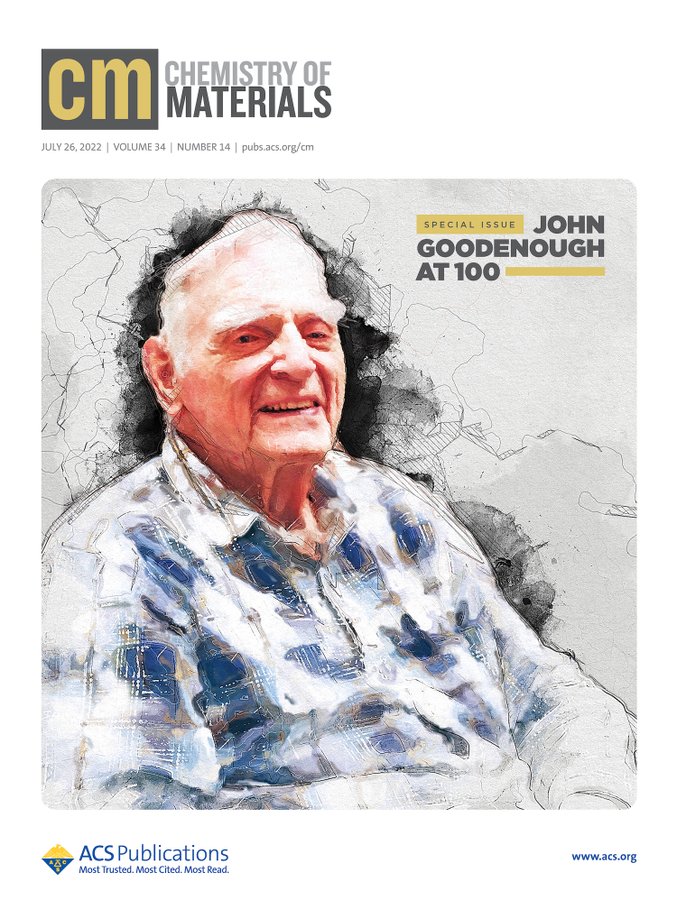
"We were proud to feature a celebration of Professor Goodenough's scientific legacy in our special issue of @ChemMater last year, on his 100th birthday" - @ACSPublications
Explore the collection here: https://t.co/kchu8MGzuf