Senior Research Fellow, Latin American Security @RUSI_org. Phd @uniyorkpolitics, later @BritishAcademy_ postdoc fellow @LACOxford, and lecturer @Uni_of_Essex
External assessment of new AI models is essential to ensure they are unable to cause large-scale harm such as supporting WMD development, or automating cyberattacks.
However, industry norms around these external AI model evaluations are varied and inadequate which make them ripe for exploitation.
They therefore require urgent coordination and collaboration to ensure the security of the most sophisticated AI models currently available.
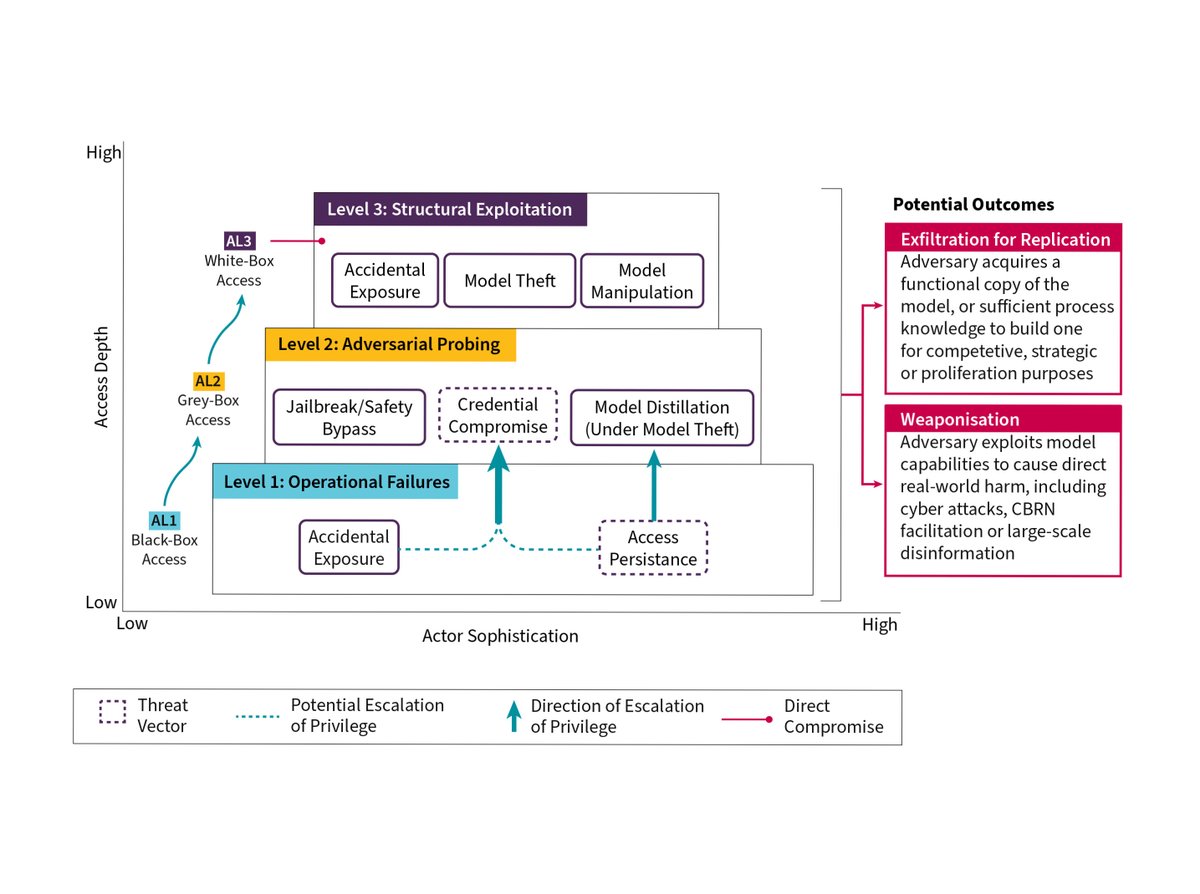
Our latest paper by @LouMarieHSD, Elijah Glantz and @dcuthbert delivers a critical framework for securely enabling third-party evaluation of frontier AI models, directly addressing the urgent need for robust safety and security in the defence and security sector as AI capabilities rapidly advance.
The image is a visual representation from the paper of direct and indirect pathways of access exploitation that may lead to weaponisation of the model to cause real-world harm.
Read the paper: https://t.co/qRSp96R5kw
Alma Keshavarz, "SWJ–El Centro Book Review: Cybersecurity Governance in Latin America." BOOK REVIEWS| EL CENTRO. 13 April 2026, https://t.co/Xx51h6M4kW
Are you a student in the UK with an interest in European defence?
The Defence Department of the French Embassy in London has launched the French Defence Attaché’s Prize, recognising outstanding academic work that deepens understanding of Franco-British defence cooperation.
We are proud to share that RUSI will be part of the award jury and will be publishing the winning essay, offering a unique platform to showcase your research.
Submission deadline: 1 May 2026
For more information on how to submit, visit the page: https://t.co/OPnNTC5EsO
New research by @LouMarieHSD and Prerana Joshi shows cyber attribution in the Global South isn’t binary, but a spectrum shaped by politics, economics and risk, challenging Western assumptions about ‘naming and shaming’ as a universal tool of cyber statecraft.
States balance signalling capability with risks: escalation, economic fallout and exposing vulnerabilities. Many prefer partial or no attribution, especially where conflict, trade ties or ‘saving face’ shape decision-making.
Private sector threat intelligence plays a major role. Some states rely on firms as a proxy for attribution, signalling awareness without official statements, raising questions about sovereignty and dependency.
The paper calls on policymakers to move beyond Western models, engaging Global South partners on their own terms, with better understanding of local decision-making, technical cultures and regional dynamics.
https://t.co/OcjWd45HHc
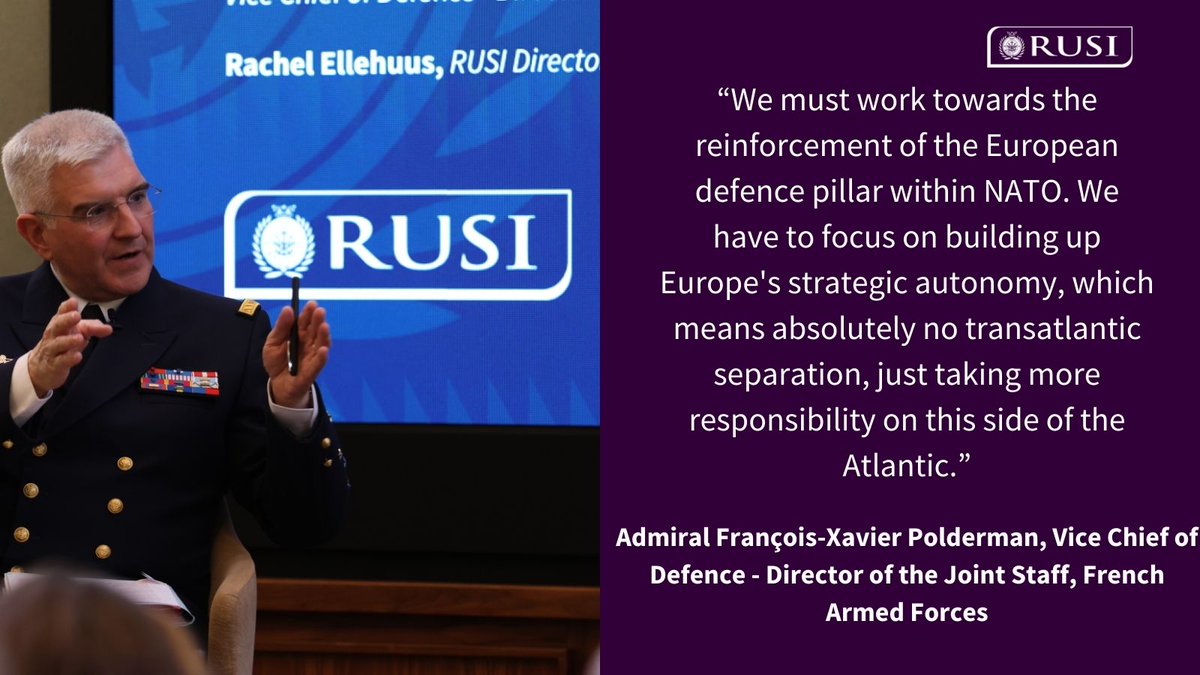
Yesterday we welcomed Admiral François-Xavier Polderman, French Vice Chief of Defence, to 61 Whitehall for a high-level discussion regarding the future of European defence readiness and strategic autonomy.
@EtatMajorFR@FrenchForces@FranceintheUK@FRDefence_UK
#HIRING
We’re recruiting a Director, International Security to lead cutting-edge geopolitics research at RUSI.
Shape strategy, drive impact, and lead a team at the forefront of today’s most pressing security challenges.
Apply by 22 March 2026:
https://t.co/RUeaX0F7r4
'Iran's system has built-in mechanisms designed for continuity under pressure.'
Read the latest op-ed from RUSI Senior Research Fellow @BurcuAOzcelik in The @Independent.
https://t.co/BrPWuDZu7b
Join us on 3 March for a timely webinar where RUSI experts and associates will explore the security, political and wider implications of the death of the leader of Mexico’s Cartel Jalisco Nueva Generación (CJNG), ‘El Mencho’.
https://t.co/m9ZzB8e3FG
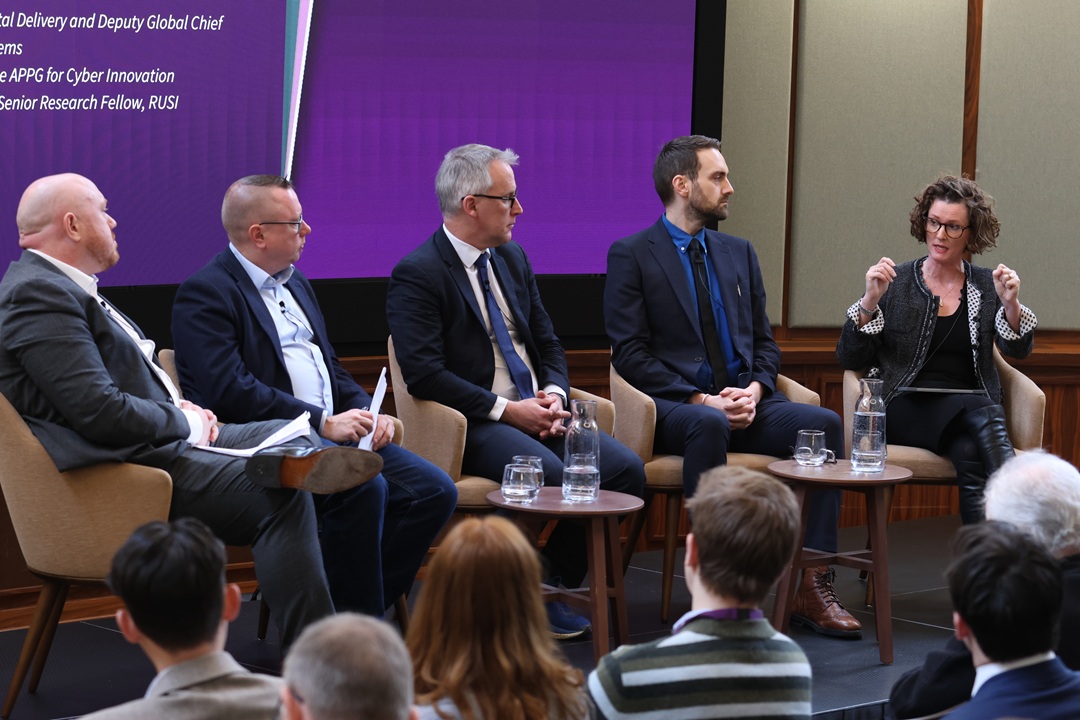
Last week, we convened experts from government, academia and industry to discuss our new paper calling for a more ambitious UK cyber strategy, one that rebalances responsibility and tackles persistent market failures.
Watch the recording:
https://t.co/VOYZMZZo4a
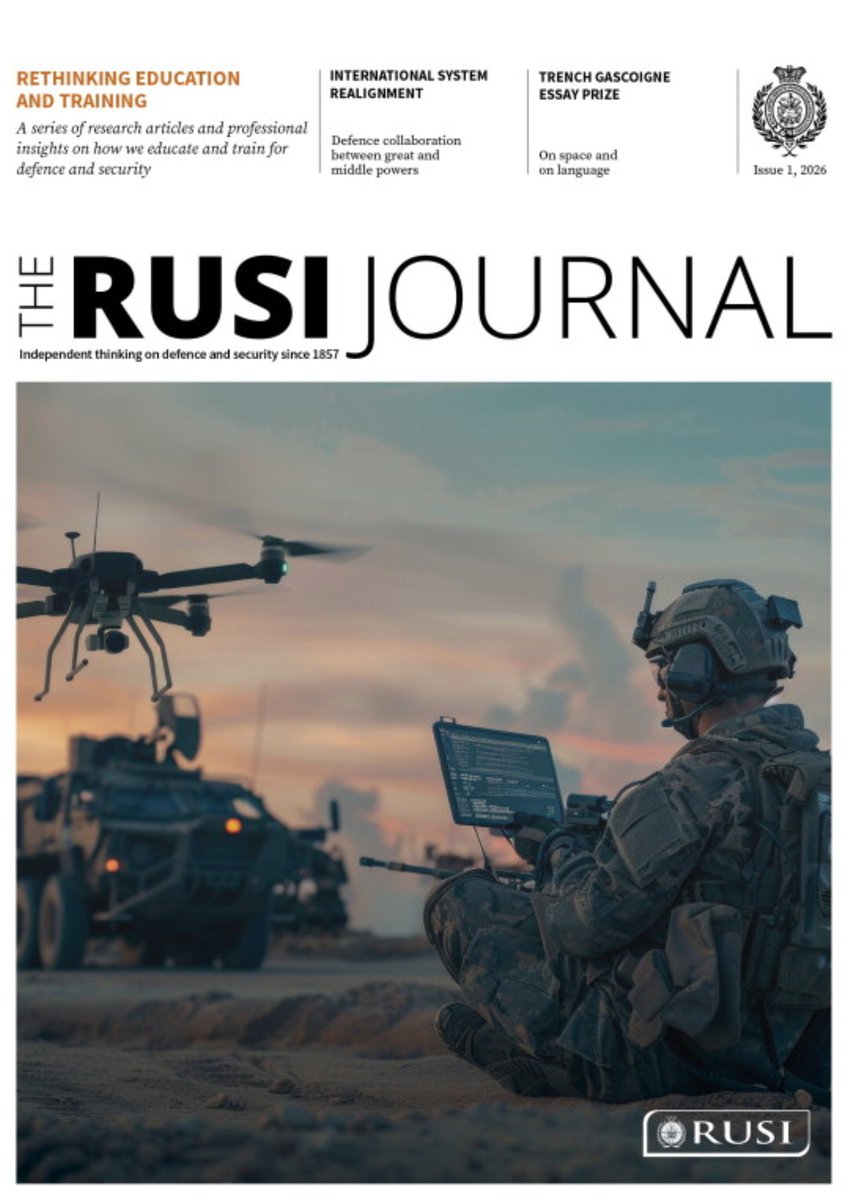
Explore the latest #RUSIJournal, newly redesigned with a fresh look and feel. Our latest edition reflects on shifting defence and security narratives and features articles on education and training for the future.
Read the journal: https://t.co/7qdcYAjLGS
Two weeks ago we gathered senior policymakers and experts from academia, industry and think tanks to discuss the current and emerging challenges that threaten to disrupt Latin America.
Find out more about our findings from the conference below.
https://t.co/6B3fZnzugw
Chile is facing a shift from ‘simple’ crime to complex transnational networks.
Our new research from @pilarlizana, @CSolar, and @MariaNizzero shows its system for recovering criminal assets is key to weakening organised crime. https://t.co/VaI1TaVlec
At 10:30 am GMT @CSolar will give evidence to @CommonsForeign on the implications of the US' intervention in Venezuela.
Tune in: https://t.co/kNk3DL63eM
Visit our page below for more information on our research on Latin America. https://t.co/lUeRH5kmM8
Gracias @RUSI_org y @CSolar por invitarme moderar el panel sobre "Cooperación en Seguridad en el Atlántico Sur y la Antártica" en el marco de la Latin America Security Conference 2026 en Londres.
Ukraine is fighting a 'narrative war' alongside traditional, kinetic war. With its 'pivot to the south', Ukraine has found allies in new places.
Discover F. Lobo & C. Solar's new paper for @RUSI_org@RUSIEurope, which I had the chance to edit ⬇️
https://t.co/yjkebxZSsu
"Both Russia and China are losing this tip of the tentacle. It was their way in to the US backyard"
RUSI's @CSolar speaks to @Telegraph's Battle Lines about the capture of Venezuelan leader Nicolás Maduro and the broader implications of this move.
https://t.co/a4fulRTH6n