Ambassador, I’m sorry to say it appears you’ve developed a bit of clientitis.
Let me help you — Turkey cannot rejoin the F-35 program while it maintains Russian S-400s. If you or @POTUS try to circumvent that, Congress will stop you.
By the way, aren’t you in the Epstein Files?
Τα μιξοαγγλικά στις διαφημίσεις τραπεζών, εταιρειών, ιδρυμάτων και του κράτους μου θυμίζουν τους γραικύλους, οι οποίοι την εποχή που οι Ρωμαίοι εξελληνίζονταν,εκείνοι έπαιρναν λατινικά ονόματα και πιθήκιζαν τα αφεντικά τους.
Οι γραικύλοι έσβησαν, οι Έλληνες ή οι Ρωμαίοι, όχι...
Τα γκάλοπ δεν γίνονται για να διερευνηθεί τι πιστεύουν οι πολίτες, αλλά για να τους υποβληθεί (ή επιβληθεί) τι να πιστεύουν.
Οι δημοσκοπήσεις είναι η δημαγωγία των Δυνατών για να δημιουργείται
(και ετσι) η εκλογική πελατεία που χρειάζονται για να κυβερνούν προς το συμφέρον τους.
As pressures against opposition journalists escalate in Turkey, let us remember the Greek journalist Eleni Michailidis, who was prosecuted and convicted 87 years ago for "insulting Turkishness" over a single word her newspaper used to refer to Turks.
The case began with a word published in the February 28, 1929, issue of the Greek-language newspaper Ta Hronika (Τα Χρονικά) in Constantinople.
The article, which the newspaper translated from the Greek newspaper Imerisios Typos, used the Greek word "Agrios" (Άγριος) when referring to Turks. The prosecutor's office claimed that this word was used to mean "savage" or "barbaric" about the Turkish nation and filed a lawsuit against the newspaper's managing editor, Eleni Michailidis.
The use of the word was deemed to fall under the category of "insulting and belittling Turkishness" under the infamous Article 159 of the Turkish Penal Code.
The first expert panel appointed by the court reported that the word "Agrios" in the text meant "barbaric and savage." The defendant, Michailidis, argued that the word was not intended as an insult, but was used within the context of the article only to mean "violent" or "harsh." She claimed that in this sense, it would be considered a "compliment" to the Turks.
After a trial lasting approximately four months, the judge ruled that the word was insulting and sentenced Michailidis to three years of hard labor. In the appeals trial, which resumed in November 1929, a different expert panel was convened. This panel concluded that the word was used in the sense of "violent" and that its use was not intended to insult Turkishness, resulting in Michailidis' acquittal.
Ever since, sadly, the Turkish state has never stopped violating the free press and freedom of expression…
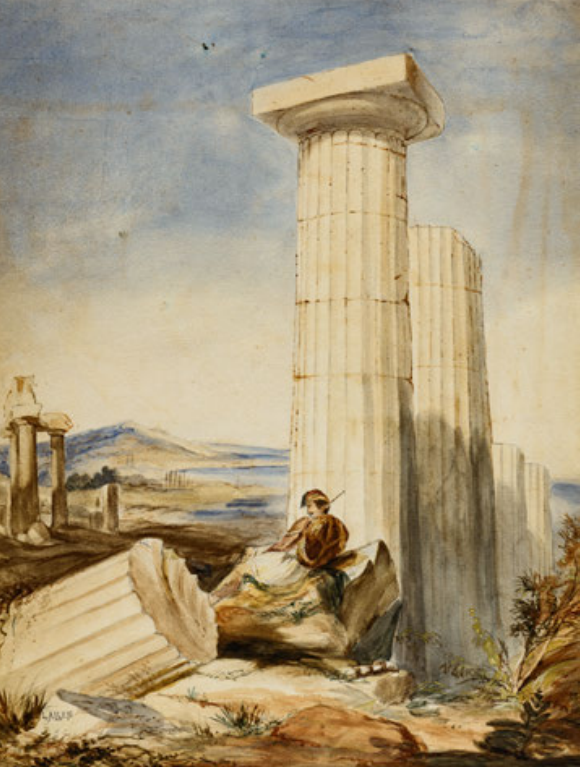
"Our basileus was killed, he made no bond, and his garrison has carried on a never-ending battle against the Turks..." - Kolokotronis to Captain Hamilton
"“Our war was a war with a people whom [we] never desired to acknowledge as ruling [us]; to whom [we] had never taken oaths of fealty, except when made to do so by force ; neither had a Sultan at any time any inclination to regard the Greek people as his people, but only as his slaves. Once, when we had gone to Nauplia, Hamilton came to see me.
"You Greeks must have a treaty," he said, "and England will act as mediator."
"This will never come to pass," I made answer; " with us it is freedom or death. Captain Hamilton, we have never yet made a treaty with the Turks… Our basileus was killed, he made no bond, and his garrison has carried on a never-ending battle against the Turks and there are two fortresses which have never surrendered."
"Where is this royal garrison which are your fortresses? "
"Our royal garrison is with the bands called Klephts; the fortresses are Mani, Souli, and the hills." "
Source:
Kolokotrones, Theodoros. 1896. I Kolokotrones. The klepht and the warrior. Sixty years of peril and daring. An autobiography. Edmonds, E.M. Trans. London: T. Fisher Unwin. p.252-253
1/3 29 ΜΑΪΟΥ 1453
"Το δε την πόλιν σοι δούναι ουτ' εμόν εστίν ουτ' άλλου των κατοικούντων εν αυτή, κοινή γαρ γνώμη πάντες αυτοπροαιρέτως αποθανούμεν και ου φεισόμεθα της ζωής ημών"
Κωνσταντίνος ΙΑ΄ Παλαιολόγος 🌺
Που σημαίνει: ↩️
Το κνώδαλο,κύμβαλο και σκύβαλο αυτοκτόνησε με τον πιό γελοίο τρόπο.
Κραγκιοζιλίκια με τον ΕΛΑΣ μπορούν να κάνουν μόνον οι λούμπεν και οι καλικάντζαροι.
Πλην όμως όταν αρχίζει " να γελάει το καφενείο" ο πολιτικάντης απέρχεται.
Και πέφτει πολύ γέλιο.
Καθότι, μωραίνει Κύριος...
The President of NIKI is demanding to know who approved millions in public funds for a production that draws its value from Homer, while the government leaves Greek cultural heritage exposed.
https://t.co/6Mi78unLCd
1/ 📜🍂 ❝ ο πτερνοτήρης ὄφις ❞
(λέξεις & φράσεις της εκκλησιαστικής γλώσσας)
✦ Η παράξενη λέξη «πτερνοτήρης», από τη βιβλική φράση «τηρῶ τὴν πτέρναν», απαντά μόνο στο επίγραμμα του συναξαρίου τοῦ Αγίου Κελεστίνου (25 Μαΐου), που μαρτύρησε με τρύπημα των φτερνών:
Δημοσιογράφος- παρουσιαστής (φιλικός προς τον Τσίπρα)
σε κανάλι φιλικό προς τον Τσίπρα, έκανε φιλικές ερωτήσεις στην εκπρόσωπο του Τσίπρα.
Ο Τσίπρας βρήκε τις ερωτήσεις εχθρικές και ζήτησε την απόλυση του φιλικού δημοσιογράφου. Το φιλικό κανάλι τον απέλυσε.
Αδιόρθωτος. Τελείως
Πως μίλαγε ένας Ναξιώτης του 1650;
Παρακάτω ένα απόσπασμα απο το γράμμα ενός Ναξιώτη αιχμαλώτου του 17ου αιώνα προς τη γυναίκα του. Γράφει από την Τρίπολη της Βαρβαριάς (Λιβύης) όπου έφτασε μετά απο εβδομάδες μέσα σε μία γαλιότα, αφού πιάστηκε αιχμάλωτος απο Βαρβαρέζους πειρατές κάπου στο Αιγαίο, και περιγράφει τις συνθήκες αιχμαλωσίας του.
Έχοντας για μέρες "ένα κομμάτι παξιμάδι το ταχύ μουχλιασμένο που δεν το'τρωγε ο χοίρος και μια τάσα νερό βρωμισμένο" ο Ναξιώτης θα εκφράσει τη νοσταλγία του για τη γυναίκα και τα παιδιά του:
"...Ωχου και αλλοίμονο, αγάπη μου, και να ήθελα σου γροικώ να μην έχω τώρα το στειρεμό σου να καίγωμαι, ώχου, παιδάκια μου, μωρουδάκια μου, ώχου γλυκότατά μου, ω φως των εμματιών μου και πώς σας εποχωρίστηκα, ωχ αλλοίμονο, οι ανεστεναγμοί κάβγου τα χείλη μου και δεν έχω δροσισμό, τα μάτια μου δε σκολάζου ποτέ και άν πιω ένα σκουτέλι νερό πίνω δύο σκουτέλια φαρμάκι και χύνω άλλα τόσα δάκρυα που όσες μπουκουνιές τρώγω τόσους αναστεναγμούς βγάνω και τα μάτια μου, που τρέχου σά το ποταμό ζωή κρινάμενη έχω, αγάπη μου, δεν τόνε δύνομαι το στειρεμό σου μηδέ των παιδιώ μου. Ωχου, Λιανή μου, καρδιά μου, ώχου Χρουσάκη μου, φως των εμματιών μου. Μολονετούτο, δόξα σοι ο Θεός, ας γίνη το θέλημά σου, Κύριε, όχι το δικό μου, μα παρακαλώ σε, Θεέ μου, λεημοσύνη, όχι δικαιοσύνη, δεν ημπορώ να σου γράφω τα βάσανα που επέρασα και όπου περνώ, γιατί αν ήτο η θάλασσα μελάνι και η γη χαρτί δεν έσωνε να σου τα γράψω..."
- Ναξιακόν ημερολόγιον του δισεκτου έτους 1896 / τη συμπράξει φιλομούσων λογίων υπό Γεωργίου Ι. Βυρίνη.
Οι απολογητές της αμάθειάς τους,
των κόμπλεξ τους
και της ιδιοτέλειας
μας λένε οτι η Οδύσσεια του Νολαν είναι συμπεριληπτική!
Τότε γιατί δεν παίζει ούτε ενας Έλληνας (ως κομπάρσος);
Ένας Ινουί ( στον ρόλο της Αρτέμιδος);
Ένας Δαλάι Λάμα ( στον ρόλο ενός λεωφορείου);
Ρατσισμός!
In 43 days every major European leader flies to Ankara for the NATO summit. They will shake hands with the man who just hosted a secret Muslim Brotherhood summit, runs their European mosque network, and shelters Brotherhood figures expelled from Sudan, Egypt and Jordan. Nobody has briefed them.
I've done it for them. 🧵



![Alyunan00's tweet photo. "Our basileus was killed, he made no bond, and his garrison has carried on a never-ending battle against the Turks..." - Kolokotronis to Captain Hamilton
"“Our war was a war with a people whom [we] never desired to acknowledge as ruling [us]; to whom [we] had never taken oaths of fealty, except when made to do so by force ; neither had a Sultan at any time any inclination to regard the Greek people as his people, but only as his slaves. Once, when we had gone to Nauplia, Hamilton came to see me.
"You Greeks must have a treaty," he said, "and England will act as mediator."
"This will never come to pass," I made answer; " with us it is freedom or death. Captain Hamilton, we have never yet made a treaty with the Turks… Our basileus was killed, he made no bond, and his garrison has carried on a never-ending battle against the Turks and there are two fortresses which have never surrendered."
"Where is this royal garrison which are your fortresses? "
"Our royal garrison is with the bands called Klephts; the fortresses are Mani, Souli, and the hills." "
Source:
Kolokotrones, Theodoros. 1896. I Kolokotrones. The klepht and the warrior. Sixty years of peril and daring. An autobiography. Edmonds, E.M. Trans. London: T. Fisher Unwin. p.252-253](https://pbs.twimg.com/media/HJempBEbIAAEl6x.jpg)


