Thanks to everyone who purchased one of our Limited Edition Blu-Ray disc sets, they've all sold out. There's still a good number of the standard edition sets left and they have the same extras and features. Link in bio.
This used to be a standard program, where ATC Controllers would ride along in the cockpit jumpseat.
I’m glad to see it come back. I’ve toured a few ATC facilities & the more we learn about the other’s jobs, the better we’ll work together.
Scariest landing at the airline:
San Jose, Costa Rica. A nice city w/ nice people, but I haven’t been back since…I don’t like the runway.
It’s fine in the day, but on a dark & stormy night, it left me shaking as we taxied clear.
I’d been assigned to go on reserve as a new Captain. I’d been before, but during the day. This time it would be night, and I picked up a new (to me) First Officer in Houston for the flight down. He had been at the airline for something like 25 years & wouldn’t upgrade…he was so senior he only flew if the airline was offering premium pay for someone to come in on a day off. This trip was broken before it was assigned to me, so it was a mix of whatever FOs they could find.
Anyway, we get down to San Jose & there is weather. At night. That’s not normally a problem, and I didn’t think it would be tonight, either.
Then we heard the jet in front of us had reported “breaking out at minimums”. This ostensibly means they get right to the minimum altitude allowed on the approach before you can either see the runway, or have to go around / do the missed approach procedure. That’s not great…the ceilings w/ weather may vary quite a bit, changing frequently. The jet in front of you may see it, then you can’t.
It’s also an unwritten code in my profession. For better or worse, this sometimes means “we had to duck under the weather” or “it was really close”. Now, there is some allowance between hitting “minimums” & executing the missed approach, but some pilots have a broader view of how long it should take you to react.
Anyway, I now think there is a higher than normal probability of having to do a missed approach, and we only have the fuel to make one attempt before diverting to our alternate airport. Not ideal, but not unsafe.
Oh, for some reason, the lead-in lights are not operational. You’ve seen them in movies…like a line of lights before the runway that flash in a fast sequence, kind of pulling you into the runway. “Follow me”, the lights say. Then, you get a bunch of other lights in front of the runway that give you clues to your orientation in both the vertical & horizontal. Extremely useful, but…not working for some reason.
Also, the lights on the side of the runway that indicate how high or low you are on the Glideslope (PAPIs) are broken. Both of these things require our normal minimum altitude on approach be increased.
Well, we flew the approach & get bumped around in the storm pretty good. Tough to stay on the instrument Glideslope. The autopilot is trying, but it tends to correct too much…it can’t predict that pushing the nose over dramatically will ultimately result in getting too low, too fast. It’s just reacting based on what the Glideslope is doing.
We break out slightly above minimums, but it’s night & only the runway edge lights are working. No centerline lights to help you gauge if you’re drifting left & right.
Two factors made this much worse: pouring rain that the wipers couldn’t keep up with, and the new LED lights used for the edge lights. The windscreen is drenched & the lights are too bright. So the runway looks like a single strip of lights being viewed through a glass of moving water.
It stayed that way until we were very close. At about 50’, I could kind of make out the 1,000’ markers painted on the runway, where I’m supposed to be aiming. It’s just too dark & the runway is wet. The PAPIs are beside the markers for a clue, but again, not working.
I landed firmly, well left of centerline (no centerline lights & couldn’t see the stripes well). The FO calls “Centerline” prompting me to correct – and I do – but too much. Now we’re shooting right of it.
Takes a couple overshooting corrections left & right on the wet runway, but we got the nose back to aligned w/ centerline. The autobrakes did their work. I taxied clear.
My heart was racing. My hand was a claw I struggled to extract from the yoke & shook slightly when I did.
Anyway, headed back soon. Hope it’s better…
They are lucky to be alive.
Initial reports indicate either an attacker got into the cockpit & stabbed the pilots, or the copilot stabbed the captain then tried to crash the jet, bound for Tel Aviv.
Palestinian militants have a long history of hijacking jets, mostly from the 1960’s to 1980’s. They often targeted random airlines, but a common thread early on was the planes were bound for Tel Aviv…which is what makes me think there is a possible link here. At one point, these hijackings became such a threat that airline pilots worldwide threatened to go on strike.
In September, 1970, the “Dawson’s Field” hijackings occurred. 3 jets bound for NYC & one for London were hijacked & flown to Dawson Field, Jordan, a desert airstrip. One passenger was injured, and all 4 jets were eventually blown up by the militants. The hijackers released most of the passengers except for those of Jewish descent. Jordanian security forces eventually fought a battle & forced a negotiated release.
To this day, Israeli airline El Al still stations armed guards at the airplane when parked at any international airport for an extended period to make sure nobody tampers with the jet or sneaks aboard.
As for this jet, they almost certainly exceeded a lot of limits, including speed & G’s. Most of the rudder surface is gone, but the Vertical Stabilizer remained intact. If it had not, the jet would almost certainly have been lost. How fast they got is unknown, but I’ve seen estimates of around .90 Mach…the limit on a 737 is .82 Mach, and I refuse to go faster than .80 Mach unless it’s absolutely smooth & I have a very compelling reason.
They did put a code into their transponder that indicates a hijacking. I won’t share the code, but it sets a lot of alarms off when you do it & we have procedures in place (which I won’t share).
You can bet that airlines worldwide are reviewing their security procedures today. I’m not too worried about an incident like this in the U.S., but as they say, “If you see something, say something”. Also noteworthy is that the passengers themselves appear to have intervened & saved the day…if the Flight Attendants ask for your help, give it!
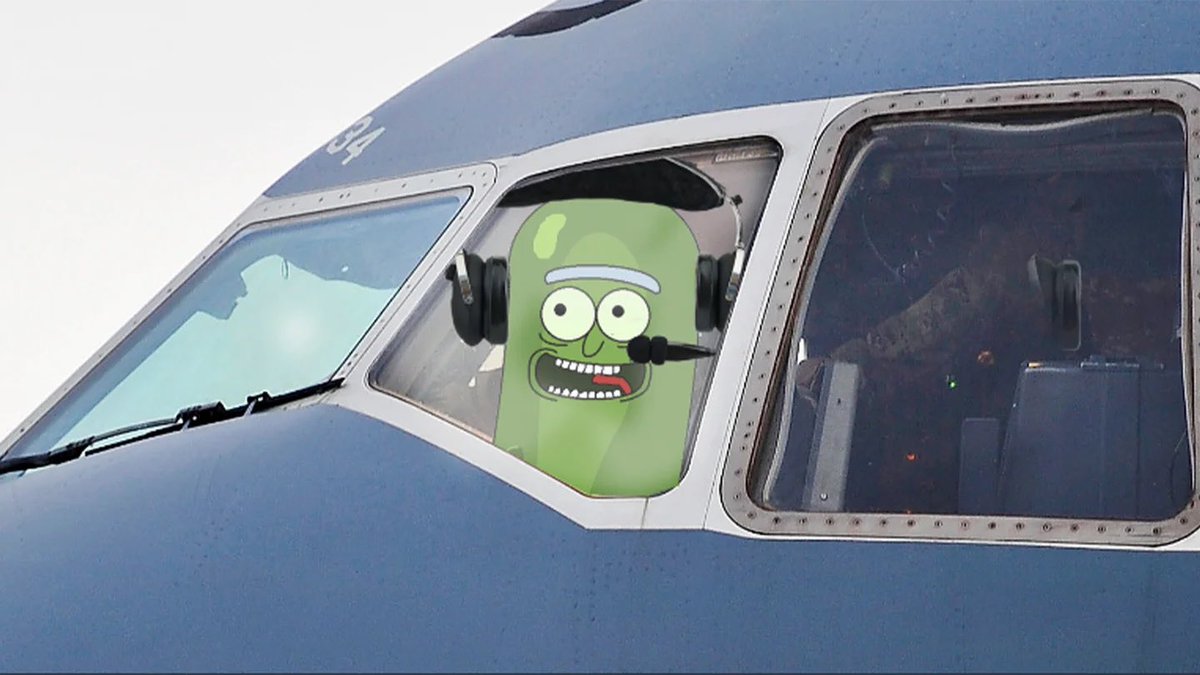
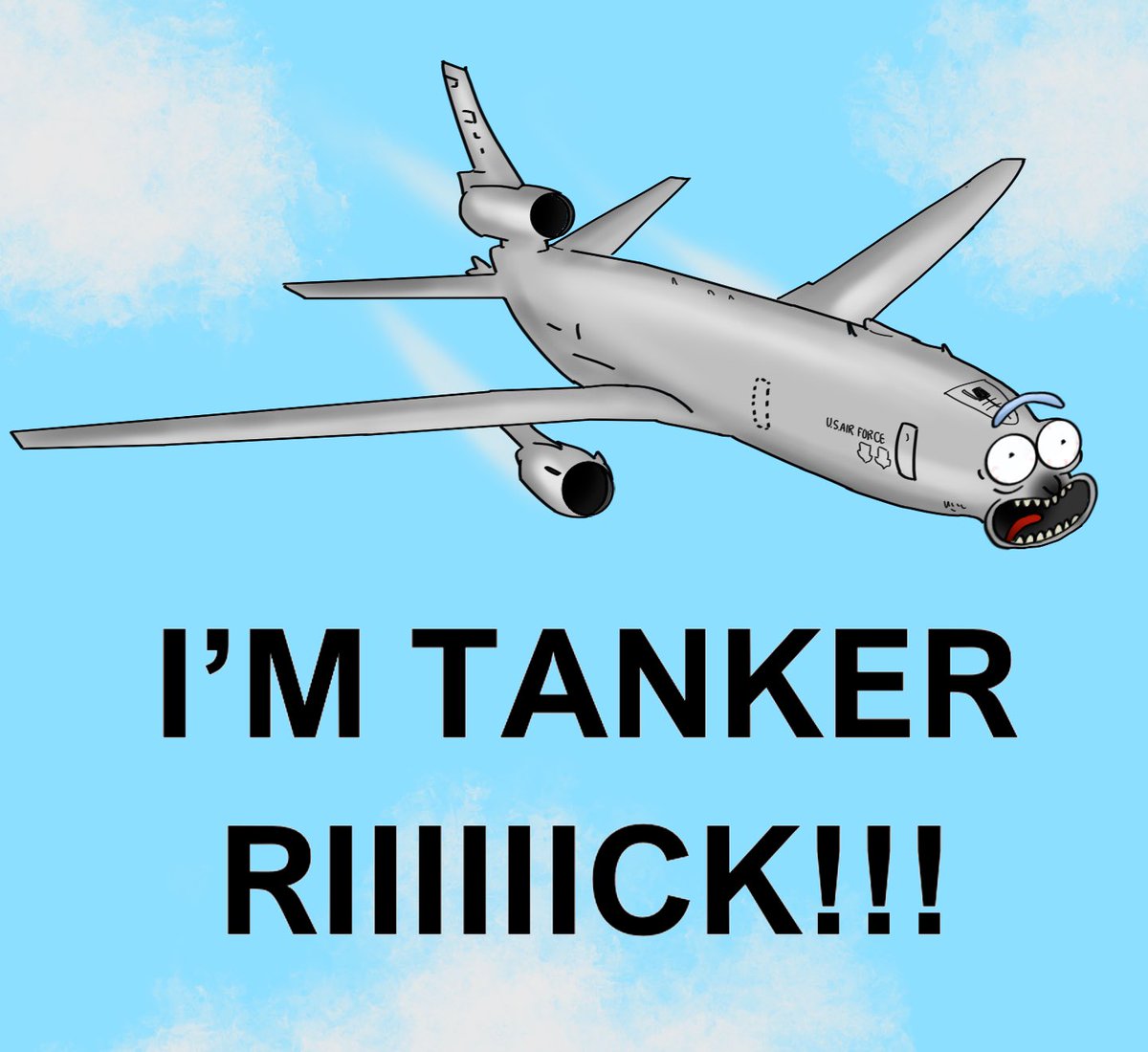
Throwback to the time in 2021 a deployed KC-10 crew decided to code their transponder callsign as “PIKLRICK” in reference to Rick & Morty for a laugh, but plane spotters noticed, it made international news & the crew had to be scolded.
Heroes, all.
The “Slam Dunk” is a term nearly every airline pilot knows (at least in the U.S.), but you won’t find it in any book.
It occurs when getting vectors (heading & altitude) from Air Traffic Control for an approach to the runway. The pilot expects that they will end up on a nice, long straight-in approach with time to configure the jet for landing (put down the landing gear, slow down & extend the flaps to their final position) before reaching the “Final Approach Fix”. This is the last point on an approach before you begin a constant rate descent to the runway.
In a Slam Dunk, the controller gives you a heading that will end up having you roll out of the turn right at the Final Approach Fix. Inexperienced pilots will not see this coming & fail to start slowing down the jet & configuring, which leads to them reaching the fix with way too much airspeed. You now have to descend & try to get rid of that airspeed simultaneously, which is not easy to do…as we say, “the jet can slow down or go down, but it can’t do both at the same time”.
With experience, pilots begin to listen to the instructions given to other jets & can predict a Slam Dunk. Or they notice the controller has cleared them to descend to Final Approach Fix altitude much earlier than they otherwise would expect.
In these scenarios, I can tell a junior pilot “he’s going to dunk you” & they know exactly what I mean. The most reliable fix for this is to immediately put out the landing gear…it has a much higher speed limit than the flaps do & provides lots of drag to slow the jet. As the jet slows down, you can extend the flaps when passing their speed limits.
(For the 737, flaps 1 - 5 can be extended up to 250 kts, flaps 15 at 200 knots, flaps 30 – the usual landing setting – can be selected once under 175 knots)
For my audience that only casually follows aviation, here’s the story that’s mind-blowing for us geeks & will eventually become a much bigger story for the public.
The SR-71 is an icon. Elon Musk named one of his kids after the precursor to it. Every fanboy knows it & visiting one at a museum is awe-inspiring.
Bringing one back to flying condition is something I never thought possible. On retirement, most jets are given to a museum in a way the military could conceivably return them to service, but some are deliberately disabled. The SR-71 was one of the latter.
Except, apparently, for one. One that was pulled from display a few years ago. And now we hear they quietly recruited people that used to work on it, presumably to return it to flight.
It’s like hearing that we’ve gone to Alabama & decided to rebuild the Saturn V rocket on display, we’ll pull an Apollo capsule from a museum & we’re going back to the moon.
This will be a huge undertaking, but if true & they restore one to flight…I will fight like hell to be at the maiden flight.
In that regard, since I don’t know where to actually submit an application, I am hereby formally tossing my hat in the ring to fly it. For my country.
A good suggestion for a post recently:
What do pilots do in cruise? Is it boring?
Climbing up to cruise & descending for the approach is fun & active. A lot of it is hand-flown; most I fly with hand-fly the jet up to 18,000’ or more. On descent, it’s a little busier & there can be lots of changes to the plan, so the autopilot stays on longer, but once you are established on the straight-in part of the approach the autopilot gets clicked off, as long as the weather is good. If the weather is bad, we’ll generally leave it on until we can see the runway (but you *mostly* have to turn it off around 150’ above the ground. The rules vary by airline).
In cruise, the autopilot has the jet. The flight plan is programmed in before you take off, so if there are no changes, the jet will fly the flight plan exactly as it’s programmed. It knows when to climb or descend, but can’t do it unless you spin the altitude knob to the altitude you want. For example, it knows when it’s time to descend to 6,000’, but it will stay at 32,000’ until you spin the knob down to 6.
In this sense, the autopilot is always overridden by the pilots & can’t do certain things unless the pilots approve.
There are many things the autopilot doesn’t know. It has no idea about weather, traffic or terrain. Some jets can actually deal with traffic, but not all, and if you program a jet to fly from LA to Denver at 3,000’, at some point it will attempt to tunnel through the earth. It also has no idea what Air Traffic Control (ATC) is asking for.
So, there is some involvement from the pilots. We’re always monitoring the jet to make sure nothing goes wrong. If it does, the autopilot doesn’t know that…it can’t handle an engine failure or a fuel leak, and if it’s trying to do something but the jet isn’t responding the way it expects, it just gives up, sounds an alarm & turns itself off.
Most of the time, though, none of that happens. So, it can be kind of boring staring at the instruments for 4 or 5 hours.
I personally like to look out the windows. We get a pretty spectacular view up there. But that doesn’t hold your attention forever.
Cell phone use is banned at most airlines. We’re not scrolling social media. Now, some people ignore that ban, and it’s kind of a battle we’re having internally in the airlines & union. I know of one guy that got fired for pulling his phone out repeatedly during a sim session to text. That’s absolutely a no-go.
But, some people do pull out their phones. Maybe they are checking their calendar. It’s hard to make a distinction here, but the rule says no phones.
In the not too distant past, magazines, books & newspapers were the norm. They are still acceptable, but I don’t see that a lot. Not sure why, it just is.
Conversation is good, and sometimes you get into really good ones. But sometimes it’s the same conversation you had with the last guy, about the contract or the union or the new base rumor or unsolicited financial advice or boats, whatever. After a while, that gets old; I tend to be kind of quiet when flying & hope that doesn’t come across as not liking the First Officer, but I don’t care enough to do small talk just to be liked.
We have iPads to use for all our charts & a bunch of other stuff. It’s a fantastic tool, but that’s another post. Anyway, you can review the flight manual on it, studying up. You manage your schedule on the airline app…by far, this is what I see most FOs do. They are looking to trade & improve their schedule. It’s OK to read the news on your iPad, as long as the company approves the app.
You can go on the internet, but must be careful. The company knows everything that iPad does, and if they decide to look into it, they’ll have every keystroke. I’ll look into golf & watches, but not much more.
Mostly, though, I like to look outside, particularly at night. The iPad screen can wreck night vision, so I’ll turn it off.
I’m out of space. Hope that helped! The pics were taken IAW my airline’s policy.
A good question I got on this post was about how the airlines treat checkride failures.
On your application, you have to list any checkride failures or less than a pass (there is a military grade that’s not a fail, but not a pass either).
If you only have one or two, it’s not a big deal; most pilots generally do. They are going to ask you about it in the interview & you’ll need to explain what happened & how you learned from the experience. This is a variation in the “Tell Me About A Time..” (TMAT) theme.
The TMAT format will extend to how you handle interpersonal issues. For example, “Tell Me About A Time you disagreed with the Captain” or “TMAT your First Officer disagreed with you”.
You tell them your story, hopefully showing off how well you work with others. There are a few consulting agencies that you hire to help you prepare for your pilot interview. It’s a bit pricey, but well worth the money.
Anyway, one or two checkride failures is not a deal breaker. Get your story down & show how you grew from the experience. You could have more, but expect some tighter scrutiny. If you have a lot, creating a history of failing checkrides, you are unlikely to get an invite to interview.
So, if your goal is to get to the airlines, don’t be in a rush to take your checkrides. Wait till you are ready. If you fail one, it’s not the end of the world…but try not to fail them!
In the event of an unruly or violent passenger, the Flight Attendants may ask you for help.
There is about 1 FA per 50 seats by law. An unruly passenger may require several people to restrain them. So, they will ask other passengers to assist.
Please do so. The cockpit door is now locked down in these scenarios & will not open under any circumstance.
Pilots have their own procedures & will start working with the airline via our dispatchers on divert decisions & having law enforcement meeting us at the gate. This kind of incident gets our security department on edge & may trigger fleet-wide actions…sorry, but I can’t discuss security protocols.
In any event, the jet is not at risk. The cockpit door is not reopening. Nevertheless, please help the FAs if they ask, or if they obviously are in need. Don’t be surprised if they then treat you as suspicious, too…they just don’t know who you are & now are concerned there is some coordinated plan you may be part of.
The magic of “Spoilers”!
Spoilers spoil the lift of the wing, so you stop flying. At least, that’s what they are doing in the video below. But read on…
On landing, fully deployed spoilers kill so much lift that it shifts the weight of the jet from the wings to the landing gear…where the brakes are.
Brakes are much less effective when the wing is carrying the load. That might be hard to imagine & I’m struggling to come up with an everyday parallel, so you’ll have to just take my word on it.
So, on landing we want to get the jet down, kill the lift & let the brakes work. Spoilers are critical for this purpose.
The spoilers are “armed” prior to landing. When the jet senses weight on the landing gear & the wheels start spinning, the spoilers automatically deploy w/ no pilot input needed. The handle physically moves itself back to the “ground spoiler” position. If it doesn’t, the pilot not flying will manually do it.
BUT WAIT, THERE’S MORE!
In flight, you might see the spoilers deploy *slightly*, but never to the extent like you see below, on the ground. The spoilers can be used to create drag, slowing you down…when used this way, we call them “Speed Brakes”. On the 737, the Speed Brake handle is the same as the spoiler handle, there is just a detent that you can’t go past in the air.
BUT WE’RE NOT DONE YET…
Spoilers can also be used to roll the aircraft, particularly when we’re at slower speeds. Reduce lift on one wing without reducing it on the other & you get a roll. When used this way, they are (sometimes) called “Spoilerons”. The jet mixes spoilerons into the control inputs automatically & how many “panels” are used on each wing will change based on speed; at higher speeds, the outboard spoiler panels are usually “locked out” & don’t respond to roll commands, as it might produce too fast a roll rate.
(There are some very handy aerodynamic advantages to using spoilerons vs just the ailerons for roll, but let’s keep this simple. Also, we won’t go into flaperons here…that’s enough for one day & I can feel your eyes glazing over from here)
For simplicity, you can think of the difference between speed brakes, spoilerons & spoilers as just whether or not the spoiler panels on both wings come up equally, and how far they are allowed to come up (spoilers). It’s a little more complicated, but that’s a good basic understanding.
Three purposes, three names, but the same mechanism. If sitting behind the wing on your next flight, watch & see if you can spot them moving!
Fantastic video. I personally think these kind of “newsreels” should come back. Same voice, background music, themes, etc..
Anyway, here are random interesting things about the F-4 “Phantom” II:
• Very unusual design for its time; it didn’t look like any other fighter. Horizontal stabilizers on the tail pointing down, wingtips pointing up
• Massive, thirsty engines; it had a unique appearance but big thrust & crews said it was proof “even a brick will fly if you put enough thrust behind it” (paraphrasing).
• The F-4 was once used to pull up & fly alongside the Saturn V rocket – which eventually took us to the moon – after launch to photograph stress points & how it behaved aerodynamically.
• Max Climb: 41,300’ per minute.
• The F-4 was originally built without a gun; at the time, leaders thought missiles were the only way. They were wrong & a gun pod was eventually put on it, with later versions incorporating a cannon in the nose.
• (in my opinion) the most famous F-4 exploit was “Operation Bolo”. North Vietnamese fighters had been preying on bombers & attack jets, using radar, callsign & flight patterns to identify their targets & avoid F-4s. So, in Bolo, F-4s just used the bomber callsigns & flew like the bombers did on radar. The North Vietnamese got a terrible surprise when they showed up & it was a squadron of F-4s. A terrible, last surprise.
(Bolo should already be a Hollywood movie & it’s a shame it isn’t. Attention, @JustineBateman. I’ll help you write it if needed. The mustache of Robin Olds & his relationship w/ “Chappie” alone is a feel good story…they literally called the pair “Blackman & Robin”…and then they kill a bunch of communists)
• The original “Phantom” was built by McDonnell Douglas for the Navy. It was the first jet aircraft to land on a carrier & the first jet to be deployed by the Marine Corps. It was not very impressive & only 62 were built.
• 5,195 F-4 Phantom II’s were built, adopted by the Navy, Marine Corps, Air Force & many other countries, making it the most produced *American* supersonic fighter in history.
• Entering service in 1961, the last Phantom was built in 1981 & was retired from the U.S. inventory in 1996, though it flew on in other countries. South Korea retired their last F-4 in 2024.
• As the video says, the F-4 set a series of records that remained until the F-15 arrived. I’m not going to expand on that, watch the video.
• The F-4 was a big fighter & not super maneuverable, as it was designed to shoot missiles from a distance. Nevertheless, in combat the rule for F-4 pilots was “Speed is life”. The F-4 could accelerate away from enemy fighters at will, giving pilots the ability to both engage in combat & disengage as they saw fit. They fight when they think they can win, and escape when things don’t look good.
• The US Air Force eventually became the biggest operator of F-4s, but many other countries were eager to buy them. Iran & Turkey were the biggest consumers (prior to the 1979 Iran revolution).
• Crews also called the F-4 the “World’s largest distributor of used MiG parts”.
• The F-4 is the only jet to be used by both of the U.S. military aerial demonstration teams, the Air Force “Thunderbirds” & Navy “Blue Angels”. Its’ thirsty engines killed it during the 1970’s OPEC oil embargo.
• The first & only recorded supersonic, air-to-air gun kill was in 1972, when Major Handley squeezed the trigger of his F-4 at Mach 1.2 & downed a MiG 19 over “Thud Ridge” in Vietnam.
• In 1989, a coup erupted in the Philippines. President Bush ordered F-4s to “buzz” (fly low over) rebel airfields & discourage them from employing air power. This led to the collapse of the coup.
• After retirement from active service, 314 F-4s were eventually converted to remotely piloted target drones, to be shot down in training exercises.
• The only civilian, “air-worthy” F-4 flying the airshow circuit belongs to the Collings Foundation, and just started in 2026.
Time for “Dial a Death” once again.
Pilots have recurring simulator checkrides. The timeline varies, but about every 9 months we come back to the training center for 2 days of pain, where everything that can go wrong does go wrong.
2 hour brief, then 4 hours in the sim. The sims are full motion, with every button & switch functioning as it does in the real world. All the noises, vibrations, etc. have been built into the sim. The only feeling of motion it can’t produce is G load…everything else can be achieved by tipping it forward, backward or sideways. Even shaking it, if you’re simulating gusty winds or hard braking.
The instructor sits in the chair to the left, behind the pilots. Not shown is their control panel, basically a touchscreen computer that runs the sim.
In it, they have a bunch of pre-programmed scenarios. Want the engine to catch fire right as the nosewheel comes up on takeoff? No problem. Windshear? Easy, and if you want to be sneaky you can set it up so the radar doesn’t detect it. You can quickly manufacture just about any problem you’d like.
The sim records all your data & you can spend hours looking at it. For example, it took 1.8 seconds for the nosewheel to touch down after the main gear touched down tonight, my pitch attitude was 2.9° in the “flare” at 151 knots (on speed), then it took 2.1 seconds for the thrust reversers to be deployed. You can see this data all the way down the approach in 10’ blocks, if you want to.
That’s useful; the training department already captures an unbelievable amount of real-world data from the jets, giving them the ability to spot trends before a problem develops. Maybe the number of landings that are more than 5 knots fast are ticking up. Maybe pilots are starting to cross the runway threshold too high on approach. Anyway, they can start looking in the sim to see what might be causing this & customize the training syllabus to get everyone back in parameters.
The sim can be “moved” almost anywhere inside the virtual world. After landing in Chicago, you press a few buttons & now you’re on a 5-mile final to Albuquerque at the final approach fix. With whatever weather they want. The sim will stay on “freeze” until you are ready to go, then the instructor un-freezes & you’re flying.
It used to be that we had some idea of what would happen to us on these checkrides, but they’ve randomized it on a computer now. The instructor doesn’t know what we’ll get until the briefing…and pilots don’t find out until it happens.
If you pass, you come back in 9 months. If not, you’re removed from the flying schedule for retraining. Once that is complete, you are now on the “short cycle” & will come back to the sim every 3 months until they are satisfied with your performance. You’ll also get special monitoring on the actual airplane.
The airlines each have their own massive training centers, which are a bit like a college campus. There’s a cafeteria & classrooms, plus briefing rooms, offices, maybe a campus shop & some airlines even run their own hotels. The bays for the simulators are massive; my airline has 46 of them, and is installing more.
Each simulator will run 20 hours a day, 7 days a week, with exceptions for holidays like Christmas. Generally, the sims get a 4 hour break from 02:00 to 06:00 so maintenance can work on them, but another crew starts their briefing at 04:00 & will be back to flying by 06:00.
Anyway, dial a death. It will all be over tomorrow, for another 9 months.
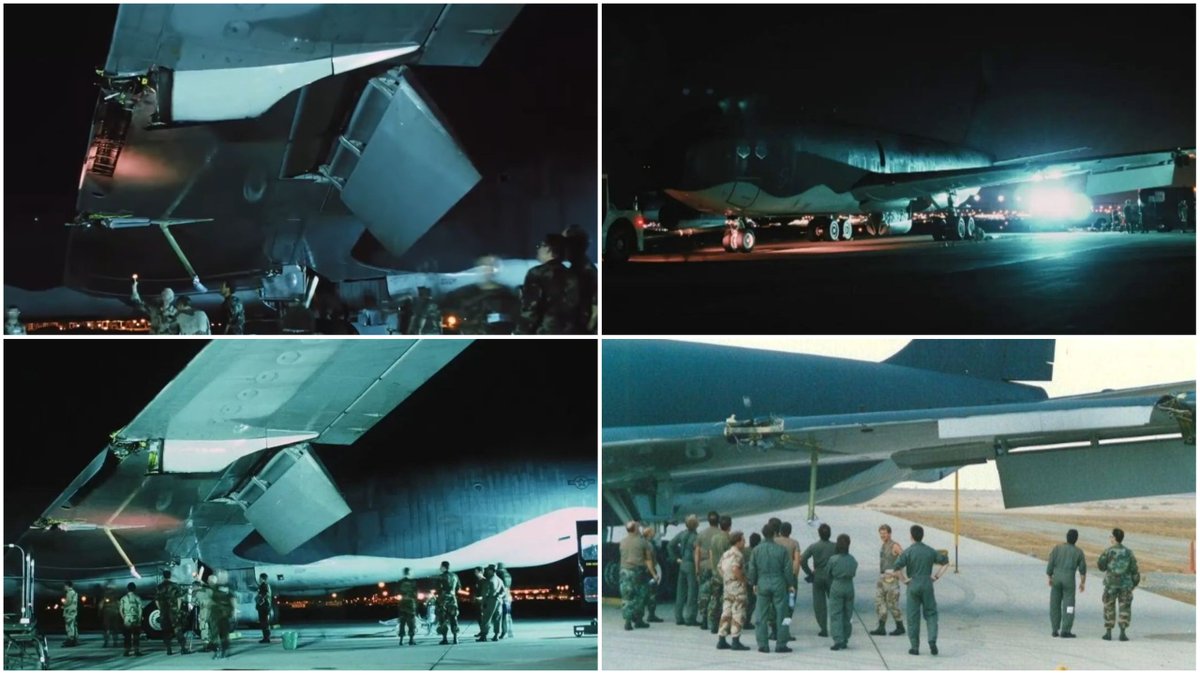
February 6, 1991. Night combat refueling mission over Saudi Arabia. KC-135E Stratotanker “Whale 05” (58-0013) is at 25,000 feet, heavy with fuel, when it flies into the wake turbulence of another tanker just two miles ahead. The jet rolls past 110 degrees left, then right, then left again. G-forces spike past 2.8. Both engines on the left wing are ripped clean off the pylons. Fire warning lights start screaming. Boom operator Senior Master Sergeant Steve Stucky looks out and delivers the six words nobody ever wants to hear: “They’re not on fire. They’re gone.” Four-engine tanker now has only two. Left-side hydraulics are dead. They’re at max weight, over a war zone, at night, and falling. Aircraft commander Lt. Col. Kevin Sweeney and the crew dump tens of thousands of pounds of fuel, fight the Dutch roll with speed brakes, and somehow get the giant back under control. They fly more than 200 miles back to Jeddah on the two remaining engines. The landing gear has to be cranked down by hand. They put it on the longest runway, blow several tires on rollout, and stop. Intact. The right engines were one bolt away from joining the left ones. All four men, Sweeney, Capt. Jay Selanders, Capt. Greg Mermis, and Stucky, later received the Distinguished Flying Cross. The three officers refused the medal unless the boom operator got one too. General Chuck Horner, the air boss for Desert Storm, later called it the finest piece of airmanship of the entire war. Two engines missing. Night. Combat. Still got it home. That’s a tanker crew. That’s the Stratotanker. 🇺🇸🫡#KC135 #Stratotanker #DesertStorm #USAF #AviationHistory #NeverQuit
If you aren’t aware, WestJet flight attendants are on strike. I don’t have all the details, but here are random semi-relevant things you can learn today:
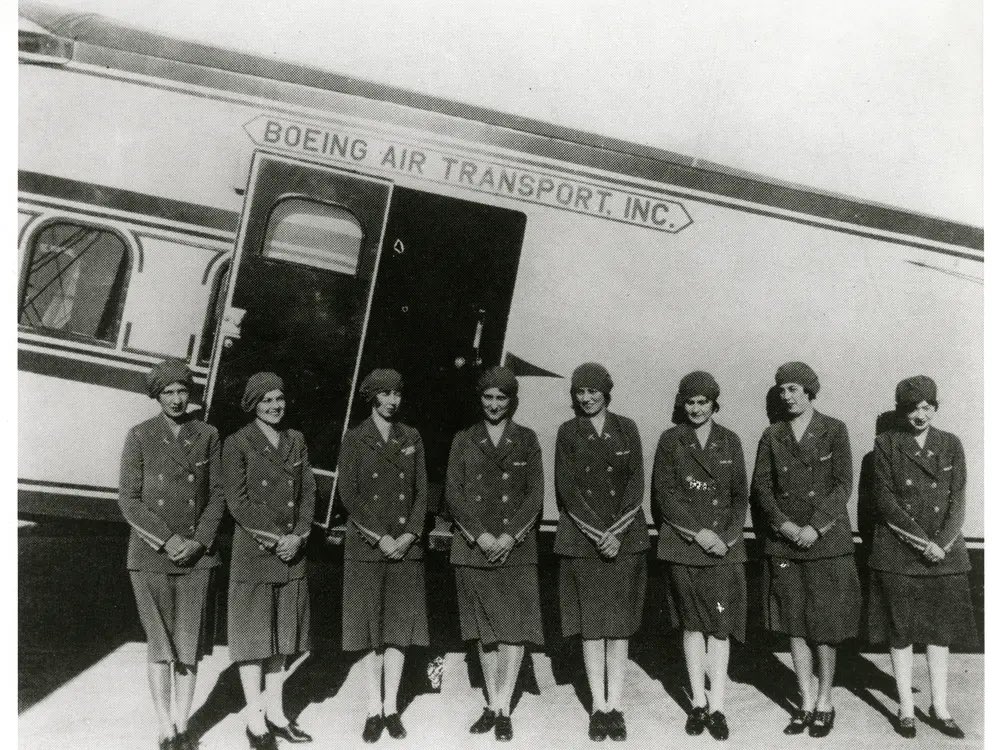
The first FA served passengers on a Zeppelin in 1912, but it wasn’t really the same as today. Then, Stewards were introduced to serve passengers, though sometimes it was the copilot’s duty to go back & do so.
The role was generally for men only for some time after.
The first modern, female airline FA was a nurse & pilot named Ellen Church, who convinced Boeing (it was also an airline in those days & eventually became United Airlines) in 1930 to hire registered nurses to calm passengers & provide treatment if necessary. Since Stewards were the current thing, she became a “Stewardess”.
(The Stewardess title disappeared somewhere in the late 1970’s)
Ellen was grounded 18 months after due to a car accident, but she created a training program & recruited more nurses. It’s not unfair to say she was kind of the foundation.
It took some time, but airlines pivoted & began hiring only women for the FA role, based on trying to lure male business travelers. They could also pay them less; this was good news for an industry regulated by the government, which couldn’t compete based on fare prices, frequency or routes…so they competed based in part on the looks of their crew.
Early standards for FAs were strict. They had to be single, under 115 lbs, under 5’4” & had to retire upon either marriage or reaching the age of 32. They were sometimes called “Sky Girls” & the airlines marketed them heavily well into the 1970’s.
The first African American FA was hired in 1958.
The uniforms of FAs is a history all its own. You could spend days discussing it, so I won’t bother here, but it’s an interesting history…take a look! It’s originally based partly on the prestige of ocean liners; Pan Am was a leader in this field, dressing their crews as if they were the crew of a ship & calling the lead pilot a “Captain”. It took some wild turns after that, though…
In the late 1970’s, civil rights rulings forced the airlines to begin hiring men for the FA role again. The airlines were then also deregulated, which meant they could now compete based on fares, frequency & more routes…the result was a return to a business-style uniform.
The gay community had a kind of unique role in FA history once the airlines started hiring men. I’m afraid I am not the person to ask about this, I just think it deserves to be mentioned & really hope I haven’t written this in some offensive way.
The number of flight attendants required for a flight depends on the number of passengers. I *think* it’s 1 FA for every 50 passengers. Then you need relief FAs if flights are over a certain duration.
Passengers can’t board until the minimum number of FAs are aboard. This can be a problem, as airlines need to maximize the productivity of FAs to keep fares low. Sometimes airlines keep a few FAs at the airport to start boarding while waiting for the assigned FAs; once the assigned FAs show up, the airport FAs leave. Or they might get the assignment if something goes sideways – they are packed & ready to go.
FAs don’t have the same rest & work rules that pilots do. They can generally work much more in a month, and rest periods can be shorter. FAs also aren’t required to retire at 65 like pilots are.
(Scheduling crews is incredibly complex. Most airlines don’t keep FAs & pilots together for entire trips, to maximize the productivity of crews. They don’t even necessarily keep the FAs together)
FAs are generally nice by training. They will be a completely different person if they have to do their real job in a crash. Fortunately, few ever see that.
FAs get a little training in fighting. I wouldn’t say it’s impressive training, though.
OK, that’s all I can come up with for the time being. Hope you enjoyed & learned something on a Sunday afternoon!
The Sandia Peak Tramway in Albuquerque used to point out to visitors where TWA 260 crashed into the Sandia Mountains in 1955. It remains the deadliest crash in NM, killing 16.
They left the wreckage, as it was too much to haul down. When the tree canopy is not thick, it’s visible under the Tram.
You can also hike to the site. Anyway, apparently some family found it offensive recently. I suppose I can see that argument. They now don’t point out the crash site (I asked the operator).
Initially, the crash was blamed on intentionally flying into the mountain, implying the pilots had a suicide pact. This was outrageous, and the board was forced to remove the term “intentional”, but blamed it on pilot error. The winter weather was bad at the time. Eventually, the board had to concede that a known fault in how the compass works could have led to the crash as the pilots were in clouds at the time, so the official report is that the plane flew into the mountain for reasons unknown. It’s an early example of pilot unions pushing back on crash investigations, and a quite reasonable one at that. Nobody takes off thinking they will die.
My dad hiked up there maybe 15 years ago. He was around 70 at the time. It’s illegal to remove any wreckage, as it’s now legally a historic site. You can still see the TWA markings on much of the debris.
A small memorial in a picture frame was placed on the wreckage, listing the victims & explaining the accident. I will include a picture of that, as it seems more respectful.
Captain Al Haynes would come talk to the KC-10 squadrons periodically, as the KC-10 was basically a DC-10 w/ modifications.
After this crash, they rerouted some of the hydraulics & added “accumulators” that would provide some pressure if the line was cut.
We practiced landing w/ no hydraulics every once in a while in the sim. It can be done, but it’s very difficult and conditions need to be near perfect.