Cellular gets most of the IoT coverage. It accounts for less than a quarter of the connections.
IoT Analytics put cellular IoT at 4.7 billion connections in 2025, growing 13.3%, the slowest rate since 2020. That's about 22% of the 21.1 billion IoT connections worldwide.
Which leaves roughly 78% running on something else. BLE, Zigbee, Wi-Fi, LoRaWAN, Thread, 802.15.4 and the rest. Short range, unlicensed, and largely sitting in the same spectrum your access points are using.
There's a reason that split matters to you specifically. Cellular IoT is somebody else's problem. It's provisioned by a carrier, it doesn't touch your WLAN, and when a metering device stops reporting, nobody walks over to your desk about it. The other 78% is different. It gets installed by facilities, or a building automation contractor, or an OT team, usually without a conversation with the network group. Then it shares your airtime.
When that mesh starts dropping and someone needs an answer, the ticket lands with you, because you're the person in the building who understands RF.
Source: IoT Analytics, Cellular IoT market update 2026 https://t.co/MGatCc06oA
CWNP's IoT track starts with CWISA and covers those protocols vendor-neutrally: https://t.co/AedtpQMQiZ
How many of these are live in your environment right now? Most people undercount.
#CWNP #CWISA #IoT #WirelessIoT #IndustrialIoT #NetworkEngineering #EnterpriseWiFi #IoTSolutions #VendorNeutral #WLAN
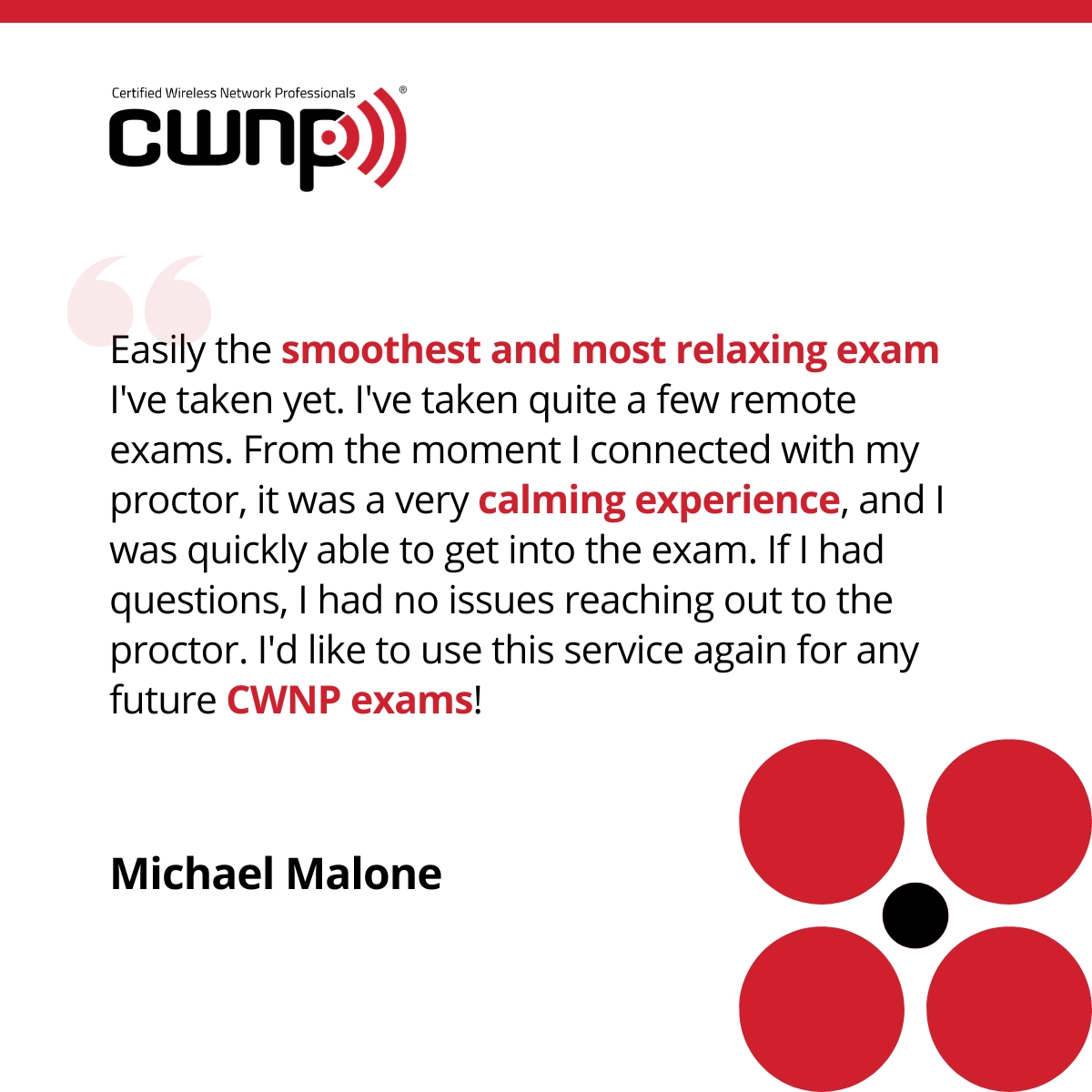
CWNP Remote Proctoring lets you test from home, on your schedule, without a trip to a testing center. No commute, no crowded testing center, just you, your setup, and a proctor who's there if you need them.
Swipe through to see what that experience has looked like for real candidates.
📍 All CWNP certifications offer remote proctoring except CWSS and CWTS.
📩 Questions? [email protected]
#CWNP #RemoteProctoring #WirelessCertification #ITCertification #CareerGrowth
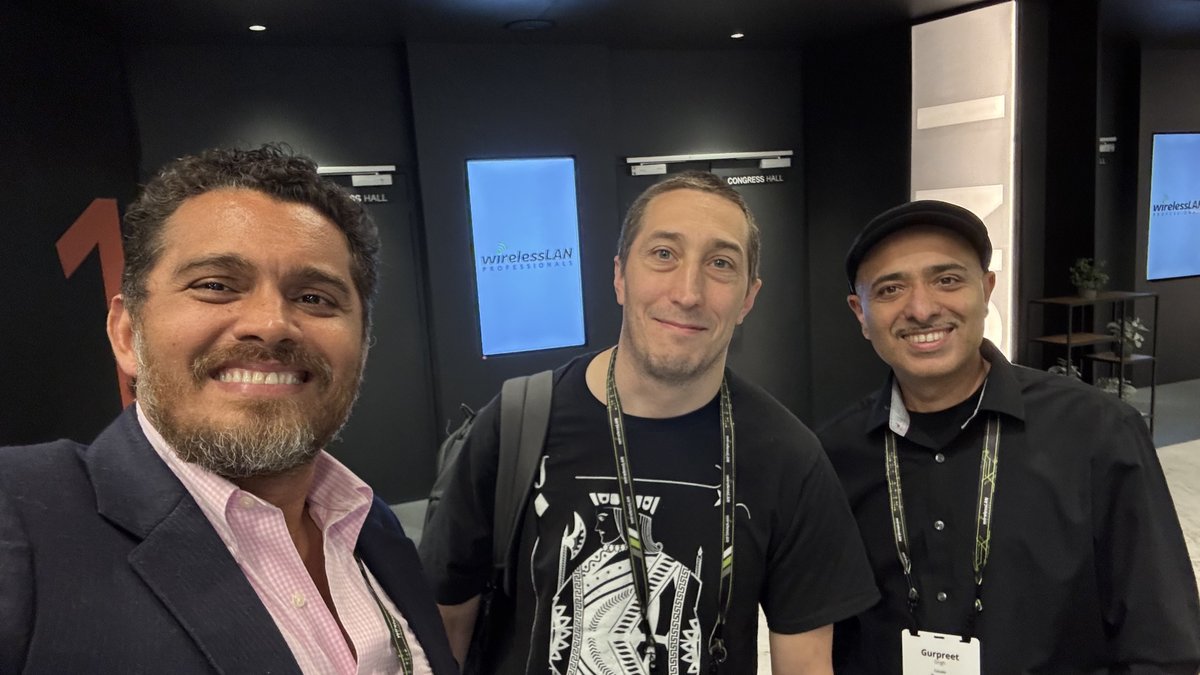
WLPC Prague 2026 is a wrap. 🇨🇿
Three days of deep technical conversation, and one thing stood out: this industry runs on people who keep learning.
Seeing CWNEs in one room is a reminder of what that commitment looks like. These are engineers who’ve put in the work, validated it, and keep pushing the standard forward for everyone behind them.
Thank you to Keith Parsons and the WLPC team for building a space where that happens, and to everyone who stopped by to talk certifications, workforce development, and where wireless goes next.
See you at the next one.
#WLPC2026 #CWNP #CWNE #WiFi #WirelessNetworking #WirelessEducation
You can explain 802.11ax in your sleep. Can you explain 802.15.4?
For a lot of wireless engineers the honest answer is no, and that gap is getting expensive.
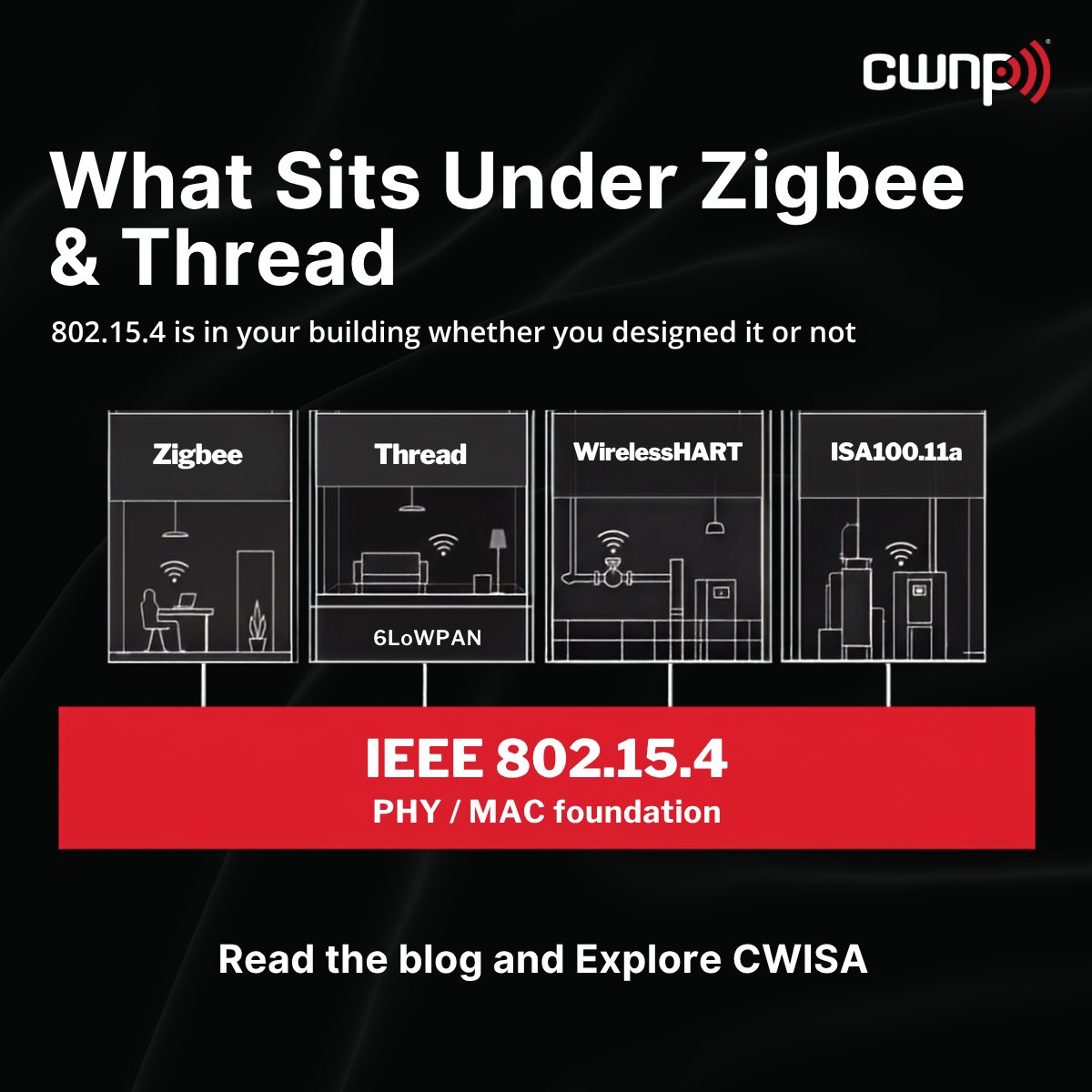
802.15.4 is the layer sitting underneath Zigbee, Thread, 6LoWPAN, WirelessHART, and ISA100.11a. When a building automation vendor, a facilities team, or an OT group brings sensors into your environment, that's usually what arrives. It shares the 2.4 GHz band with your Wi-Fi. It has its own channel plan. It behaves nothing like an 802.11 client.
So when the sensor mesh gets flaky and someone asks the Wi-Fi person to look at it, "that's not my protocol" stops being a useful answer. You're the one in the building who understands RF.
Tom Carpenter's breakdown of 802.15.4 covers the bands, data rates, and where it actually fits. It's a solid starting point.
Read it: https://t.co/ny6Ahpen6I
CWISA is where the structured version of this lives. It's the entry point to CWNP's IoT track and it covers 802.15.4, BLE, Zigbee, LoRaWAN, Thread, Z-Wave and more, vendor-neutral, so the knowledge transfers whoever built the gateway.
Start here: https://t.co/O9CiIsz7wy
Has non-Wi-Fi IoT landed on your plate yet?
#CWNP #CWISA #WirelessIoT #IoT #802dot15dot4 #Zigbee #NetworkEngineering #IndustrialIoT #VendorNeutral #WLAN
WLPC Europe is underway in Prague, and CWNP is on site.
Jose Cantanhede is at the event through the 15th. If you’d like to talk certifications, training for your team, or a wireless issue you’re working through, he’d be glad to connect.
#WLPC#WLPCPrague2026#CWNP#wifi #WirelessNetworking
Your engineers are certified on the platform you sell. What happens when the client isn't running it?
That's not a hypothetical for most reseller teams. A merger adds a second vendor. A client asks you to troubleshoot a network somebody else designed. The environment doesn't match the manual your people trained on.
Vendor certifications prove your team can execute one platform well, and that's worth having. What they don't cover is the 802.11 layer sitting underneath all of them. RF behavior, protocol operation, design methodology, security architecture. None of that changes when the logo does.
That's the layer CWNP certifications cover, and being vendor-neutral is the whole point. They sit alongside the credentials your engineers already hold rather than competing with them. Your team gets a shared technical language. You get something concrete to point at when a client asks what your people actually know.
If there's budget left in this quarter, it's worth scoping now rather than in December. Pick the track, confirm group pricing, get the POs moving while the line is still open.
Group pricing and team enrollment:
📩 [email protected]
📞 (984) 227-8564 Ext 1020
What's the bigger blocker for you, budget or engineer time?
📡 Wi-Fi Word of the Day: Uniform spreading
A regulatory requirement for a channel selection mechanism that provides uniform usage across a minimum set of channels in the regulatory domain.
Channel selection isn't purely an engineering decision. In some regulatory domains, it's partly a legal one.
Regulatory domains and RF design: https://t.co/ECMc7hj6CP
Every generation since 802.11n sold itself on peak data rate. Wi-Fi 8 (802.11bn) doesn't. Its stated targets are about reliability: at least 25% higher throughput in poor signal conditions, 25% lower latency at the 95th percentile, and 25% fewer dropped packets when a client roams between access points. Peak rate stays roughly where Wi-Fi 7 left it.
That shift matters for how you'll be judged. Nobody files a ticket because the theoretical maximum is too low. They file tickets because the scanner drops at the edge of the warehouse, or the voice call breaks during a roam. Those are the problems 802.11bn is aimed at, and they already fill your queue today.
Source: Samsung Research, IEEE 802.11bn (Ultra-High Reliability, Wi-Fi 8) https://t.co/nUZbRXyBCt
Build the foundation: https://t.co/XWuidcPl6Z
#CWNP #WiFi8 #802dot11bn #EnterpriseWiFi #WirelessNetworking #NetworkEngineering #CWNA #VendorNeutral #WLAN #WiFi
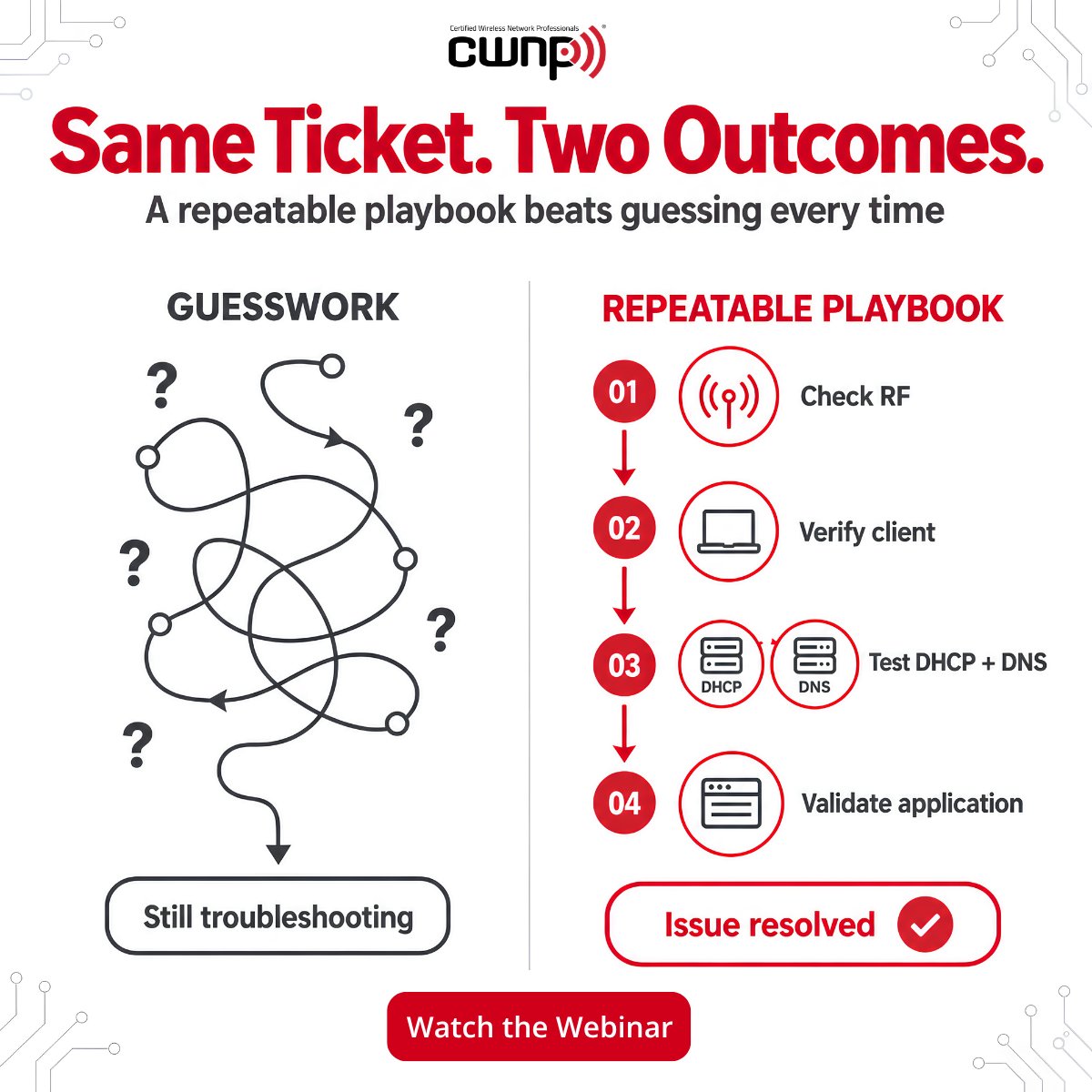
Two engineers get the same ticket. One closes it in 20 minutes. The other spends the afternoon guessing.
The difference usually isn't talent. It's whether they're working from a repeatable process or starting from scratch every time.
Most Wi-Fi tickets show up in one of two flavors: "I can't connect" or "it's slow." Both are vague. Both have a dozen possible root causes spread across RF, the client, DHCP, DNS, and the application itself. Without a defined path through those layers, you end up checking whatever you happened to check last time.
That's the gap a troubleshooting playbook closes. You decide the order of investigation up front, name the evidence you'll collect at each step (controller metrics, a packet capture, an RF check), and write it down so everyone follows the same route. The payoff isn't only speed. It's that your findings become comparable across tickets and across people.
Tom Carpenter walked through building these workflows and the sample playbook is free on the blog.
Watch the session: https://t.co/ZeMdBZDakt
Grab the sample playbook: https://t.co/KoVZHSafC1
What's the first thing you check on a "Wi-Fi is slow" ticket?
#CWNP #WiFiTroubleshooting #WirelessNetworking #NetworkEngineering #EnterpriseWiFi #WLAN #ITCareers #VendorNeutral #CWNA #WiFi
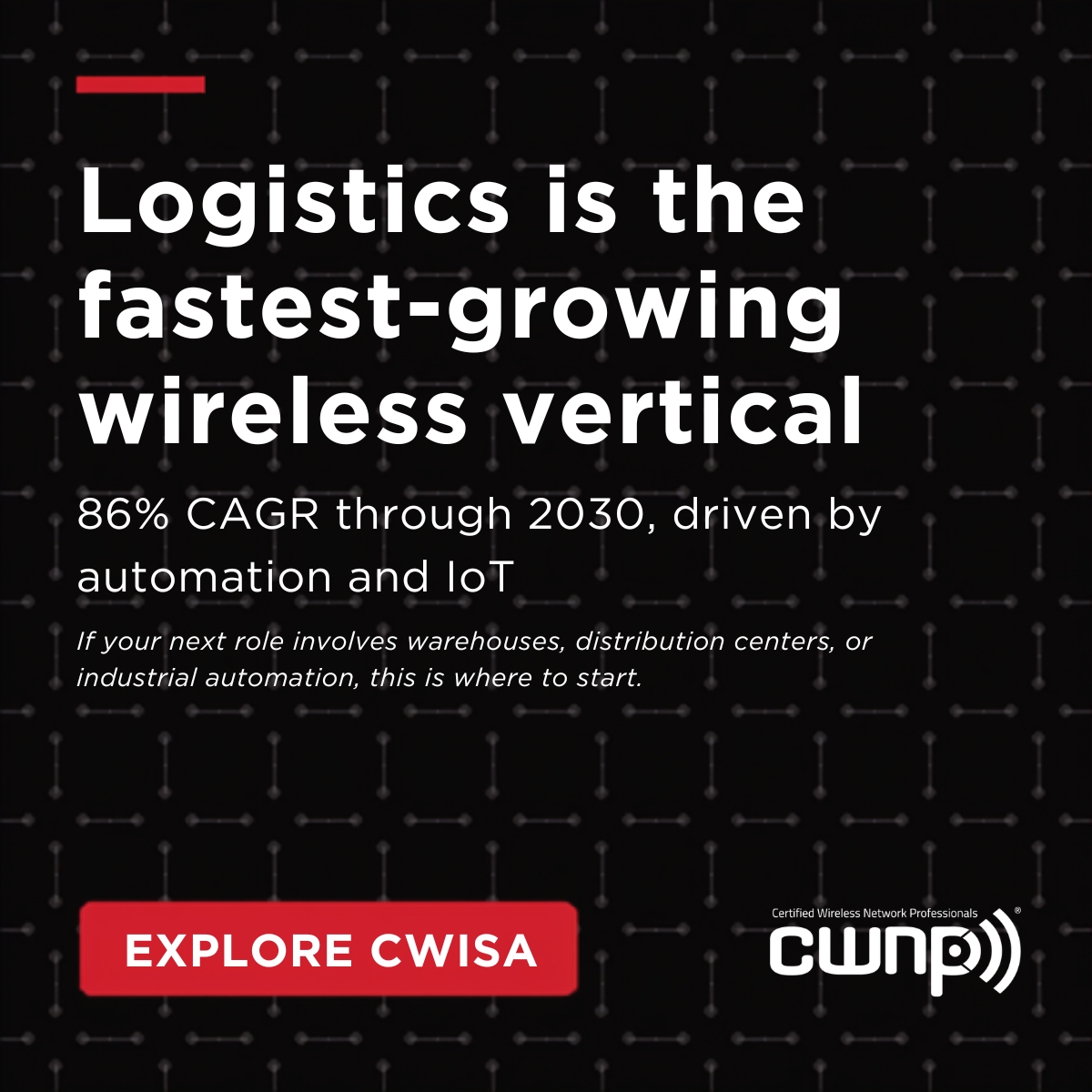
Logistics is the fastest-growing vertical in private wireless networking, projected at an 86% compound annual growth rate through 2030, driven by labor shortages and the resulting push toward automation according to a new STL Partners forecast.
The same report found spending is shifting away from hardware and connectivity and toward applications and network intelligence. Applications alone are projected to jump from 15% to 25% of total market value by 2030.
Source: https://t.co/fkbmAMO9cp
That shift changes what "wireless engineer" means in a warehouse or distribution center. It's not just deploying access points anymore. It's understanding the sensors, protocols, connectivity layers, BLE, Zigbee, LoRaWAN, and cellular IoT that automation actually runs on, as well as how they interact with the Wi-Fi network already in place.
CWISA is built for exactly this shift: the foundation for wireless professionals moving into IoT-heavy environments where the fastest-growing job isn't managing more access points, it's managing more device types.
If your next role involves warehouses, distribution centers, or industrial automation, this is where to start.
Learn more: https://t.co/cNGVaSqp8j
#CWNP #CWISA #WirelessIoT #Logistics #IndustrialIoT #NetworkEngineering #CareerGrowth #VendorNeutral
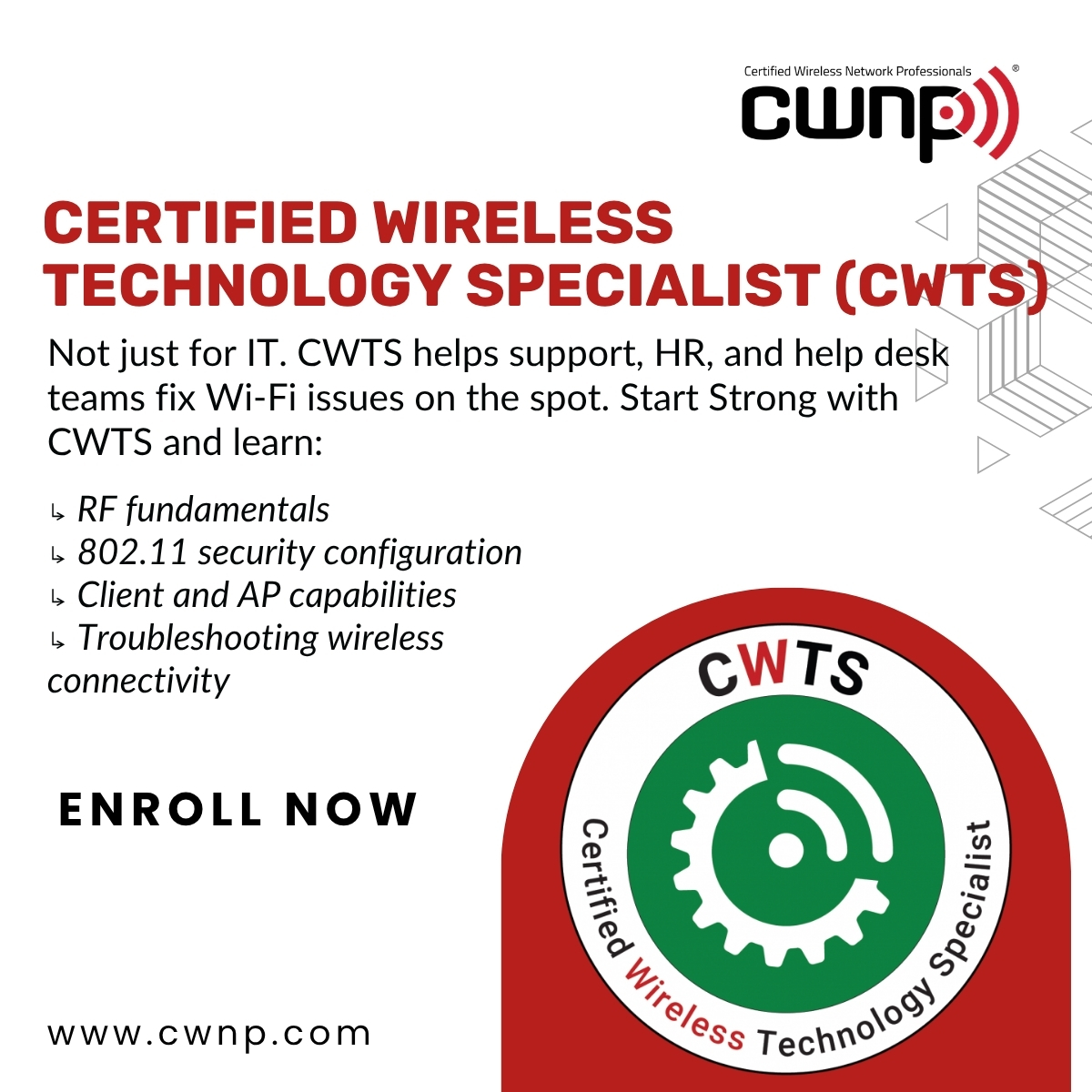
New to Wireless Networking? Start Strong with CWTS
The Certified Wireless Technology Specialist certification is your gateway into the world of WLANs. Whether you're starting an IT career or just want to understand Wi-Fi well enough to troubleshoot the basics, CWTS gives you the skills to configure, connect, and fix common issues with confidence.
It's not just for future network engineers. Customer service and support teams handle Wi-Fi complaints every day like, "it won't connect," "it's slow," "it keeps dropping." Most of those are simple fixes once you understand what's actually happening. Onboarding for HR or IT support teams benefit the same way: fewer escalated tickets, faster answers, less time waiting on a specialist for something basic.
It's vendor-neutral too, so the skills apply whether your clients run Cisco, Aruba, Ubiquiti, or any other vendor
Explore the CWTS-102 objectives: https://t.co/0ZsMFlraBO
Training a support, HR, or help desk team? Group pricing is available.
📩 [email protected]
📞 (984) 227-8564 Ext 1020
CWNP Remote Proctoring lets you test from home, on your schedule, without a trip to a testing center. No commute, no crowded testing center, just you, your setup, and a proctor who's there if you need them.
Swipe through to see what that experience has looked like for real candidates.
📍 All CWNP certifications offer remote proctoring except CWSS and CWTS.
📩 Questions? [email protected]
#CWNP #RemoteProctoring #WirelessCertification #ITCertification #CareerGrowth
🚨 48 hours left
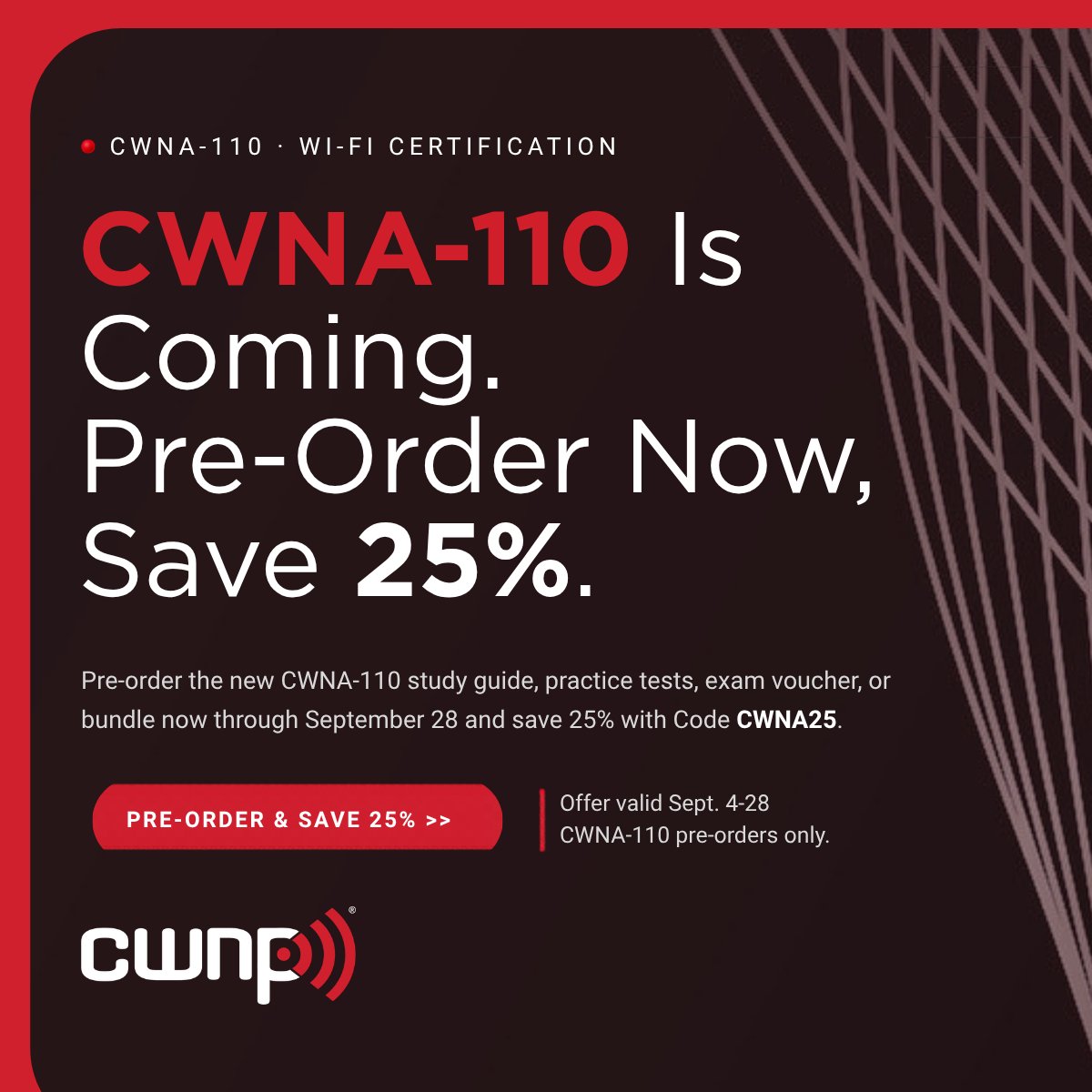
CWNA-110 goes live Sept 28. When it does, code CWNA25 retires with it and everything returns to standard pricing.
Study guide, practice tests, exam voucher, bundles — 25% off until 11:59 p.m. ET Saturday. Use code CWNA25 at checkout.
https://t.co/kjaVcV9FxS
#CWNP #CWNA #WirelessNetworking #WiFi #NetworkEngineering #ITCertification #VendorNeutral #WLAN
📘 Wi-Fi Word of the Day: Hidden Node Problem
Picture two clients that can both hear the access point clearly, but can't hear each other. Neither one knows the other is transmitting, so they both send data at the same time and collide at the AP.
That's the hidden node problem. It's common in larger coverage areas, outdoor deployments, or anywhere physical obstructions sit between clients that share an AP.
The result looks like random packet loss and retries with no obvious cause, which makes it one of the trickier RF issues to diagnose from a dashboard alone. Understanding how CSMA/CA and RTS/CTS work to manage this is core to real wireless troubleshooting.
Recognizing the pattern is the first step to fixing it.
Earned your CWNA in 2023? It expires this year.
CWNA-109 launched September 30, 2023, and CWNA certifications are valid for three years. If you were in that first cohort, your clock is running out right about now.
Two ways to renew:
1. Pass a professional-level exam; CWSP, CWDP or CWAP, before your CWNA expires, and your CWNA renews for another three years. Each of those also earns credit toward CWNE.
2. Or retake the current version of the CWNA exam. As of September 28, that's CWNA-110.
Which means the pre-order discount is a renewal discount. Study guide, e-Learning, practice tests and vouchers are 25% off through Sept 28, 11:59 p.m. ET.
Use code CWNA25 at checkout. https://t.co/hzbr6PbVom
#CWNA #CWNE #WirelessNetworking #ITCertification
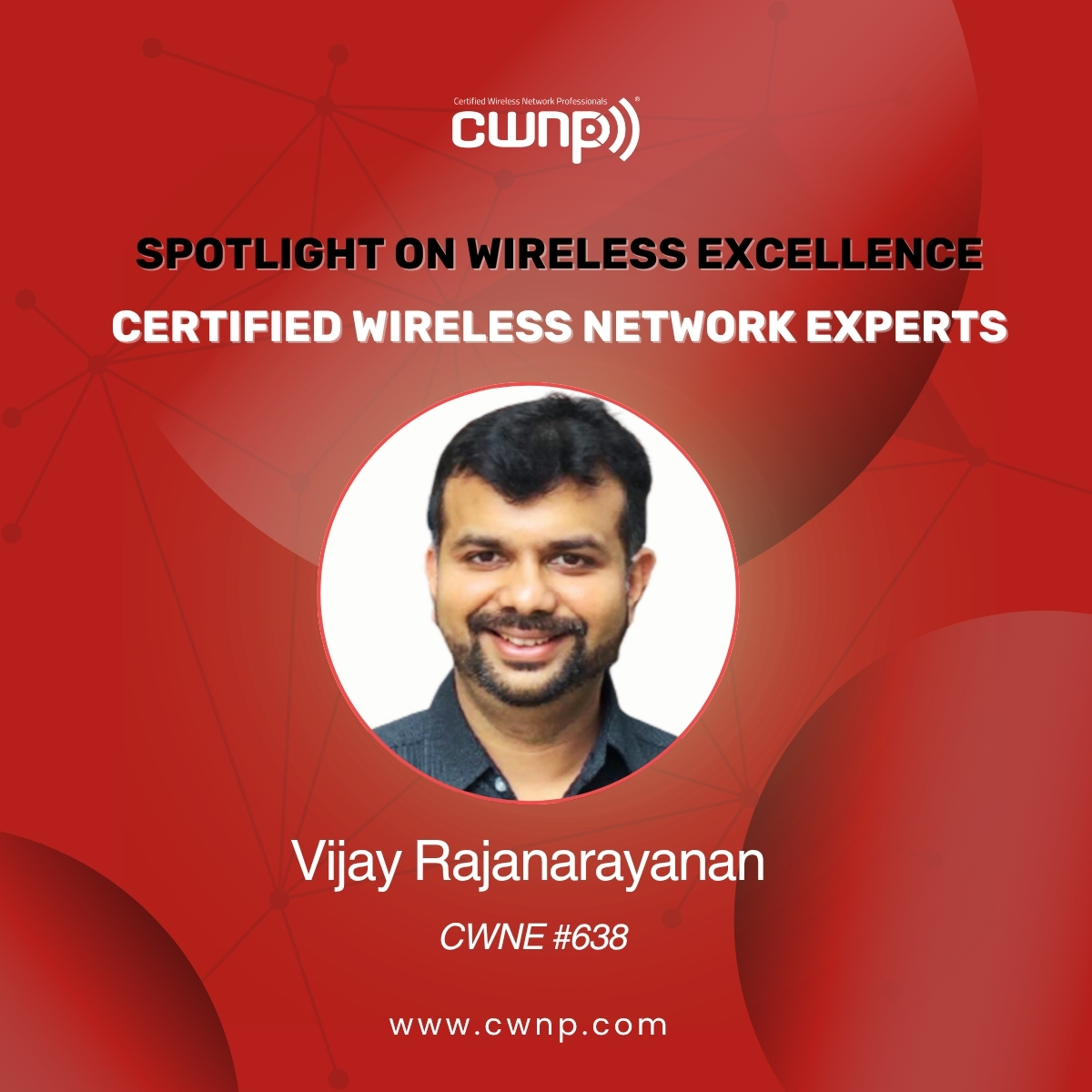
🏆 CWNE Spotlight: Vijay Rajanarayanan (CWNE #638)
Vijay has spent more than 20 years in enterprise networking, working across engineering, technical marketing, product management, and solutions architecture at Meru Networks, Cisco, Aruba, Cisco Meraki, Juniper Mist, and now Hewlett Packard Enterprise, where he's a Senior Sales Engineer and Wireless Solutions Architect. His CWNE journey pulled him back into the fundamentals even after two decades in the field.
"It was less about adding another certification to my resume and more about becoming a student again and testing the depth of my own understanding."
The CWNE isn't just four exams. It's documented commercial deployments, peer endorsements, and a board review. That's why it means something.
📖 Read the full spotlight: https://t.co/ugrqrcK1kp