New paper day! It on arXiv now, collaborate with Laura Tolos, Constança Providência and @drannawatts . The newest paper comes from our collaboration starting from pandemic (when I was a undergrad)
https://t.co/xmINsM8u5K
"New" paper! We proposed a large challenge on the existing glitch theory by Bayesian technique
https://t.co/bc8ZIvOw6N
This is the work during my undergraduate, and the 2/3 (maybe?) paper I will be affiliated as a CCNU student. (last one is on its way)
In a rush and need a bite-sized summary of our latest research? 🏃
Check out this fun new short that we made 📹
Should I make a GRWM to debug a supercomputer next? 💅🤓
@ISS_Research#NICER#pulsar#SciComm
And for some more quick info of the findings by NICER, and associated press releases and papers, check out my instagram stories using the link below!
https://t.co/2jsmF38qCK
Check out this awesome and informative reel by @ARC_OzGRav ft Dr. Daniel Reardon, how the Parkes radio telescope and the NICER space telescope @iss have joined forces in our latest work to yield new insights into the dense matter inside neutron stars 🔭✨
https://t.co/AFQDD6lQ9K
Nearest millisecond pulsar has radius of 11.4 kilometers and is 1.4x as heavy as the sun.
Precision measurements made by a team of researchers led by the University of Amsterdam (the Netherlands).
https://t.co/mldgVkZe46
cc: @uva_api@uva_science@uva_amsterdam @drannawatts
Radius von Neutronenstern PSR J0437-4715 bestimmt
Millisekundenpulsare sind rotierende Neutronensterne, die wie Leuchttürme regelmäßig elektromagnetische Signale aussenden. Der Pulsar PSR J0437-4715 ist der erdnächste und damit auch der Signal-he...
https://t.co/NFgN0PJ4TZ
Thrilled to announce the culmination of years of research, working with an amazing team; the results for PSR J0437-4715 are finally here✨🍾! Dive into details of how we came about some of the tightest neutron star radius measurement to date in this insightful thread! #published
First, first-author paper finally out there! 📜😁
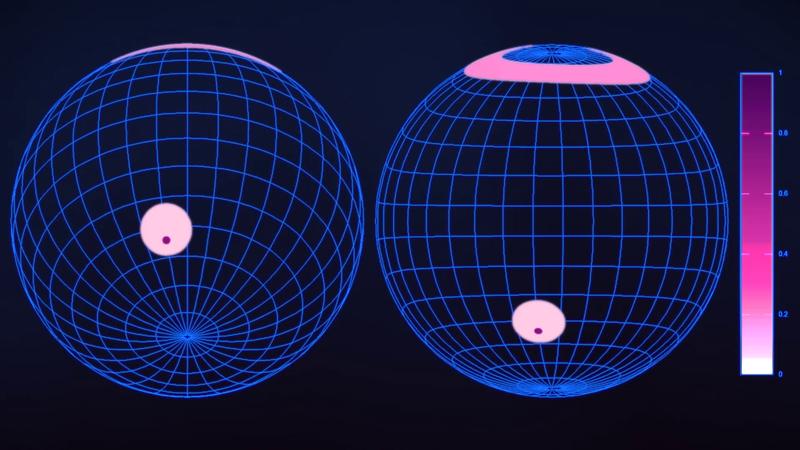
We validate whether the different relativistic ray-tracing codes used for NICER data analysis of neutron stars hold up when trying out some of the more funky possible surface hotspot geometries 🌟
Typically our codes hold up strong! 💪🏽🔥
But we also highlight some specific scenarios where a bit of extra caution is warranted, hopefully giving the pulsar theorists some homework, telling us whether we should ever realistically expect such scenarios or not worry about them📚