Top 2022 #Geography papers:
https://t.co/GQ5evijq0S
1) Drain from the Global South through Unequal Exchange, 1990-2015
2) Sulfur: A Potential Crisis
3) Global Rainbow Distribution
4) Electric Vehicle Travel for Remote Australia
5) Banning Super Short-Haul Flights
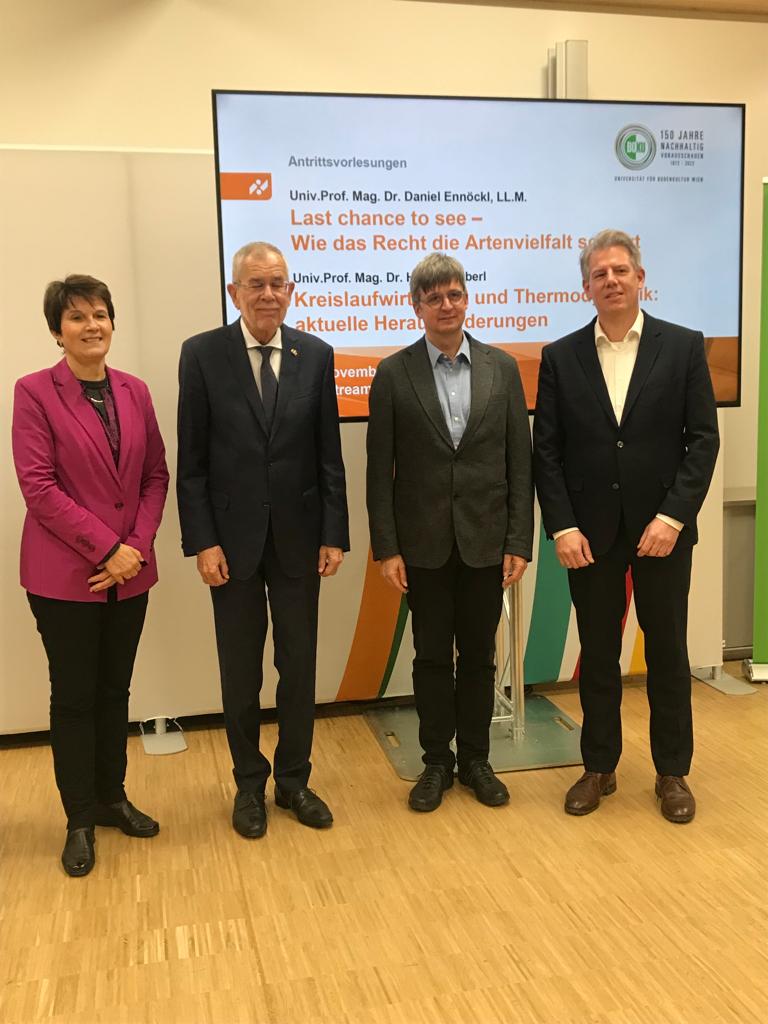
Wir gratulieren Helmut Haberl und Daniel Ennöckl zur spannenden Antrittsvorlesung vor hohem Besuch👏
Nachzuhören auf : https://t.co/TZxKQsQAj5
@alexandervanderbellen, @_helmut_Haberl, @DEnnockl, @bokuvienna, #socialecologyvienna
Kick-off of @klimafonds funded project FOCAL-points: with Alina Brad and Etienne Schneider @univienna we will investigate how Austrian climate policies affect household emissions and identify leverage points for demand-side climate policies. Exciting collaborations ahead!
The KLI stands with the people of Ukraine. We are part of an expanding "Global Research Groups Supporting Ukrainian Scientists” & pledge to offer support through research stays in Theory, History, Philosophy of Biology. Statement: https://t.co/eg75dsMJmg #scienceforukraine /1
I’m excited to share this new paper we have out, “Imperialist appropriation in the world economy”. The results confirm that the global North relies on a massive net appropriation of resources and labour from the South. The figures are quite staggering. 🧵https://t.co/FWDS4jUTaG
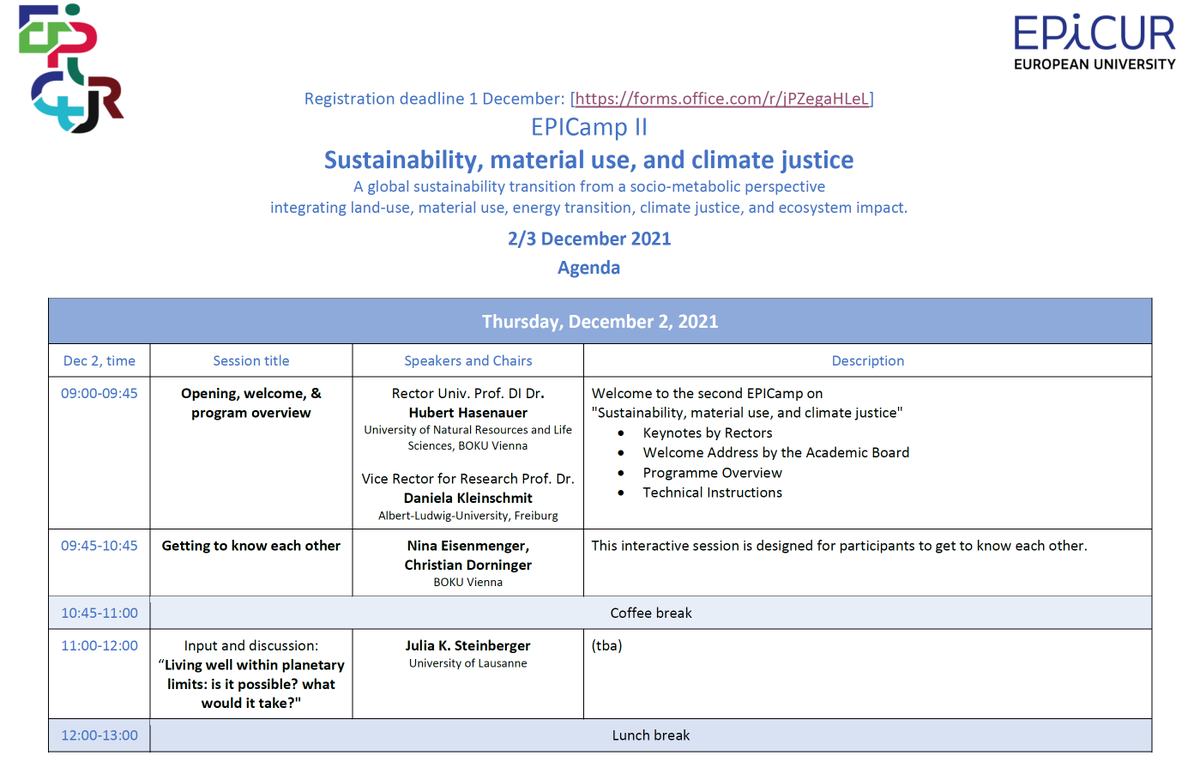
Join us (online) for a 2 day workshop on >>Sustainability, material use and climate justice<< (Dec 2+3), featuring platforms for #ECR and input by @JKSteinberger@CitiesGuy Helmut Haberl, @KlausHubacek & more!
See homepage and screenshot:
https://t.co/cQoKjiXDow
@EpicurAlliance
I'm extremely happy to share some of the main findings of our new paper: "The effect of industrialization & globalization on domestic land-use: A global resource footprint perspective" https://t.co/Ho0PCwrJjY @SustainableDean @KlausHubacek@MartinBruckner 👇 (1/6)
We need to rethink notions of #resourceefficiency and sustainability by acknowledging the structure of national land-use as a complex nexus of domestic ecological productivity, national harvest, inputs of labour, energy, and materials, and of international trade relations (5/6)
This new paper really upends conventional narratives about international development. Basically, poor countries are developing rich countries, not the other way around. I'll highlight the key points in the thread below:
https://t.co/ju66pkMWET