"É disso que precisamos: parlamentares que saibam se esquivar das ARMADILHAS da MÍDIA MILITANTE e inverter a NARRATIVA falando a VERDADE.
SHOW do FELIPE BARROS! 👏👏👏
🚨🇯🇵BREAKING
JAPAN'S NEW ANTI-ISLAM LAWS SEND SHOCKWAVES
Halal - BANNED✅
Mosques - BANNED✅
Call to prayer - BANNED✅
Burka - BANNED✅
This is basically saying Islam is not welcome here
Should we copy Japan?
A. Yes
B. No
🚨URGENTE - Senador Alessandro Vieira detona Gilmar Mendes e Toffoli, dizendo que não se curva a ameaças de ministros
“Eu não me curvo a ameaças! Não me curvava como cidadão, não me curvava delegado e não vou me curvar como senador da república!”
The Pen That Rules the Polls
In Brazil, democracy now seems to come with a quiet add-on: you may run for office—provided you first survive the judiciary.
This latest move—ordering an inquiry into alleged “slander” by Flávio Bolsonaro against Luiz Inácio Lula da Silva—might sound routine. In most countries, political disputes are settled in public debate or, at most, through clearly defined legal channels.
Here, however, the order comes from Alexandre de Moraes—once again stepping into the now-familiar role of investigator, gatekeeper, and judge of what constitutes acceptable political speech.
All perfectly reassuring, no doubt.
Because when one man can initiate proceedings against a leading political figure, the timing becomes… interesting. Especially when polls suggest that Flávio Bolsonaro is gaining ground and positioning himself as a serious contender.
Which raises an uncomfortable question: is this bold judicial intervention about protecting the law—or managing the race?
In a healthy democracy, polls are answered with campaigns.
In a supervised one, they appear to be answered with inquiries.
The language remains legal. The optics, however, are increasingly political.
And so Brazil finds itself in a curious position: where ballots still exist, debates still happen—but the most decisive instrument in shaping outcomes may not be the vote.
It may be the pen that decides who gets to compete in the first place.
No ano de eleição, o Lula resolveu:
- Remover a taxa das blusinhas (que ele mesmo sancionou);
- Reduzir imposto na gasolina (que ele mesmo aumentou);
- Mandar o PL do fim da escala 6x1 pro Congresso com urgência (que ele mesmo disse que não podia fazer);
- "Reduzir" imposto de renda até 5k (que ele disse que ia fazer no primeiro ano de mandato)
Ou seja, ele podia ter feito tudo isso em um ano só mas não quis, roubou o máximo possível nos primeiros três anos pra empurrar tudo pro último com a barriga e posar de herói
É muito Brasa
Resumindo o caso Master:
Uma jornalista vaza os pgtos insanos de possíveis honorários, feitos por um banqueiro criminoso ao escritório de advocacia da mulher de um certo Ministro:
- O MINISTRO NEGA!
A mesma jornalista vaza então o contrato, revelando 129 milhões em honorários parcelados em 36x :
- O MINISTRO NEGA!
A mesma jornalista, diz que existiram conversas entre réu e este juiz, combinando apoio e até mesmo, "possíveis defesas" no caso:
- O MINISTRO NEGA!
Essa jornalista então, vaza as conversas entre este Juiz e o réu:
- O MINISTRO NEGA!
A relatoria do inquérito troca de mão, a PF entra no caso, prende o banqueiro criminoso e recupera não só todas as conversas deletadas, como tbm identifica o número que pertence ao Ministro citado nas conversas:
- O MINISTRO NEGA!
A jornalista determinada a ir mais fundo no caso, revela que este mesmo banqueiro criminoso, já havia pago 80 milhões em 2024 a este mesmo escritório da esposa deste mesmo Ministro
- O MINISTRO NEGA
A jornalista obcecada, expõe que o patrimônio deste Ministro triplicou em 3 anos, inclusive com aquisições de 7 imóveis pagos à vista no valor de 23 milhões, revelando ainda que o banqueiro criminoso, irá delatar todos os envolvidos no esquema, entregando provas e nomes ao relator do caso.
- O MINISTRO NÃO TEM MAIS COMO NEGAR, então parte para o contra-ataque, decidindo desarquivar uma ação do PT de 2021, que coloca fim as delações premiadas, pedindo urgência na votação para anular não só as delações do banqueiro criminoso que estão por vir, como todo o inquérito.
Agora me digam:
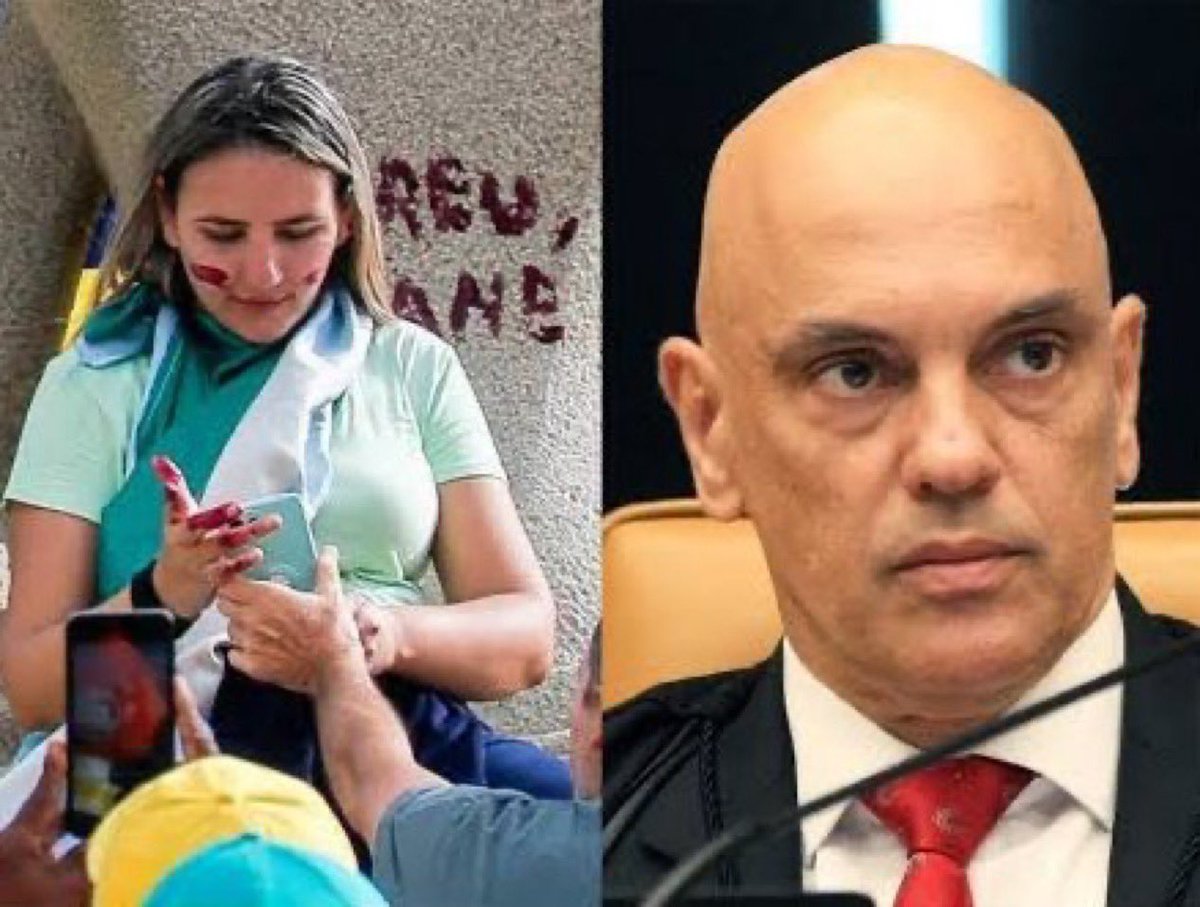
Num país sério, um juiz como este ainda estaria à frente de uma Suprema Corte, julgando e condenando mulheres a 16 anos de prisão, por uma pichação de estátua com batom? 💄
DELETE A MESSAGE, GO TO JAIL: THE CURIOUS LEGAL PHILOSOPHY OF ALEXANDRE DE MORAES
Brazil’s Supreme Court has discovered a fascinating new branch of jurisprudence: the crime of pressing “delete.”
In the now infamous case of Débora Rodrigues—dubbed the “lipstick crime” by critics—Justice Alexandre de Moraes argued that the alleged deletion of messages from her mobile phone was not merely inconvenient to investigators, but evidence of something far more dramatic: “contempt for the Judiciary and public order.”
Think about that for a moment.
According to this logic, clearing your phone—something millions of people do every day for privacy, storage space, or simple housekeeping—can suddenly become proof of hostility toward the state.
It is a legal theory so inventive it might deserve its own textbook chapter: Digital Hygiene as Sedition.
Yet the real curiosity lies not in the argument itself, but in its potential application.
If deleting messages demonstrates “contempt for the Judiciary,” then consistency would require this principle to apply equally to everyone—citizens, politicians, investigators, and even judges.
Equality before the law, after all, is not supposed to be optional.
Brazil’s constitution was not written with an asterisk that reads: except for powerful officials.
The problem with expanding legal interpretations to this degree is obvious. Once ordinary behaviour is reframed as evidence of defiance, the boundary between law enforcement and political discretion begins to blur.
Today it is message deletion. Tomorrow it could be a missing email, an archived chat, or a lost file.
In such an environment, digital activity becomes less about evidence and more about interpretation—an interpretation conveniently controlled by those already holding authority.
Which raises a rather awkward question.
If the deletion of messages demonstrates contempt for the judiciary, then surely the same standard must apply universally. The credibility of any legal system depends on precisely that: the same rules for everyone.
Otherwise the principle quietly transforms from law into something else entirely—something closer to political theatre.
Brazil deserves a judiciary that enforces rules consistently, not creatively.
Because when legal logic starts bending depending on who holds the phone, justice stops looking like justice and begins looking suspiciously like power.
Source @SantiagoDLNWS
In less than 50 seconds, this man exposes the hypocrisy of gays and feminists supporting Gaza.
“If a gay person goes to a Muslim country, he will be stoned to death. If a feminist goes to Palestine, she will be beaten and forced to marry a Muslim man.”
Vamos recapitular:
> Um ministro do STF fica bravo porque o contrato de R$ 129 milhões de sua esposa com um certo banco investigado se tornou público.
> Ele, sozinho, ordena que a Receita Federal realize 8.000 procedimentos para identificar se houve vazamento de dados financeiros dela.
> Em seguida, também de forma monocrática, manda a Polícia Federal deflagrar uma operação nacional inteira contra 4 servidores da Receita.
> Não contente, mas sem provas suficientes para prendê-los, impõe aos 4 servidores uso de tornozeleira eletrônica, cancelamento de passaporte, proibição de sair do país, afastamento do cargo e o “recolhimento domiciliar”.
> Tudo isso utilizando o imoral e ilegal “Inquérito das Fake News”, que basicamente ainda existe para que esse ministro possa fazer o que bem entender, colocando-se no papel de vítima, investigador e juiz.