هذه مساحة لالتقاط الإشارات الدقيقة —
من القاهرة والمنطقة إلى العالم،
ومن العالم عودةً إلى منطقتنا.
مال. أعمال. رعاية صحية. تكنولوجيا. رؤية. تغيير.
مساحة للوضوح،
للفهم،
ولما يستحق المتابعة.
حالياً، هي مجرد خطوة أولى:
من الصفر… إلى شيء له قيمة.
@CairoSignal#إشارات_القاهرة #رؤية_من_المنطقة #الشرق_الأوسط #اقتصاد #أسواق #ريادة_الأعمال #الصحة_الرقمية #الرعاية_الصحية #تكنولوجيا #تحول_رقمي #ابتكار #مستقبل_المنطقة #MENA #MiddleEast #EmergingMarkets #CairoSignal #DigitalHealth #HealthTech #Tech #AI #Strategy #Insights
Moderna Is Still Priced Like a COVID Stock — But It’s Quietly Building a Platform Giant
@CairoSignal
In 2020, Moderna helped change the course of a global pandemic. But the real story? It’s just beginning — and it has massive implications for MENA’s healthcare future.
While many still associate Moderna with its COVID-19 vaccine, reducing it to a “pandemic play” is short-sighted. Moderna is not just a product company. It is rapidly becoming a programmable therapeutic platform — rewriting the rules of drug development, clinical trials, and biological defense.
For regions like the Middle East, this is more than a biotech evolution. It’s a strategic wake-up call.
⸻
🧬 What Makes Moderna Different?
Moderna isn’t a traditional pharma company relying on chemical libraries or “me-too” drugs. It’s built around programmable mRNA — instructions encoded into cells to prevent or treat disease.
This unlocks a new era of medicine:
•Speed: New vaccines or therapeutics can be designed, tested, and deployed in months — not years.
•Precision: mRNA targets previously untreatable or hard-to-treat diseases, including cancers, CMV, and rare disorders.
•Scalability: One platform supports dozens of programs — from infectious diseases to oncology and genetic conditions.
Moderna isn’t just a biotech firm. It’s a software company for biology.
⸻
📉 From COVID Windfall to Pipeline Proving Ground
Yes, COVID generated over $18 billion in revenue in 2021 — but that was just the beginning.
Moderna is now navigating its most critical test: Can it convert pandemic momentum into a pipeline powerhouse?
So far, the signals are promising:
•✅ RSV vaccine (mRESVIA) approved in the UK, Australia, Taiwan, and more.
•✅ Flu + COVID combo shots in late-stage trials — simplifying respiratory vaccination.
•✅ CMV vaccine in Phase 3 — a first-of-its-kind candidate with blockbuster potential.
•✅ Personalized cancer vaccine with Merck in Phase 3, fast-tracked by the FDA.
•✅ 45+ programs in development across infectious disease, cancer, rare genetic, and autoimmune diseases.
•✅ AI-powered partnerships with NVIDIA and OpenAI to accelerate discovery and trial design.
⸻
💵 Is Moderna Still Investable in 2025?
Despite the post-COVID selloff in its stock price, Moderna remains structurally and strategically strong:
•💰 $8.4 billion in cash and zero debt (Q1 2025)
•🏭 Fully integrated global manufacturing footprint
•🔬 R&D budget of ~$4 billion this year, despite topline revenue drop
•🔁 Cost-cutting plan targeting $1.5 billion in annual savings by 2027
•📡 Strategic positioning in biodefense and pandemic preparedness — backed by long-term U.S. government partnerships
The risk? Execution. The pipeline still needs major commercial wins beyond COVID and RSV.
The reward? Leadership in what could become a trillion-dollar class of programmable therapeutics.
Tempus AI: Turning Healthcare Data into a Precision Medicine Revolution
Tempus AI’s latest Q2 2025 results show a company in rapid expansion mode — growing revenue, strengthening gross margins, and making bold investments to cement its position as one of the most important players in the future of healthcare. While the company is still posting net losses, its trajectory suggests a deliberate strategy: build the infrastructure and AI capabilities now to dominate later.
Q2 2025 Snapshot: Growth at Full Throttle
•Total revenue surged to $314.6M, up 89% year-on-year, driven by explosive growth in genomics (+115% YoY) and steady expansion in data and services (+36% YoY).
•Gross margin jumped to 62.8% from 56.6% last year — a sign that scaling is making the model more efficient.
•Non-GAAP genomics gross margin hit 59.4%, showing that even the cost-intensive genomic sequencing business is turning into a margin engine.
•Loss from operations narrowed sharply (excluding non-cash items like stock-based compensation and acquisition amortization), with non-GAAP loss from operations improving to $17M from $40M last year.
Why These Numbers Matter
Tempus isn’t just another AI-healthcare story — it’s building the operating system for precision medicine. Its model blends:
1.Massive multi-modal datasets — genomics, clinical records, imaging, and lab results.
2.Proprietary AI models that can match patients to the best treatment options, optimize clinical trials, and discover new drug targets.
3.Integration at the point of care, meaning doctors get real-time, AI-driven insights during consultations.
The scale is already remarkable — Tempus has one of the largest libraries of de-identified clinical and genomic data in the world, covering millions of patients. This data advantage compounds over time, creating a moat that’s hard for competitors to breach.
A Platform That Extends Beyond Healthcare Delivery
Tempus’ work goes beyond diagnostics. The company is:
•Partnering with biopharma to accelerate drug development by identifying patient populations for clinical trials faster and more precisely.
•Building AI tools for oncology, cardiology, infectious diseases, and rare genetic disorders.
•Expanding into population health analytics — potentially influencing how payers, governments, and health systems allocate resources.
The Q2 acquisition-related expenses hint at a broader consolidation strategy — snapping up capabilities and datasets that reinforce its data flywheel.
Strategic Positioning: AI + Healthcare at Scale
Healthcare AI adoption is still in its early innings, but Tempus is positioning itself as the foundational layer. Just as operating systems became indispensable for computing, Tempus aims to be the indispensable AI infrastructure for healthcare systems, biopharma, and research institutions worldwide.
In the MENA region, where healthcare digitization is accelerating, Tempus’ model could have an outsized impact — particularly in genomics-led personalized medicine, clinical trial localization, and AI-assisted diagnostics in oncology. Strategic collaborations could bring its platform to emerging markets faster than expected.
The Road Ahead
For now, investors will have to tolerate heavy R&D spend and acquisition costs — the company burned $61M in operating cash in the first half of 2025. But the trade-off is clear: Tempus is buying speed, scale, and an AI advantage that could make it one of the most valuable healthtech platforms of the next decade.
If it succeeds, the payoff will be measured not only in shareholder returns but in lives saved and treatments optimized — the real metric that will define its legacy.
The Cairo Signal | The AI Chipmaker That’s Rewiring Healthcare Itself
NVIDIA, long known for gaming GPUs, is now quietly positioning itself as healthcare’s AI backbone — embedding into drug discovery, clinical workflows, and hospital infrastructure.
⸻
From Chips to Clinics
•Drug Discovery: Novo Nordisk and research groups use NVIDIA’s BioNeMo & Gefion supercomputer to accelerate generative biology.
•Digital Twin Hospitals: Foxconn and GE Healthcare deploy NVIDIA robotics and simulation tech to build smarter, more efficient facilities.
•Clinical Decision Support: UK’s PATH reduces waitlists with AI agents, while Pangaea Data detects hard-to-diagnose diseases using NVIDIA’s NeMo toolkit.
⸻
Operational Impact
•17× Faster Genomic Analysis
•Reduced Nurse Workloads through AI-driven documentation
•Smarter Hospital Design to address staffing shortages and aging populations
⸻
Implications for Policy & Capital
https://t.co/mWA4Bdd0j5 Systems: AI is no longer an option — it’s becoming infrastructure.
2.Regulators: Must address data security and AI decision-making at scale.
3.Investors: NVIDIA’s healthcare exposure is diversifying its growth drivers far beyond gaming and core AI markets.
⸻
The Cairo Signal View
NVIDIA isn’t just powering algorithms — it’s shaping the infrastructure of tomorrow’s healthcare.
For policymakers and investors, the question is no longer if AI will transform healthcare — but who owns the platforms that make it possible.
⸻
📌 Follow @CairoSignal for more signals where health, capital, and policy converge.
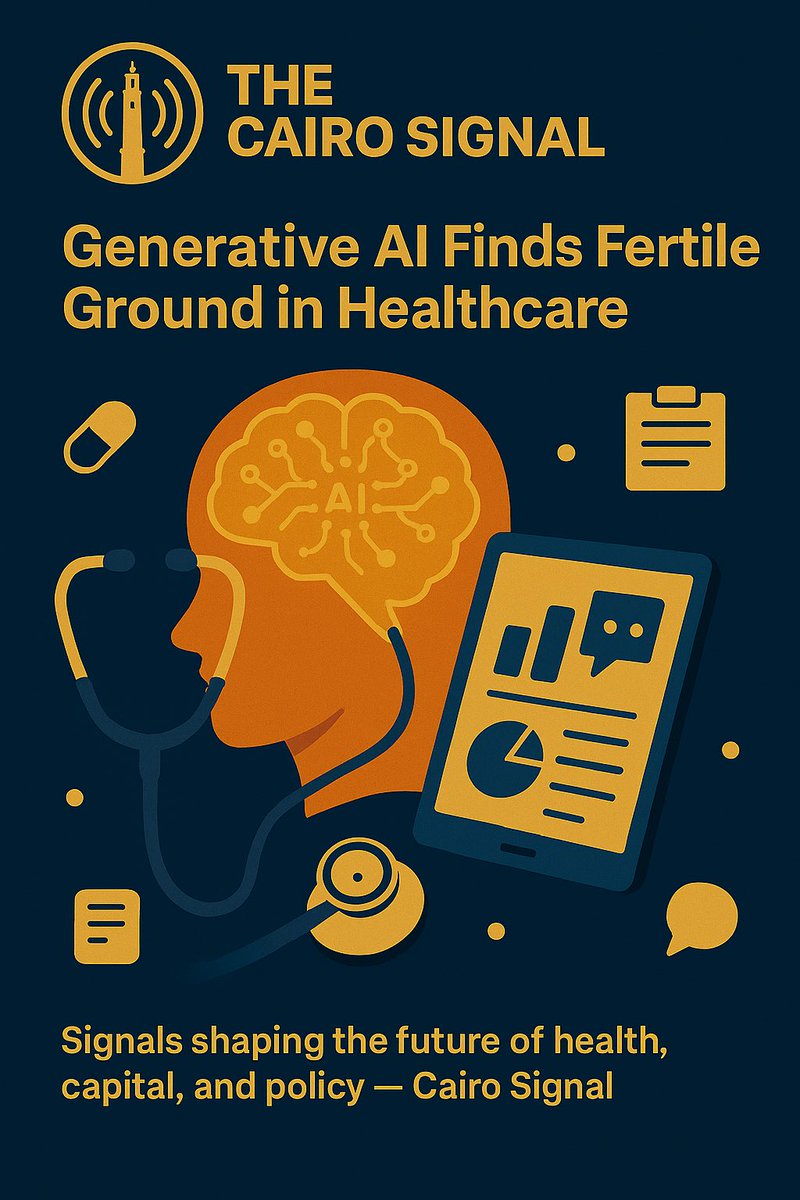
🧭 Cairo Signal | Generative AI Finds Fertile Ground in Healthcare
Healthcare is notoriously inefficient, expensive, and slow to change. But generative AI — the same technology powering advanced chatbots and content engines — is finding real traction in one of the world’s most complex industries.
⸻
Why Now?
For decades, healthcare innovation focused on devices, drugs, and physical infrastructure. Generative AI shifts the game to knowledge automation and decision support:
•Automating clinical documentation
•Accelerating drug discovery
•Powering patient engagement through virtual assistants
•Synthesizing complex medical imaging and genomic data
Generative AI’s value isn’t theoretical — it’s operational.
⸻
Signals From the Field
•Clinical Workflow: AI models are reducing administrative burdens, allowing doctors to focus on patient care instead of paperwork.
•Drug Discovery: Generative models are identifying drug candidates in weeks, not years.
•Patient Communication: Virtual assistants are improving access, triaging patients, and lowering call center costs.
These innovations address a system long criticized for its slow pace, high cost, and clinician burnout.
⸻
The Cairo Signal View
Generative AI isn’t replacing healthcare workers — it’s augmenting them, freeing capacity and cutting inefficiencies.
But it raises strategic questions:
•Who owns the AI-generated insights?
•How do we regulate models that adapt continuously?
•Will smaller health systems be able to adopt, or will this widen gaps?
⸻
Why It Matters
For investors: generative AI could shift billions from labor-heavy operations to AI-powered platforms.
For policymakers: regulation must keep pace with rapidly evolving models without stifling adoption.
For health systems: early adopters will likely set new benchmarks in cost efficiency and patient outcomes.
⸻
📌 Follow @CairoSignal for front-line signals at the intersection of AI, health, and capital — shaping the future from Cairo and beyond.
🧭 Cairo Signal | July 2025 — The Health Tech Signals Reshaping Global Healthcare
In the last quarter alone, health tech has seen breakthroughs that don’t just tweak care — they reshape it.
From AI-powered diagnostics to digital twins, these signals mark a structural shift in how, where, and when care is delivered.
Here’s what the global health, capital, and policy communities should be watching.
⸻
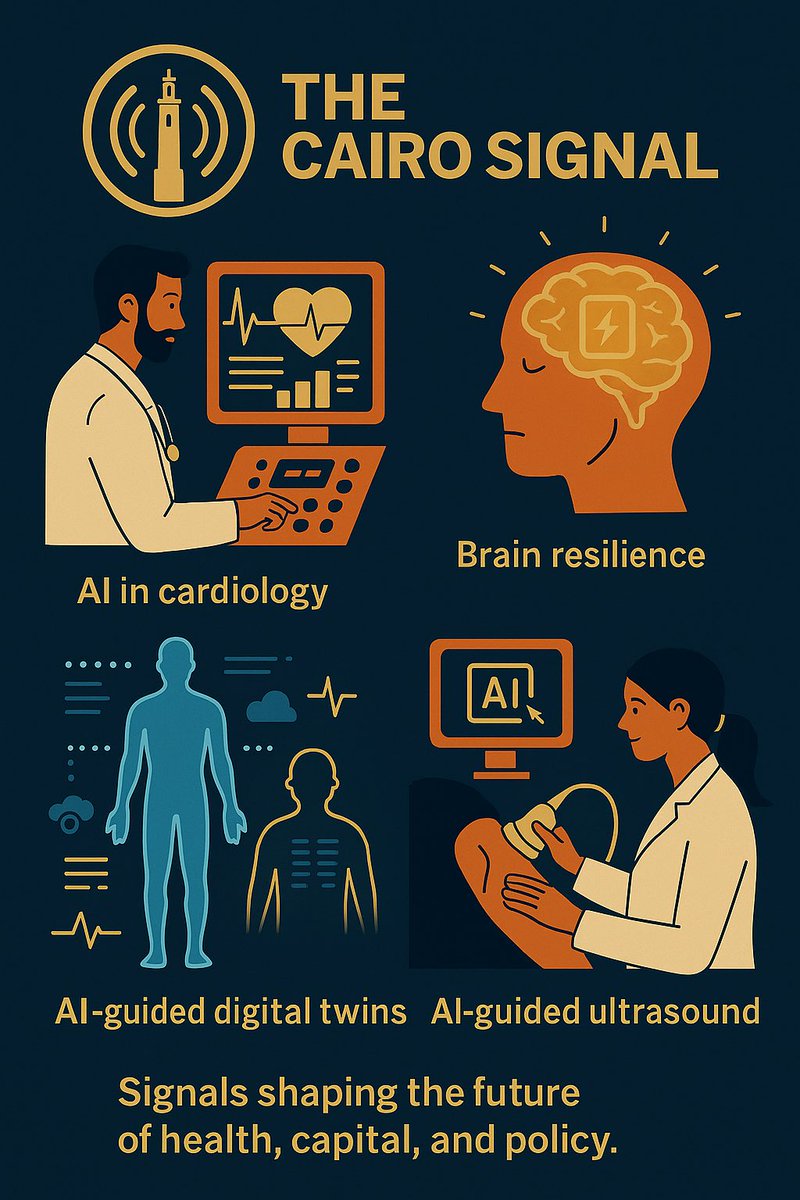
🩺 1. AI That Outperforms Cardiologists
A team from Columbia University and NewYork-Presbyterian introduced EchoNext, an AI model trained on over 700,000 echocardiograms. By analyzing standard ECG data, it detects structural heart diseases — including valvular conditions and myocardial thickening — with a 77% accuracy, outperforming cardiologists’ 64% in blinded tests.
Retrospective application on 85,000 ECGs uncovered an additional 3,400 patients at high risk — cases that would have otherwise been missed.
Signal: This suggests a future where routine, inexpensive tests powered by AI can serve as scalable, early-warning systems for silent yet deadly conditions like heart failure.
⸻
🧠 2. Brain Resilience and Neuronal Energy
In a breakthrough from Yale University, scientists have confirmed that neurons store glycogen, previously thought to be exclusive to glial cells. This glycogen acts as an energy reserve, shielding neurons during metabolic stress events such as stroke, seizures, or ischemia.
This finding opens therapeutic pathways for enhancing brain resilience — potentially informing treatments for stroke recovery, epilepsy, and neurodegeneration.
Signal: Brain energy metabolism could become the next frontier in neuroprotective drug development, a critical space as populations age.
⸻
🌐 3. Medical Digital Twins — From Concept to Clinic
Major institutions like Stanford, Johns Hopkins, and leading European research centers are developing medical digital twins: dynamic, data-driven virtual replicas of individual patients.
•Applications include surgical planning, chronic disease simulation, and personalized treatment adjustments.
•The global digital twin healthcare market, valued at $4.5 billion in 2025, is projected to reach $60 billion by 2030 (CAGR of 68%).
Signal: This is more than visualization — it is predictive, personalized medicine at scale, with implications for reducing trial costs, surgical risks, and chronic disease mismanagement.
⸻
🩻 4. AI-Guided Cardiac Ultrasound
UltraSight, an Israeli medtech firm, has developed AI-guided ultrasound tools that enable non-specialist clinicians to capture diagnostic-quality cardiac images. In clinical trials, novices achieved diagnostic accuracy in 95-98% of cases, compared to expert sonographers.
Signal: This could democratize access to cardiac diagnostics, especially in rural or underserved health systems, mitigating the shortage of skilled sonographers.
⸻
📊 Policy and Investment Imperatives
•Regulatory frameworks must evolve to govern AI-driven diagnostics, ensuring safety without stifling innovation.
•Data governance and patient privacy become more complex with digital twins — requiring policy clarity on data ownership and cross-border health data sharing.
•Investors should assess scalability, clinical validation, and regulatory pathways when evaluating health tech ventures.
•Health systems need to build capacities not just in tech adoption, but in integrating AI and digital tools into clinical workflows — avoiding tech for tech’s sake.
⸻
⚠️ The Cairo Signal View
Health tech is no longer about marginal gains — it’s about restructuring healthcare around prediction, precision, and decentralization.
The regions and systems that align policy, capital, and clinical practice around these signals will define the next era of healthcare delivery.
⸻
📌 Follow @CairoSignal for strategic insights where health, capital, and policy intersect — from Cairo and beyond.
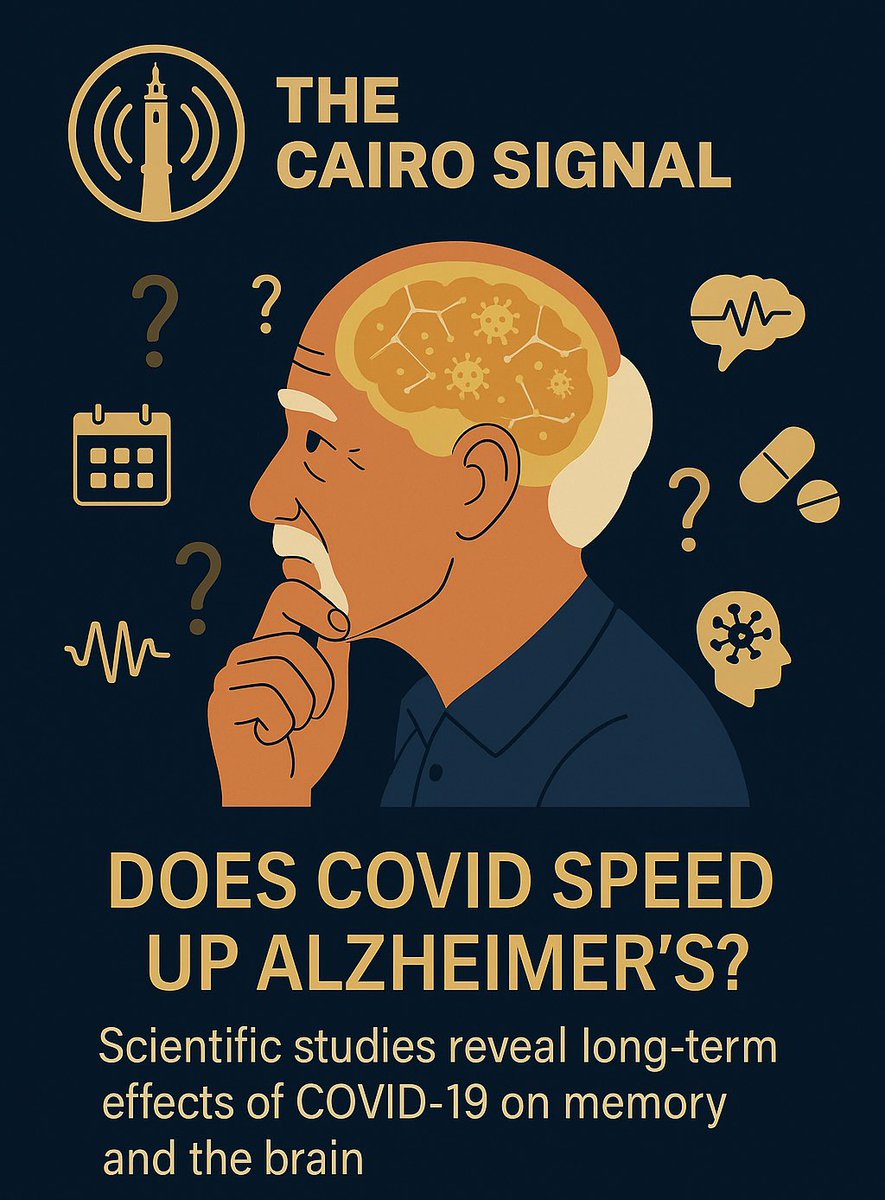
🧠 Cairo Signal | ALARMING SIGNAL: COVID-19 AND THE DEMENTIA CRISIS COLLIDE
What if COVID-19 didn’t just take your breath — but slowly took your mind?
A growing body of global research is converging on a deeply unsettling conclusion:
COVID-19 may be accelerating the onset and progression of dementia — particularly Alzheimer’s — especially in older adults and those with cognitive vulnerabilities.
For policymakers, investors, and health system leaders, this is a signal we cannot afford to miss.
⸻
📉 The Evidence Is Mounting
•A multinational study across 8 countries, published by the University of Texas Health Science Center (2024), found that individuals with Long COVID are at significantly higher risk of cognitive impairment — particularly those who lost their sense of smell, a known precursor of Alzheimer’s.
•Hospitalized COVID-19 patients, especially older adults, exhibit elevated neurodegeneration biomarkers including:
•Total tau
•Phosphorylated tau-181
•GFAP (glial fibrillary acidic protein)
•NfL (neurofilament light chain)
These findings were detailed in Neurocritical Care (2022), linking COVID-related biomarkers directly to neurodegenerative pathways.
•The Alzheimer’s Association launched a global SARS-CoV-2 brain study, positioning COVID-19 as a potential chronic, degenerative trigger with lasting cognitive consequences.
•Autopsies of deceased Long COVID patients, led by researchers at the University of Kentucky (2024), revealed Alzheimer’s-like brain changes: microglial activation, neuroinflammation, and disrupted neuron-glia signaling.
•A 2025 review in Frontiers in Aging Neuroscience confirmed that COVID-19’s impact on the brain mirrors the early biological mechanisms that drive dementia.
⸻
🔥 Why This Should Alarm MENA
The MENA region is facing a triple collision:
1.Rapidly aging populations, especially in Egypt, Lebanon, Tunisia, and the Gulf states
2.Underdiagnosed dementia, compounded by social stigma and lack of specialist capacity
3.High COVID-19 exposure, straining already vulnerable healthcare systems
By 2050, the number of people living with dementia in the Middle East and North Africa is projected to triple — a burden both societal and economic.
“What we’re witnessing could be a public health time bomb,”
— The Wall Street Journal
⸻
🧭 Strategic Imperatives for the Region
To mitigate this emerging crisis, leaders in Cairo, Riyadh, Amman, Abu Dhabi, and beyond must act decisively:
•Integrate post-COVID cognitive screening into primary care protocols
•Expand investment in neurodiagnostics, memory clinics, and geriatric care infrastructure
•Support startups, biotech, and AI ventures focused on brain health and early detection
•Embed dementia care into national health strategies and aging policies
This is not just a medical challenge — it is a capital allocation imperative, a policy oversight, and a test of regional resilience.
⸻
⚠️ The Bottom Line
The post-COVID world will not be defined solely by immunity or respiratory recovery — but by cognition, memory, and brain health resilience.
Failure to address this now risks a mental health and neurological crisis of generational scale.
⸻
📌 How is your institution preparing for the cognitive aftershocks of COVID-19?
At Cairo Signal, we track the signals shaping the future of health, capital, and innovation — from Cairo and beyond.
#CairoSignal #HealthTech #BrainHealth #DementiaCrisis #AlzheimersAwareness #LongCovid #MENAHealth #HealthcareInnovation #PolicyInsights #FutureOfHealth #AgingPopulation #PublicHealthPolicy #HealthcareInvestment
Is COVID Reshaping the Future of Aging in Our Region?
Emerging scientific studies from leading research institutions are now pointing to a troubling correlation:
COVID-19 may accelerate the onset of Alzheimer’s and cognitive decline.
Long COVID patients — including younger adults — are showing signs of persistent memory loss, brain fog, and even biological markers that mirror early-stage neurodegeneration.
⚠️ What does this mean for policymakers, healthcare investors, and system leaders in MENA?
•A redefinition of aging risks in the post-pandemic era
•Increased pressure on long-term care systems and caregivers
•Rising demand for early diagnostics and cognitive health programs
•New investment opportunities in brain health infrastructure, AI diagnostics, and neuro-wellness solutions
At Cairo Signal, we surface these signals early — not just as medical alerts, but as structural shifts shaping the future of health, capital, and resilience across our region.
📌 Our full analysis drops tomorrow.
Cairo Signal — Signals shaping the future of health, knowledge, and the economy across MENA and beyond.
From Signals to Shifts: What Our First Articles Got Right — And What Comes Next
When we launched The Cairo Signal, the goal was simple: track the early tremors before the ground shifts — especially where health, capital, and strategy intersect.
Just a few months in, the signals we’ve covered are already turning into structural shifts. Here’s a quick reflection:
⸻
📍 Healthtech Wasn’t Hype — It Was Inflection
We flagged Hims, Oscar, and Tempus as companies reshaping how care is delivered and financed. Since then, they’ve all seen major price swings — not just on earnings, but because their models are starting to scale. Investors are waking up to the next wave of consumerized, tech-enabled healthcare.
🧬 Moderna: More Than a Pandemic Play
We said Moderna wasn’t just a COVID stock — it’s a programmable therapeutic platform. That call is now playing out. mRNA 2.0 is becoming a category, and Moderna’s cancer, CMV, and AI drug design pipelines are proof the pivot is real. The market still underprices what’s coming.
⏳ Longevity Isn’t Fringe Anymore
When the UN validated aging biology, we said it was a turning point. Not just scientifically, but financially. Platforms targeting healthspan are drawing billions. MENA is just beginning to position itself — but the race has already started.
⸻
What This Tells Us
Cairo Signal is not just about what’s trending. It’s about what’s structurally shifting. What’s inevitable, but not yet priced in — by markets or by regional policy.
In every piece, we’ve tried to:
•Decode early signals
•Map their strategic relevance to the MENA region
•Highlight where capital, science, and policy are converging
⸻
What’s Next?
The next articles will go deeper:
•The rise of platform biology and the next 5 players beyond Moderna
•Why Saudi and UAE are betting on “bio-sovereignty”
•Diagnostic infrastructure as the next healthtech battleground
•How regional capital markets can back the science of tomorrow
The signal is still early — but the pattern is clear.
—
Follow @CairoSignal for front-line signals shaping the future of health, capital, and innovation — from Cairo and beyond.
🧬 Longevity Goes Mainstream: Aging Science Becomes a Global Policy & Investment Frontier
Something big just happened in aging science — and it’s no longer fringe.
This week, the UN’s Scientific Advisory Board released its first-ever brief on The Biology of Aging — officially framing aging as a modifiable biological process, not just an inevitable decline.
This marks a global turning point — with major implications for health systems, capital allocation, and biotech innovation.
At the heart of it? Epigenetic reprogramming — the idea that aging is caused by a loss of cellular information.
Harvard’s David Sinclair and team have already reversed aging symptoms in mice — restoring muscle strength, kidney function, and skin resilience. Human trials are now underway.
This isn’t sci-fi. It’s the beginning of a new therapeutic category — one aimed at resetting aging itself.
⸻
For investors and operators, this changes everything.
The global longevity market is expected to exceed $44B by 2030.
But smart capital isn’t chasing miracle pills.
It’s backing platforms that treat aging like an operating system — programmable, measurable, and eventually… resettable.
⸻
MENA is waking up:
🔹 Saudi Arabia launched Hevolution — a $1B/year longevity fund.
🔹 UAE and Qatar are making quiet moves.
🔹 Egypt? Still early — but the opportunity is massive.
With an aging population, Cairo-based diagnostic networks are well-placed to bolt on epigenetic clock testing as a premium healthspan service.
This isn’t just a scientific leap.
It’s a commercial one.
⸻
The signal is clear:
��️ The UN just legitimized the science.
✔️ Trials are advancing.
✔️ Capital is moving.
✔️ MENA has a unique window.
This is your mRNA moment — for aging.
At Cairo Signal, we’ll be tracking:
• The first clinical approvals
• Investment flows
• MENA-specific longevity strategies
📡 Follow @CairoSignal for frontier insights where health, capital, and strategy converge.
#Longevity #AgingScience #UN #Biotech #MENA #CairoSignal #Healthspan #Epigenetics #InvestInHealth #Hevolution
Cairo Signal doesn’t follow the trend — we surface what’s next, before it becomes obvious.
We didn’t just catch the trend — we were early.
Since our Cairo Signal call on healthtech:
• Tempus (TEM): $52.55 → $74.81 (+42%)
• Hims (HIMS): $52.75 → $61.59 (+17%)
• Oscar (OSCR): $14.21 → $19.2 (+36% in 9 days)
These aren’t just stock moves — they’re signals of transformation in how health, tech, and capital align.
And momentum may be turning again.
Our latest deep dive on Moderna (MRNA) reveals what’s next — as it transitions from vaccine maker to programmable therapeutics platform.
At Cairo Signal, we deliver forward-looking intelligence where health, tech, and capital strategy converge — grounded in MENA, built for global relevance.
👉 Follow us on X @CairoSignal to stay ahead of the curve.
#HealthTech #Investing #Biotech #CapitalMarkets #MENA #Moderna #HIMS #TEM #OSCR #CairoSignal #StrategicInsights #MarketTrends $MRNA $TEM $OSCR $HIMS
Moderna Is Still Priced Like a COVID Stock — But It’s Quietly Building a Platform Giant
@CairoSignal
In 2020, Moderna helped change the course of a global pandemic. But the real story? It’s just beginning — and it has massive implications for MENA’s healthcare future.
While many still associate Moderna with its COVID-19 vaccine, reducing it to a “pandemic play” is short-sighted. Moderna is not just a product company. It is rapidly becoming a programmable therapeutic platform — rewriting the rules of drug development, clinical trials, and biological defense.
For regions like the Middle East, this is more than a biotech evolution. It’s a strategic wake-up call.
⸻
🧬 What Makes Moderna Different?
Moderna isn’t a traditional pharma company relying on chemical libraries or “me-too” drugs. It’s built around programmable mRNA — instructions encoded into cells to prevent or treat disease.
This unlocks a new era of medicine:
•Speed: New vaccines or therapeutics can be designed, tested, and deployed in months — not years.
•Precision: mRNA targets previously untreatable or hard-to-treat diseases, including cancers, CMV, and rare disorders.
•Scalability: One platform supports dozens of programs — from infectious diseases to oncology and genetic conditions.
Moderna isn’t just a biotech firm. It’s a software company for biology.
⸻
📉 From COVID Windfall to Pipeline Proving Ground
Yes, COVID generated over $18 billion in revenue in 2021 — but that was just the beginning.
Moderna is now navigating its most critical test: Can it convert pandemic momentum into a pipeline powerhouse?
So far, the signals are promising:
•✅ RSV vaccine (mRESVIA) approved in the UK, Australia, Taiwan, and more.
•✅ Flu + COVID combo shots in late-stage trials — simplifying respiratory vaccination.
•✅ CMV vaccine in Phase 3 — a first-of-its-kind candidate with blockbuster potential.
•✅ Personalized cancer vaccine with Merck in Phase 3, fast-tracked by the FDA.
•✅ 45+ programs in development across infectious disease, cancer, rare genetic, and autoimmune diseases.
•✅ AI-powered partnerships with NVIDIA and OpenAI to accelerate discovery and trial design.
⸻
💵 Is Moderna Still Investable in 2025?
Despite the post-COVID selloff in its stock price, Moderna remains structurally and strategically strong:
•💰 $8.4 billion in cash and zero debt (Q1 2025)
•🏭 Fully integrated global manufacturing footprint
•🔬 R&D budget of ~$4 billion this year, despite topline revenue drop
•🔁 Cost-cutting plan targeting $1.5 billion in annual savings by 2027
•📡 Strategic positioning in biodefense and pandemic preparedness — backed by long-term U.S. government partnerships
The risk? Execution. The pipeline still needs major commercial wins beyond COVID and RSV.
The reward? Leadership in what could become a trillion-dollar class of programmable therapeutics.
🔄 Reinvention Despite Headwinds
Despite a nearly 80% decline from its COVID-era peak, Moderna’s transformation into a platform biotech is not theory — it’s in motion. The company continues to evolve beyond vaccines, building infrastructure, AI partnerships, and a robust pipeline across oncology and rare disease.
Even amid political uncertainty — including shifts in U.S. public health policy and RFK Jr.’s vaccine skepticism — Moderna’s roadmap hasn’t stalled. If anything, it’s doubling down:
•On June 12, Moderna reaffirmed its commitment to co-developing new drugs through strategic partnerships — not only with big pharma, but with tech players like NVIDIA and OpenAI.
•It’s also expanding its clinical and discovery network, signaling that mRNA’s next phase will be collaborative, not solitary.
The signal is clear: The reinvention is already happening — and it’s happening regardless of market sentiment or political noise.
⸻
🌍 What MENA Must Decode — Now
Moderna isn’t just a company to watch. It’s a signal — and MENA needs to move quickly to stay relevant in this new era.
1. This is a platform revolution — not a pill race.
A single programmable platform now powers dozens of therapies. MENA’s healthcare investments must shift from product procurement to infrastructure adaptability — to plug into this new model.
2. Genomic readiness is now a precondition for participation.
mRNA therapies are increasingly data-driven. Population-specific genomic data, biobanks, and AI integration in public health are no longer luxuries — they’re foundational.
3. Regulators need a new operating system.
Legacy regulatory timelines don’t fit real-time, variant-adapted therapies. Rolling submissions, adaptive trials, and real-world evidence frameworks are now essential for regional competitiveness.
4. Clinical capacity will determine regional relevance.
If MENA wants to co-create — not just consume — next-gen therapeutics, it must urgently build:
•Trial-ready patient registries
•AI-assisted trial matching systems
•Harmonized ethics and approval protocols
•Post-market surveillance capabilities
⸻
🛰 Final Signal
Moderna is no longer just the company that helped end the pandemic. It’s a blueprint for what happens when software, science, and statecraft align.
For MENA, the choice is simple:
Build capacity to partner — or prepare to depend.
This next wave of healthcare isn’t coming. It’s already being coded.
—
🧠 Follow @CairoSignal for sharp insights on healthcare, strategy, and transformation — from Cairo to the Gulf and beyond.
🟦 Oscar Health Is Redesigning Insurance ��� And MENA Should Pay Attention
A tech-first, consumer-native platform is reshaping health coverage. Here’s what policymakers and investors in the Middle East need to learn from it.
By @CairoSignal
Oscar’s Model: Insurance as Infrastructure
Oscar isn’t chasing scale for scale’s sake — it’s building intelligent scale.
What makes it different?
•Proprietary infrastructure: Oscar built its own claims engine, provider interface, and patient tools from scratch
•Member experience as a strategic asset: Patients can book care, message doctors, and access benefits — all from a single app
•AI-led, risk-based navigation: Oscar proactively engages members with chronic conditions, behavioral health risks, and high-cost episodes — before they escalate
•Plug-and-play SaaS: Its +Oscar platform powers other insurers — including a major Cigna-Humana joint venture
This is no longer just a payer.
It’s health system infrastructure.
⸻
What Investors Should Note
Oscar isn’t profitable yet — but its fundamentals are improving:
•Over 1.3 million members in 2023
•>90% retention in key markets — rare for insurance
•B2B SaaS licensing is growing
•Operating leverage is kicking in as tech costs flatten
This dual model — direct insurance + platform licensing — makes Oscar uniquely positioned as both operator and enabler.
For investors focused on healthtech, fintech, or health infrastructure, Oscar is a live case study in monetizing inefficiency at scale.
⸻
Relevance to MENA Policymakers & Fund Architects
MENA is on the cusp of a generational shift in how health coverage is delivered:
•Mandatory schemes are becoming universal
•Public-private partnerships are accelerating
•Digital health startups are emerging — but lack integration
Oscar offers a roadmap — not for duplication, but for inspiration:
✅ Design from tech, not regulation
Oscar’s platform wasn’t built to meet minimums — it was built to delight users, reduce risk, and drive efficiency.
✅ Position the insurer as a care guide
If the insurer becomes the patient’s first point of contact — not just a billing entity — cost control and outcomes improve.
✅ Think platform, not product
The future isn’t just in selling plans — it’s in powering ecosystems.
⸻
Strategic Signals for the Region
1.Coverage ≠ Outcomes
Success must be measured by engagement, risk reduction, and satisfaction — not just “lives insured.”
2.Tech-native platforms will outlast legacy administrators
Modern payers must operate with APIs, real-time dashboards, and nudges — not just claim forms and reimbursement cycles.
3.Insurers can become infrastructure
Oscar’s SaaS model proves that payers can license their stack — to partners, startups, even governments.
4.The market will reward user engagement
In a low-margin sector, sustained engagement is the most defensible economic moat.
⸻
Final Word: The MENA Opportunity
Oscar Health is far from perfect.
It has battled pricing errors, volatility, and scaling pains.
But it’s doing something most MENA insurers and regulators still aren’t:
Designing for behavior — not bureaucracy.
If policymakers and institutional investors in MENA want real transformation — not a digitized version of the status quo — they must treat insurance as infrastructure.
Health insurers must evolve into tech-first enablers, not just financial administrators.
Oscar offers a glimpse of what that evolution can look like.
⸻
🔵 Follow @CairoSignal for more signals on where global health innovation meets Middle East opportunity.
How Hims Is Quietly Building One of the Strongest Health Platforms in America — And What MENA Can Learn
By Cairo Signal | @CairoSignal
—
In a healthtech world bloated with buzzwords and broken promises, Hims & Hers has quietly done what others haven’t — built trust, delivered care, and turned a profit.
It didn’t start by claiming to “disrupt healthcare.”
It started where healthcare actually breaks down: access, trust, and experience.
📊 And today, the results speak for themselves:
•$586M in Q1 2025 revenue — up 105% year-over-year
•$49M net income
•2.4M+ active subscribers
No hype. Just operational discipline.
—
🩺 From Direct-to-Consumer → End-to-End Care
What began as a men’s wellness brand has become a clinical-grade platform:
•Fully vertically integrated
•Licensed virtual consultations
•Pharmacy & fulfillment infrastructure
•AI-enhanced clinical protocols
•Services: mental health, dermatology, sleep, GLP-1 weight loss, and more
It’s not a marketplace.
It’s healthcare, engineered for trust.
—
💼 A Business Model That’s Profitable, Scalable — and Defensible
•92% recurring revenue
•73% gross margins
•CAC down, LTV up
•85% on multi-month plans
•$51M Q1 EBITDA
•$237M in cash, zero debt
This isn’t growth at all costs.
It’s structured, durable execution.
—
🤖 No AI Hype. Just Execution.
•AI used for triage and personalization, not headlines.
•Care led by licensed clinicians, not bots.
•Data used for continuity, not advertising.
•Direct manufacturing boosts speed + margin control.
Hims isn’t chasing trends.
It’s compounding trust.
—
🌍 What This Means for MENA
Most MENA healthtech players are still solving for access, not care — stuck in Phase 1:
•Booking apps
•Aggregators
•E-pharmacy
•Teleconsultation
These models are transactional.
Hims shows what comes next:
•Own the care layer.
•Design for lifetime value.
•Deliver outcomes, not just services.
•Align with clinical and regulatory systems from day one.
And do it all while keeping user trust at the center.
If the region doesn’t move beyond Phase 1 soon, it risks becoming a consumer of digital health — not a creator of it.
—
🏛️ A Note to Policymakers
Don’t copy Hims.
Enable what made it possible.
That means:
•Regulatory clarity.
•Integration of the private sector.
•Investment in trust-based digital infrastructure.
Egypt, Saudi Arabia, and the UAE have a narrow window.
Get the incentives and regulation right — and they won’t just adopt digital health, they’ll define it.
—
📈 For Investors
In a post-ZIRP world, Hims stands out:
•Profitability
•Retention
•Operational precision
•Global expansion potential
With its stack built and playbook proven, it’s positioned to scale into new geographies — especially where digital care is rising, but trust remains scarce.
—
🔁 Final Thought
Healthcare isn’t just delivered. It’s designed.
Hims designed around friction — and now it’s scaling around trust.
Founders should take notes.
Policymakers should act.
Investors should watch closely.
Because this isn’t just a U.S. story —
It’s a blueprint with global relevance.
—
📡 Follow @CairoSignal for weekly signals on where healthcare, tech, and markets are heading — from the region to the world, and back again.
⸻
#HealthTech #PolicyInnovation #MENAHealthcare #SaudiVision2030 #Egypt2030 #UAEHealth #DigitalCare #PublicPrivatePartnership #TrustInTech #CairoSignal #Hims $hims @AndrewDudum
🚨 Tomorrow on @CairoSignal
What if one company quietly solved the healthcare equation — trust, access, profit, scale?
Hims & Hers did.
$586M revenue. 2.4M subscribers. No hype.
📡 From San Francisco to Riyadh to Cairo — here’s what MENA must learn.
#HealthTech #DigitalHealth #MENA #CairoSignal #HealthcareInnovation #GLP1 #Startups #Hims $Hims @AndrewDudum