But of course Moby-Dick was not written in nineteenth-century vernacular. Before penning this book, Melville had been a promising but unambitious writer of travel tales inspired by his travels in the South Seas. His books sold well, but no one reading them would have imagined that he would someday author a masterpiece of world literature.
But then two things occurred. First, he met and befriended Nathaniel Hawthorne, for whom he developed a deep affinity. Second, in 1849 he acquired a complete set of Shakespeare. He devoured the plays, along with the works of Milton, Montaigne, Carlyle and a number of other great writers (the King James Bible was a major influence). As David Herd writes, Melville read “with the wide-eyed eagerness of the autodidact, hungry for the resources of the world’s great books.” And in doing so, the scope of Moby-Dick began to change. What had begun as another potboiler travelogue became an epic about fate, free will, money, marriage, and humanity’s place in the cosmos. You can almost pinpoint the moment in the book when the shift occurs. Whole chapters are written as scripts, complete with stage directions. Characters privately monologue in scenes Ishmael (the ostensible narrator) can’t possibly have witnessed. Melville knew he was now writing a book that transcended its time and place, a book for the ages, a work to compare with the best works of the classic authors he so loved. A miracle in print.
@lymanstoneky "Herewith follows an exercise in narrative forensics as I attempt to convince you that as Frozen was written, Prince Hans was never intended to be evil." JVL https17://web.archive.org/web/20150629161627/http://www.weeklystandard.com/blogs/defense-prince-hans_792737.html?nopager=1
@amjuster@jdflynn Softball. I had absolutely no skill whatsoever at connecting with the ball (hitting or throwing/catching), but fun was had and memories were made!
We're getting the @Plough summer issue ready for the press! The title is SEARCHING FOR THE SOUL OF AMERICA, timed for the USA's 250th.
Which cover design should we use? Check out the four options and then please vote.
#1 SKY FLAG
Middlemarch is the easiest 5-star rating I've ever given. This has been my most ambitious read of the year so far, yet it doesn't feel that way at all because I loved every second of it. I now understand why it's considered the best English novel ever written, or why Virginia Woolf called it "one of the few English novels written for grown-up people."
One can point to dozens of reasons for Middlemarch's genius, but the one I want to discuss is the novel's mastery of truly morally gray characters. You often hear about the importance of writing and reading about morally ambiguous or even undeniably unlikable characters, but many of the novels that attempt to do that fall flat or try too hard. What makes Middlemarch stand out is its honest portrayal of "unlikable" or "morally gray" characters -- they are fallible humans with psychologies so deep and complex that you could easily mistake them for real people coming in and out of your life and walking around your hometown.
In fact, it's not so simple to say that any of George Eliot’s characters are unlikable. For those who insist that Casaubon or Bulstrode or Lydgate or maybe even Rosamund are unlikable, I think doing so completely misses the point of the novel. Eliot takes pains to make sure she understands her characters so fully that she does not judge them, and implores us to do the same.
How many times, for example, has she paused her narration of Casaubon's jealousy to remind us that we must see where he's coming from -- that doing so, while it wouldn't justify his actions, would at least humble us in our harsh judgements, and make us better citizens of the world? How many times has she empathized with "poor Rosamund" in the midst of her childish schemes? Or Bulstrode -- perhaps my favorite psychological profile -- whose grief over the moral blights of his past crescendos into a severe breakdown that is at once devastating and wholly expected. Dorothea is obviously the prime example of the kind of person Eliot wants her readers to grow into: forgiving, independent, passionate. Throughout, we callbirate our sense of what's right and wrong against Dorothea's and recoil at our similarities to the gossiping townspeople. Eliot has formed her characters and let them live their lives, and what emerges is exactly what you would expect from each one of them.
It is rare to come across a book that is so protective of life. What a gem. I'm so glad I read Middlemarch for my month-in-the-title reading challenge.
https://t.co/j8EhlDNa2r
Grateful to the many people who helped helped produce our series on the atrocities of the Assad regime. Thankful above all to the many Syrians who shared their traumas with us, and who deserve justice. https://t.co/YyVs2kxIeK
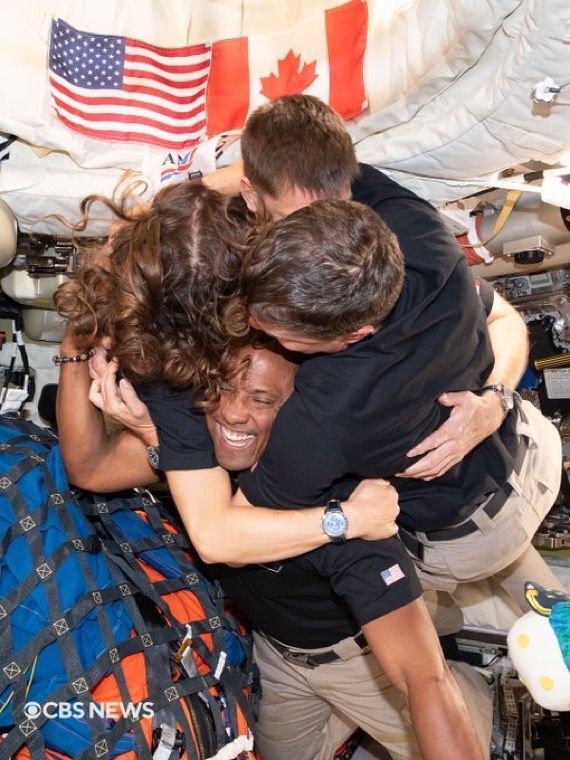
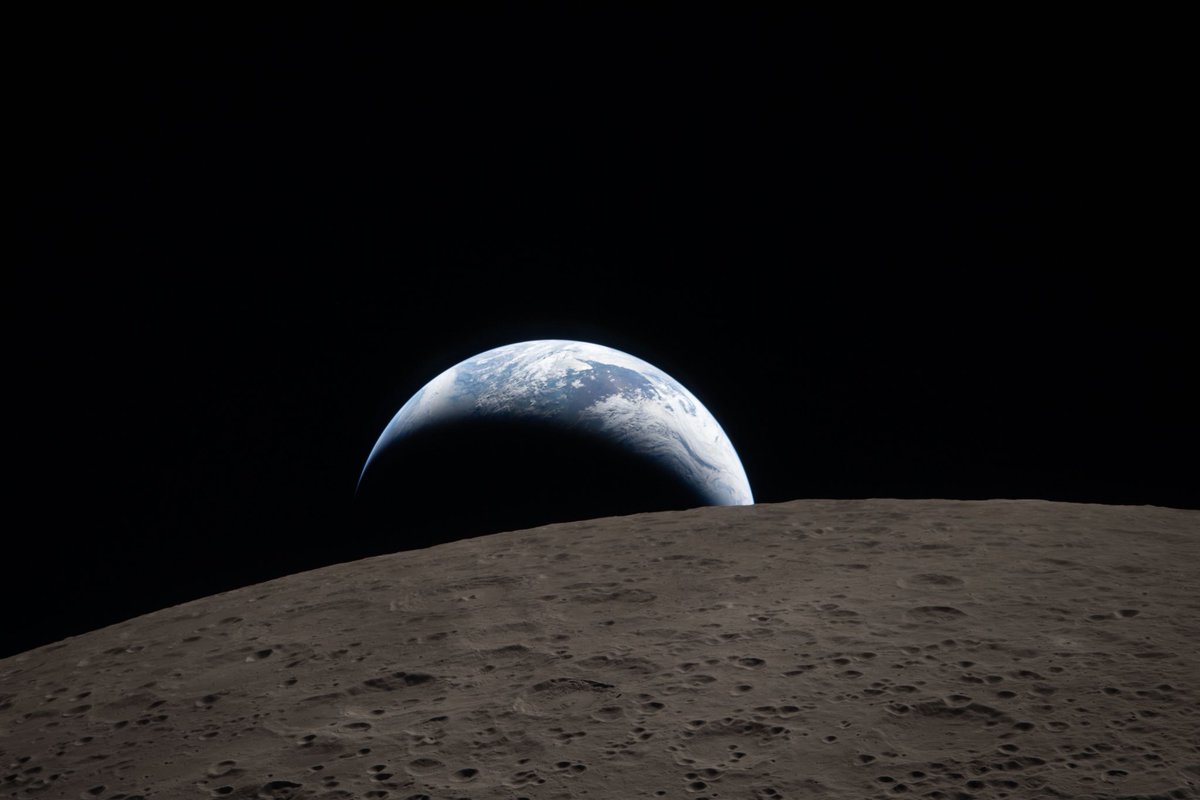
The stunning photos of the Moon have been inspiring, but right up there is the amazing character of our astronauts. They just seem like some of the kindest people and I’m happy to see good-hearted people be our ambassadors to the galaxy. They are the best of us.
“As we get close to the nearest point to the moon and farthest point from Earth, as we continue to unlock the mysteries of the cosmos, I would like to remind you of one of the most important mysteries there on Earth, and that’s love.
Christ said, in response to what was the greatest command, that it was to love God with all you are. And he also, being a great teacher, said the second is equal to it. And that is to love your neighbor as yourself.”
@AstroVicGlover
@suzania@Zheschool P.S. Although I personally am so pro-manned spaceflight that I'm for putting humans on other planets (one of the few things I agree with the owner of this site about!!), this is pretty good evidence for @suzania's view: https://t.co/AntAt6MuMf