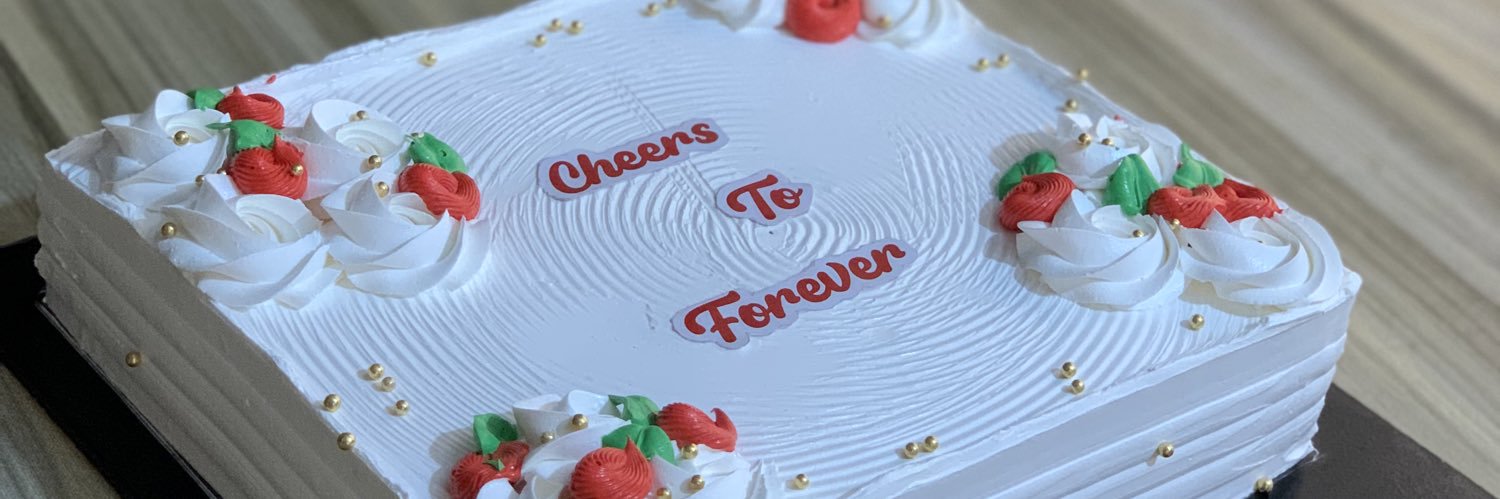
@ConnectOnitsha I am your trusted plug for all your cake and pastry needs in Anambra...
I make deliveries anywhere within Anambra.
For bookings and enquiries kindly send a DM or call 07039123273..
Dear @nbcgovng,
We saw the memo instructing all radio and TV stations not to air any of Peter Obi's campaign jingles or accept any political campaign ads from the opposition, else such station will have their licenses revoked.
State capture in broad daylight.
Nigerians will overcome and we shall come for all of you!
Nigerian politicians dey enjoy sha
See convoy of supposed public servants...the white man will.look at this and think the black man is indeed mad.
Nigerians gullible diie...mana that will be story for another day
No man can rïg me out again, I'm fully prepared for them. Do your own part, vote and stand your ground until it is recorded on the IREV portal.
__ Peter Obi
If you invite me to an event to encourage young Africans with no job experience to embrace entrepreneurship, I will disappoint you by encouraging them to seek internships or apprenticeships through employment instead.
We have far too many people on the streets with no business experience trying to do business without learning properly. A lot of the entrepreneurship support programs I see are scams that only benefit the organizers and have little or no impact.
Jobs are scarce because we have forgotten the first principles of building stable societies. Young people should learn mainly on the job while also earning income, not in schools that teach them with outdated material.
Internships and apprenticeships should be a core and compulsory part of African educational curricula. In the UK, my last six months of school were spent on an internship that required interviews to qualify for. You are prepared for the real world and not a fairy tale version.
Part of the government’s education budget should go towards this type of learning. In Nigeria, the model is there, but the process is dead. Businesses pay a portion of their profits to support internships and vocational educational programs that should have created a steady pipeline of talent. Still, those programs are either dead or poorly run.
We are borrowing the model of accelerators and incubators used in places with strong education and a rich culture of apprenticeships and internships.
We should create a ministry of Small Business and Entrepreneurship that tackles this problem head-on, instead of relying on entrepreneurship theater to benefit donors. Transforming economies is NOT about startup opportunities; it's about deep research, analysis, and deliberate policy and execution.
We should prepare people to build institutions instead of setting them up to hustle and, most likely, fail.
You clearly didn't learn propaganda well. No Anambra person uses "Nwanne m" and if this was an Anambra group, it would've been filled with voice notes, than texts.
The entire English is terrible for it to be an Anambra group. We rarely use pidgin, and we only use Igbo or English in groups. Your paymasters need to replace you, you're terrible at your job.
No serious country wey no dey subsidize critical infrastructure seh. None. Zero. Na for naija I hear say subsidizing for the benefit of your citizens is a bad thing. Remove it so that Akpabio can see more money to steal.
His Excellency, Mr Peter Obi, joins the Catholic Women Organisation (CWO), Archdiocese of Abuja, for its 2026 Annual Reunion at St Aloysius Primary School, Area 3, Garki, Abuja.
NIGERIANS, GO AND VERIFY (7)
LIFTING THE VULNERABLE : ANAMBRA’S BLUEPRINT FOR POVERTY ALLEVIATION AND SUSTAINABLE EMPOWERMENT (2006–2014)
Economic growth that does not translate into improved living conditions for ordinary citizens is incomplete. This is one of our fundamental concerns with President Bola Ahmed Tinubu's government. Development must ultimately be measured by its impact on human lives, particularly those of the poor and vulnerable. This was underpinned by the Anambra Integrated Development Strategy (ANIDS). We believed that infrastructure, education, healthcare, agriculture, and social protection must reinforce one another. Poverty was not merely a shortage of money; it was also a lack of access to opportunities, productive resources, and the basic conditions necessary for a decent life.
Our poverty alleviation strategy, therefore, went beyond temporary handouts. It focused on restoring dignity, creating economic opportunities, and equipping vulnerable citizens with the means to become self-reliant.
Our approach attracted recognition beyond Anambra. In May 2010, Magnus Kpakol, then National Coordinator of the National Poverty Eradication Programme (NAPEP), commended our commitment to poverty reduction, declaring: “We are prepared to support you in the excellent work you are doing in Anambra State.”
1. POVERTY MAPPING: KNOWING WHERE POVERTY LIVES
We recognised that poverty could not be effectively addressed without knowing where it was concentrated and what caused it. We, therefore, undertook a poverty-mapping exercise to identify the most deprived local government areas and communities.
The exercise revealed that some of our poorest communities were also important food-producing areas. Their challenges included poor access to markets, agricultural inputs, electricity, water, and other economic opportunities.
Areas including Anambra West, Orumba South, Awka North, and Ogbaru required particular attention. The findings informed our development priorities, enabling us to direct roads, agricultural support, and social interventions toward neglected communities.
2. EMPOWERING WOMEN, WIDOWS, AND COOPERATIVES
We recognised that rural women, widows, and indigent households bore a disproportionate burden of poverty. Across the 21 local government areas, we provided financial assistance and productive support to thousands of beneficiaries.
Our administration provided financial assistance to support the establishment and expansion of small businesses and farming activities. We also introduced revolving loan schemes to promote enterprise development, economic self-reliance, and improved livelihoods.
We distributed productive equipment, including sewing machines, generators, ovens, cookers, hair dryers, shoe-making machines, and welding equipment. The objective was to help beneficiaries establish sustainable livelihoods rather than remain dependent on government assistance.
We also promoted access to microcredit and cooperative financing to enable small entrepreneurs to expand their businesses, improve their incomes, and create employment.
Our philosophy was simple: rather than merely giving people money to survive today, the government should help them acquire the means to earn a living tomorrow.
3. AGRICULTURE AND FADAMA: MAKING RURAL COMMUNITIES PRODUCTIVE
Agriculture was central to our poverty-reduction strategy because many rural households depended on farming.
Through partnerships with the Federal Government, the World Bank, and other development partners, particularly under the FADAMA programme, we supported farmers with finance and productive assets.
In November 2009, our administration disbursed millions to FADAMA Community Associations across the state. By October 2010, the National FADAMA office was commending Anambra’s commitment. Its National Project Coordinator, Buka Tijjani, represented by Charles Ugwuona, described Anambra as the leading state in the programme.
Have you guys noticed that Tinubu posters and banners only have NELFUND and NO ASUU STRIKE on them. That is the only achievement in 4 years.
None is talking about healthcare, reduced unemployment, ELECTRICITY, economic prosperity and Infrastructure Developments. Only loans.
Scorecard: 0.0004 / 100.
APC must go at all costs.
Give us light - “Omo Nigeria electricity is complex o, they can never fix it”
Okay fine
Give us good roads - “Omo the road is not the work of the government alone”
Okay, good
Reduce cost of living - “Omo, it’s impossible, we are poor we need more tax”
Ok What is possible?