The inauguration of #Calabar branch will be coming up on Saturday 16th of January, 2021 at Marina Resorts.
Membership forms and sourveniers will be distributed at the location.
Kindly inform all intending members.
Dear Nigerians,
Leave everything & watch the 1993 presidential debate between Abiola & Alhaji Bashir Tofa.
MKO was fiercely against the IMF & the World Bank. He was against Naira Devaluation & IMF loans. He kicked against wasteful spending.
He stood for FREE education, not student loan.
In fact, Chief MKO won the 1993 presidential election after defeating Tofa in that debate. Nigerians saw his exceptionalism that day & voted overwhelmingly for Kashimawo. It was a Muslim-Muslim ticket that offered REAL hope.
Chief Moshood Kashimawo Olawale (MKO) Abiola was firmly against the International Monetary Fund (IMF) & the World Bank. He viewed these Bretton Woods institutions & their structural adjustment programs (SAP) as exploitative & designed to ensnare developing nations into debt traps & neo-colonial reliance.
In fact, he criticized the Structural Adjustment Program (SAP), a program of the IMF harshly. MKO was a Capitalist with Socialist ideals.
Key aspects of his economic vision were:
Farewell to Poverty: His manifesto proposed an economic framework that rejected the World Bank & IMF loans & structural adjustments.
Alternative Funding: Instead of devaluing the currency or taking conditional loans, Chief MKO planned to fund a nationwide free health & free education by cutting government waste & securing more profits from oil companies.
National Sovereignty: MKO was against neo-colonialism. As an international businessman, he argued that Nigeria had no business letting young IMF officials dictate its internal policies.
Today, JUNE 12 People are implementing SAP 2.0. They are running away from debates. They have gone against everything MKO stood for.
His HOPE '93 "Farewell to Poverty" was largely a ‘people-centric’ manifesto, anchored on democracy, social justice, agric revolution, poverty eradication, & anti-imperialism.
He promised to write off 10 years of taxes for private businesses that went into farming. He was ready to mechanize the whole value chain.
1993 was the fairest & freest election in Nigeria. The irony is, it was the military that conducted that election, before it was ultimately annulled.
Today, June 12 People cannot conduct a free election. The beneficiaries of JUNE 12 declare Oro on Election Day, & snatch ballot boxes.
They mutilate result sheets, compromise the IREV, & tell you to go to court. They plant their surrogates in opposition parties & call it a Master Strategy. June 12 People are no democrats, they are worse than Abacha.
They work against everything that MKO stood for. Under JUNE 12 People, Nigerians have no human rights. They use the police & the DSS to kidnap the critics of their government. They borrowed Nigeria to stupor. They plan to more, & they will squander it. And when the IMF or World Bank says “jump!” They ask, “how high?”
Recall that Muhammadu Buhari participated in the 2011 presidential debate, where he debated Nuhu Ribadu & Ibrahim Shekarau. However, he did not attend the 2007, 2015, & 2019 debates.
JUNE 12 People have never participated in any presidential debates. They will run away from the 2027 debates. They hate accountability.
MKO always quoted statistics like the man they attack in Nigeria today. The candidate they call “Obi China.” MKO articulated his thoughts. He was no bulaba. He stood for the poor. JUNE 12 People are there for themselves & the rich only.
They are asking you to renew their mandate—so they could do the things they promised you before. They will remain a fraud in my book.
Between 1985 and 1994, Babangida’s regime diverted about $12B of oil money. Well, he wrote a book and the launch raised nearly ₦17bn for the IBB Presidential Library Foundation. ₦8bn from Aliko Dangote and ₦5bn from Abdulsamad Rabiu. Nigerian Elites
https://t.co/gkcw9tQ2zk
If Peter Obi could reject all this, then he is a hero & have conquered greed.
Watch how ex governors milk the states & country, then finds their way into Senate to continue more economic disaster, Why masses suffer.
The difference between Tinubu & Peter Obi is very sacrosanct.
I’m happy it’s happening to you guys😫 it’s you people’s turn . I remembered I traveled to uyo with bad road to go and see Woman King , you people should come to Hogis cinema now if you want to see any movie
While politicians are being celebrated and handed party tickets, many healthcare centres in cross river state, and still remain in terrible condition.
Months after these facilities were exposed online, residents say little or nothing has changed.
Who truly cares about the pple?
In this country, it feels like someone is just after your life in every corner. Anyone still drinking anything other than water has basically decided to gamble with their own life. Just stick to water, biko. 🙏
Despite producing double the cement Nigeria needs, three companies control the market and have hiked prices to 15,000 naira per bag, making home ownership an impossible dream for you.
THE COMPROMISED PRESIDENT
Bola Tinubu Has Become the Greatest Security Threat to Nigeria — and He Knows It
Kio Amachree | Stockholm, Sweden | President, Worldview International
There is a particular species of danger that is harder to see than a bomb, more corrosive than a drought, and more lethal than a coup. It is the danger of a leader so personally compromised — by history, by debt, by desperation — that the machinery of state bends entirely to his survival. Nigeria today is living inside that danger. Its name is Bola Ahmed Tinubu.
The question is no longer merely political. It has become constitutional, existential, and moral. Is Bola Tinubu so entangled in undisclosed relationships with Western intelligence, so buried in personal legal vulnerability, so dependent on foreign creditors for economic oxygen, that he has become — functionally, practically, dangerously — a security threat to the 220 million people he was elected to serve?
The evidence is not speculative. It is documented, global, and growing.
The Intelligence File They Will Not Open
The FBI, CIA, and DEA have invoked Glomar responses — legal provisions allowing agencies to neither confirm nor deny the existence of records — in response to multiple Freedom of Information Act requests concerning Tinubu’s alleged ties to drug trafficking. In court filings, the agencies argued that confirming or denying the existence of such records could “compromise privacy interests and national security.” Intelligence officials have also referenced Tinubu’s possible status as a CIA asset. 
Read that again. American intelligence agencies — three of them — have told a federal court that revealing what they know about the sitting President of Africa’s most populous nation would compromise United States national security. Not Nigerian national security. American national security. A sitting head of state protected by the secrecy architecture of Langley and Quantico.
Court documents from a Chicago case have tied Tinubu, in the early 1990s, to a heroin trafficking investigation. He was reported to have held multiple bank accounts into which suspicious funds were deposited. Though never formally charged, the U.S. government confiscated approximately $460,000 from one of his accounts as part of a civil forfeiture agreement. 
This is not allegation. This is documented federal forfeiture. And it is the foundation upon which a presidency has been built, a presidency now commanding the continent’s largest army, its most strategic oil reserves, and its most consequential diplomatic relationships. The Western powers know what they know. That knowledge is leverage. And leverage, in geopolitics, is always eventually used.
The Economic Surrender
A man who cannot afford to be scrutinized cannot afford to say no. And Tinubu, facing the arithmetic of a collapsing revenue base and an insatiable appetite for borrowing, cannot say no to anyone holding his financial lifeline.
Nigeria’s total public debt has risen to around ₦159 trillion in 2026 under the Tinubu administration, intensifying fears that future generations may be left to shoulder the burden. Opposition voices and economists have repeatedly warned that the federal government is spending a dangerous portion of its revenues on debt servicing, leaving less money for healthcare, education, electricity, and jobs. 
According to analysis by the Nigerian Economic Summit Group, debt servicing consumed over 100 per cent of federally retained revenue — meaning that for every ₦100 the federal government earned, at least ₦100 went into paying interest and repaying loans. Every naira spent on infrastructure, healthcare, education, or security had to come from borrowing. 
This is not an economy being managed. This is a nation being mortgaged. And in the great game of international finance, mortgaged nations do not make independent foreign policy. They execute the foreign policy of their creditors.
The Nigerian government has sought to increase external borrowing by approximately $26 billion in 2025–2026 to cover budget shortfalls and stimulate economic growth. Analysts at Cowry Asset Management have warned that around 60 per cent of anticipated spending will be covered through new borrowings, marking a concerning shift from earlier promises to reduce dependence on debt by focusing on foreign direct investment and equity financing. 
The World Bank praises Nigeria as a global model for steady and credible reform leadership — while simultaneously reporting that 63 per cent of Nigerians live in poverty. This exposes a familiar tension: institutions that fund and evaluate reforms often emphasize macroeconomic stability and policy consistency, even as on-the-ground indicators highlight worsening poverty, weak job creation, and limited improvements in living standards. 
The World Bank’s applause is not charity. It is a signal that the structural adjustment conditions attached to Nigeria’s loans are being complied with. Fuel subsidy removal. Naira devaluation. Market liberalisation. These are not Tinubu’s ideas. They are the policy agenda of Bretton Woods institutions, implemented by a president who is in no position to resist. A stooge does not always wear chains. Sometimes he wears a presidential sash.
The Crackdown That Tells You Everything
When a leader is confident in his legitimacy, he tolerates dissent. When a leader is afraid of what scrutiny might reveal, he criminalizes it.
Since 2023, the DSS has launched real-time social media tracking systems, while police cyber units have dismantled thousands of domains and arrested hundreds under the Cybercrimes Amendment Act 2024. These funds have not demonstrably reduced insecurity; instead, they have supported repressive practices such as mass content takedowns, platform pressure, and politically motivated surveillance against opponents and arrests ahead of the 2027 elections. 
Media Rights Agenda documented 141 attacks on journalists and citizens for online speech in Tinubu’s first two years, with nearly half carried out by police and DSS under cybercrime pretexts. 
Just days ago, a Federal High Court in Abuja dismissed a no-case submission by opposition figure Omoyele Sowore, who faces charges filed by the DSS for calling Tinubu a “criminal” on social media. Sowore alleges the prosecution is designed to prevent him from contesting the 2027 election. 
A president prosecuting citizens for calling him a criminal is not defending his dignity. He is defending his secrets.
The Architecture of a One-Party State
With the state sponsoring leadership crises in the main opposition parties, the PDP — once described as the largest party in Africa — has been reduced to two governors. The APC, under Tinubu, has grown from 21 to 31 governors, holds 82 senators, and commands 242 of 360 House of Representatives seats, with all pledging allegiance to Tinubu’s political hegemony. 
The African Democratic Congress has accused the Tinubu-led government of destroying every other political party so that Tinubu will remain the sole candidate in 2027 — a tactic likened to Sani Abacha’s creation of five parties that all nominated him as their sole presidential candidate. 
A senior Nigerian official has publicly warned that ahead of 2027, Tinubu may resort to locking up opposition members — drawing a direct parallel to former Senegalese President Macky Sall, who detained opposition politicians, attempted to cancel elections, and was subsequently defeated overwhelmingly when international pressure forced him to hold the vote. 
The Verdict History Will Record
Nigeria has survived locusts before. It survived Abacha. It survived Babangida. It survived the structural adjustment catastrophe that destroyed the middle class in the 1980s — the same structural adjustment now being replayed with a different set of signatures on the loan documents.
But what Nigeria has not faced before is a president whose personal legal exposure in a foreign jurisdiction appears to make him partially owned by that jurisdiction’s intelligence services; whose ballooning debt dependency gives Western creditors effective veto power over national economic policy; and whose survival instinct has turned the apparatus of state — the DSS, the EFCC, the courts, the electoral commission — into instruments of political warfare against his own citizens.
In December 2024, the Organized Crime and Corruption Reporting Project ranked Tinubu as one of the five most corrupt leaders globally, based on more than 55,000 nominations received from around the world.  The citizens of Nigeria did not need a Swiss journalism consortium to tell them what they already know.
The man in Aso Rock is not governing Nigeria. He is managing the terms of his own survival — managing his intelligence file in Washington, managing his creditors in London and New York, managing his opposition with handcuffs and cybercrime charges, and managing the 2027 election with the tools of authoritarian consolidation.
That is not leadership. That is a hostage situation — and the hostages are 220 million Nigerians.
The world should pay attention. And Nigerians should not wait for permission to demand their country back.
Kio Amachree | Stockholm, Sweden | President, Worldview International
#KioAmachree #WorldviewInternational #TheKioSolution
The Boki people inhabit both sides of the border (Cross River State in Nigeria and Manyu Division in South West Cameroon).
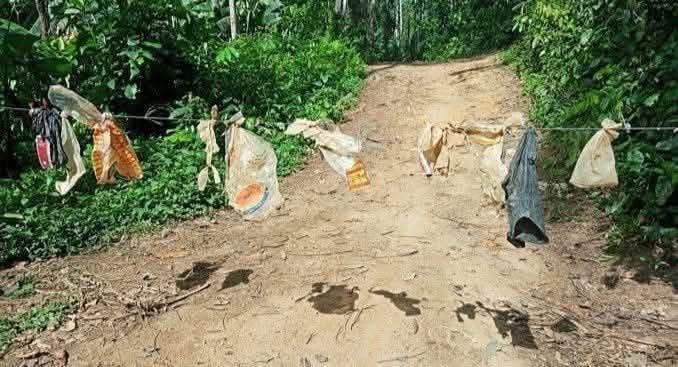
Here’s what the border in Bashua community of Boki LGA looks like. Zero visas needed for international travel. 😂
This is Ochumode community in Yahe, Yala LGA, Cross River. No road, no clinic, no clean water, and no functional school.
When it floods, the community is cut off. Farmers lose produce, pregnant women trek for care, families drink from the same river used for bathing and fishing.
I have been silent since on Sunday for a reason. But when it comes to local Nigerian politics, oga na master.
I said NDC is the sure hope, but some people doubted me.
Give whatever i say on twitter time, it must surely come to pass.
I will be putting out some shocking but available info's from today if i have the time.
She’s a phoenix teacher, he’s a vulcanizer.
She’s 10yrs older than him and they’re both married and in love
We found love in a mysterious places truly 🥰
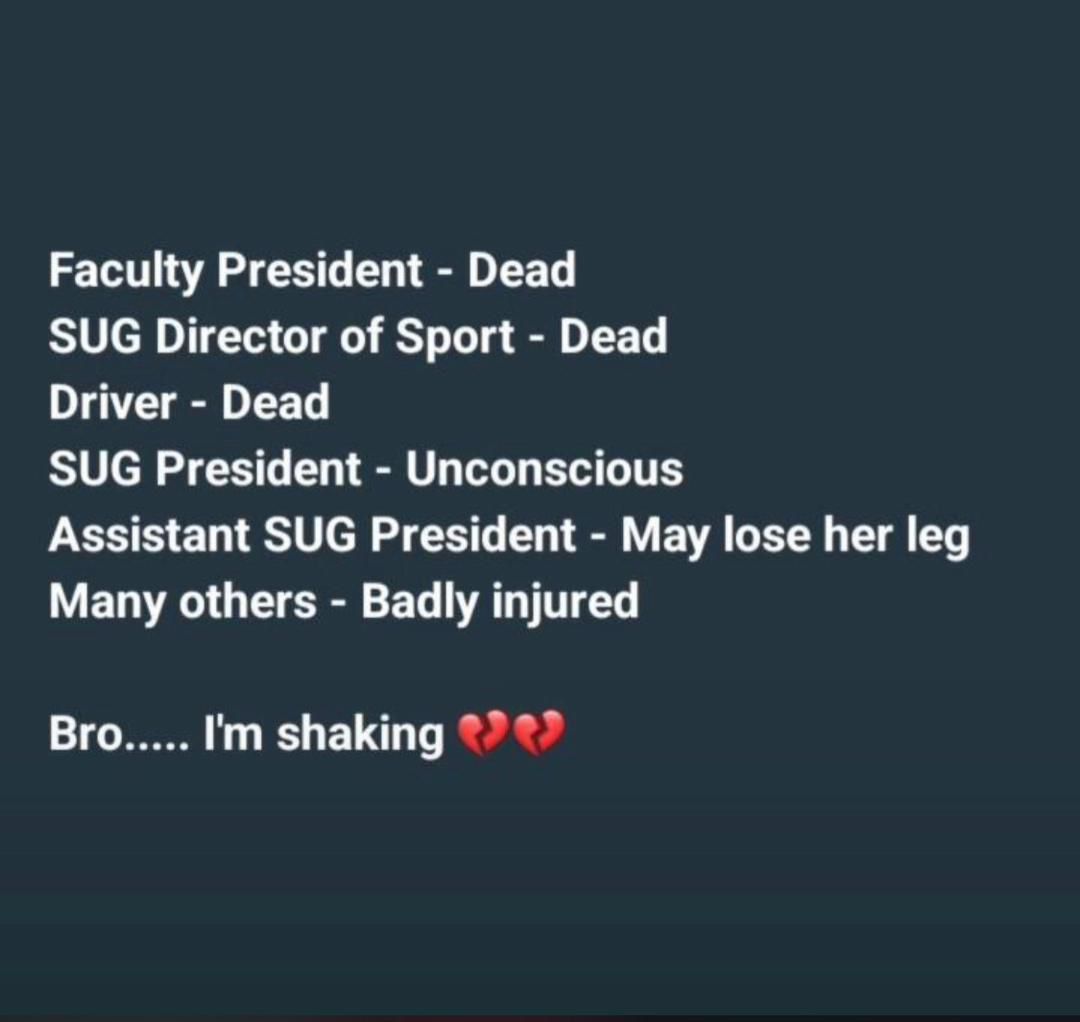
A tragic road accident involving students of the University of Cross River State has claimed four lives, including three students and the bus driver.
The Federal Road Safety Corps (FRSC) confirmed that 22 persons were in the bus, with 18 others sustaining injuries.