“Psalm 1 opens the Psalter with the Lord blessing man. Psalm 150 closes the Psalter with man blessing the Lord. In between these poetic bookends, the psalms address all of the vicissitudes of life – from the highest highs to the lowest lows.”
- @hbcharlesjr
“In Christ God was reconciling the world to himself” (2 Cor. 5:19)
Poythress (2026): “God’s goal in sending Christ as the final mediator is not merely a limited truce between parties who still detest one another. The goal is full reconciliation. And that is not easy. God’s justice and wrath have to be satisfied thoroughly, and the hearts of human beings have to be changed from hating and fleeing God to loving and worshiping him. The message of reconciliation in the Bible is wonderful and rich precisely because it is so satisfying in comparison with many human situations in which mediation achieves nothing more than a minimal truce.”
“The very worst sin that’s ever been committed was the murder of the Son of God. The very best thing that’s ever happened on this planet was the death of the Son of God. And if God can make the worst thing the best thing, He can make your disappointment, even your sin, even your foolishness, work together for good.”
– Stuart Olyott
“It breaks your heart. It is designed to break your heart. The game begins in the spring, when everything else begins again, and it blossoms in the summer, filling the afternoons and evenings, and then as soon as the chill rains come, it stops and leaves you to face the fall alone. You count on it, rely on it to buffer the passage of time, to keep the memory of sunshine and high skies alive, and then just when the days are all twilight, when you need it most, it stops. Today, November 2, a Sunday of rain and broken branches and leaf-clogged drains and slick streets, it stopped, and summer was gone.”
- A. Bartlett Giamatti (with a small change from October to November)
This is testimony from Dr. Neil Frank at a Billy Graham event in the 1980s.
He's actually Forrest Frank's grandfather. He plays this before every one of his shows.
I haven't been able to stop thinking about it. This is EXACTLY what happened to me. Lift the veil 👇
On July 24, 1965, #StLCards Bob Uecker hit a home run off #Dodgers Sandy Koufax called by Vin Scully on the home broadcast and Harry Caray alongside Jack Buck on the visiting broadcast.
@cwilson0125 @jasonkovacs Hi Chris, I have actually just started as a new pastor. One role is overseeing community groups. I see and believe in their value, but also want to avoid any potential ditch that you have experienced. If you do have guidance or insight of caution/wisdom I’d be grateful to learn!
Our Life in the Wilderness
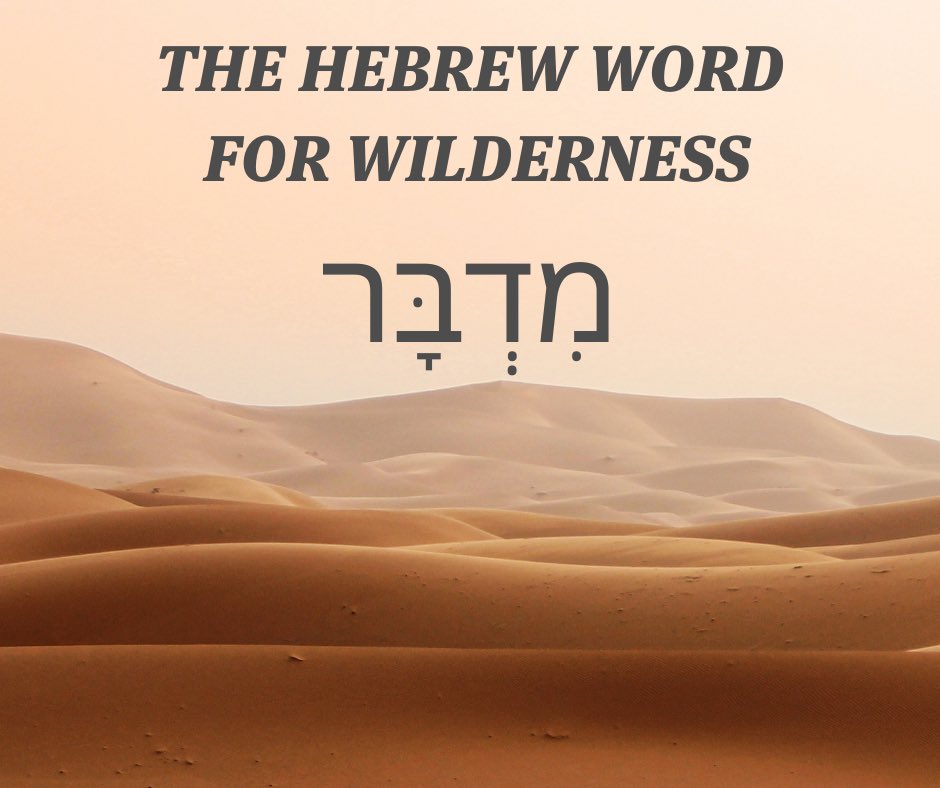
The Bible begins in a garden (Eden) and ends in a city (New Jerusalem). In between, there’s lots of time in that dry, desert territory known in Hebrew as the מִדְבָּר (midbar).
The midbar is usually translated as “wilderness” or “desert.” Israel spent 40 years wandering in this midbar. David was driven into the midbar by Saul. And Jesus spent 40 days being tempted in the midbar by the devil.
The Hebrew name of Numbers is Bamidbar, “in the wilderness,” taken from the opening sentence, “The LORD spoke to Moses in the wilderness [bamidbar] of Sinai…”
We’ve talked before about the theological nature of the biblical landscape. Rivers, deserts, mountains, seas, valleys, and fields are (what we might call) “Geographical Dogmatics.” Israel even puts sin on the map at times, such as Massah (“Test”) and Meribah (“Quarrel”) in Exodus 17:7. At other times, they put divine grace on the map, such as at Gilgal (“Rolling”), where the Lord “rolled away” the reproach of Egypt from them via circumcision (Joshua 5:9).
Sometimes a map is just as helpful, if not more helpful, than a commentary when reading the Scriptures.
The midbar/wilderness is iconic of a place of deprivation, suffering, want, and need. It is the anti-Eden, the godforsaken place, where the children of God undergo testing in life. In the wilderness, the Lord humbled Israel, testing them, letting them hunger and feeding them with manna, that they might know “that man does not live by bread alone, but man lives by every word that comes from the mouth of the LORD” (Deut. 8:2-3).
This is why Jesus, as Israel-reduced-to-one-man, endured his temptation in the wilderness, where he too hungered and quoted to the devil this verse from Deuteronomy.
And the wilderness is where we, with painful frequency, sojourn in this life. When surrounding us are the hot, desert sands of anxiety and fear. Where we see no green grass of joy but lots of sharp rocks of grief. Where day after day, we spy no oasis of hope but only a horizon of despair. Here, too, is the place we enter when we rebel against God and think we’ll create our own utopias out of the raw materials of greed or lust or power, only to find our souls are full of sand.
That, too, is one reason that Jesus was led by the Spirit into the wilderness. He knows the place where you are. He’s been there, hungry and thirsty and attacked. And he is there now, with you, in whatever wilderness you might find yourself. To bring you a cup of the sweet water of hope in the drought of your despair. To lead you out of the heat of fear and into the shade of peace. And gently but firmly to guide you away from your failed utopias of sin and into the paths of forgiveness and righteousness.
Jesus is the God of the garden, the city, and the wilderness. Wherever you are, he is close at hand, ready and eager to heal, love, forgive, and sustain you.