New work looking at how epigenetic clocks and cell composition derived from Illumina EPICv1 and v2 compare, led by our outstanding colleagues @UBC@koborlab Always thrilled to publish with such a great team!
Ever wondered about compatibility of @illumina#infinium V1 versus V2 #arrays for #epigenetics population studies including #epigenetic age & #risk scores? Check out our newest, courtesy of our wonderful #bioinformatics team and an awesome group of amazing @collaborators - enjoy!
@natalie_matosin @KieranOD_PhD Thank you! Funny though I've seen responses to our work from non-scientists at both extremes.
1. "Obviously unnecessary study! Of course pregnancy and parenthood ages us!"
2. "Obviously wrong. My aunt had 8 kids and lived to 100".
Exactly why we need the science!
@JKresovich@PNASNews@koborlab@Danbelsky @ChrisKuzawa Thanks @JKresovich! Yes! We still need to account for studies showing faster bio aging with parity like our NHANES study, and some of the epi data linking parity to CVD, kidney disease, all-cause mortality (at the high end of parity after the j-shaped portion). Much to learn!
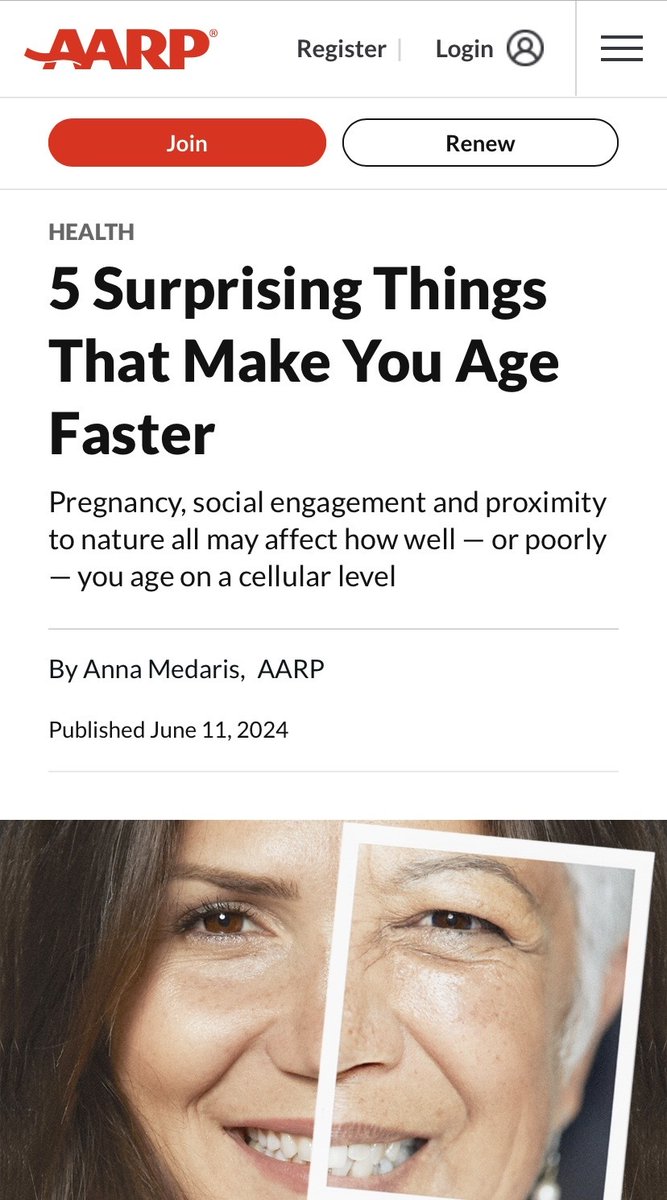
Our publication showing that pregnancy is associated with faster epigenetic aging is out now in @PNASNews!
https://t.co/t4JKhpxiwp
@koborlab@Danbelsky @ChrisKuzawa
A thread about the paper below 👇
More broadly, these kinds of studies are highlighting how research in biological aging has often overlooked women and women’s health: we really think more carefully about pregnancy, menstruation, and menopause, when building, testing, and validating measures of biological aging.
We measured biological aging using 6 epigenetic clocks, a family of revolutionary tools for studying aging and predicting health and longevity. You can read more about them in my not too out-of-date review article. https://t.co/PHL3OlFHva
The effects we see are small, and we still don’t know the long-term implications. But this kind of research may one day help us identify who is at the greatest risk and devise ways to support them to minimize any long-term costs of reproduction.