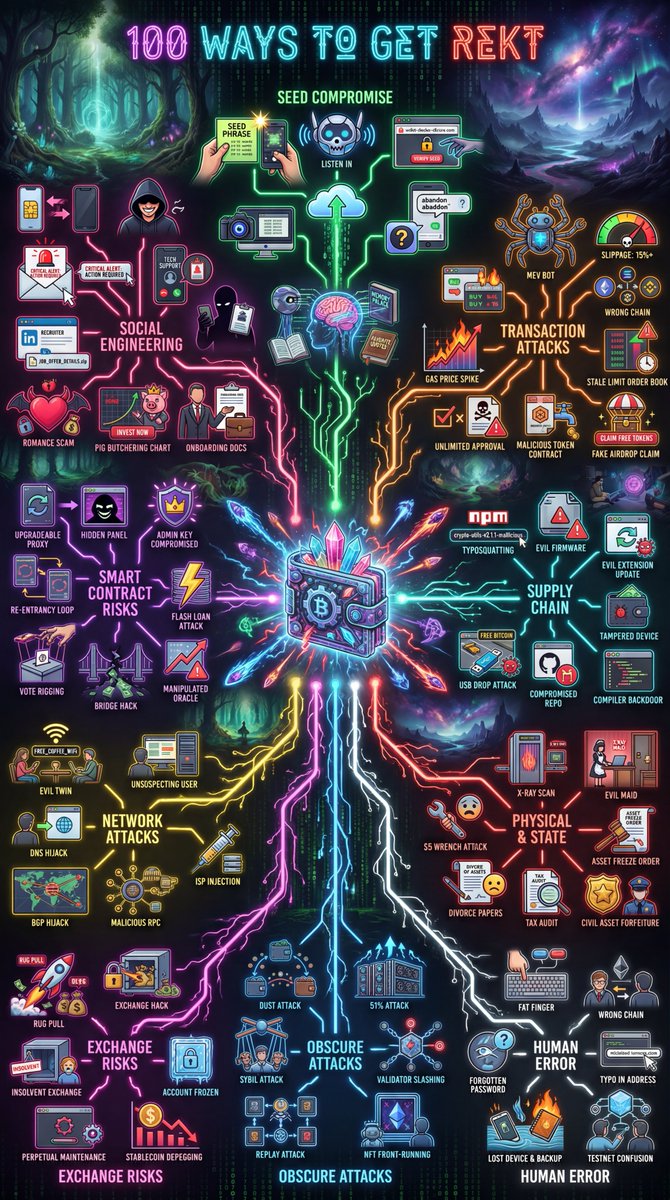
⚠️ A PulseChain user lost 43.7 billion $PLS (~$367k) today, likely by blind signing a transaction that had a different destination wallet maliciously inserted into the calldata. It's still being investigated, but it looks like this was a particularly sophisticated attack.
https://t.co/P4NuI9fnLs
Note: this is not a Piteas issue, it's happened on other DEXs on PulseChain recently as well.
2 lessons here:
✍️ Be extremely careful that you're using the right website.
✍️ Use a wallet that simulates transactions. OKX does this, we're not sure what else does.
For our upcoming yield product, we want liquidity providers to retain the majority of the trading fee revenue.
We expect the yield to be strong, as liquidity providers will have some of the strongest incentives in the ecosystem to supply liquidity.
A possible fee structure could be:
1️⃣80% to liquidity providers
2️⃣10% used to buy back and burn PCOCK
3️⃣10% used to buy back PCOCK and held in the protocol treasury as a long-term investment
The treasury allocation is important because, even if the software is immutable or highly decentralized, ongoing maintenance and security require sustained resources to defend against evolving threats. Without a portion of fees supporting long-term development and operations, it becomes difficult to ensure the protocol remains secure and well-maintained over time.
This April, we will launch our first yield DeFi product that is permissionless, open-source, allows yield creation, and is conservatively safe - protecting our protocol’s funds while remaining open for public use.
A new chapter begins for Liberty Swap, Liberty Shield, and LibertyX.
$PCOCK is coming