Two months ago, I left Annapurna Labs, ending a five-year chapter at Amazon. Amazon treated me exceptionally well and gave me more opportunities to grow than I can count. I’m grateful for the people I worked with and everything I learned there.
I followed my heart to Prime Intellect. Its mission to build an open superintelligence stack deeply resonated with me. I believe every person and every business should be empowered to build their own intelligence. Your AI agent should be yours, not a third-party stranger.
Walking into Prime’s SF office, I felt ten years younger. These past two months have been the most exciting of my career.
Three things stand out:
1. The people.
Prime’s team doesn’t all come from famous AI labs, but I’ve rarely seen this level of curiosity and determination.
When we made our high interactivity GLM-5.3 serving endpoint available internally, everyone switched their agents to it. They never went back.
The speed improved productivity. Just as importantly, the team kept sharing feedback, helping us refine performance and tool-calling reliability. Soon, RL rollouts, synthetic data generation, and long-horizon agent research were running on the same infrastructure.
As of this week, our internal inference usage is 600–700 billion tokens per day. That experience gave us the confidence to open the service to the public.
2. The full stack.
Prime brings together hosted training with prime-rl, verifiers, sandboxes, an RL environment hub, the Prime Agent harness, and now Prime Inference.
You can train, deploy, and run agents in one place, without stitching together infrastructure through a massive engineering effort. And most of these components are fully open source.
Our inference stack builds on that same foundation, with deep collaboration across NVIDIA Dynamo, Inferact, and the broader vLLM community.
3. The compute.
For anyone working on LLM infrastructure, access to compute at this scale is a privilege. Building and operating inference across large scale of GB200 racks and B300s is not something I take for granted. Vera is already in our hands, and Rubin is on the horizon. NVIDIA’s latest hardware gives us the foundation to push inference performance further.
Alongside the public launch, we published a technical post on how we built Prime Inference: https://t.co/zsEVO51jsL
Inference has moved incredibly fast over the past year, and it can be hard to separate useful advances from the noise. We use GLM-5.3 optimization to show the work end to end: how we serve agent workloads with low latency while also supporting high concurrency, dependable availability, and reliable tool calls. Recommend for a read if you are interested in learning about P/D, topology choice, NVFP4 KV compression kernel fusion, tool call reliability.
Fast inference matters. Serving real agents reliably at scale is what counts.
It was obvious Anthropic would save their strongest release until just before the IPO. We now know the name of that model: Fable 5.5. Opus 5.5 is special because of its lineage, and soon we shall see why. Anthropic have not paced anything, and their resolve has never wavered.
And if that's the form factor, fundamentally the 1B-user bot will be free.
Not $20/mo ChatGPT Plus. Not $200/mo Claude Code. Free like Google Search and Facebook was, not paid like Spotify and Netflix.
So how does it make money? Really only two ways:
- Ads
- Affiliate
While ads can generate demand (Facebook), or capture demand (Google), *proactive* personal bots (e.g. Instinct) taking affiliate cuts will be insane for commerce.
If you’re interested in running ads for the first time, read this first
I would’ve saved thousands of dollars if I had this mindset before I started ads
Here are remote jobs that actually pay.
- *Virtual Assistant* - managing emails, calendar, WhatsApp for US/UK clients - $400 to $1,200/month - Upwork, Belay, LinkedIn
- *Customer Support / Chat Agent* - replying to customers on WhatsApp/Email - $300 to $800 - Remote Africa, Tawk, HelpScout jobs
- *Transcription & Captioning* - GoTranscript, Rev, Verbit - $200 to $600 if you are fast
- *Data Entry & Lead Generation* - finding contacts for businesses - $250 to $500 - Upwork
- *Content Writing / SEO Writing* - blogs, product descriptions - $5 to $30 per 500 words
- *Video Editing - Shorts/Reels* - cutting TikToks for brands - $150 to $1,000 - Fiverr, X
- *Social Media Management* - running pages for small businesses abroad - $300 to $700
- *Tutoring Online* - English, Math, Science on Preply, Chegg, Cambly - $10 to $25 per hour
- *AI Data Labeling / Rating* - labeling data for AI companies - $500 to $1,000 - Remotasks, Scale AI, Appen
- *No-Code Automation* - setting up Zapier, https://t.co/AhRPZOkFu7 for businesses - $500+ per project
Fastest to start now: Virtual Assistant + Video Editing + Tutoring.
GM ☀️
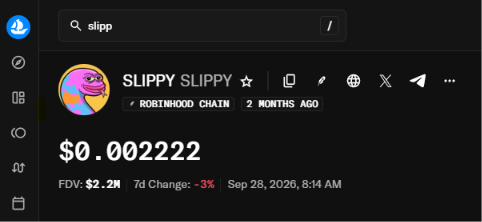
Hot take: most “IP NFT” collections sold holders a license, not an actual business.
BAYC-style rights let you merch *your* ape. That sounds powerful until you realize the brand still owns the universe, the marketing budget, and the demand. You get a character. They keep the flywheel.
Unpopular opinion: @Slippyclub is structured differently. The license is personal + commercial, it moves with the NFT, and it sits next to revenue share on what that character actually earns plush, prints, apparel, licensing, cosmetics. Rights without a share of the character’s output is just paperwork. Rights plus a cut is ownership.
Most IP NFTs gave you permission. Very few give you the P&L.
Went with a Browns Steelers game in Pittsburgh. Had shit randomly thrown at us over the whole course of the game.
This is just the Browns Steelers rivalry.
It would be more surprising if nothing was thrown.
THE PRESS THAT WOULD HAVE TO INVESTIGATE THIS IS ON THE LIST
This is the uncomfortable one, and I want to be careful with it because it would be easy to overclaim.
On 28 April 2026, eight of Australia's news organisations signed one joint statement backing the news bargaining legislation. The ABC. Australian Community Media. News Corp Australasia. Nine. Network Ten. SBS. Southern Cross Media Group. Guardian Australia. Commercial rivals and both public broadcasters, on one statement, backing a measure that pays all of them.
Separately, the Commonwealth pays $67.6 million through a fund subsidising journalists' wages at $13,000 per full-time-equivalent journalist a year, $33 million to AAP, a mandated minimum $3 million a year of advertising carved out for regional newspapers, and $204.1 million of campaign advertising in a single year.
Those recipients do report.
The journalism fund requires expenditure reports and a declaration, and can demand an audit. What none of them has to do is tell you. The reporting goes to the department, not to the reader.
I am not saying anyone spiked a story.
I have looked for that and I cannot prove it, so I am not going to imply it. I have also found nothing showing an instruction went out to any newsroom.
The narrower claim is the one I can stand behind, and I think it's harder to argue with.
The organisations best placed to investigate how discretionary government money is allocated are themselves recipients of discretionary government money, on terms the government sets, and none of it is accounted for in public.
That doesn't require anyone to be corrupt. It requires nobody in that room to have a reason to go looking.
And here is what the recipients were doing with their money.
In June 2024, while payments from the original bargaining code were flowing, Nine announced up to 200 job cuts, and confirmed in August that around 85 had gone from its newsrooms, print operations and commercial divisions. In the same week Seven West Media was reported to be cutting up to 150 roles. Seven never confirmed that number, but its own accounts three months later set out a $108 million cost-out program. Then in January 2026, three months before signing that joint statement, Nine agreed to buy the outdoor advertising company QMS Media for $850 million.
The money is for journalism. Nobody has to show that it went there.
Cold Hard Facts. Corrected when wrong. No misinformation.
What's your thoughts…?
Peter Lyndon-James 🇦🇺
Sources:
Joint statement of Australian news businesses on the News Bargaining Incentive draft legislation, 28 April 2026, published by the ABC and SBS. Department of Infrastructure, News Media Assistance Program. Journalism Assistance Fund grant opportunity guidelines, sections 11.2 and 11.3. Department of Finance campaign advertising figures, FOI 25-26-152. Nine Entertainment and Seven West Media announcements and ASX releases, June and August 2024. Gilbert + Tobin on the QMS acquisition, January 2026.
Most free mints are just free JPEGs. This one could be building more.
@0xCyberThrone is preparing an 8,888 supply Genesis collection:
- Omnichain
- FREE mint
- Mint date TBA
- Launch via Unvault
- WL through Nucleus + project collaborations
The interesting part is the utility:
IP rights, marketing support, downloadable content, digital books plus lifetime CyberCortex access for qualifying investors.
My take?
The NFT may be the entry point, not the final product.
If CyberCortex and the wider ecosystem keep developing, these 8,888 assets could become more than collectibles.
Free mint is the hook.
Utility is what I’ll be watching.