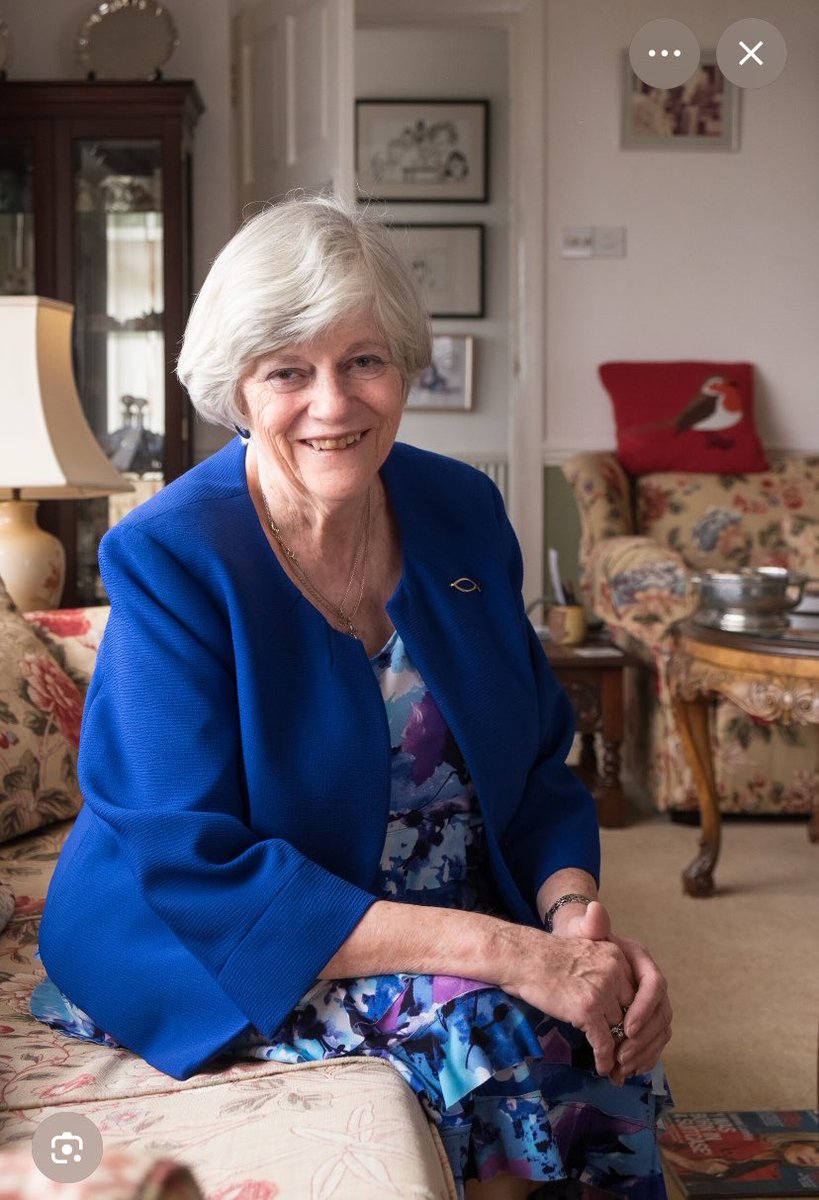
If you follow me or even speak to me on this platform kindly unfollow if you think Ann Widdecombe death was funny. Nothing is funny about a 78 year old woman being beaten to death. Understand this ! You are scum and I want absolutely nothing to do with you. Enough is enough
Ann Widdicombe's name must be put on the wall in the House of Parliement alongside the other two MPs Joe Cox and David Amess who were also murdered.
Repost this if you agree.
UK police apparently don’t want anyone talking about this man who was attacked by a muslim migrant gang
They told him not to talk about it
So definitely don’t talk about it or share… that would be really bad…
His lighthouse stood for 123 years. And in the end it was not the tower that failed.
It was the rock underneath it. 🇬🇧
Two lighthouses stood on the Eddystone Rocks before him, 14 miles south of Plymouth, and the sea destroyed them both. The first, built of wood, vanished without trace in the Great Storm of 1703, taking its builder and 5 other men with it. The second stood for 47 years, then burned one December night in 1755, down to the rock it stood on. 🔥
So Britain faced a question: how do you build on a rock the sea owns?
The Royal Society's answer was not a lighthouse man. It was John Smeaton, an Englishman from Austhorpe near Leeds, a maker of scientific instruments who had turned his mind to engineering.
He started with a question nobody had thought to ask. Why does an oak tree survive a storm? Wide at the root, narrow at the top. So he shaped his tower like the trunk of an oak. Wood had washed away and wood had burned, so he built in granite, every block dovetailed into its neighbours like a carpenter's joint in stone, pinned with dowels of marble. For the mortar he ran experiment after experiment until he proved which limestone sets hard even underwater, a lime the Romans had used whose science had been lost. He worked out why and brought it back.
3 years, 1756 to 1759, 14 miles out in the open sea. Then the lamp was lit, and the sea came to test it, winter after winter. It did not move.
He went on to build bridges, harbours, canals and mills across Britain, and because the only engineers Britain named were soldiers, he called himself a civil engineer, the first man in Britain to do it. In 1771 he and 6 others met in a London tavern and founded the first engineering society anywhere in the world. It still exists. 🏛️
His light burned for 123 years. When engineers finally found a fault in 1877, it was in the reef, not the tower. The sea was wearing away the rock beneath it. His tower had outlasted the rock it stood on.
In 1882 the lamp went out for the last time. But nobody scrapped his tower. The top came down stone by stone and went back up on Plymouth Hoe, where it stands today in its red and white bands. You can climb it.
━━━━━━━━━━━━━━
Look at any lighthouse standing on a British rock. That curve is his oak, still holding.
We are the home of British heroes.
There is a place for you in it.
👉 https://t.co/rih7iKwnvf 👈
Be part of us. ☝️🇬🇧
Be Proud Of Us. 🙏🇬🇧
The governor of Oklahoma raises a glass of raw milk to a camera in 2026, takes a swig, and tells the state it tastes like freedom.
He had just signed a law lifting the cap on how much unpasteurised milk a farm can sell directly to the public, from a hundred gallons a month to fifteen hundred, and making it legal to advertise the stuff. Oklahoma is one of a run of states pulling raw milk back out of the shadows. And every time one does, the same warning goes up: this was banned for a reason, have you forgotten why.
So it is worth remembering exactly why. The real reason has been quietly mislaid.
In the growing American cities of the mid-1800s, milk became a genuine killer, and the reason was an industry. Distilleries producing whiskey had a hot, sour waste left over called swill, and someone worked out you could feed it to cows packed into sheds right next to the still. The animals lived in filth, diseased and dying on their feet, and gave a thin bluish milk so poor it was doctored with chalk, plaster and molasses just to pass for milk. This swill milk poured into the cities and killed infants by the thousand. That was the scandal that built the case for pasteurising milk and regulating dairies, and it was a fair case against that milk.
Here is the part that got quietly folded in. The same wave of law that rightly killed off the distillery-slop dairies also swept up the clean stuff: milk from healthy cows on grass, on small farms, drawn into clean pails. All of it got tarred with the swill-dairy brush and pushed toward the same ban. And once the big pasteurising plants and the consolidated dairies were built, keeping the small raw producer locked out stopped being about disease at all. It became about who was allowed to sell milk.
The filthy urban swill dairy vanished a century ago. The suspicion it earned got pinned, permanently, onto a farmer selling clean milk from healthy cows at his own gate.
They banned the milk of dying cows fed on distillery waste, which was right, and then kept the ban aimed at the farm down the lane, which was never the problem.
This is DJ Tommy Shrewsbury, who was attacked in Bournemouth by four men "speaking Arabic."
The @dorsetpolice 🚔 have done nothing in 10 days and asked him not to publicise his beating.
Bournemouth is notorious for migrants dealing in drugs and raping women.
Muslim migrants are losing their minds after Milan Mazurek’s powerful speech in the European Parliament.
The MEP called on Europeans to start protecting their own citizens, especially women and young girls, and to deport migrants who refuse to integrate and bring crime to Europe.
This is the kind of honest leadership Europe desperately needs.
In October 1942, a terrified nineteen-year-old Jewish girl knocked on the door of Céleste Varon, a 63-year-old seamstress who lived alone with her elderly cat.
The girl was the Mandel daughter from the second floor.
The girl’s parents had already been taken by the authorities, and she had absolutely nowhere left to go. Céleste did not make a grand speech, and she did not hesitate.
She simply stepped aside, let the frightened teenager inside her two-room apartment on the Rue Sainte-Catherine, and quietly decided to change history from her sewing machine.
For forty years, Céleste had a reputation in her Bordeaux neighborhood as the woman who could make something from nothing.
She spent her days doing close work by her window, watching the world change through the glass. When the German occupation brought terror and yellow stars to her streets, she did not see a political crisis.
Instead, she saw a practical problem that required a practical solution. To survive, her new guest needed to become completely invisible to the soldiers patrolling the city.
Céleste knew exactly how to do that because she understood that how a person is seen depends entirely on what they wear.
She immediately set to work transforming the young girl into her niece.
She did not just alter clothing. She coached the girl on how to walk, how to carry her shoulders, and how to blend into a crowd with the same patient specificity she used during dress fittings.
Later, she used her sharp eyesight and steady hands to alter identity papers, mixing her own inks under a work lamp until the changes were flawless.
"A person is noticed when they look out of place," Céleste whispered to her guests as she worked. "Our job is to make sure you look exactly like what the world expects to see."
Soon, her quiet resistance grew.
Over two years, Céleste hid a total of seven people in her tiny back room.
When her savings ran out in 1943, she took a massive risk to feed them. She started accepting alteration commissions from the wives of German officers.
She sat calmly in apartments decorated with swastika flags, pinning hems and maintaining a perfectly blank expression, using the money from the occupiers to buy food for the Jewish citizens hidden right under their noses.
Twice, the French police searched her building, but they only ever saw an old woman sewing quietly at her machine and moved on.
Of the seven people she sheltered, five survived the war. After the liberation, the Mandel daughter emigrated to Canada and eventually named her own first daughter Céleste.
In 1947, she sent a letter back to the little apartment on Rue Sainte-Catherine, thanking the woman who taught her how to walk down a dangerous street like she belonged there.
They wrote to each other for eleven years until Céleste passed away in 1958, right at her sewing machine, with a piece of fabric still under the needle.
Céleste never asked for fame, medals, or recognition.
She simply went back to her normal life after the war, believing she had just done her job. Today, her story lives on through that single, treasured letter preserved in the Bordeaux municipal archives. It reminds us that ordinary kindness, mixed with a little courage and practical skill, has the power to light up the darkest times and sew a broken world back together.
You have a birthday.
So does England. 🏴
And it’s today. The 12th of July.
Almost 1,100 years ago, on this exact day, England became a country. Almost no one knows it.
The island was old long before it had a name. Farmers. Romans. Saxons. Then out of the sea came the Danes. ⚔️
They came to raid. They stayed to farm. And one hard question hung over the whole land.
Two peoples, Saxon and Dane, one small island. Whose country was it now?
Alfred of Wessex held the last corner and turned the tide. But he wanted more than a truce. One country. For both peoples. One England.
He died before he could build it. 🔥
So his family finished it. His son took back town after town. His daughter Æthelflæd led the armies herself. A woman commanding armies more than 1,000 years ago.
But it was Alfred’s grandson who ended the work.
Æthelstan.
In 927 he rode north and took York, the last Viking crown in England. One man now held every English kingdom.
Then he did something stranger. He called the other kings of Britain to a bridge in the north. A quiet place called Eamont. 📜
Scots. Welsh. The kings of the north. There, by the river, they bent the knee.
And that morning he took a new title. Not king of Wessex. Not king of the Saxons.
King of the English. All of them.
That bridge, on this day in 927, is the closest thing we have to the morning a country began. ⚖️
He made it real. One law, coast to coast. One coin, struck the same everywhere. On it he wears a crown, not a war helmet.
Then in 937 they came to destroy it. Vikings, Scots, the men of the north. The largest army the island had ever seen. They met him at Brunanburh.
Dawn to dark. Five kings fell. And when the sun went down, Æthelstan was still standing. 🏛️
England had been tested. And England had held.
He left no son. He died in 939 and chose a quiet abbey at Malmesbury. Alone, in the country he had made.
But it never came apart. Every king and queen of England since has sat on the throne he built. More than 1,000 years. Unbroken.
You were taught 1066. The Tudors. The wars. But not this. Not the king who made the country. Not the bridge. Not the 12th of July.
Æthelstan. The first king of England. And the one we forgot.
Next year it turns 1,100.
England has a birthday. And now you know when it is. 🇬🇧
You did not choose to be born here. But you inherited a country with a beginning. A name won on a bridge, 1,100 years ago. That is yours. No one can take it from you.
Help us remember the king who made us.
Help us remember who we are. 👇🙏
👉 https://t.co/rih7iKwnvf 👈
Be part of us. ☝️🇬🇧
Be Proud Of Us. 🙏🇬🇧
Activist: "You should be feeding Bovaer. It cuts methane by a third. Why wouldn't you?"
Farmer: "Have you followed what happened in Denmark?"
Activist: "They rolled it out. Good for them."
Farmer: "They made it compulsory last year. Feed the additive, or switch to a high-fat diet, or take the fine. Within weeks farmers were reporting whole herds with diarrhoea, milk yields dropping, animals going off their legs. One dairyman lost ten cows and put his own family back on organic milk."
Activist: "That's anecdotal. The regulators say it's safe."
Farmer: "Norway and Sweden paused their trials. The European Commission ordered the safety review reopened. The maker says it's fine, and it may well be, but when two countries hit the brakes and a third's animals are on the floor, I'm allowed to wait before I put a synthetic nitrate compound in the feed of animals I've kept healthy on grass for years."
Activist: "It's about the planet, not your cows."
Farmer: "My cows are the bit of the planet I'm in charge of. The methane they breathe out was grass a season ago and it'll be grass again. I'm not dosing a healthy animal to fix a loop, on the say-so of the firm selling the dose."
Activist: "So you're just refusing to change."
Farmer: "I'm refusing to be the trial. Ask the Danes how volunteering for that went."
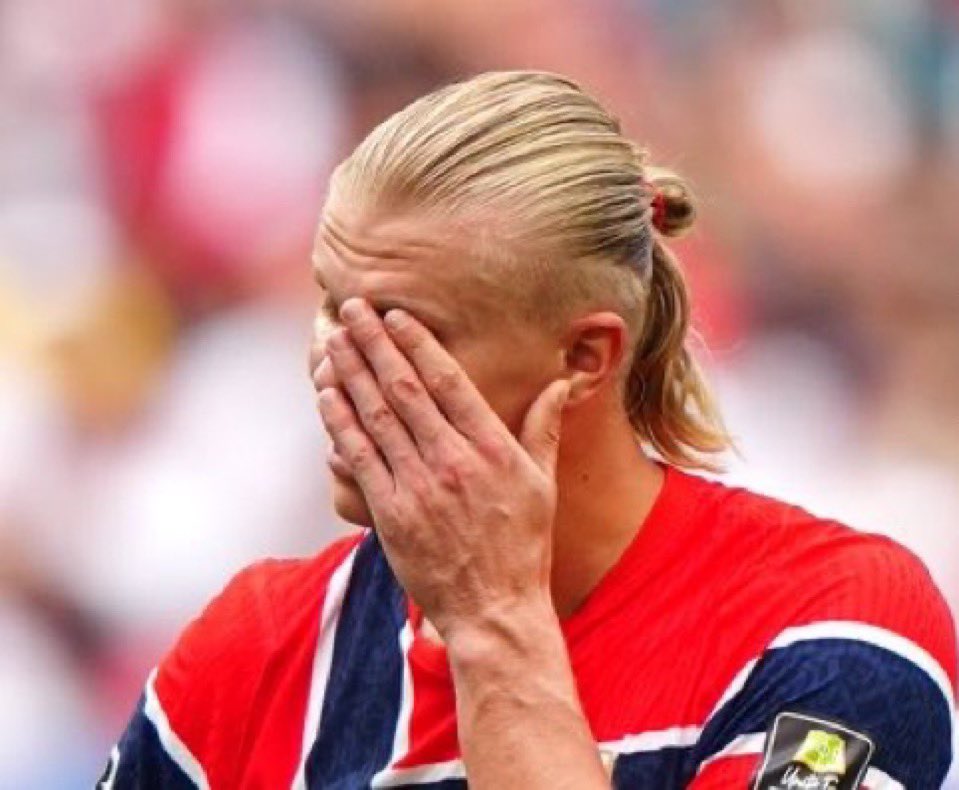
🚨🗣️New: Erling Haaland on why England’s equalizer through Bellingham against Norway should not have stood:
“I don’t care how big the moment was, that goal should never have counted. The Laws of the Game are there for everyone. If the ball hits a camera cable and it changes the flight, that’s outside interference. Play stops. It’s a dropped ball. Simple.”
“Instead, England score, the whole momentum changes, and suddenly Norway are chasing a completely different game. Moments like that decide international tournaments.”
“Now imagine the exact same thing happened in a match involving Argentina and Messi. Be honest with yourselves, football wouldn’t hear the end of it. Every TV show, every podcast and every social media account would be calling it one of the biggest refereeing scandals of the tournament. But because it’s England, somehow people are expected to move on.”
“Consistency is all players ask for. Either the Laws apply every game, or they don’t.”
Alf-Inge Haaland on speaking to Erling Haaland after Norway’s World Cup elimination to England.
🗣️ “I walked into the dressing room and saw my son sitting there in complete silence, tears streaming down his face. He tried so hard to hide them, but he couldn’t. His heart was shattered. I put my hand on his shoulder, looked him in the eyes and said, ‘Erling, don’t you dare apologise. Don’t carry this pain alone. You gave your country every drop of your heart, every ounce of your strength, and every breath you had.’ Seeing your own son broken like that is one of the hardest things a father can experience.”
”‘People only celebrate the goals and the trophies. They never see the sacrifices, the endless pressure, the sleepless nights, the injuries, the doubts, and the emotional burden of carrying an entire nation’s dreams. Erling wasn’t crying because he lost a football match. He was crying because his dream of making millions of Norwegians proud had slipped through his fingers. Those weren’t tears of weakness they were tears of love, pride and heartbreak.”
“I told him, ‘Lift your head, son. There is no shame in crying after giving absolutely everything. Real warriors cry because they care. Real leaders cry because they feel the pain of letting people down, even when they haven’t. Never let anyone tell you those tears make you weak they prove how much this country means to you.’”
“And to the people already searching for someone to blame… shame on you. Before you criticise these players, remember the joy they gave this nation. Remember how they made children dream again. Don’t destroy them in one night because football can be cruel. Every player in that dressing room is hurting far more than any supporter watching from the stands.”
“As his father, I couldn’t have been prouder tonight if he had scored a hat-trick and lifted the World Cup. I didn’t see a global superstar—I saw my little boy wearing Norway’s shirt, refusing to give up until the very last second. That’s what filled my heart with pride. Medals and trophies fade with time, but courage, sacrifice and love for your country stay with you forever.”
“These tears will never define Erling Haaland. They will shape him. One day, when people look back on his career, they won’t remember him crying—they’ll remember the man who stood back up after the deepest heartbreak and fought even harder. Tonight, Norway lost a football match, but they gained something even greater: a generation inspired by players who gave everything for the badge. Sometimes football breaks your heart… but it’s that heartbreak that creates legends.”
I can’t stop thinking about how my friend Ann must have felt and how I wish I could have been there to protect her in those awful last minutes… I feel disgusted that this could have happened in my country
https://t.co/NitMBY4FC3
Dear the World,
We lost a beautiful soul today. A feirce patriot who only ever wanted the best for our country.
I feel shattered. I am sure many others do
The UK is Broken. Can we fix ourselves? Do we even want to?
Her name was Ann Widdecombe
😔💔🇬🇧
Lifted from Facebook.
Tommy Shrewsbury
Sooooo. Sorry.
They need to go - that’s it.
I hate uploading personal stuff, however this is monumentally different.
PLEASE SHARE.
I’m a 32 year old man.
I respect people from all backgrounds, ethnicities, religions, sexuality etc etc however - things need to change.
I’m posting this because it’s true - and that’s all.
I’ve DJ’d and worked in the town for 13 years.
I’ve never had any serious altercations, and I think the industry knows not to attack someone who has nothing but a lot of love to everyone.
In all my years working, djing, late nights I’ve never had a problem.
Without sounding like an idiot, I never thought I could get in any violent situations - ever.
I hate confrontation.
And it STILL happened to me.
Just to confirm. I’m fully recovered.
Police asked not to upload anything due to potential backlash?! Bollocks.
Family and close friends said to maybe keep this quiet, but if this can happen to me, it can happen to anyone, I really mean that.
I’m grateful I only got punched up, rather than anything worse.
It’s been a week since this happened to me, I have heard NOTHING from the police, however they’re happy to patrol the hotels non-stop day and night so they’re safe…
This needs to be seriously addressed, I hate drama, but this is taking its toll on our town.
Last Wednesday I was waiting for a bus home (before the England V Congo game finished).
Out of nowhere, 4 men started shouting at me (Arabic), and hit me 3 times in the face. Then kicked me when I was on the floor, took my wallet, and cash.
Apparently I’m lucky to still have my eyesight.
Luckily, a lovely group saw this, chased them, called police and ambulance.
Still waiting to hear from the police… 10 days later - still nothing…
These guys were laughing, spitting on me, and fled towards a certain Hotel.
I have NEVER seen the guys in my life.
I hate politics:
I’m the nicest guy on Earth.
These were illegal immigrants attacking a young, white local guy. That’s all.
Appreciate the messages!
Rupert Lowe.
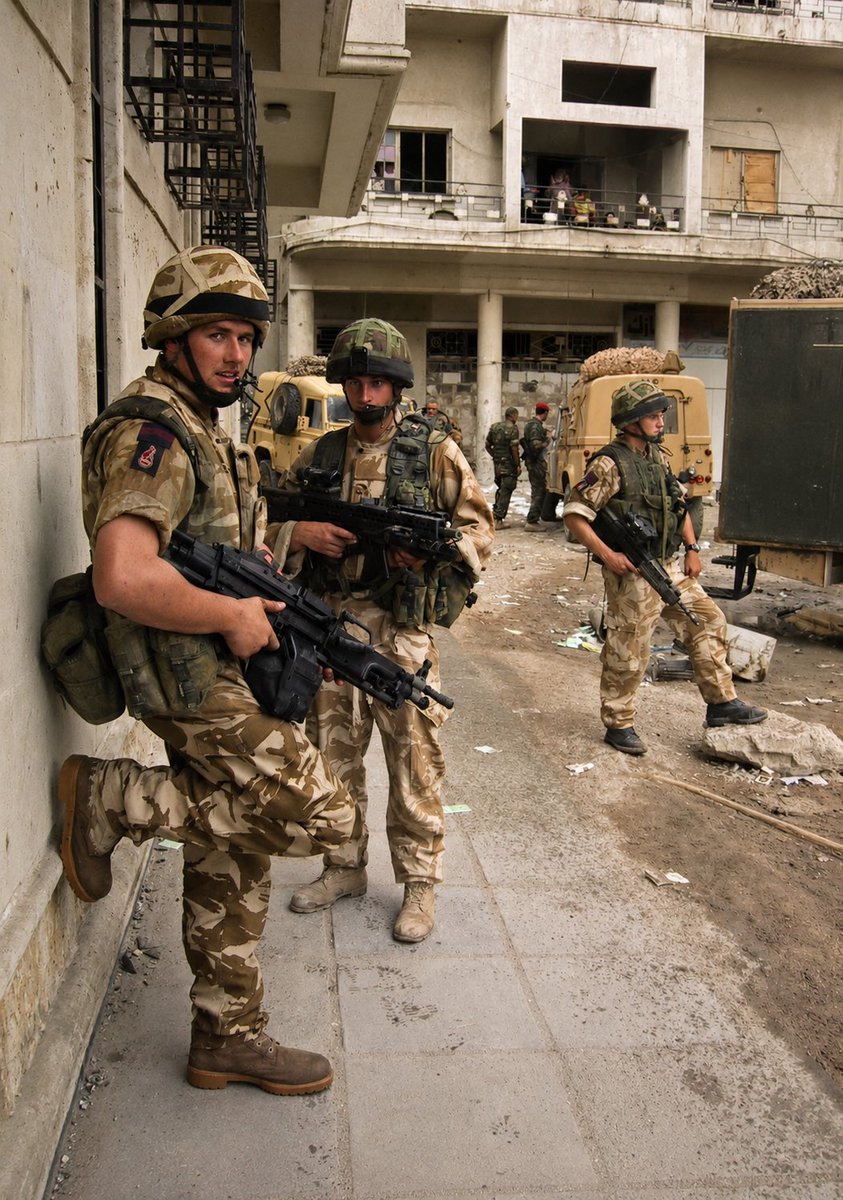
An American soldier, Iraq 2005.
"Those Brits are a strange old race. They show affection by abusing each other, will think nothing of casually stopping in the middle of a firefight for a 'brewup' and eat food that I wouldn't give to a dying dog. But fuck me, I would rather have one British squaddie on side than an entire battalion of Spetznaz! Why? Because the British are the only people in this world who when the chips are down and it seems like there is no hope left, instead of getting sentimental or hysterical, will strap on their pack, charge their rifle, light up a smoke, and calmly and wryly grin, 'Well, are we going then you wanker?" 🏴 🇬🇧
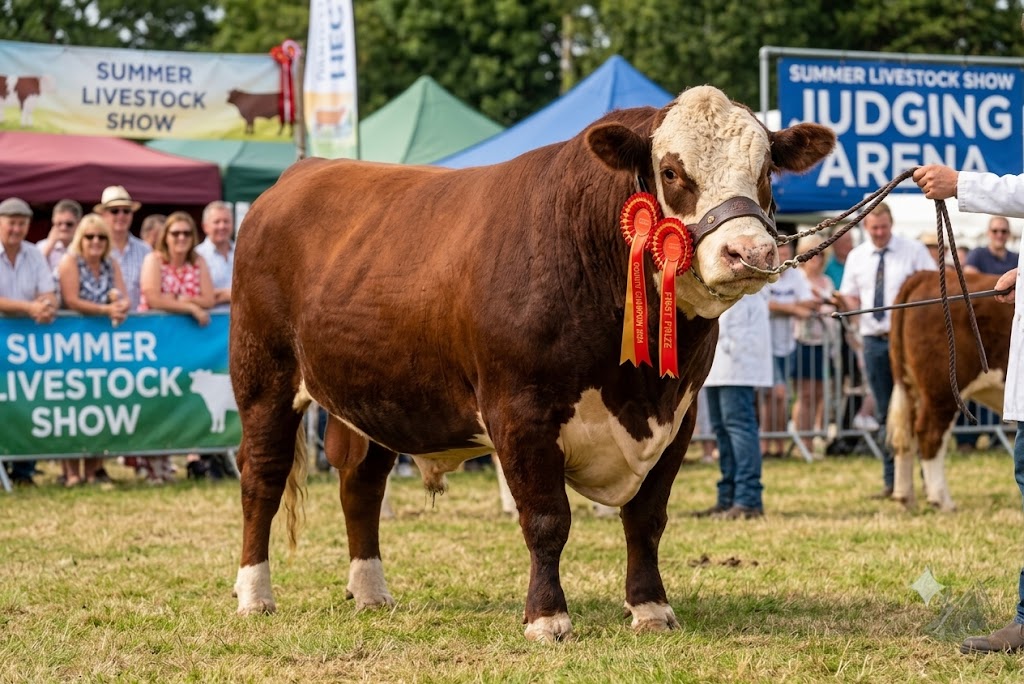
At the county show last summer, Gerald won a red rosette, and remains the only individual present that day who did not care about it in the slightest.
The humans cared enormously. There was scrubbing, and grooming, and a great deal of anxious brushing of an animal who never asked to be entered. There was tension at the ringside. There was a judge in a bowler hat walking slowly along a line of vast cattle, making the sort of grave decisions that, to the people holding the halters, felt like the most important judgements ever passed on earth.
Gerald stood through all of it as though waiting for a bus.
The rosette went to him. His owner was thrilled, and rightly, because a great deal of good work stood behind it. The rosette was pinned up. Photographs were taken. And Gerald, a champion now, decorated, validated, publicly declared superior to every other bull in the field, did the only thing that made any sense to him. He tried to eat it.
Two ways of being stood in that ring. A creature who had pinned his whole sense of worth to a scrap of ribbon awarded by a stranger, and a creature who could not tell the difference between winning and lunch, and frankly preferred lunch.
We spend our lives chasing the rosette. The promotion, the follower count, the stranger in the bowler hat nodding at us at last. And the animal we call simple stood in the ring already complete, needing no ribbon to tell him what he was, and would have traded the whole honour for a decent bit of hay.
Gerald did not become magnificent when the rosette was pinned on. He was exactly the same the moment before, and the moment after he tried to eat it.
The ribbon was for us. He never needed it. That was the entire lesson, and he taught it without trying.