📢📢There is a parliamentary petition for a parliamentary debate on folic acid being added to bread.
It does not ask for it to be stopped but at least it needs to be debated.
It URGENTLY needs more signatures.
https://t.co/NyRL3KzWwG
People get strangely angry when I question the calorie model.
I’ve spent years studying nutrition and functional medicine, so this is coming from education, not ignorance.
Energy matters. Nobody is denying that.
But you do not eat calories.
You eat food.
You do not literally burn calories.
Your body processes food.
That is why 2000 calories of steak, eggs, and butter eaten once or twice a day does not act the same as 2000 calories of cereal, toast, muffins, and biscuits eaten six times a day.
Every time you eat, insulin goes up.
Six meals, six insulin spikes.
One or two meals, far fewer.
That matters.
Protein also takes more energy to digest.
It fills you up more.
You eat less without fighting yourself all day.
Human biology is regulated by hormones, appetite signals, digestion, and food quality, not just arithmetic.
So calorie counting “works” because you are eating less food.
That is it.
You are attaching a number to food and using that number to control how much food you eat.
The number did not do anything.
The food did.
Then people stop counting, eat more food again, and put the weight back on.
If calories were all that mattered, six sugary meals would do the same thing as one or two meals of eggs and steak.
They do not.
That is the part people do not want to admit.
@TeamRealityCT@newstart_2024 Many years ago I was told by a young doctor that she was so impressed by the statin stats that she would take it herself if the NHS would prescribe it. I still didn't want it because of the muscle pains already known about even then...
Let me categorically Debunk this utter rot. @sainsburys.
I am a poultry Breeder. The hens that lay white eggs (Amberline/White Star) DO NOT have a lower carbon footprint.
Yes they eat a bit less and produce roughly the same amount of eggs as the Brown egg layers (Bovan/Lowman/ISA Brown) but they live shorter lives, are prone to dying suddenly when startled, a flighty and nervous and because they live shorter productive lives (12 -18mnths) vs brown 18/24mnths (both commercial farmed), you have to incubate more which is increased (Electricity/gas costs) and their eggs are not the same quality.
I breed and keep 20+ different breeds, including: ISA Brown hens and White Stars. All my hens are 100% free range, Not a single barn kept bird, I have ISA browns that are 5yrs old and still laying beautiful Brown eggs, I have not seen a White star live beyond 3yrs and certainly none have laid eggs past 18-24mnths.
White stars Lay themselves to death. They are slender birds and because they dont eat a lot, it drains their personal vitality to keep up laying the eggs you want to sell because of the nonsensical lie that they are "More Carbon Neutral"
You want to know about eggs, come talk to someone like me, Don't rely on some hairbrained imagination of a buyer who's trying to squeeze the profit margin for a few extra pennies at our expense and to the poor hens detriment.
@HalCranmer@drterrysimpson I have a history degree and I'm always annoyed by the people who don't know/care what the basic historical facts are about a proper human diet.
(Mind you, I only got a 2:2 and my last year I studied Art History, but still...!)
Brown rice is what you order when you want the waiter to know you have made peace with joylessness in exchange for health points. The arsenic is the twist nobody puts on the menu.
Rice has a problem unique among grains. It grows in flooded paddies, sitting in standing water for months, and it draws arsenic out of the soil roughly ten times more eagerly than wheat or barley. That arsenic concentrates in the bran, the grain's outer layer. White rice has the bran polished off. Brown rice keeps it, because the bran is where the fibre and minerals live. It is also, inconveniently, where the arsenic lives.
A 2025 analysis found brown rice carries around 24% more total arsenic and 40% more inorganic arsenic, the form classed as a known human carcinogen, than white. You upgraded to the wholegrain and quietly upgraded your carcinogen dose along with it.
Then the ecology, which nobody ever pins on rice, because rice looks so very innocent. Those flooded paddies are anaerobic, and the microbes thriving in them belch methane on an industrial scale. Rice cultivation produces something like 10% of all human methane emissions and roughly a fifth of agricultural methane. Cattle get filmed for documentaries about their burps. Rice quietly produces a tenth of the world's methane while flooding entire landscapes and hoarding arsenic, then takes its place in the salad bar wearing a wellness halo.
Cows are dragged through the climate courts every week. The rice paddy, doing serious damage of its own, sits in your grain bowl with the expression of something that has never done anything wrong in its life. Curious, isn't it, which foods we decide to interrogate.
A customer at the library asked me a question I wasn't prepared for.
Customer: Excuse me.
Customer: Why does this machine require flesh?
Me: ...what?
Customer: This machine.
Customer: I am touching it, but it does not work.
Customer: Is because... flesh?
At this point I was trying very hard to figure out whether I had accidentally wandered into a horror movie.
Then she held up her hands.
She was wearing gloves.
Me: Oh!
Me: The touchscreen.
Me: Right.
Me: Yeah, it probably can't detect your fingers through the gloves.
Customer: Ah.
Customer: Okay.
Customer: Sorry to bother.
Me: No, no.
Me: That's the best thing I've heard all week.
She laughed.
The machine worked.
And I thought that was the end of it.
It was not.
Now whenever one of our library computers stops working, someone inevitably says:
Staff: It requires flesh.
Staff: The machine must be fed.
Another staff member: Who's volunteering?
So thanks to one perfectly innocent question, our library now sounds like a cult every time the self-checkout freezes.
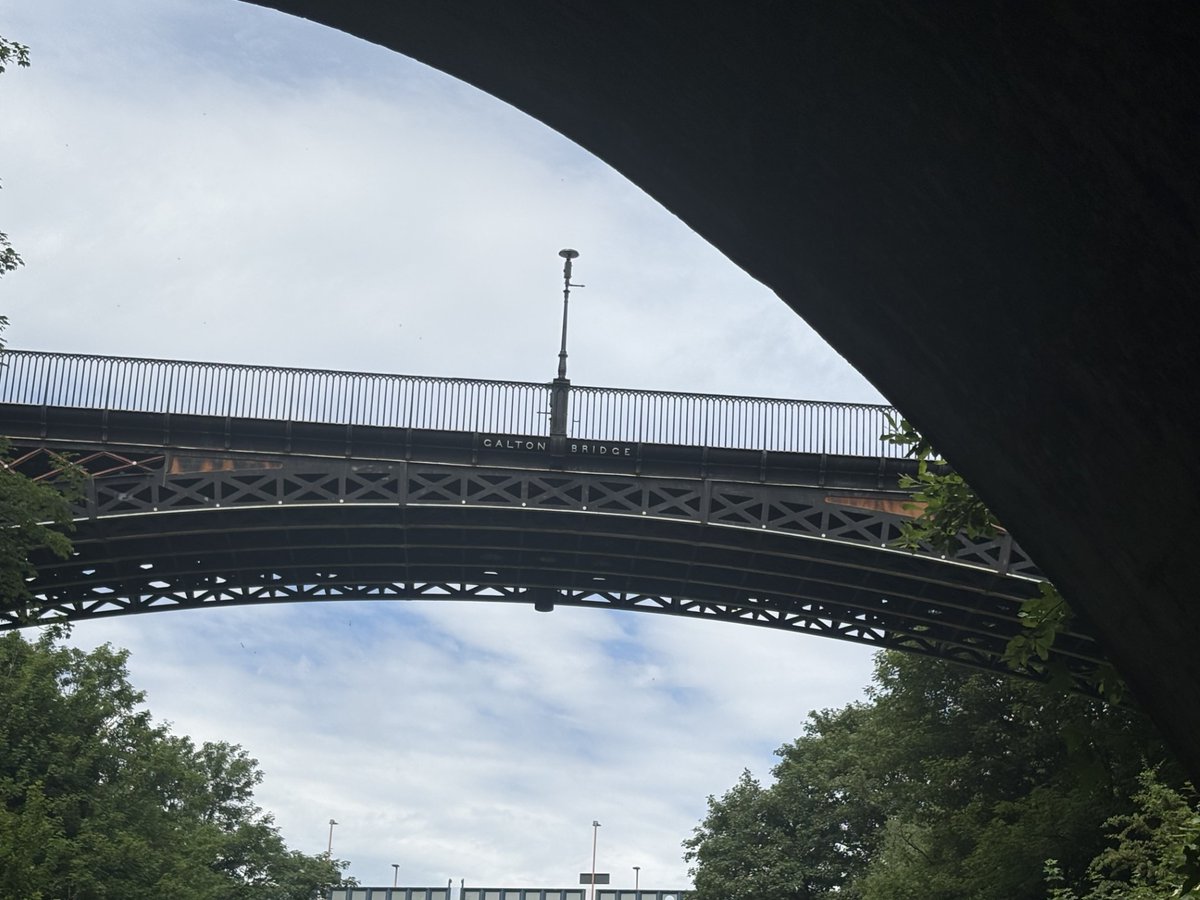
The magnificent Galton Bridge. A must go and see from underneath on the Birmingham to Wolverhampton canal. Opened in 1829. Designed by Thomas Telford. Cast iron. 150 feet long. Grade 1 listed. Just one of the cultural gems you can experience on a walk along the canal network.
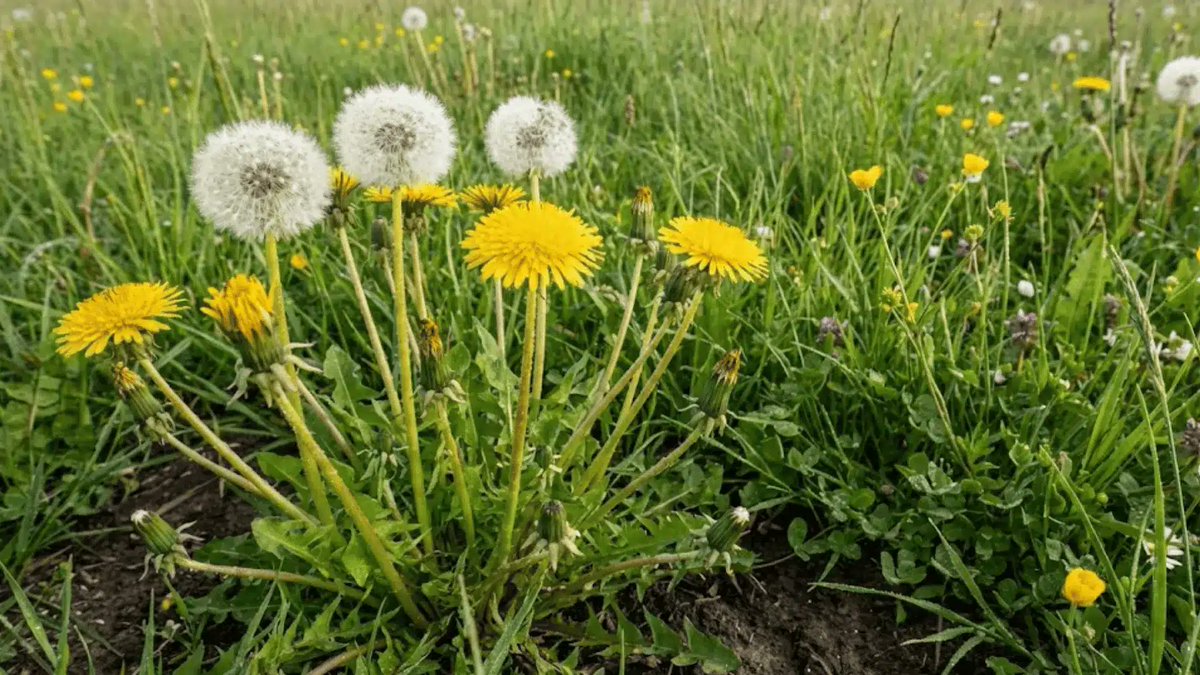
The reason we think dandelions are weeds is because of a 1950s marketing campaign.
Dandelions, native to Europe and Asia, were brought to North America in the 1600s by European colonists who grew them deliberately.
Every part is edible. The leaves are a salad green, the flowers were made into wine, and the roots were roasted as a coffee substitute and used medicinally for liver and kidney conditions for thousands of years. They were a kitchen-garden staple well into the 1800s.
The shift happened after World War II, when 2,4-D (originally developed for chemical warfare research) was approved as a residential herbicide. Companies like Scotts built the modern lawn-care industry around the idea that a perfect green lawn meant zero broadleaf plants.
Dandelions, being bright yellow and resistant to mowing, became a visible enemy, and the campaign worked. By the 1970s, "dandelion-free" was synonymous with "well-kept."
They aren't native, but they aren't doing significant ecological harm either. The herbicides used to kill them, on the other hand, kill bees, contaminate groundwater, and have been linked to non-Hodgkin lymphoma in humans.
If you hate dandelions, it's most likely due to a marketing campaign that ran before you were born.
On the Tibetan plateau, three to five thousand metres up, there is a line above which the air thins, the cold turns murderous, and every crop a human has ever sown simply gives up and dies. A lowlander dropped there without warning would be gasping within the hour. Below the line, a little barley clings on. Above it, across the entire roof of the world, one animal reigns.
The yak. A miracle of engineering that no laboratory could design and no factory could ever build.
Start with the body. It carries a heart around three times the size, for its frame, of a lowland cow's, with lungs to match. Its blood runs thick with red cells and grips oxygen far more tightly than yours, hauling enough of it out of air that holds barely half what you are breathing right now. Its lungs refuse to clamp shut in the thin atmosphere the way an ordinary animal's would, sparing it the fluid and the heart failure that kill lowland cattle dragged up too high. It is sealed inside a shaggy double coat over a dense woolly down, shrugging off forty below as a minor inconvenience, because it scarcely sweats and scarcely needs to. Millions of years of evolution went into an animal that treats the most lethal inhabited ground on earth as home turf.
Now watch what it does with all that. It walks out onto a landscape that offers a human being precisely nothing, crops the sparse, frozen, good-for-nothing grass that grows where value goes to die, and converts it, inside the four-chambered furnace of its gut, into the entire material foundation of a civilisation.
Milk so rich it is churned into butter that lights the lamps of every monastery and is folded into the tea that keeps a body alive against the wind. Meat, dried iron-hard in the cold to carry a household through a six-month winter. A fine, warm down spun into the clothes on their backs and the black tents over their heads, and a coarse outer hair twisted into the ropes that lash the whole thing down. Hide for leather and for boats. Bone for tools. And dung, dried into bricks, the one and only fuel for heat and cooking in a world with no wood left to burn. For thousands of miles it was the engine too, the single animal strong and sure-footed enough to haul a loaded caravan over passes that sit higher than the summit of Mont Blanc.
One animal. Food, fuel, clothing, shelter, fire, transport, and trade, drawn out of frozen grass at an altitude that would put you flat on your back in a hospital. Fourteen million of them still hold up the lives of dozens of mountain peoples today.
So take the yak off the plateau and be honest about what remains. A corpse-cold silence where no human has any business standing, and a grass nobody can eat rotting back into the permafrost. There is no vegan Tibet, and there never could have been one. The grass up there is poison to your gut, and the magnificent, grunting, oversized-hearted creature that turns it into life is the only reason a single soul has ever drawn breath on the roof of the world.
The mountain sets the cruellest terms on earth. The yak meets every last one of them, and then carries an entire people across the top of the planet on its back.
@realDaveFeldman I’m a non-scientist bystander, only marginally affected by the LMHR issue who’s seen the Code film and felt that the Cleerly issue needs an airing on several counts, not least that it adds another intensely human dimension to the whole issue.
Hello, we are Jonathan and Abigail - unashamed pedants who want to bring this affliction to bear on all things public policy and practice.
We believe that details matter, especially in public administration. This is why today we are founding quibble: a campaign to fix the small stuff.
Think, for example, about the cookie banner that we click on every webpage. Each instance is not a big deal, so we just put up with it. But its cumulative impact adds up - on average we press it 5 times per day. The European Commission estimates that it costs EU citizens 343 million hours per year.
And who is there to represent the impacts of seemingly minor issues like this in a systematic way? We want quibble to be the answer. In the case of the cookie banner, lots of advocacy has rightly focused on privacy, but has this meant that user experience has taken a backseat? We believe there are ways to improve user experience without compromising on privacy. We will share more about this soon.
Consider another example. Did you know that in some government-run car parks you can be fined for a minor keying error, such as accidentally typing a zero instead of an “o”? Again, we will come to the detail of this quibble in the coming weeks, but for now just consider again the question: who? Who is there currently to systematically represent the interests of the parker who is given an unfair ticket?
An inherent feature of consumer interests is that those who have them rarely have enough other things in common to make collective organisation and representation feasible. This is the gap that quibble seeks to fill. Now of course excellent consumer interest groups exist. But understandably quibbles might not be at the top of their lists. Our hope is that quibble will be complementary; picking up the bottom-of-the-list issues faced by various groups - the stuff they are almost too embarrassed to raise because they are too small.
We are not embarrassed about detail. If you’ve ever had a splinter, you know small things can have a big impact. This is what quibble is committed to tackling, and our wider hope is that by doing so we will also incentivise policy makers to be even more careful about detail.
Check out our website here, including our first four campaigns: https://t.co/gZiqqHbhIL
@grover_kath Well done for recording your highest weight - I’ve had to lose solidly attached fat 3 times (took me too long to work out what to do that works) and I’ve never managed to be brave enough to face the facts head on - think if you’ve managed that, you’re off to a strong start!