📚 We have submitted written evidence to @SP_ECYP on the Children (Care and Justice) (Scotland) Bill, arguing for six key improvements to the reporting restrictions proposed in the Bill, protecting child victims, witnesses and children accused of crime. https://t.co/HpknvNKlAw
Today's #16DaysOfActivism highlights the Campaign for Complainer Anonymity (@campaign4ca).
People reporting sexual crime currently have no legal right to anonymity under Scots law, which this campaign aims to change.
⚖️ CCA’s written evidence to Holyrood's @SP_Justice Committee on the proposals for complainer anonymity in the Victims, Witnesses and Justice Reform (Scotland) Bill https://t.co/UZnlLYWh9I
📚 Published today: @GCULaw's Seonaid Stevenson-McCabe and Dr Andrew Tickell have submitted written evidence on the complainer anonymity proposals in the Victims, Witnesses and Criminal Justice (Scotland) Bill: https://t.co/1H4QkHqqPw
IPSO finds the Greenock Telegraph breached ethical rules by jigsaw identifying sexual offence complainer in "egregious" breach of Clause 11 of the Editors' Code (via @LadyCatHT) https://t.co/Hi8PxUbNNK
The Bill updates the clearly outdated current framework for reporting restrictions in cases involving children. This is good. But we think there is scope for improvement with six comparatively simple fixes which would significantly improve the new law. https://t.co/pGQPbatvsZ
Pleased that Holyrood's Education Children and Young People Committee have asked the Scottish Government to consider our proposed amendments to the Children (Care and Justice) Bill in their stage 1 report - published this morning.
https://t.co/9ITgFw5qpi
🆕 GCU Law wins campaign for complainer anonymity
The lifelong right to anonymity for complainers in sexual offence cases is to be enshrined in Scots law following a successful campaign by GCU law students and lecturers.
📲 https://t.co/MkT2sWMVv9
@seonaid90 | @Campaign4CA
The Scottish Government outline the policy thinking behind the reporting restrictions proposed - in terms of qualifying offence and when anonymity begins and how it can end - in paragraphs 343 to 477 of the Policy Memorandum to the Bill. https://t.co/FvgLS1qvLy
🗞️ We're delighted that the Victims, Witnesses and Justice Reform Bill - introduced to the Scottish Parliament today - sets out concrete proposals for the automatic lifelong anonymity of complainers in sexual offence cases in Scots law for the first time. https://t.co/llum85J3Fx
New Scottish Govt Justice Reform Bill published. Congrats to colleagues @seonaid90 and Andrew @PeatWorrier for their campaign for complainer anonymity to get recognition in this @Campaign4CA#CriminalJustice
Lifelong anonymity aids the media by making it easier to tell the stories of victims without them feeling exposed. Too often in Scotland are victims left in fear that some rando on Twitter/Facebook can break convention by naming them, but not break the law.
Most assume it was already the case, but Scot Gov plan as part of Justice Bill to legislate to ensure lifelong anonymity for victims of sexual offences is a major change
Also
- Abolition of 'Not Proven' verdict
- Jury dropped from 15 to 12
- Conviction to require min 2/3 of jury
Particularly good to see realistic defences in the Bill in terms of secondary publishers - responding to the reality of social media sharing of content in good faith. Learning lesson from the Defamation and Malicious Publication (Scotland) Act 2021, which raised similar issues.
There are important policy choices being made here which may not be obvious on the face of the Bill: broadly, when do reporting restrictions begin, when do they end, and who decides? This might seem straightforward - but recent Australian experience has exposed several pitfalls.
Absolutely delighted that the new Victims, Witnesses, and Justice Reform (Scotland) Bill sets out a clear framework for complainer anonymity in sexual offence cases in Scotland, learning the best lessons from the international practice and experience.
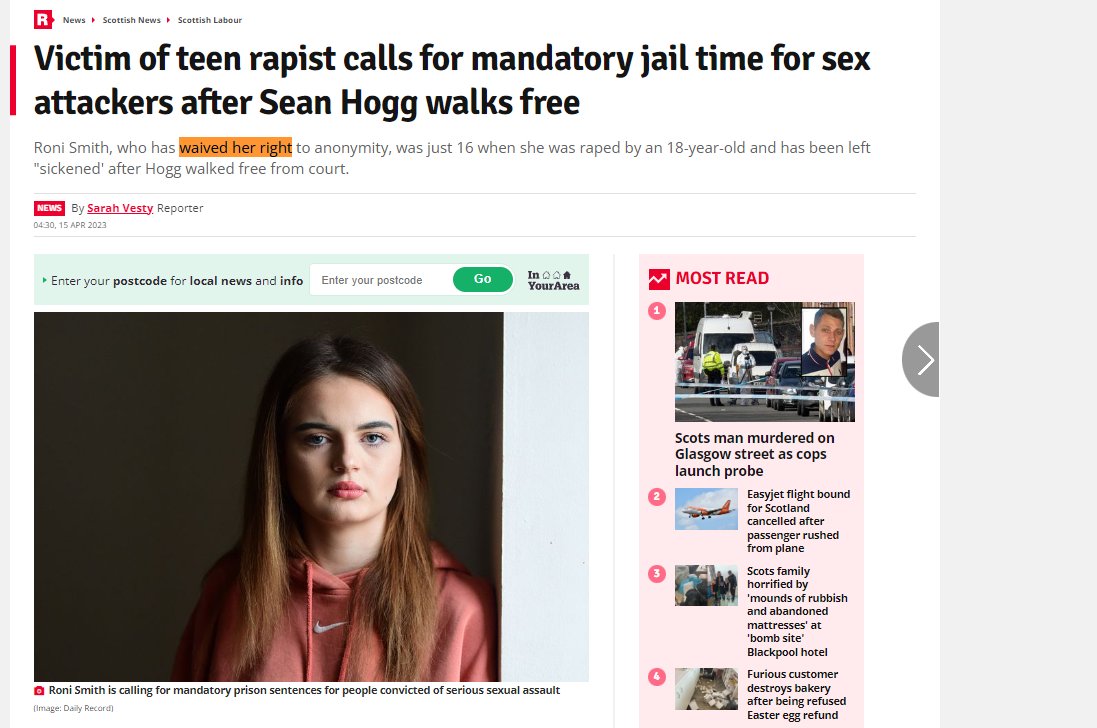
I'm always torn by this kind of reporting. The media has ethical obligations not to identify complainers without consent. This is absolutely important. But it isn't a right. It isn't law. Constantly suggesting otherwise has contributed to the absence of proper law reform here.
Until we reform Scots law - no matter how many times the Scottish media publish articles suggesting otherwise - complainers in sexual offence cases have no legal right to anonymity under current legal frameworks.
⚖️ That's the potted version. The strengths and weaknesses of these proposals haven't really been spotlit in the consultation on the Bill - but I hope MSPs & the Scottish Government are open to reviewing the proposals. Our full submission to Holyrood here: https://t.co/pGQPbatvsZ
Lastly, we suggest the legal regime governing reporting restrictions in civil cases in Scotland is also an outdated mess, applying to old media only, and using different age thresholds - and suggest it would also benefit from rationalisation and reform. https://t.co/tMJtAeZOXf