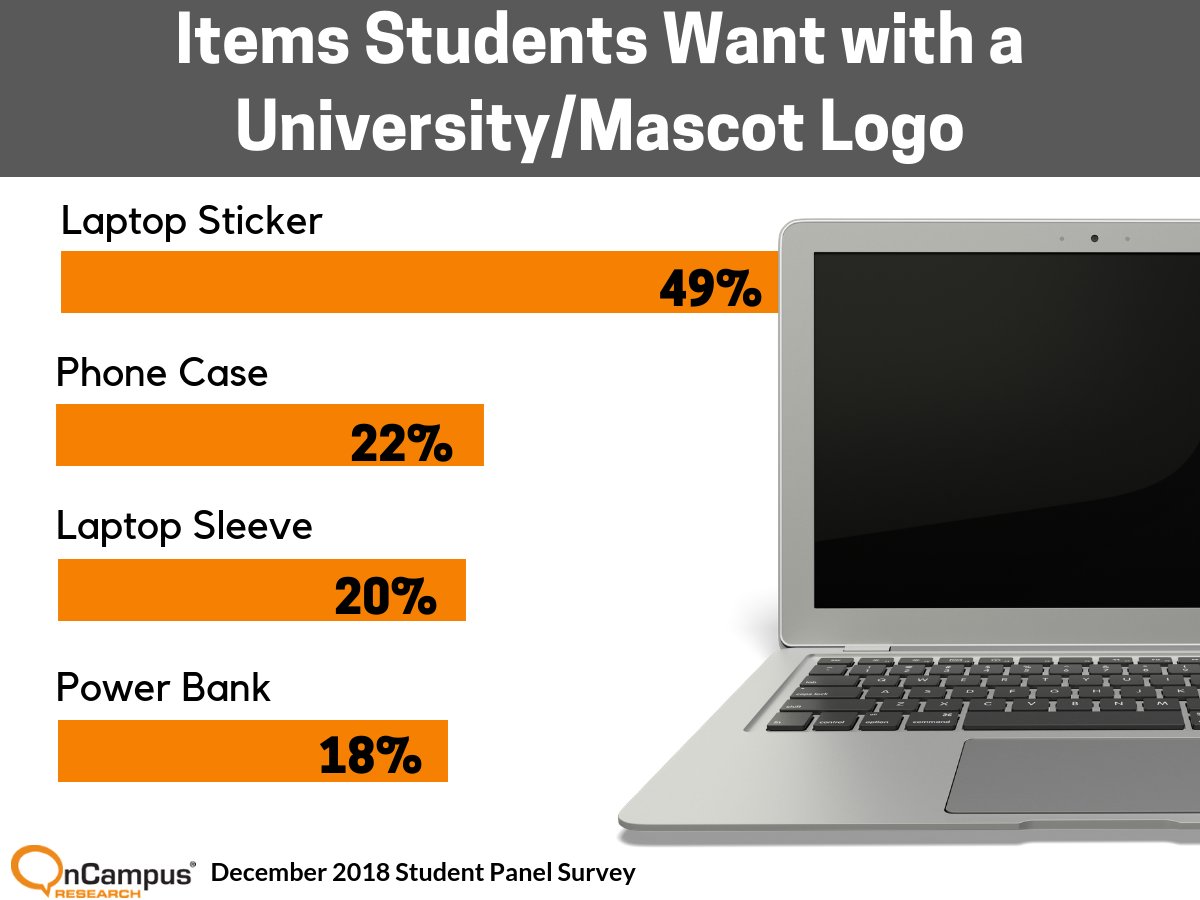
The desire for university/mascot branded items fell from 2017 to 2018, with laptop stickers experiencing the biggest drop (from 59% to 49%). #retail#highereducation
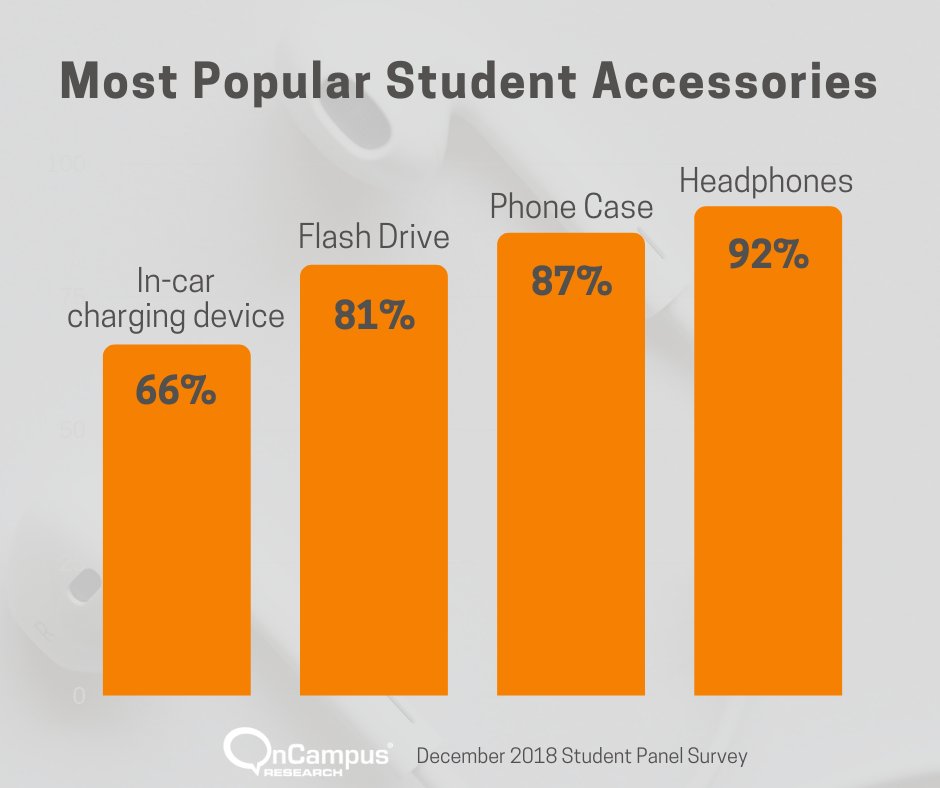
While car chargers remain popular accessories, that probably won’t be the case for long. The category dropped a significant 10% from 2017 to 2018. #retail#highereducation
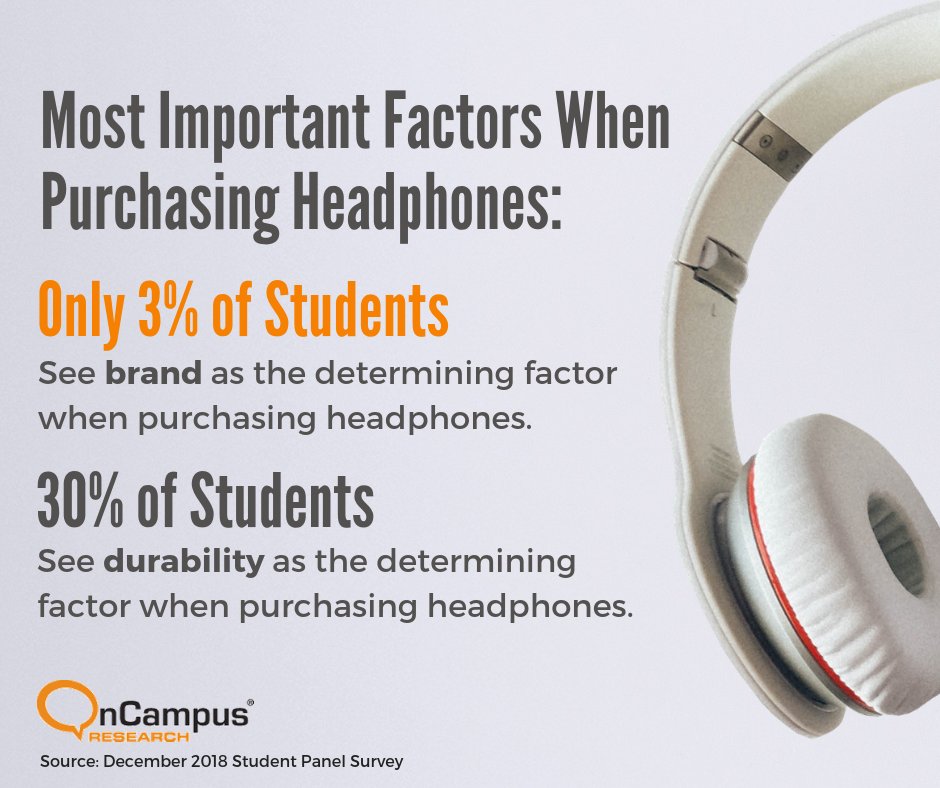
The importance of brand to students continues to decrease and headphones are no exception. Instead, durability and sound quality now take precedent. #retail#highereducation
For the majority of students, school-branded apparel is the most likely purchase when shopping at their college bookstore. Specifically, school-branded sweatshirts or t-shirts. #HolidayShopping
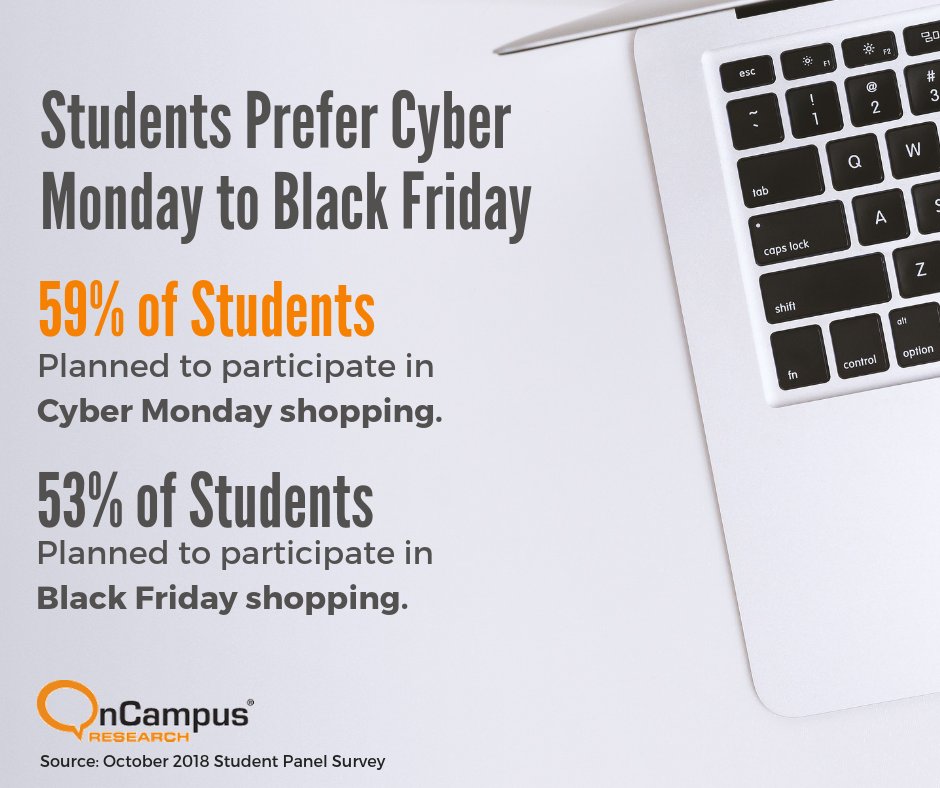
During Black Friday 2018, foot traffic was down, while online visitors reached record levels. Those results accurately reflect student preferences, and show little sign of changing. #BlackFriday
In a continuing trend from last year, stores that offer free shipping and online discounts/sales are best positioned to take advantage of holiday traffic. #holidayshopping#retail
Both clothing/shoes and bath/beauty products remain highest on student shopping lists, growing year-over-year from 48% to 54% and 38% to 46% respectively. #retail#holidayshopping
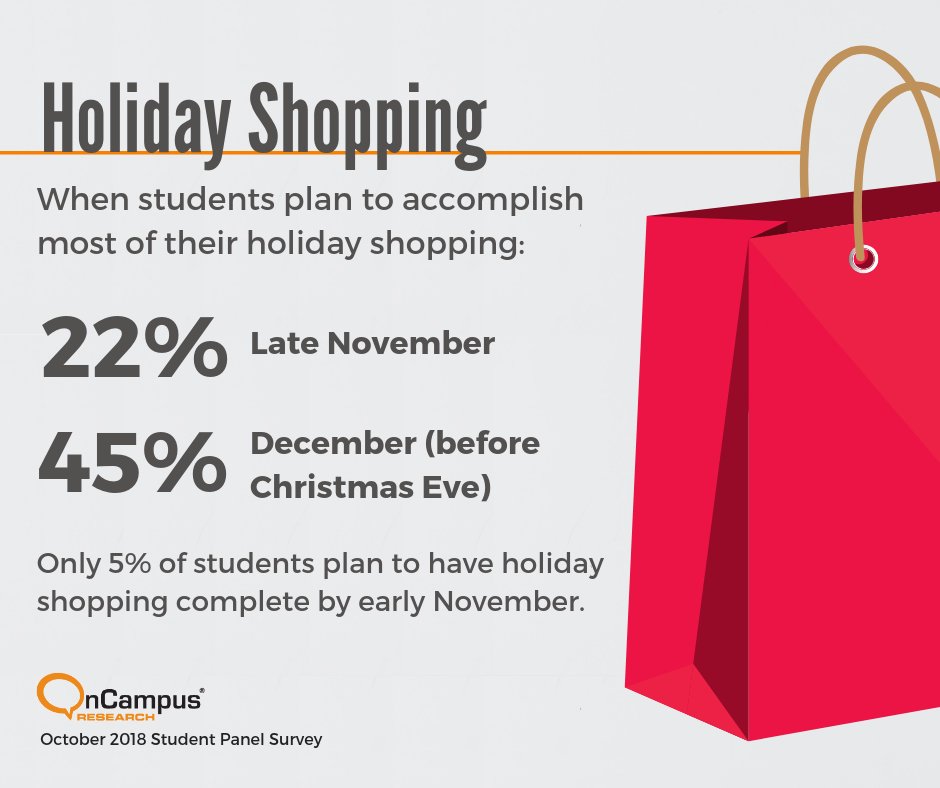
As online shopping increases in popularity, the shopping season itself continues to be pushed back. Nearly half of all students plan to accomplish most of their shopping in December. #holidayshopping#retail
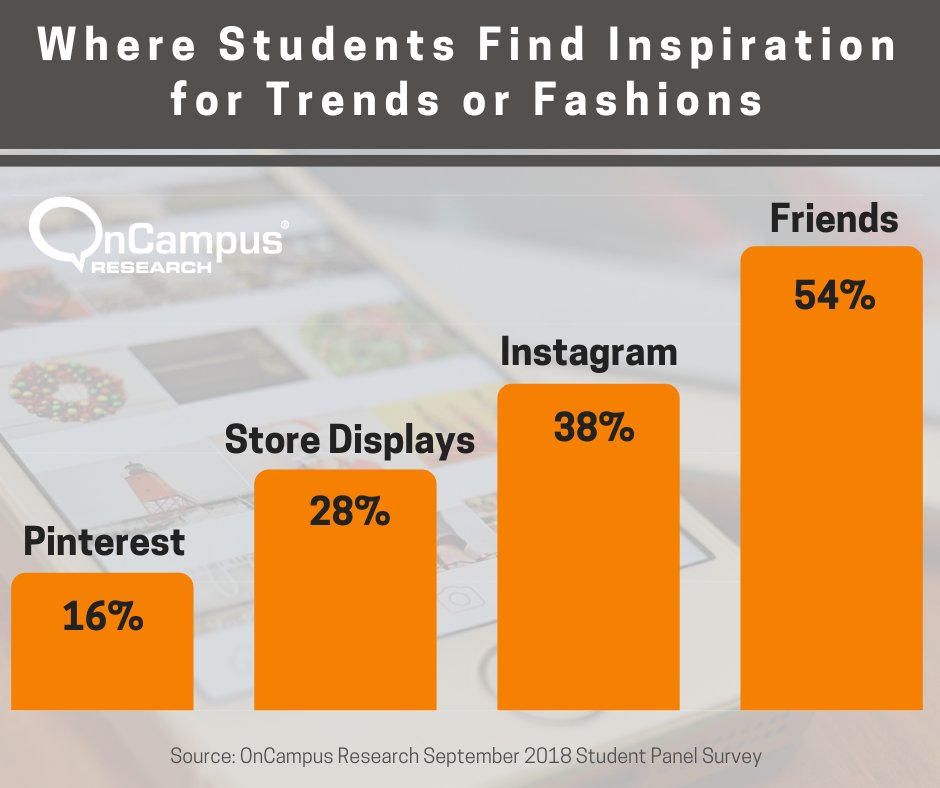
While students still rely on friends most heavily for fashion choices, social channels including Instagram, Pinterest, and YouTube are becoming increasingly influential. #fashion#HigherEducation
Nearly 3 in 4 students shop clothing selections regardless of brand. Not surprisingly, a similar percentage of students are moving away from “big and bold” brand logos. #fashion
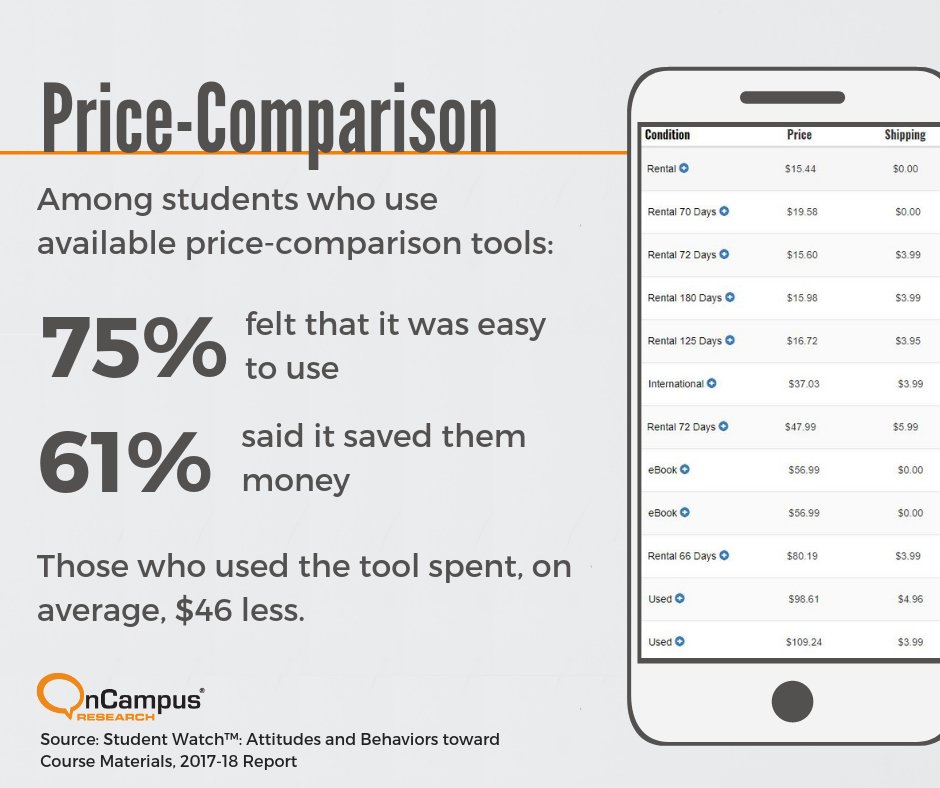
One particularly effective way that students can save on course materials: Taking advantage of price-comparison tools. #highereducation#coursematerials
The percentage of students who acquire at least one free course material unit has been steadily increasing, from 15% in spring 2015, to 32% in spring 2018.
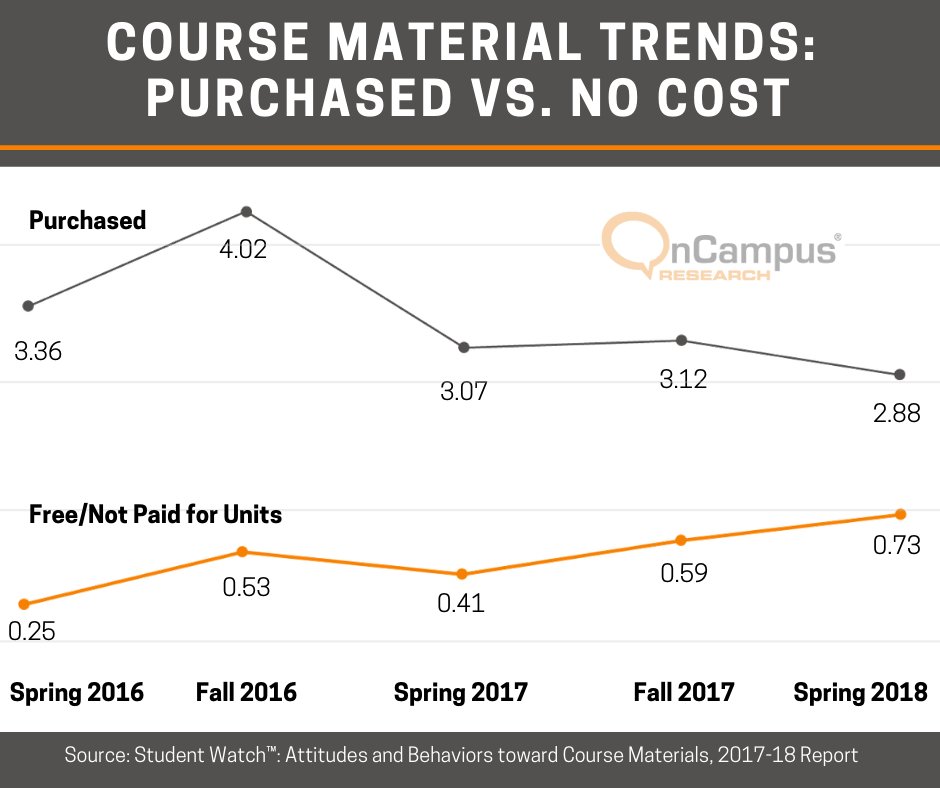
While both new and used print course material acquisitions are trending downward, the average number of digital units purchased has continued to steadily increase. #coursematerials
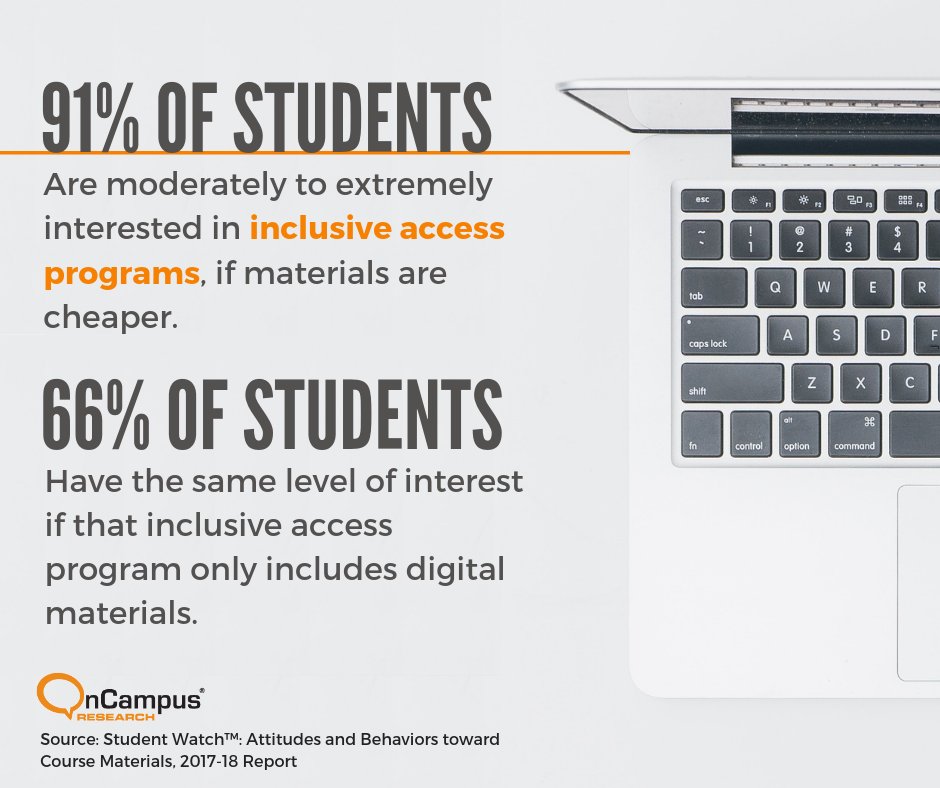
Students are overwhelmingly interested in inclusive access programs that make course materials cheaper. However, 25% of students lose interest if that means using only digital materials. #OER
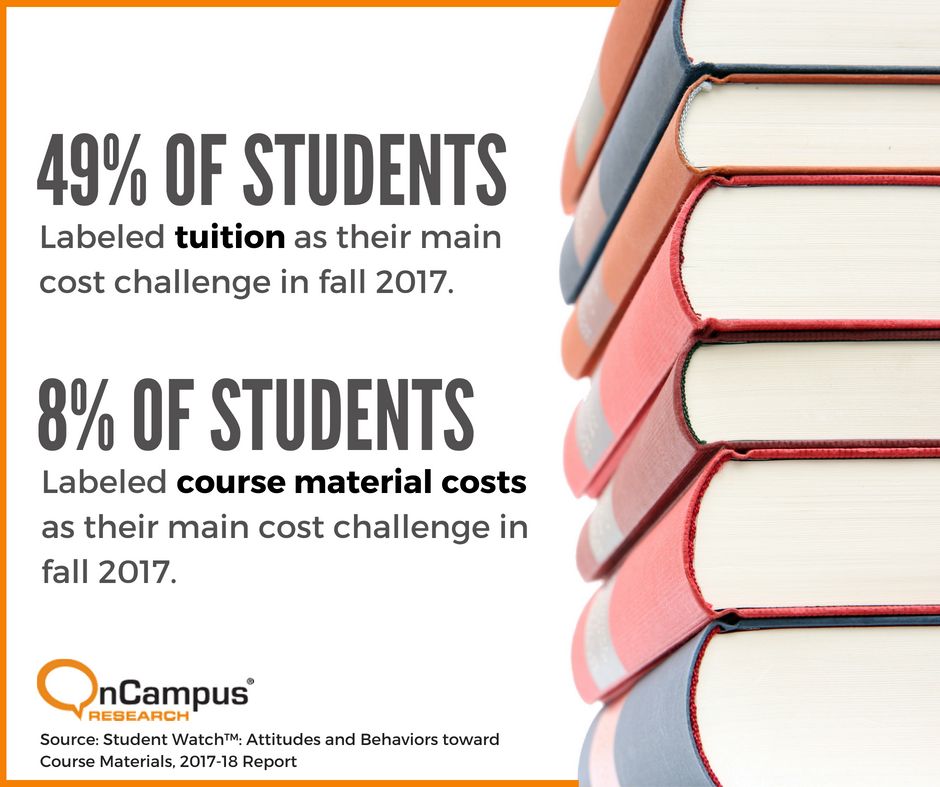
While course material costs remain a major concern, tuition is overwhelmingly the largest financial hurdle for students, followed by housing costs (16%) and living expenses (9%).
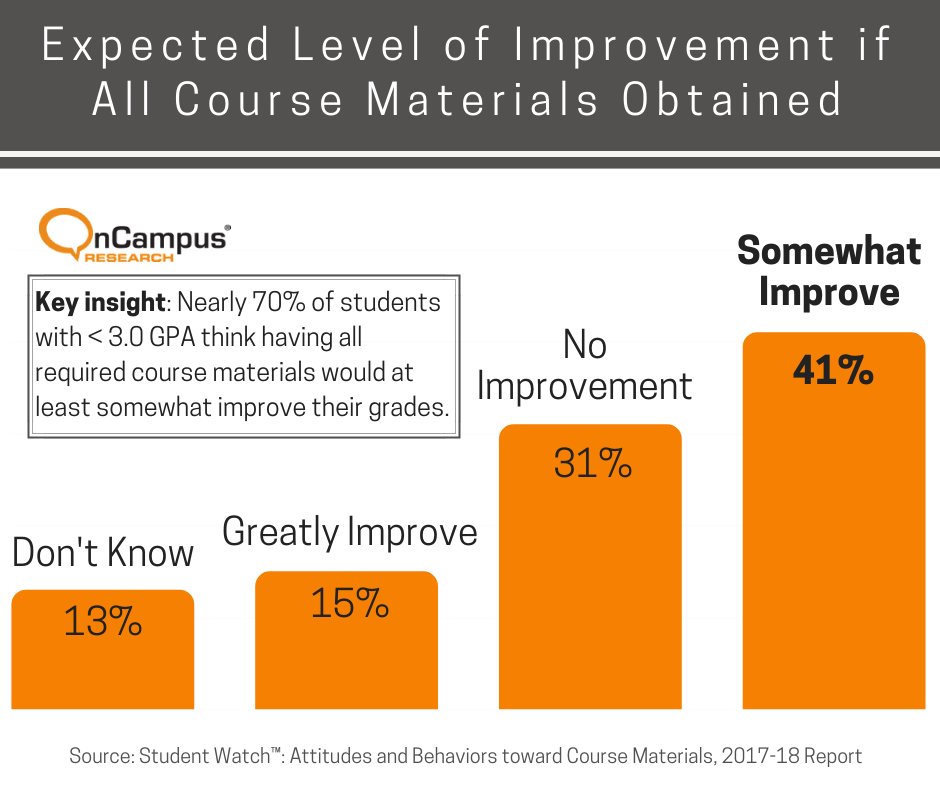
The majority of students, especially those with less than a 3.0 GPA, believe having all course materials would make a difference in their academic performance.
While course material costs remain a major concern, tuition is overwhelmingly the largest financial hurdle for students, followed by housing costs (16%) and living expenses (9%).
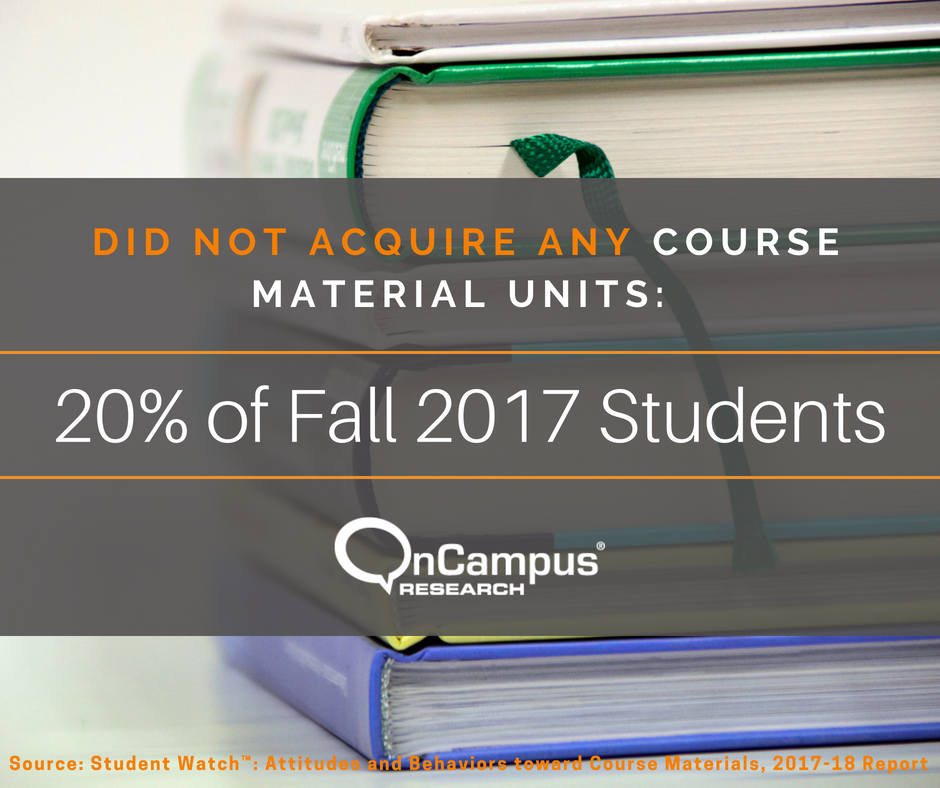
The primary reason for not acquiring course materials: price. Other contributing factors included students not thinking a course material would be needed, or was available for free elsewhere.
Free course materials rising: The percentage of students who have acquired at least one free unit has steadily increased from 15% of students in spring 2015, to 32% in spring 2018.