The Can-Go Foundation is a Canadian humanitarian organization working to raise funds, deliver worthy projects and advocate for the Afar people of Ethiopia.
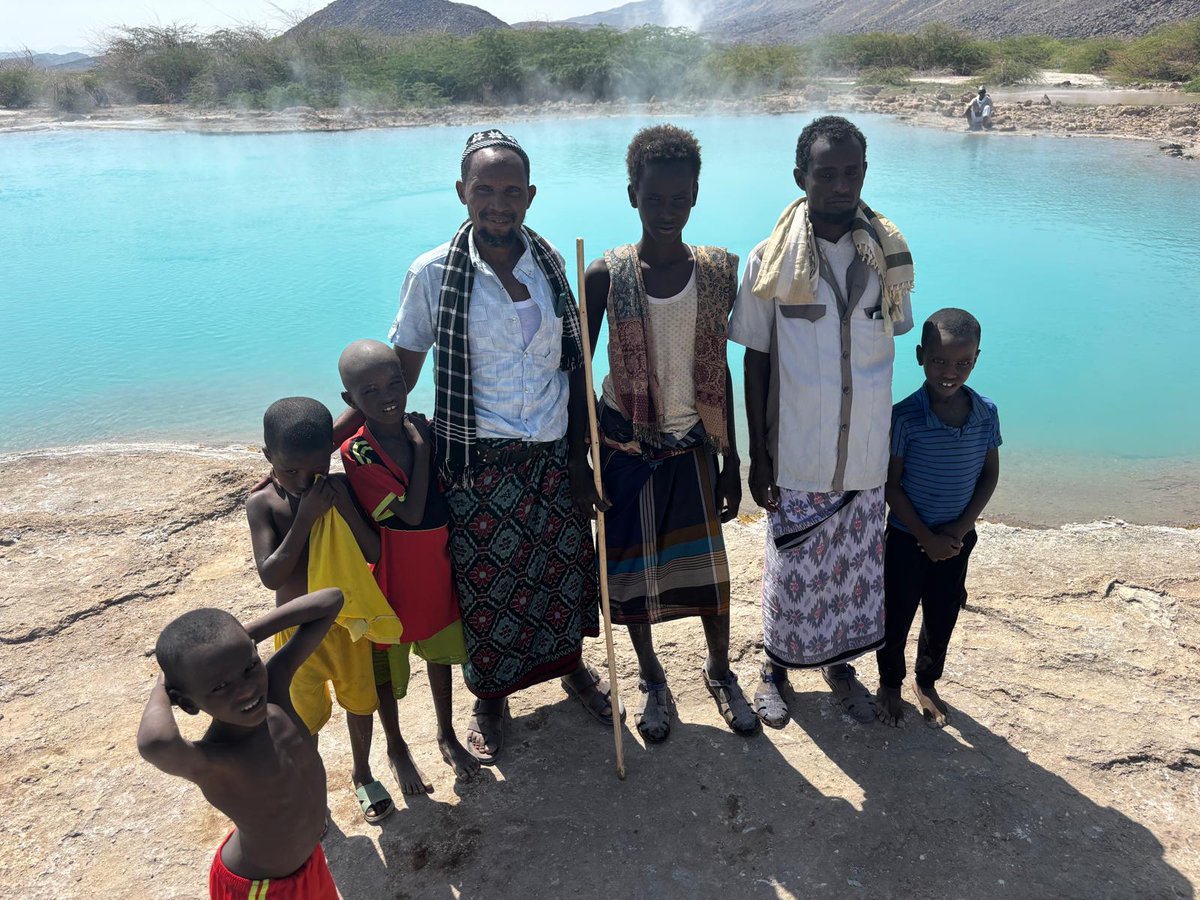
Amid meetings and discussions on new humanitarian initiatives—such as scholarships for disadvantaged Afar youth—the Can-Go Afar Foundation team had the chance to visit Alalobad, a breathtaking geothermal hot spring just outside Logiya, Afar State.
🐪 A Sacred Stop for Afar Pastoralists 🐪
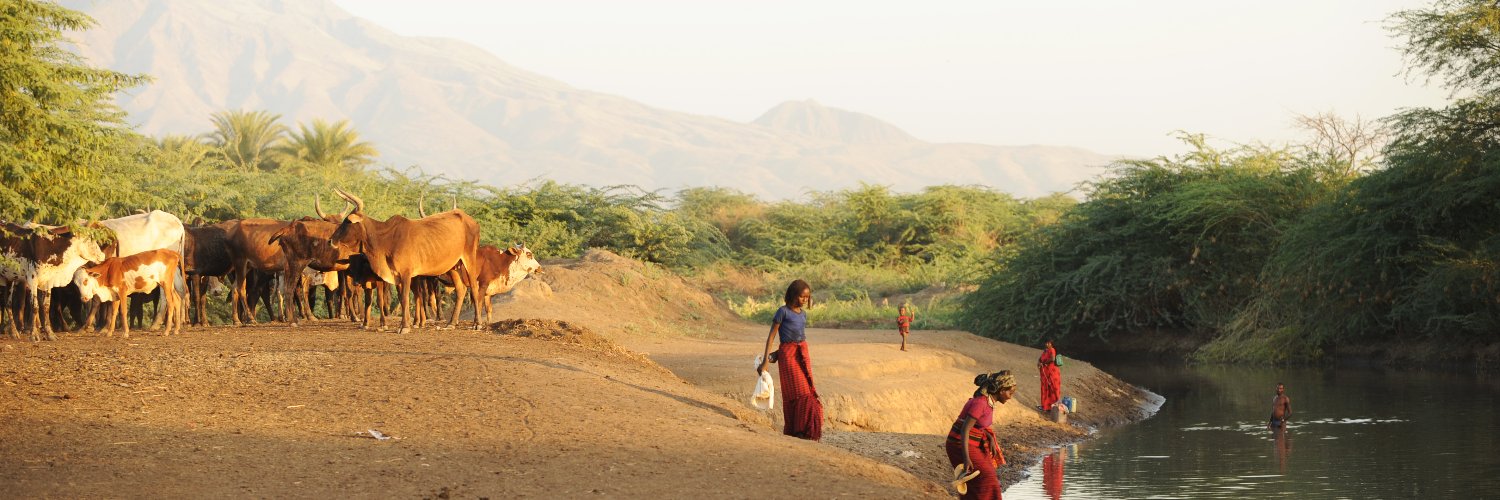
Once a year, Afar pastoralists bring their cattle, goats, sheep, and camels to drink from the cooled waters, believed to enhance the health of their herds.
💧 𝐀 𝐇𝐢𝐝𝐝𝐞𝐧 𝐆𝐞𝐦 💧
So far, this world-class site remains untouched and pristine, with no economic or tourism development—making it an area of special interest.
During Mission 14, the Can-Go Afar Foundation and our dedicated Afar Region implementing partner of 18 years, the Afar Pastoralist Development Association (APDA), celebrated the signing of a new, robust Memorandum of Understanding (MoU) at APDA’s offices in Samara.
This partnership marks a new chapter in our mission to empower communities through education.
Pictured (L to R): @WarrenCreates (Foundation President), Dr. Mohammad Usman (Samara University President), and Dr. @JasonKellyOtt (Foundation Vice-President)
A proud and momentous day in our 18-year journey! Can-Go Afar Foundation has officially signed a Memorandum of Understanding with Samara University, Samara, Ethiopia, strengthening our commitment to education collaboration and scholarship support for the Afar people.
Mission 14 hit the ground in Samara with a warm welcome on the tarmac by @SamaraunivEthio. SU President Dr. Mohamed Usman and his team greated Can-Go Afar's president Warren Creates, and Vice President Dr. @JasonKellyOtt in advance of the upcoming SU Conference.
The Can-Go Afar Foundation recently hosted a reception for Dr. Mohammed Usman the President of Samara University (located in Ethiopia's Afar region) during which we discussed sponsoring a scholarship for Afar students & a partnership with the University’s Tourism Center.
Our Mission 13 leads met with Maleka of Afar Pastoralists Development Agency (APDA) to discuss their current priorities which incl. a cholera outbreak in Awash.
Can-Go Afar provided APDA with 100,000 birr ($2,500 CAD) to assist with this and other initiatives across Afar.
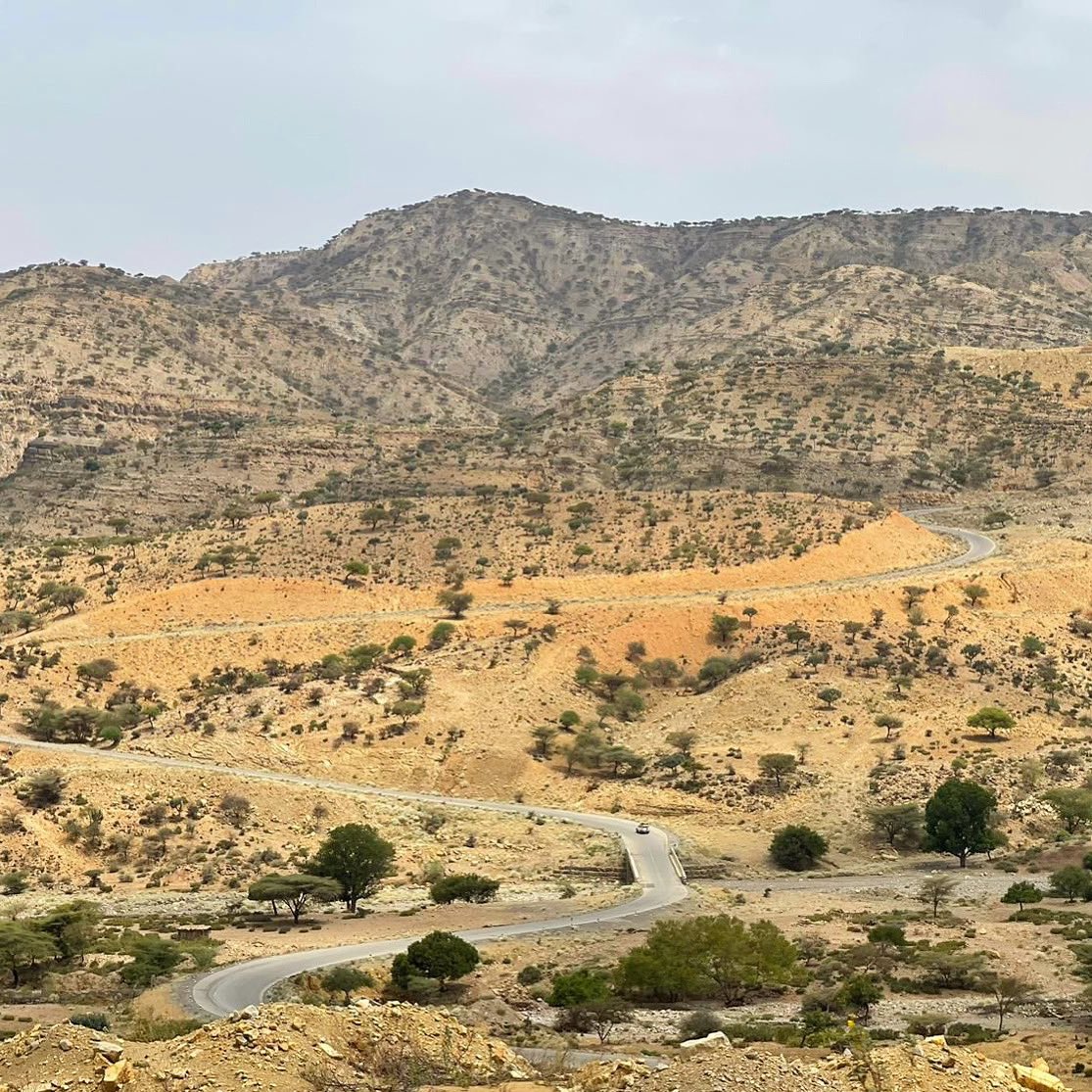
The highlands in north western Afar are a stark contrast to the lowlands of the Danakil Depression. These areas experiences the most conflict during the recent Tigray War.
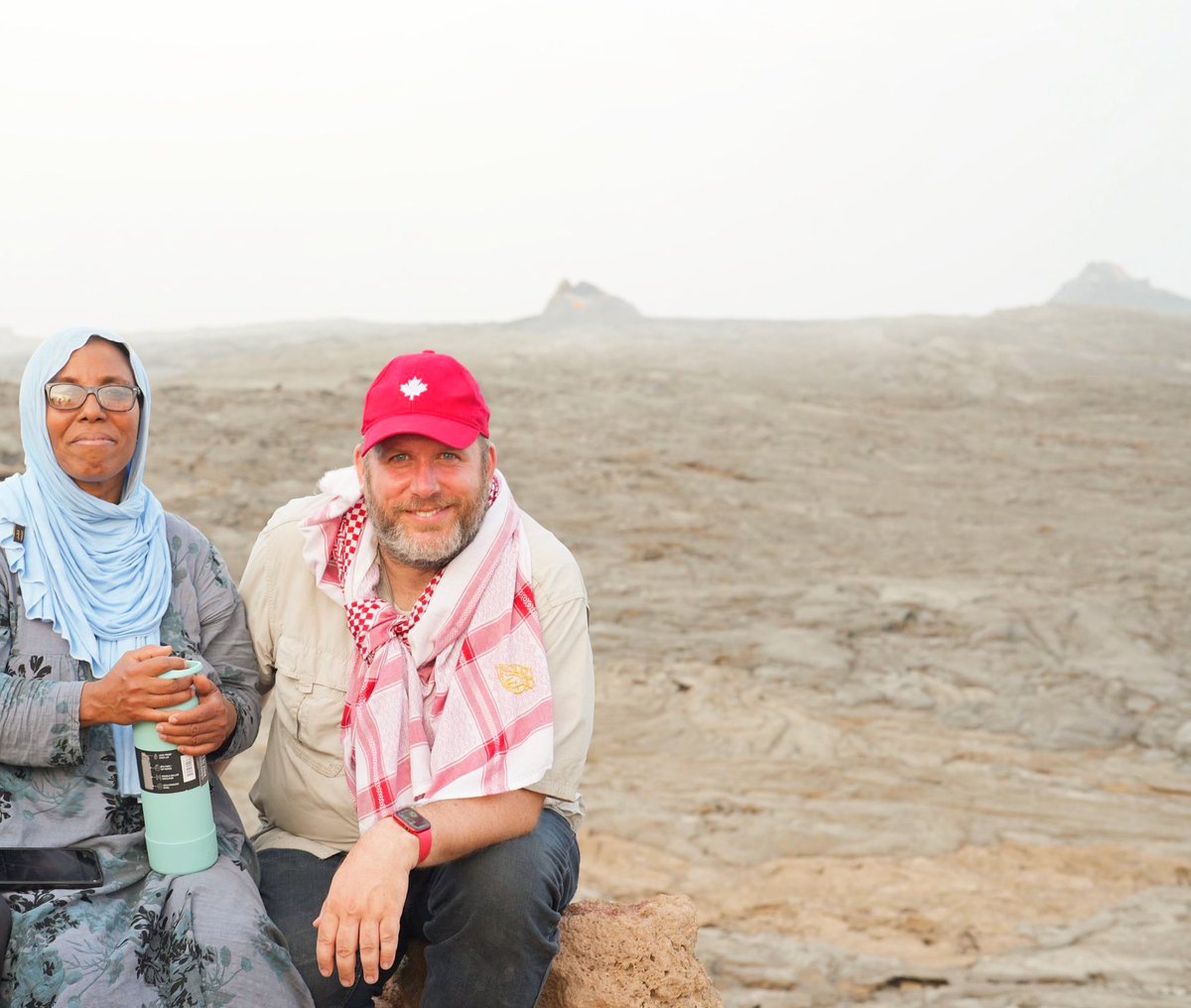
Mission 13 leads Aicha Youssef and @JasonKellyOtt pose at the edge of Erta Ale volcano in northern Afar.
The most active volcano in Ethiopia, Erta Ale has been erupting continuously since 1967 and is home to two lava lakes. It’s also one of the biggest tourist draws in Afar.
Mission 13 leads Aicha Youssef and @JasonKellyOtt meet with community members to discuss their current needs. These in-person meetings are critical for Can-Go Afar to better understand the Afar region in the wake of the two-year Tigray War. 🇪🇹
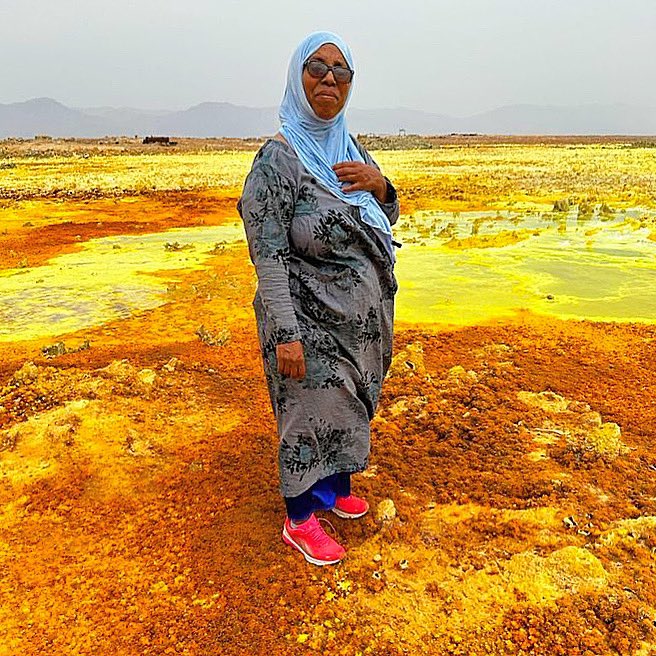
Mission 13 co-lead Aicha Youssef stands in the sulphuric landscape of Dallol, Ethiopia near the northern border with Eritrea. One of the most remote tourist sites in Afar, Dallol holds the record for the hottest avg temperature (35 °C) for an inhabited place on earth.
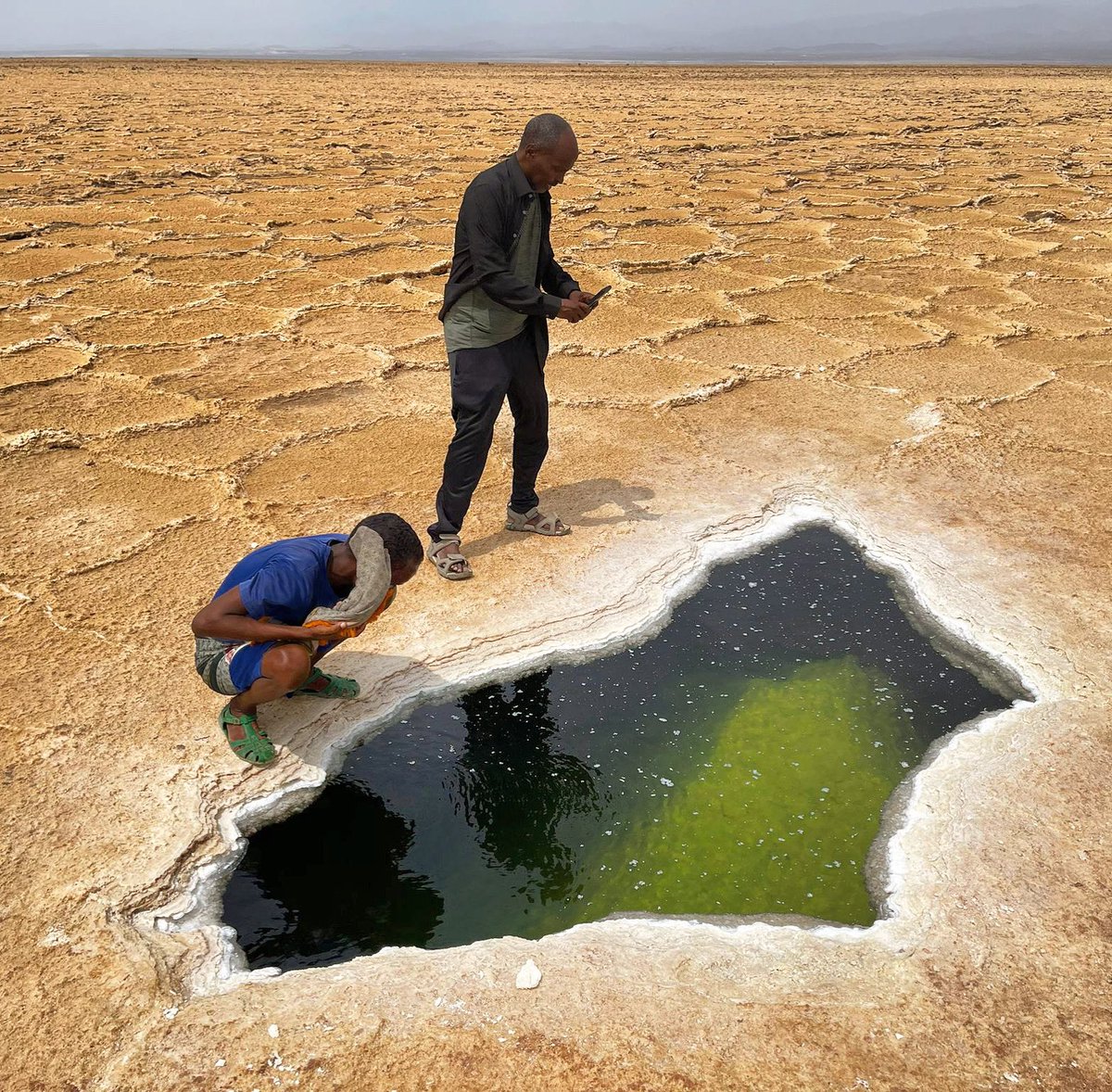
Asa’ale is an opening in the salt flats near Dallol, through which you can see an enormous cavern of saline/briny water under the salty crust surrounding it. #mission13
Awash Falls are a major landmark and attraction in Awash, Afar region, Ethiopia. Over these falls flows the water of the Awash River which provides water to much of the Afar region.
The Afar Cultural Centre at Samara University is nearing completion with a grand opening scheduled for September 1! Mission 13 co-lead Aicha Youssouf will be on hand for this auspicious event.
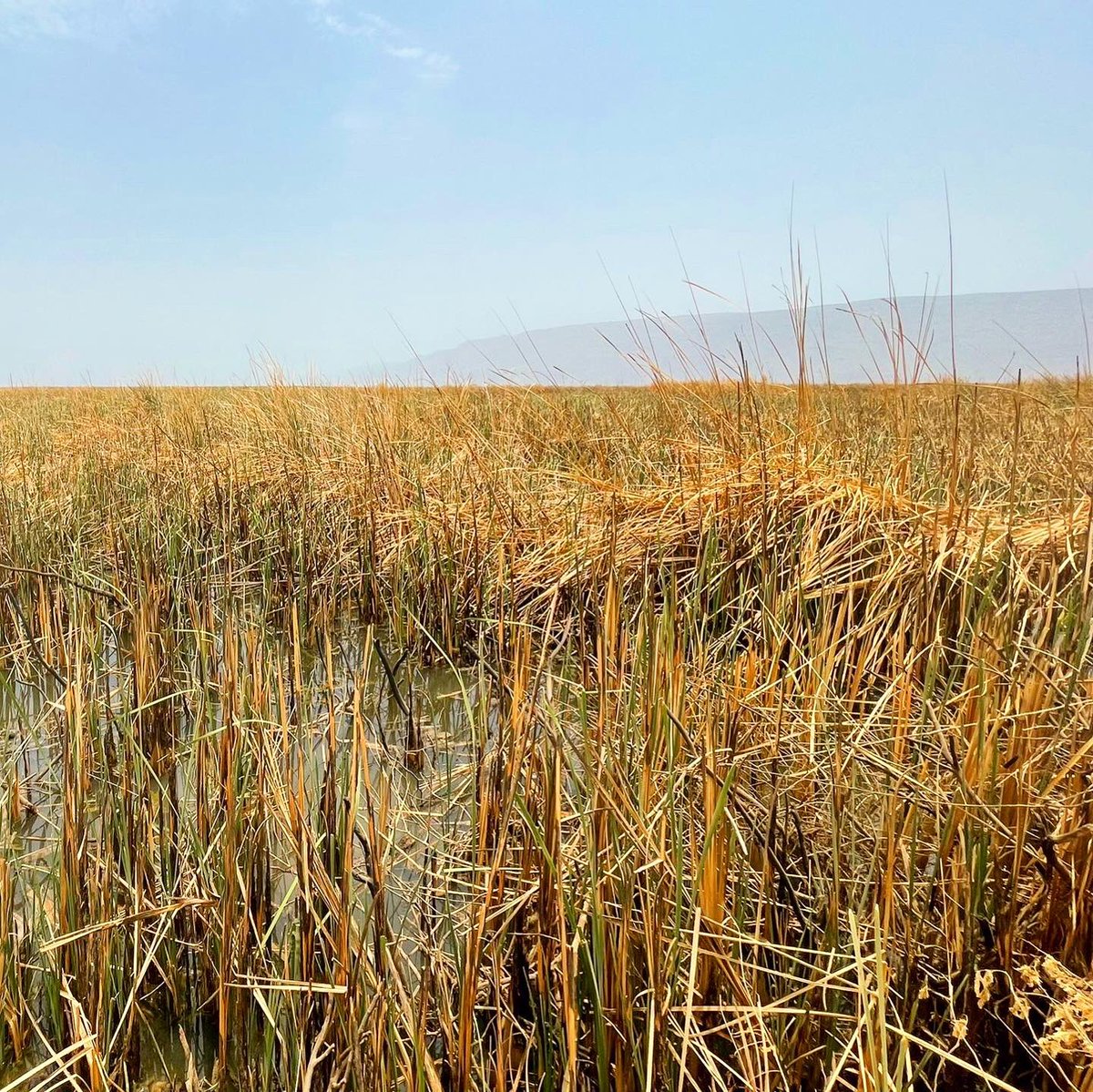
Not far from Asiata sits Gemeri Lake, whose nearby wetlands are home to reeds that are used by the Afar to make woven mats (or “ari”), an integral part of the daboita the traditional Afar domed dwellings that can be seen throughout northern Ethiopia.
During a visit to the Asiati Refugee Camp we were heartened to see that many of the temporary shelters built for Eritrean refugees have been replaced by homes, a much more hospitable state of affairs for the refugees many of whom have been residents of this camp for years.