For my machine shop friends, how do you go about training new people to quote CNC machining? Especially those that haven’t had much (if any) experience actually machining? Is it possible? Are there programs to purchase that are better than the ones I looked at 5-7 years ago?
I was taught how to quote, but I’m arguably novice at best and it’s been a hot minute since doing it day to day.
"The casting has a surface defect on the side" tells your foundry almost nothing useful.
Meanwhile: "450 RMS on the surface (see photo) of the casting violating spec #3" gets you answers fast.
Vague defect reports = longer delays, more back-and-forth, frustrated engineers.
Industry standards like ASTM, MIL, etc. exist for a reason. Use them.
Pro tip: Include a ruler or similar in your defect photos, it makes everyone’s lives much easier.
Even better: If we're local, we'll come see questionable castings in person. Nothing beats eyes-on-parts
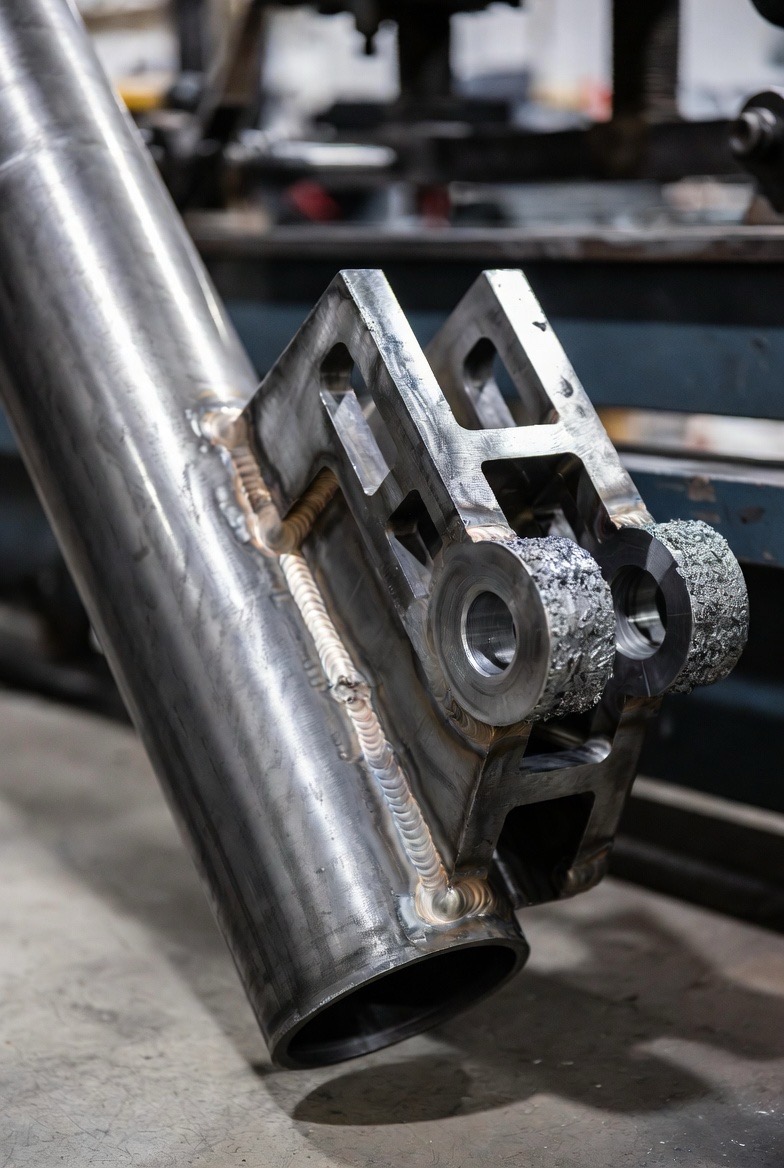
Bottom line: One aluminum casting eliminated 3 welds and 8 fasteners, cut costs 35%, and improved delivery by weeks.
Your multi-piece assembly might be the perfect candidate for conversion.
A multi-piece weldment became a single casting. Result: 35% cost savings, stronger part, and faster lead times.
This is why many engineers are rethinking their assemblies made here and overseas.
Items like ribs and webs provide stiffness without adding weight. Counter-intuitive but true: thinner cast sections are often stronger than thick ones. In addition, properties of aluminum typically mean the end part will result in longer life because of smooth radii and fillets.
We gather the information on existing tooling, part details, pictures, pricing, lead times, etc. We then work with customers to understand the history and any issues. From there, it’s a Gantt chart and checking boxes. Rinse, wash, repeat … make it simple and painless
In the past 90 days, ~5 foundries that could potentially be competitors have gone out of business or changed hands. When this occurs, inevitably we get calls to handle new work. 80%+ of foundries cease to exist the last 50 years, so we had to build a standard process for this 👇
Our well designed, durable patterns endure 5,000-10,000+ cycles vs. 500 for less expensive upfront options - less downtime, rock-solid dimensions, predictable costs. Amid supply chain chaos, consistency is your edge. Ready to upgrade? DM us!
Struggling with castings that used to come out perfectly, but now quality and delivery issues are frequent? Too often lately, it is due to ownership and workers aging out in the foundry. However, other times it is simply tooling running out of useful life.
A customer had a 1000 pc/yr part that was $50, with tooling issues $70. We’d done $1000's in repairs the prior 5 years. Customer didn’t have the CapEx, so we shared the cost and kept $70 price until paid for, resulting in a $40 piece price and lead time that dropped by a month.
Tree Stand Platform (356, ~12x10x1"): Needed lightweight + zero-fail reliability. Tweak → ribs, better radii/draft, external fins. Result: No porosity, less stress, faster production, big cost savings. Minor changes, major wins. Got a casting project? DM us!
Small geometry tweaks = better aluminum castings. We suggest minor changes during/after design to improve quality & manufacturability—no big tooling overhauls. Focus: cast-friendly shapes, simulation-verified. Examples below!
I would argue that the negatives of moving manufacturing out of the US vastly outweigh the positives. The longevity of America depends on being able to create goods at home.
Thankfully, folks like @regzeller are the tip of the spear in making small manufacturing work in the US.
He’s doing incredible work at @canekast with @joshuamschultz, but they’re doing it in perhaps the hardest niche in the space: Foundries.
I had to ask him why, and he painted the bigger picture for me in this clip.
Our episode releases tomorrow, where he breaks down the world of foundries, offshoring, how he rolls up foundries, due diligence, training, and the process of closing on a business.