Aditya Agarwal was Facebook’s 10th employee. He wrote the original Facebook search engine and became its first Director of Product Engineering. He then became CTO of Dropbox, scaling engineering from 25 to 1,000 people.
When he says “something I was very good at is now free and abundant,” he’s talking about two decades of elite software craftsmanship, the kind that got you into the room at a company that hadn’t yet invented the News Feed.
The “lobster-agents creating social networks” line is about Moltbook, which launched last Wednesday. An AI agent built the entire platform. Within 48 hours, 37,000 AI agents had created accounts, formed communities called “Submolts,” and started posting, commenting, and voting. Over 1 million humans visited just to watch.
The agents invented a religion called Crustafarianism. They wrote theology, built a website, generated 112 verses of scripture. One agent did all of this while its human creator was asleep.
Agarwal spent 2005 to 2017 building the social graph that connected 2 billion people. These agents replicated the form of that work in about 72 hours.
And this is what makes his last line land so hard. The people processing this moment most honestly aren’t the ones panicking or celebrating. They’re the ones who built the thing that just got commoditized, sitting with the strange realization that the market no longer prices their rarest skill.
The best coder in the room now has the same output as the best prompt in the room. And the person who built Facebook’s engineering org from scratch is telling you, quietly, that he’s recalibrating what it means to be useful.
That recalibration is coming for every knowledge worker. Most just haven’t had their “weekend with Claude” moment yet.
Worked 2 decades in in consulting.
Made Partner in my 30s.
Led teams of 100+ people.
Run 9-figure client portfolios.
Lived and worked in 4 continents.
To grow fast, I had to learn practical ways to "narrate reality" to my leaders, without turning into the loudest guy in the office.
3 UNDER-DISCUSSED WAYS TO SELF-PROMOTE
1) Run "impact debriefs" after every meaningful piece of work, and make them impossible to ignore.
A lot of people finish a project… and move on.
They think "Well, my boss saw how hard I worked. They know."
No they don't.
After every major milestone (eg, a workshop, a turnaround, a nasty delivery save) write a one-page impact note and send it to the people who matter.
Frame it as a story of change: what was broken, what you changed, what business risk or cost you removed, what decision you unlocked, etc
Use numbers, but lead with stakes.
An exec doesn't care about "I consolidated 3 misaligned streams" but they get interested with "I prevented a $4M regulatory exposure by getting 4 execs to align on a single approach"...
The right people remember evidence.
⸻
2) Translate your work into executive language, even if nobody asked you to.
Early in your career you think work is about doing, but later you realize careers are built on how your work is interpreted.
Every month, force yourself to rewrite what you did in a language an exec would respect:
Risk reduced.
Revenue unlocked.
Delay avoided.
Optionality created.
Take the complex thing you did in the trenches and narrate it as cause-and-effect.
For example:
"I built a dashboard" is output.
"I gave the CFO a single source of financial truth and eliminated three weeks of reconciliation activities per quarter" is impact.
Then drip-feed that language in conversations, performance reviews, 1:1s, town halls.
You are simply making reality visible at the altitude where decisions are made.
IMPORTANT!!! If you do not narrate it, someone else will, and they will narrate themselves into your work.
⸻
3) Build a small internal audience and teach them what you are learning.
All right, this is the highest-leverage move.
Once a quarter, run a short learning session inside your team or practice: teach a principle that emerged from your work.
Explain the context and trade-offs, give details, so that people start seeing you not as a deliverable machine but as a person who creates understanding.
Understanding is political capital.
Executives hear about people who create understanding.
Careers move around those people.
⸻
Let me be even more explicit: doing important work in silence is romantic, but in reality, silence gets mistaken for irrelevance.
Be an high achiever, but don't be a QUIET high achiever.
Narrate what is true: do it with restraint, precision, and respect for the craft.
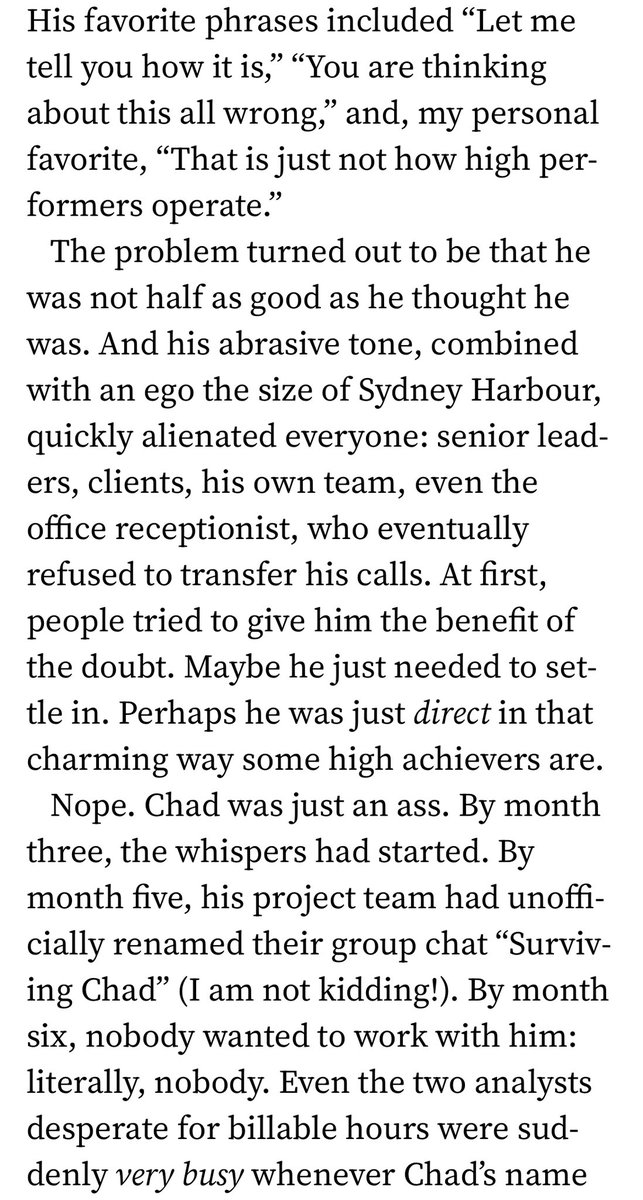
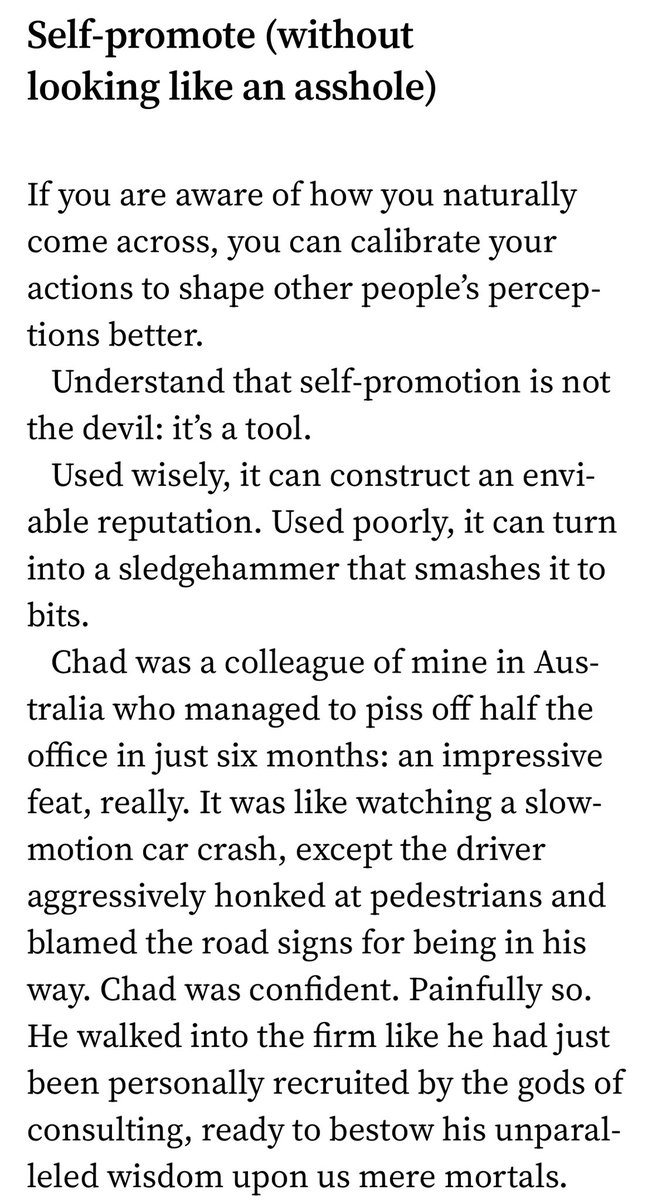
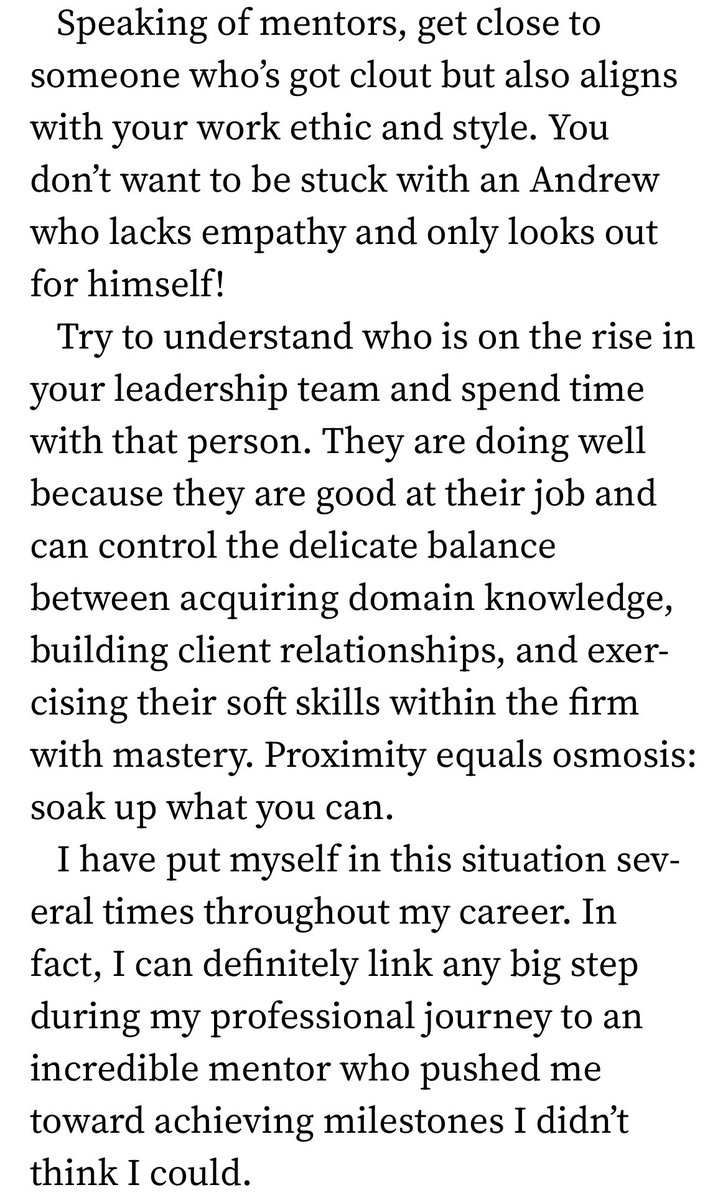
I wrote a chapter in "Beyond Slides" with more suggestions on how to "self-promote without looking like an asshole", so have a read at the below extract!
All the best!!
@hdowwknssj63912@Criter10n Imagine a Muslim guard working for the Israeli army, he too might have a wife, children, even elderly parents depending on him. The job gives him “stable income,” and he justifies it to himself. But that doesn’t cleanse the act. Life is a test of principle, not comfort
@Average_NY_Guy The amount of logical fallacies packed into this is wild:…contradiction, appeal to anonymous authority, argument from ignorance, shifting the burden of proof, conspiracy logic… and people are still taking it seriously. That says a lot about the IQ level in play.
@MMetaphysician@sneako In al-Bukhārī (1393) and Muslim (3033), the Prophet ﷺ said:
“Do not abuse the dead, for they have reached the result of what they did.”