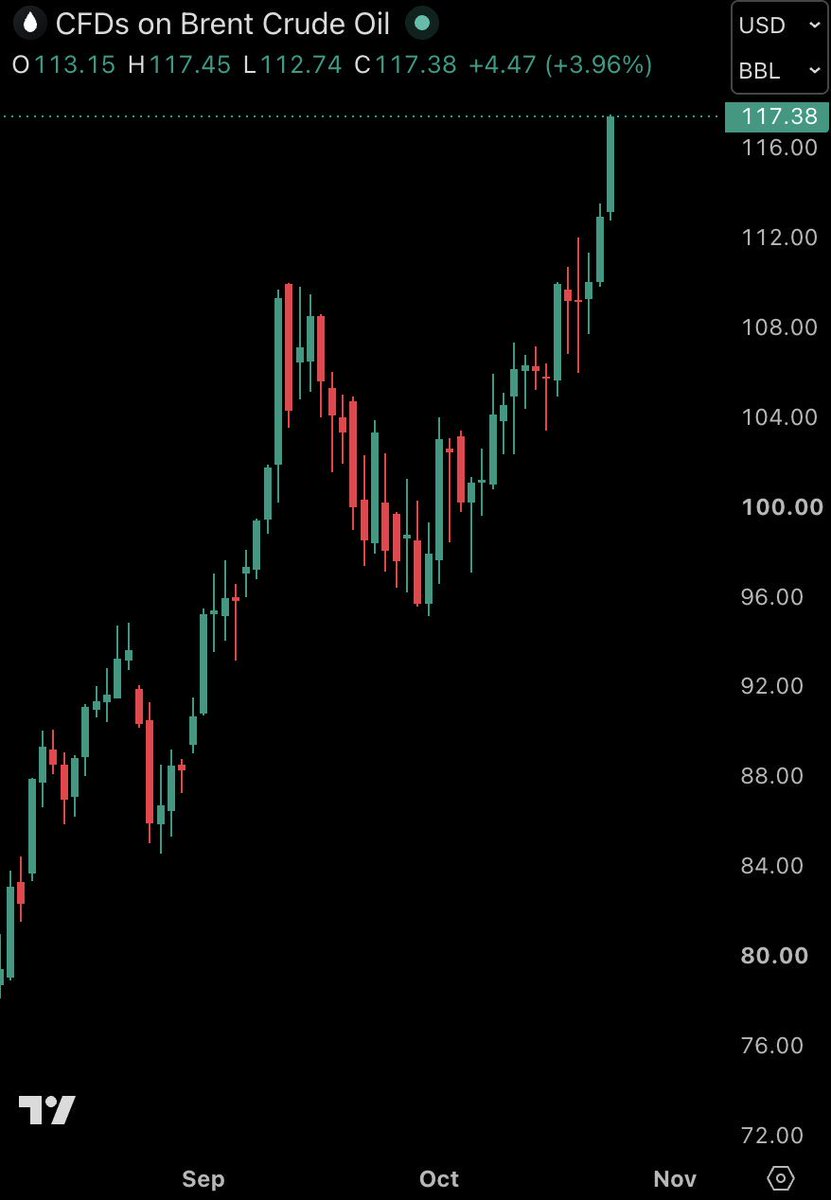
Gulf oil flows already back above prewar levels (Kpler >24 mbd).
What’s left in the price is tanker rates (still 5-10x) and the geopolitical premium.
Those risk premia can evaporate overnight.
The more the Fed tightens into this now, the more they cut in 2027.
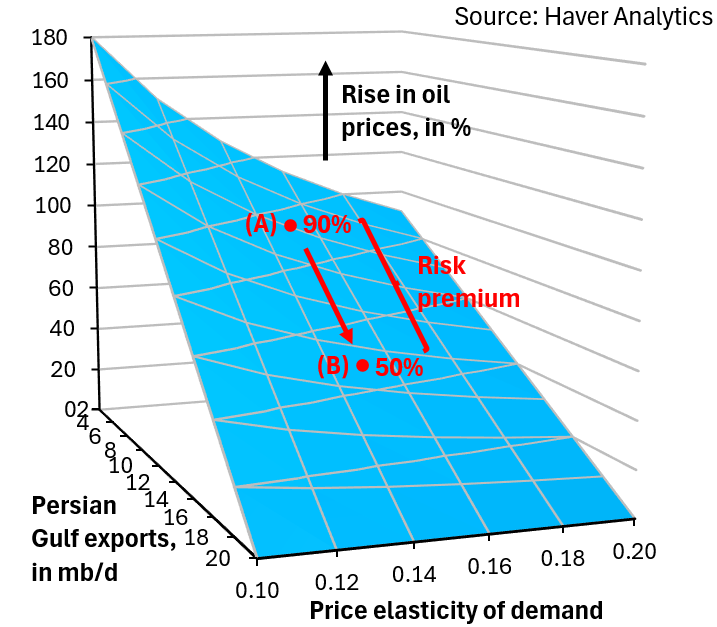
Anxiety in oil markets is back to March levels. Brent at $117 prices oil out of the Persian Gulf running at 6 mb/d (point A in the chart), when we're actually at 18 mb/d. I can see how markets want to price a risk premium, but this is way too excessive...
https://t.co/ZBZIgZhRxK
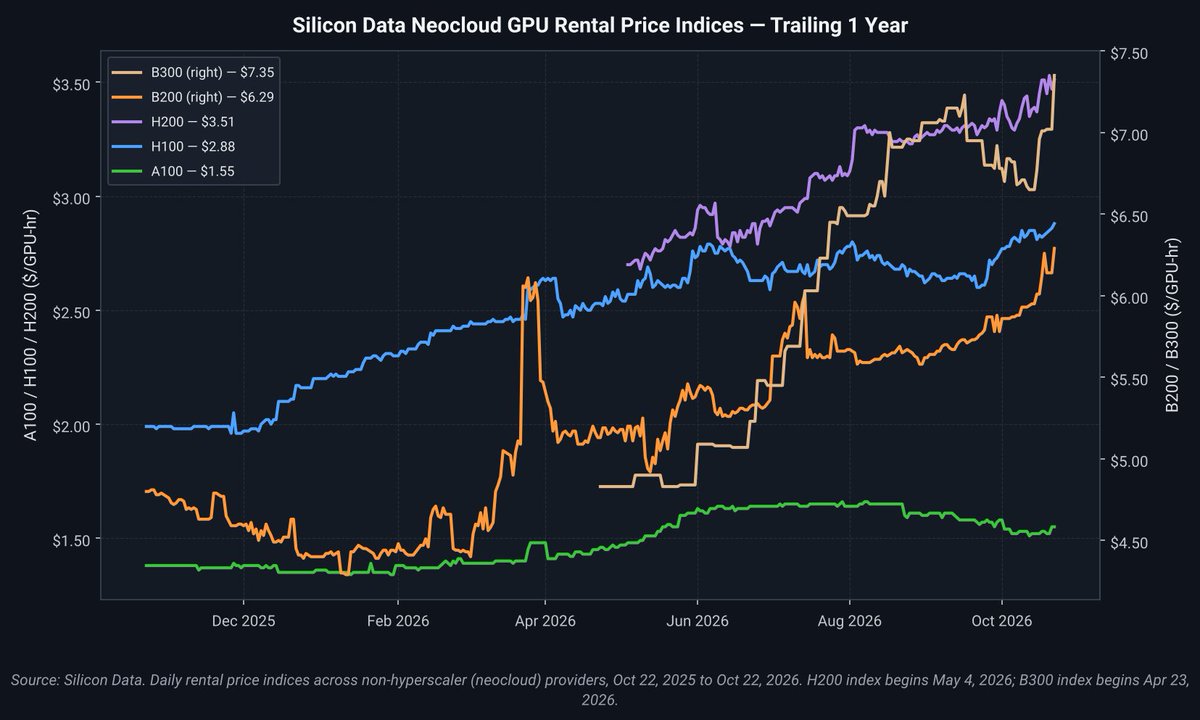
Another day, another round of on-demand GPU rental indices surging across the board and reaching ATHs. Even the A100 index, which recently saw some softness, seems to be inflecting a little.
Major explosions reported in southern Iran's Bandar Lengeh and Bandar Kong with Iranian Air Force fighter jets simultaneously airborne over the region.
Jensen: “Can you do a somersault?”
Microduck: causally flips 🦆
These little robot ducks went from simulation on RTX Spark to stealing the show on stage !
Physical AI is getting dangerously cute.🫠✨️
Oil Is Surging, Credit Is Cracking, And The Economy Is Running Out Of Time
Brent has surged to $117.38, up 3.96% today and more than 22% above its recent low near $96. It has broken through the previous $108 to $110 peak and is pressing against its session high.
Markets are demanding a greater premium for threatened energy supplies and shipping routes amid renewed Middle East escalation. Prices can surge before barrels disappear because refiners and shippers must price the possibility of disruption.
Brent traded roughly $14 above WTI in the earlier snapshot, although those quotes are not matched contracts. U.S. natural gas simultaneously fell nearly 5%. This looks more like uneven supply risk than synchronized demand strength.
What Bonds Are Revealing
The U.S. 2 year yield is 4.688%, the 10 year 4.992% and the 30 year 5.315%. Shorter yields are rising slightly faster today, consistent with concern over restrictive Fed policy.
Yet Treasuries rallied sharply yesterday as equities weakened. Markets can fear higher inflation today while seeking protection against weaker growth tomorrow.
More revealing, between October 21 and 22, 5 year breakeven inflation rose 5 basis points to 2.45%, while the 10 year measure fell 5 basis points to 2.32%. Inflation compensation for the 5 year period beginning 5 years from now declined 15 basis points to 2.19%.
These measures include risk and liquidity premiums, but the distinction is significant. Near term inflation concerns are increasing without a corresponding increase in longer term inflation compensation. That is consistent with expectations of future economic damage.
Credit Is The Real Warning
Investment grade credit spreads widened only 1 basis point yesterday. BB spreads widened 12, B spreads 14 and CCC spreads 33. CCC and lower rated debt carried an effective yield near 18%.
Government bonds rallied while the weakest borrowers still faced more expensive financing. Financial conditions can improve for governments while deteriorating for companies with fragile balance sheets.
Expensive energy drains household purchasing power and increases transportation, manufacturing and distribution expenses. Companies unable to pass those costs on lose margins. Borrowers already confronting expensive refinancing then face increasing pressure on investment and employment.
Gold and crypto weakened while the dollar strengthened modestly, reflecting growing financial caution and tightening conditions. Copper’s advance and expansionary business surveys do not negate the deterioration already unfolding beneath headline economic data.
Weak hiring, declining full time employment, rising small business bankruptcies, mounting refinancing pressures and deteriorating household purchasing power reveal an economy becoming increasingly fragile. Isolated pockets of strength are masking broader structural weakness, while the energy shock threatens to accelerate the contraction already developing across vulnerable sectors.
The Bigger Picture
Oil is pricing geopolitical supply risk. Shorter inflation horizons are reflecting immediate pressure. Lower quality credit is increasingly pricing financial vulnerability.
The biggest risk now is energy remaining expensive long enough for weaker cash flow, burdensome debt and low hiring to reinforce one another.
That is how a supply shock can evolve into an economic contraction well before headline indicators reveal the full extent of the damage.
The AI bubble is not about technology. It is about human nature.
The distant future is a blank canvas. You can paint any number on it, and nobody can prove you wrong.
Wall Street lives for that. An open ended story where everyone gets rich, so throw every dollar at it.
And the CEOs bought in too. They now believe it is AI or die.
Here is the trap. Even if AI works, you can still end up on the wrong side of it.
We saw this in the dot com era. Companies bet on an unwritten future that never matched the plan.
The debt is sold. Now the system has to deliver. Every sign says that will be very hard.