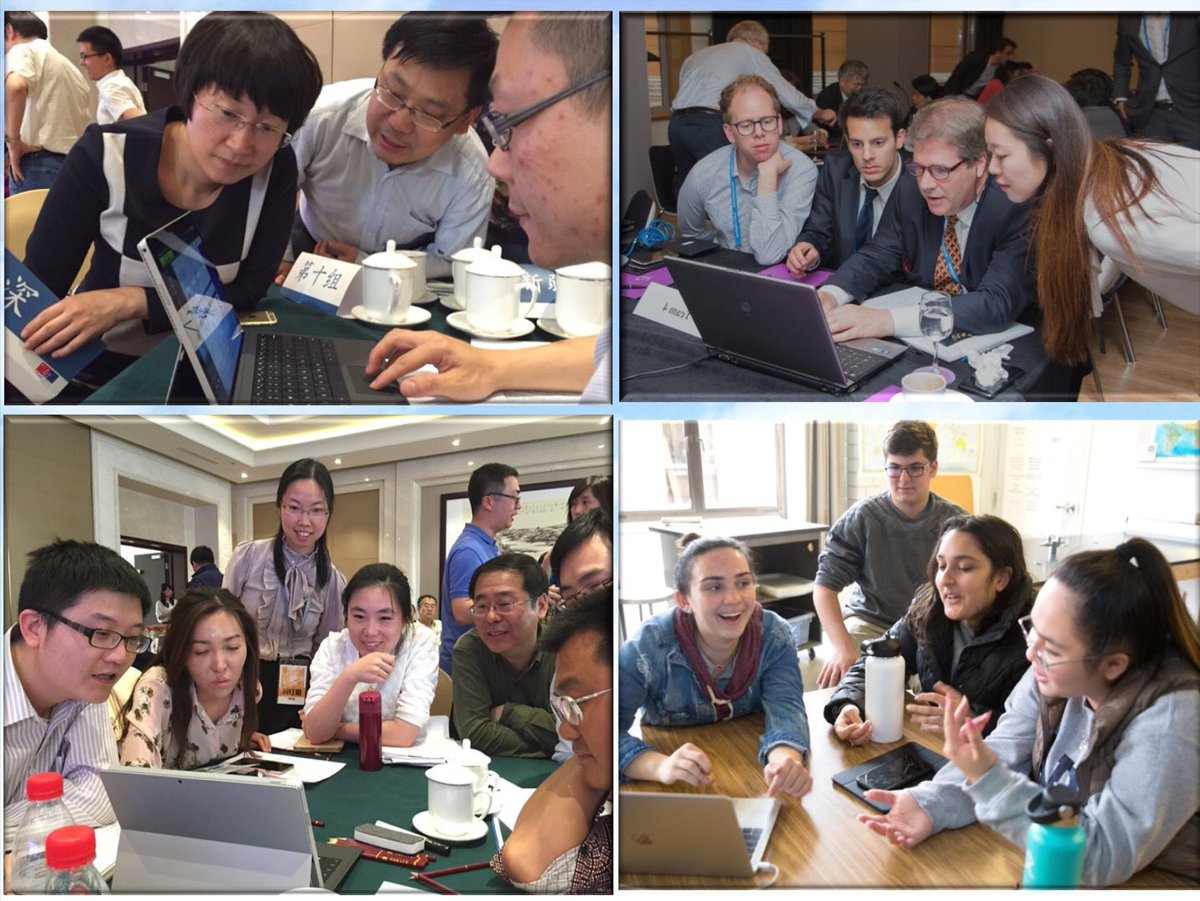
EDF’s CarbonSim is an artificial intelligence-enhanced, multi-lingual, multi-user, app that teaches the principles of emissions trading & brings markets to life
1. CarbonSim is an ETS simulation tool. It was designed with two beneficiaries in mind—policymakers that design & administer emissions trading systems & companies that are covered by an ETS. This tweetstorm describes how CarbonSim can be used to advance ETS development objectives
2. EDF is deeply thankful for donors and partners that have made it possible to develop the CarbonSim tool and to use it to train more than 2500 ETS stakeholders from 25 countries.
3. CarbonSim is fun...but also challenging. In a typical exercise you will learn a lot, have fun, and come to understand that environmental and economic outcomes are driven by choices -- by both the policymakers that administer the ETS and industries that are subject to ETS.
4. To date, more than 2500 ETS stakeholders from 25 countries have had the opportunity to engage in CarbonSim exercises. People from industry, government, civil society, universities, and even a high school have used CarbonSim.
5. During a CarbonSim exercise you will learn some ETS basics, why EDF built CarbonSim, and how it works. Then you will manage your own regulated company. And you'll finish by discussing what happened and reflecting on lessons learned.
6. EDF initially built this tool for use by Chinese ETS stakeholders charged with the development of the pilots and the national ETS. CarbonSim incorporates lessons learned from the US Acid Rain ETS, the EU ETS, the Western Climate Initiative, NSR, RECLAIM and other simulations.
7. After using this tool in China EDF customized it for use in the Republic of South Korea, Mexico, Chile, and Thailand. We also hope to make it available to ETS stakeholders in the RGGI program, the Pacific Alliance, and India.
8. ETS by choice — Results by design. Policymakers can use CarbonSim to see how the choices that they make – about both program design and administration – can affect the performance of the ETS.
9. Industry carbon portfolio managers (that’s your role in CarbonSim) have an opportunity to deploy a variety of strategies – involving production changes, the use of abatements, and trading – to satisfy ETS obligations.
11. In CarbonSim there are many more artificial-intelligence driven Bots than Humans. Believe it or not, the high Bot-Human ratio helps make this game more like a real ETS market.
12. You have four options -- use abatements to control emissions, participate in government sponsored auctions, transact on the exchange, or try the over-the-counter market.
13. Your 1rst option - reduce emissions using Abatements. You should use a Marginal Abatement Control Cost Curve as a guide. Control & sell surplus allowances (EAs) when the market is “high” relative to your costs. Buy EAs/Offsets when the market is “low” relative to your costs.