🚨 GOLD IS ABOUT TO REPEAT 1979
🇺🇸 TRUMP just requested an audit of 147 MILLION ounces of gold.
That’s $700 BILLION at current prices.
And the worst part is..
The last public audit was in 1979.
And now the same chart, 50 years apart:
1979: Iran War → Gold Audit → Chaos and Dump
2026: Iran War → Gold Audit → (We are here)
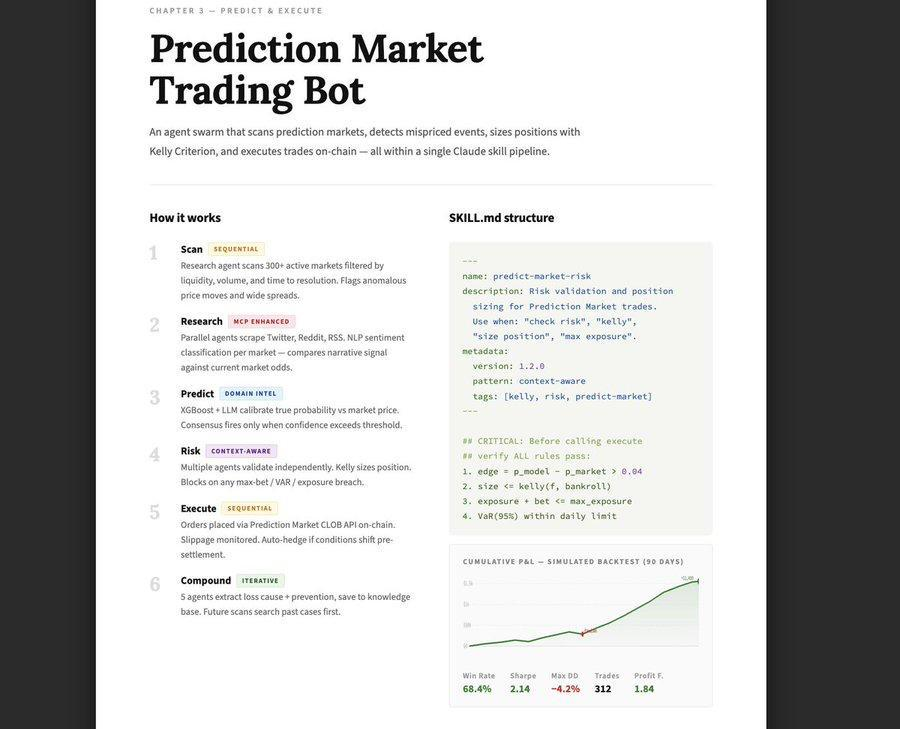
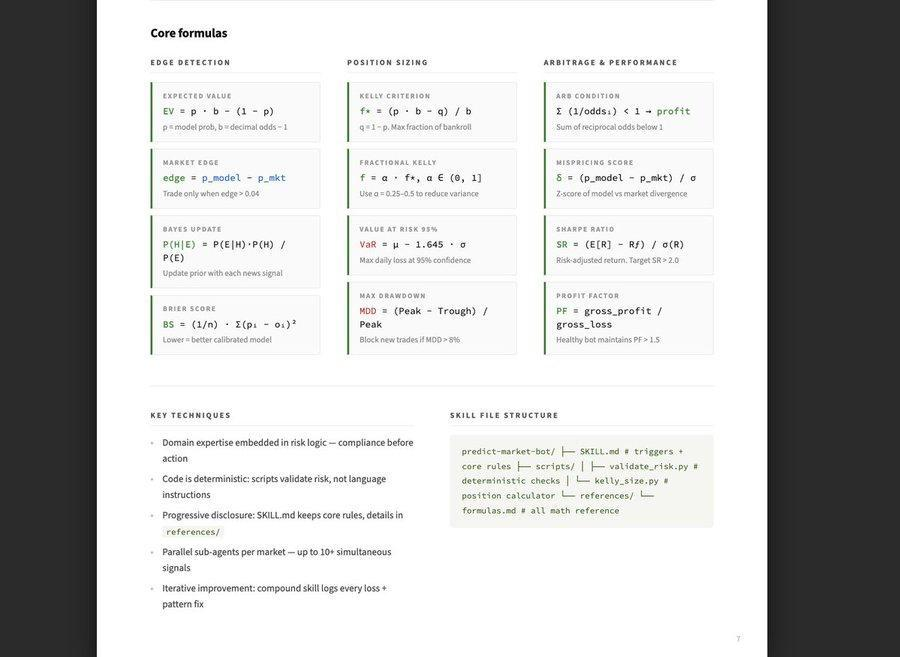
I created a pre-dump GOLD trading guide using AI based on OpenClaw..
All you need: a phone + Claude + 1 hour a day (free)
To join:
• Comment "Gold"
• Like and Retweet
Same pattern. Same setup. History doesn't repeat but it rhymes.
(Must follow me so I can send you a DM, good luck)
my wife thinks i'm obsessed...but I will keep repeating this.
Claude + Local SEO is going to quietly create a bunch of business “blue collar millionaires” this year.
This feels exactly like when people figured out Facebook ads in 2016.
hate me for revealing this...but it’s my duty to say it out loud.
“ABSOLUTELY EVERYTHING IS BEING HIDDEN FROM US!”
George Reyes - 22 years worked in the Vatican archives, there he saw the archive of a thousand years ago in which the whole history from the past to the future is written
Microsoft just banned its own engineers from using AI.
The tool was literally costing MORE than the humans it was supposed to replace.
They lied to you about AI adoption and now the whole narrative is blowing up:
Microsoft gave thousands of engineers access to Claude Code six months ago and encouraged them to use it.
Engineers loved it and adoption exploded. But then the invoices arrived.
Token-based pricing means every query, every code review, every debugging session costs money. At scale across 100,000 engineers, the numbers became so large that Microsoft issued an internal order to cancel nearly all Claude Code licenses by end of June and force everyone onto their own cheaper tool instead.
The company that invested $5 billion in Anthropic just told its own people to stop using Anthropic's product because it costs too much.
Uber's story is even worse...
Their CTO Praveen Neppalli Naga told The Information that the budget he planned for the full year was "blown away already" by April.
Uber had rolled out Claude Code in December 2025. By March, 84% of their 5,000 engineers were using it with 70% of all committed code coming from AI systems.
Heavy users were burning $500 to $2,000 per month each. Naga himself spent $1,200 in a single two-hour demo session.
The company had even built internal leaderboards ranking engineers by how much AI they used. They literally gamified the spending and then ran out of money.
Now look at what Nvidia's own VP of applied deep learning Bryan Catanzaro said to Axios last month. Direct quote:
"For my team, the cost of compute is far beyond the costs of the employees."
This is a VP at the company that SELLS the chips saying that using AI is more expensive than paying humans.
Think about what this means for the entire AI narrative.
Every CEO on every earnings call for the past two years has said the same thing:
AI will make us more efficient, reduce headcount, and cut costs.
The stock market rewarded every company that said it.
Fired workers, stock goes up. Announced AI adoption, stock goes up.
But the actual companies deploying AI at scale are discovering the math doesn't work. The MORE employees use AI, the HIGHER the bill.
Goldman Sachs forecasts a 24x increase in token consumption by 2030 as companies adopt AI agents. Gartner just published a report showing that even though individual token prices will drop 90% by 2030, total enterprise AI costs will go UP because agents consume exponentially more tokens per task than basic tools.
Meta built an internal dashboard called "Claudeonomics" to track which employees use the most AI. Amazon started pushing engineers to "tokenmaxx," their internal term for consuming as many AI tokens as possible.
Both companies are spending hundreds of billions on AI infrastructure this year alone.
And Microsoft, the company that bet its entire future on AI, just told 100,000 engineers to stop using the tool they liked best because the per-token bills got out of control.
The companies building AI are telling investors it saves money. The companies using AI are finding out it costs more than the humans it was supposed to replace. And even the company that makes the chips just admitted it through its own VP.
This is the gap nobody on Wall Street is pricing in.
$725 billion in AI infrastructure spending this year across Big Tech. And the first companies to actually deploy these tools at scale are already pulling back because the economics don't work.
What do you think?
🚨 SURGEON WARNS THE BIGGEST BREAKTHROUGH IN HUMAN HISTORY IS HAPPENING RIGHT NOW — “BIGGER THAN AI”
A surgeon is going viral after claiming scientists may have already discovered a way to partially REVERSE aging at the DNA level… and he says the implications are bigger than AI, social media, smartphones, or even the internet itself.
Dr. Buck Parker’s claim:
“The fountain of youth has been discovered.”
“This is bigger than the Industrial Revolution. Bigger than the advent of the internet. Bigger than Amazon, Apple, the iPhone, Google, social media… bigger than AI.”
And according to Dr. Parker… it’s already happening RIGHT NOW.
The core claim revolves around something called “Yamanaka factors,” proteins discovered by Nobel Prize-winning researcher Shinya Yamanaka that can reportedly reset damaged cells back to a younger biological state.
According to Dr. Parker:
• Scientists have reportedly reversed visible signs of aging in animals
• Wrinkled skin in test subjects appeared to become youthful again
• Researchers are now experimenting with literally “turning back” cellular age
• Human trials are reportedly beginning
• Some scientists now believe aging itself may simply be accumulated DNA damage
His warning:
“If you’ve been alive for the last 40 years… you’ve seen some wild sh*t happen. It’s about to get more wild.”
If this became available tomorrow… would you actually take it?
📹: drbuckparker
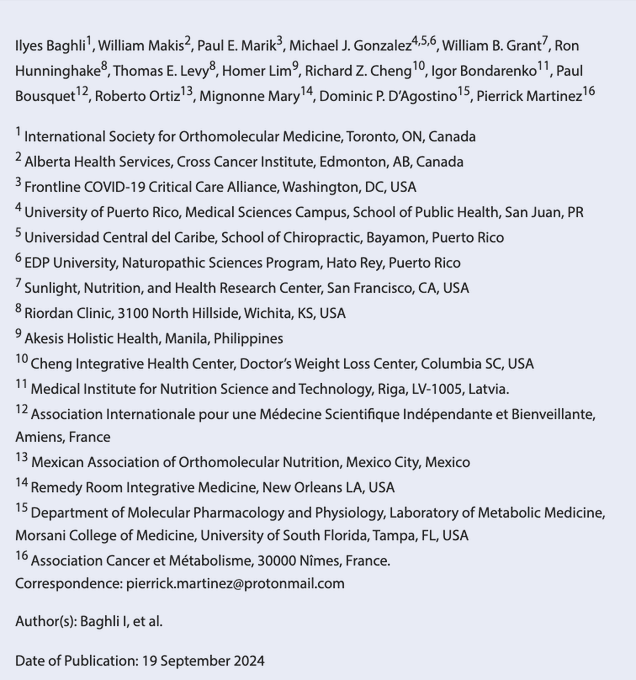
🚨 BREAKING NEWS: New Cancer Protocol Using Ivermectin, Ketogenic Diet, Fasting & Fenbendazole Published – Sept 2024
@ivermectincure
The 7-Therapeutic Hybrid Model for Cancer Treatment
1. Vitamin C
2. Vitamin D
3. Zinc
4. Ivermectin
5. Fenbendazole, Mebendazole & DON (Glutamine Antagonist)
6. Fasting, Ketogenic Diet & Ketone Metabolic Therapy
7. Press-Pulse Therapy, Endurance Exercise, Hyperbaric Oxygen Therapy, Methylene Blue, CoQ10, Niacin, Magnesium & Vitamin E
All dosages for these seven components are outlined in the protocol and are recommended to be followed for at least 12 weeks, regardless of cancer type.
Visit: https://t.co/EeKlejJcj8
Experimental at best, not standard care.
#Ivermectin #Fenbendazole #Cancer #CancerResearch #Mebendazole
Obsidian + Claude Code = 24/7 personal operating system.
Works while you sleep.
The people who build this tonight will never work the same way again.
Watch it and Bookmark it now.
This Chinese guy built a Second Brain in Obsidian and every morning gets 3 trading ideas that brought him $180,000 in 6 months.
Inside he runs a pipeline of 6 workflows on N8N that automatically pulls every read article, listened podcast, and voice note into a shared Obsidian vault, and a neural network analyst every morning at 6:00 finds connections between the fresh and the old and puts the 3 strongest trading ideas for the day into the inbox.
No analytics desk, no Bloomberg terminal, no Telegram chats with traders. Just a Mac Mini by the wall, an iPhone in the pocket, and 1 local Obsidian vault.
And traditional quant funds keep entire teams of 8 people on salary for the same flow of insights, while his expenses are only subscriptions to Readwise, Whisper API, and N8N hosting.
6 pipelines process about 200 sources a day and close the monthly API bill at about $120.
The Mac Mini itself stores the entire vault and keeps the neural network analyst running 24/7, and from the iPhone the owner drops any idea he hears on the go into a Telegram bot, and it lands in the vault inbox in just 30 seconds.
The starting instruction that sits in the VAULT.md file at the root of his vault looks like this:
"you are the AI analyst of a solo trader. you read his vault every morning at 6:00, find connections between fresh and old notes, and deliver 3 trading ideas he can verify in the hour before the market opens.
pipelines:
// Reader (pulls every article and highlight from Readwise, Twitter bookmarks, and Kindle into /notes)
// Listener (transcribes podcasts through Airr and voice notes through Whisper, puts them in /notes)
// Catcher (accepts any message from the Telegram bot and writes it to /inbox with a timestamp)
// Connector (every night reads across the entire vault and updates the connection graph between 4,000 notes)
// Briefer (at 6:00 AM writes a brief: 3 trading ideas for today plus the emerging thesis of the week, puts it in /inbox)
// Mobile (lives in the iPhone, answers any question about the vault by voice, and confirms alerts while the owner is on the go).
you wake the owner with a push notification only when a fresh note contradicts his active thesis or when 1 of the 3 morning ideas has a confidence score above 90%."
This instruction immediately sets the role for the system and the limits of its autonomy.
It knows it is supposed to connect new with old on its own.
It knows it is supposed to prepare 3 trading ideas every morning on its own.
It knows it connects the live trader only when a thesis is contradicted or an ultra-confident idea appears.
→ Reader pulls about 80 articles and highlights a day from Readwise, Twitter, and Kindle
→ Listener transcribes 4 to 6 podcasts a week through Airr and Whisper
→ Catcher intercepts all voice and text ideas through the Telegram bot, averaging 15 to 20 a day
→ Connector updates the connection graph between 4,000 notes every night, adding 25 to 30 new edges
→ Briefer puts a fresh brief with 3 trading ideas and the emerging thesis into the inbox at exactly 6:00
→ Mobile answers any question about the vault by voice and confirms alerts right from the iPhone
And only when a new note contradicts his active thesis or 1 of the ideas breaks 90% confidence does the orchestrator raise the owner with a push notification.
And when the trader at that moment is driving to the gym or eating breakfast, the Mobile agent in his iPhone answers any quick question about the vault by voice: what he wrote about this ticker last week, which 3 sources support the idea of long NVDA, and what counter-thesis already sits in his notes.
The trader makes the decision and sends the order before New York opens.
The fresh brief from last Monday looks like this:
"reader: 78 materials added over the weekend, 11 of them about semiconductors, 4 about energy, 3 about biotech. passing to connector."
"connector: 27 new connections found between fresh materials and the vault, the strongest one is that the Goldman report from Wednesday matches the NVDA thesis you wrote 3 weeks ago."
"briefer: 3 trading ideas for today: long NVDA (confidence 0.84), short Tesla at the close of the quarterly report (0.71), watch URI (0.62). emerging thesis of the week: the market is underpricing capex on data centers."
"alert: your fresh note about long-term risk in semis contradicts the NVDA thesis. sending for review."
In his work setup there is no cloud server, no team of analysts, and not even a Bloomberg subscription.
At home sits a Mac Mini with a local Obsidian vault, on top run 6 N8N pipelines and a neural network analyst, and the same vault mirrors to a secure terminal on the iPhone.
Out of everything I have seen this year, this is the cleanest solo trading setup on a second brain: $120 a month on the API, about $30,000 a month into the account, and between them 6 pipelines, 4,000 connected notes, and 1 iPhone in the pocket.
Dan Martell shared on a podcast how to go from $0 to $1,000,000 in a year - and the first tool on his list is Claude Code.
You open Claude Code, type "I want to launch a service doing..." and describe the idea - the system builds the product, writes the code, tests it and gets it ready to launch.
People who have already done this are making tens of thousands of dollars a month with no team, no investors and no development experience - working 1-2 hours a day while everyone else sits in an office for 8.
Most people simply don't understand that these systems already exist, already work and are already making someone $10,000+ a month.