Looking to collaborate internationally? JSPS provides funding to Japanese scientists conducting joint research projects and seminars between Japan and counterpart countries.
📅Application Period: Late Jun - Sep 3, 2026
🔗https://t.co/291kACMKA6
#BilateralPrograms
✨ Introducing our @andganna, Senior Group Leader in the Health Data Science Research Centre.
📊 His Group will use AI, genetics, health records and population-scale biobanks to improve disease prediction and prevention.
https://t.co/dnmxFVGnIG
🧬What makes #RNA one of the most powerful molecules in biology?
🎙️Our Piero @carninci Director Genomics Research Centre joined RAI Italia to discuss the latest discoveries in RNA research and their potential impact on human health.
▶️ Watch from minute 56 https://t.co/g6rLMSKFju
1 month until #STOC2026 🚀
Global leaders in spatial omics, neuroscience, cancer research, biotech & AI are coming together in Milan to shape the future of scientific and clinical innovation.
📍 Milan
📅 June 29–30, 2026
🔗 https://t.co/rGl9HpElTF
#SpatialOmics#SpatialBiology
🔬How can shared technology push life sciences further?
🧬 Human Technopole has opened a new Call for Access to its #NationalFacilities, after 585 applications and 298 approved projects across Italy.
Read more 👉 https://t.co/b4fBiu14Xc
@jt_mag_os@DavidMcNeill3 What is a “pure Japanese”?
The Japanese population arose from at least three major ancestries: Jomon hunter-gatherers, Yayoi rice farmers from continental East Asia, and later Kofun-era migrants. Modern Japan is the product of repeated migration and admixture over millennia.
The FANTOM servers will be unavailable due to scheduled maintenance.
[Time] May 29, 2026 15:00 - 18:00 (at latest)
(Japan Standard Time, GMT+9:00)
[Affected Services] Entire FANTOM website
We apologize for the inconvenience and appreciate your understanding.
@jt_mag_os@DavidMcNeill3 Wait few more years and without foreigners the support to elderly people will collapse, and how can this be happiness? We will see anyway.
@mrjeffu There is everywhere a minority of people that just hate and complain. But I believe that the majority are those who live their lives and don’t care to comment further.
Guardatela bene, questa foto.
Guardateli in faccia, uno per uno.
Ieri pomeriggio, a Modena, in via Emilia centro, un uomo lancia un’auto a cento all’ora contro la folla. Falcia otto persone. Poi scende, tira fuori un coltello, e prova a scappare.
Luca Signorelli gli si butta addosso. Prende una coltellata alla testa, ne schiva un’altra. Sanguina, ma non lo molla.
E in quel momento, dietro di lui, arrivano loro.
Quei ragazzi nella foto. Stranieri. Venuti da lontano. Quelli che secondo Salvini sarebbero “il problema dell’Italia”, “l’invasione”, “la sostituzione etnica”.
Sono loro che si gettano addosso all’aggressore.
Sono loro che gli bloccano la testa con un ginocchio mentre Signorelli, ferito, gli tiene il polso.
Sono loro che permettono alla polizia di arrivare e di portarsi via il responsabile prima che faccia altri danni.
Senza di loro, oggi staremmo contando forse dei morti.
Salvini e la Lega, prima ancora di sapere chi fosse l’aggressore, prima ancora che si chiarisse che si trattava di un trentunenne con disturbi psichiatrici in cura da anni, prima ancora che gli investigatori escludessero la pista terroristica, erano già là fuori a sparare la solita filastrocca.
E intanto i veri eroi di ieri pomeriggio, quelli senza i quali oggi parleremmo di altri morti, restano senza nome e senza ringraziamenti.
I loro volti non finiranno nei post di Salvini e della Lega con una grafica con scritto “EROI”. Perché rovinerebbero la narrazione.
Quella narrazione che da quindici anni divide il mondo in due caselle: italiani brave persone, stranieri criminali.
E invece la realtà, ieri a Modena, ha fatto quello che fa sempre: si è messa di traverso.
Un italiano di seconda generazione si è messo al volante per ammazzare la gente. Un altro italiano si è buttato sull’aggressore per fermarlo. E accanto a lui, fianco a fianco, ci sono finiti dei ragazzi stranieri che avevano una scelta semplice, girarsi dall’altra parte, e che hanno scelto di rischiare la pelle per gente che non conoscevano.
Questa è l’Italia vera. Quella che non sta nei comunicati della Lega.
A quei ragazzi, di cui ancora non sappiamo i nomi, va detto grazie. Forte.
E va detto adesso, prima che il rumore degli sciacalli copra tutto.
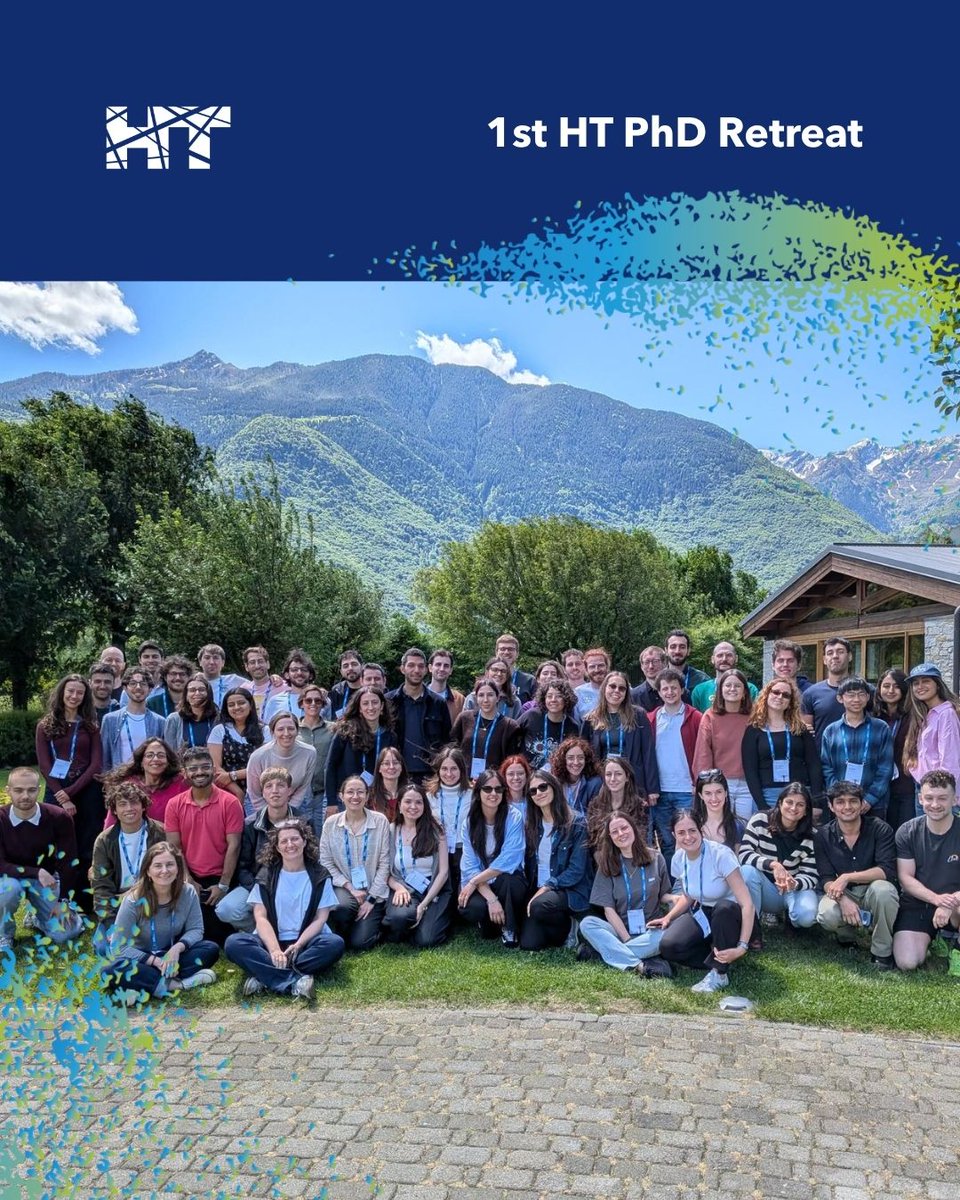
🌱A milestone for our #PhD community: the 1st Human Technopole PhD Retreat brought our doctoral students together for two days of science, growth and connection at Mantello.
#PhDlife
🧭 What if we could map the genome like a city?
🧬 Our @BienkoMagda Group developed GPSeq, a tool to chart how DNA is positioned from the edge to the centre of the cell nucleus.
Cover of @NatureProtocols 👉 https://t.co/qffLhPk7L7
🧬 Build the science that shapes the future of human health.
🔬 We are seeking a Senior Research Group Leader to build an independent lab in Functional #Genomics in Milan.
Apply by 28 May 2026 👉https://t.co/dPRF3jevmX #sciencejobs#researchjobs
The FANTOM servers will be unavailable due to urgent maintenance.
[Time] May 8, 2026 15:00 - 18:00 (at latest)
(Japan Standard Time, GMT+9:00)
[Affected Services] Entire FANTOM website
We apologize for the short notice and appreciate your understanding.
Japan's top tier professional rugby league has introduced new rules that treat naturalized Japanese citizens who didn't grow up in Japan like they are second class citizens.
To qualify as a "A1" Japanese player, a person has to have spent six of their nine years of compulsory education in Japan, or be born in Japan or have parents or grandparents born in Japan. Teams can field as many A1 players as they want.
Many of the naturalized players currently in Japan will be categorized "A2" Japanese players and face limits that will reduce their opportunities to play.
It is common in Japan for elite rugby high schools to recruit promising athletes from abroad, who then go on to play at university and professional levels. Others move to Japan as adults to play at the professional level. Up until now, if they met the requirements for Japanese citizenship and naturalized, they were treated the same as other Japanese players. The A2 category looks like it was created to target players like this and limit their participation in pro games.
Veteran players such as Lomano Lemeki, who moved to Japan at age 19 to play professional rugby, became Japanese citizens, and later played on Japan's national team, are speaking out against the new rules.