#1 Worst Snack For Your Waistline
Americans Were Lied To About Fermented Foods
Different foods can influence your joint health as well as your weight.
Quiz Discover which foods to eat & avoid for your body’s gut type!
Find out your gut type INSTANTLY Try Bio Complete 3
Linda Kasabian testified against the Manson killers, helping put them away. This is why in ONCE UPON A TIME IN HOLLYWOOD QT has Kasabian (Maya Hawke) abandon the others.
Q> How can you tell if DJT is lying?
A> His lips are moving.
Thank you, ladies and germs. Thank you very much. Don't forget to tip your waitress.
Chichen Itza's legacy has shaped the cultural, economic, and national identity of Mexico in profound ways. As one of the largest and most architecturally sophisticated cities of the ancient Maya world, it demonstrated the capacity of pre-Columbian civilizations to build complex political, economic, and religious systems that rivaled those of the ancient Mediterranean. Its eventual conquest and incorporation into the Spanish colonial world accelerated the erasure of indigenous governance across the Yucatan, setting the stage for centuries of colonial rule. In the modern era, the site's designation as a UNESCO World Heritage Site and its recognition as one of the New Seven Wonders of the World transformed it into one of Mexico's most powerful symbols of national pride and a major driver of tourism, drawing nearly 10 million visitors annually and generating significant economic activity for the Yucatan region. Ongoing archaeological discoveries continue to rewrite our understanding of Maya civilization, making Chichen Itza not just a monument to the past but an evolving source of historical knowledge.
Chichen Itza was a massive pre-Columbian city built by the Maya people in what is now Yucatan State, Mexico, rising to prominence between roughly 600 and 1200 AD.
The city's name means "At the mouth of the well of the Itza," referencing both the natural sinkholes that supplied its water and the Itza people who came to dominate the region around 800 AD.
Located on the flat limestone karst of the Yucatan Peninsula, Chichen Itza had access to four natural cenotes, or sinkholes, which made it an ideal location for a large permanent settlement.
The city grew into one of the most powerful economic forces in the northern Maya lowlands, controlling trade routes across the peninsula and importing luxury goods like obsidian from central Mexico and gold from Central America.
Chichen Itza may have been governed not by a single ruler but by a council of elite lineages, a system scholars call "multepal," though this theory has been challenged in recent years.
The city's architecture blends multiple styles, including the local Puuc and Chenes traditions alongside influences from central Mexico, reflecting its diverse and cosmopolitan population.
The most iconic structure is the Temple of Kukulcan, known as El Castillo, a nine-tiered step pyramid standing 30 meters tall with staircases on all four sides and serpent carvings at the base.
During the spring and autumn equinoxes, shadows cast on the pyramid create the appearance of a serpent crawling down the staircase, a spectacle that draws thousands of visitors each year.
The Sacred Cenote, a vast natural sinkhole 60 meters wide, served as a site of ritual offerings, and archaeologists have recovered gold, jade, pottery, and human remains from its depths.
Thirteen ballcourts have been identified at the site, the largest of which is the Great Ball Court, the biggest surviving ancient ballcourt in all of Mesoamerica at 168 by 70 meters.
Chichen Itza began its decline as a regional power around 1100 AD, before the rise of the competing city of Mayapan, and by the time Spanish conquistadors arrived the city was no longer a major urban center.
In 1526, Francisco de Montejo petitioned the Spanish crown to conquer the Yucatan, and his son eventually reached Chichen Itza, renaming it Ciudad Real before a Maya siege forced the Spanish to abandon it entirely in 1534.
By 1588 the site had been converted into a working cattle ranch, and it remained largely forgotten by the wider world until John Lloyd Stephens published his influential travel account in 1843.
Edward Herbert Thompson, the U.S. Consul to Yucatan, purchased the land containing the ruins in 1894 and spent decades excavating the site, dredging the Sacred Cenote between 1904 and 1910 and shipping artifacts to Harvard's Peabody Museum.
The Mexican government later charged Thompson with theft and seized his estate, though the Supreme Court ultimately ruled in 1944 that he had broken no laws.
The Carnegie Institution conducted extensive excavations and restorations at the site between the 1920s and 1940s, uncovering and restoring the Temple of Warriors and the Caracol observatory.
Recent bioarchaeological research in 2024 analyzed the remains of 64 individuals found in a ceremonial context, all male, including two pairs of identical twins, with genetic links to modern Maya populations, suggesting a deliberate selection process for ritual purposes.
In 2007, Chichen Itza's Temple of Kukulcan was named one of the New Seven Wonders of the World following a global public vote.
The site is now managed by Mexico's National Institute of Anthropology and History and received an estimated 9.9 million visitors in 2025.
A new Great Museum of Chichen Itza opened in February 2024 in the nearby town of Piste, housing over 1,000 artifacts and offering multimedia exhibits about the site's history.
#archaeohistories
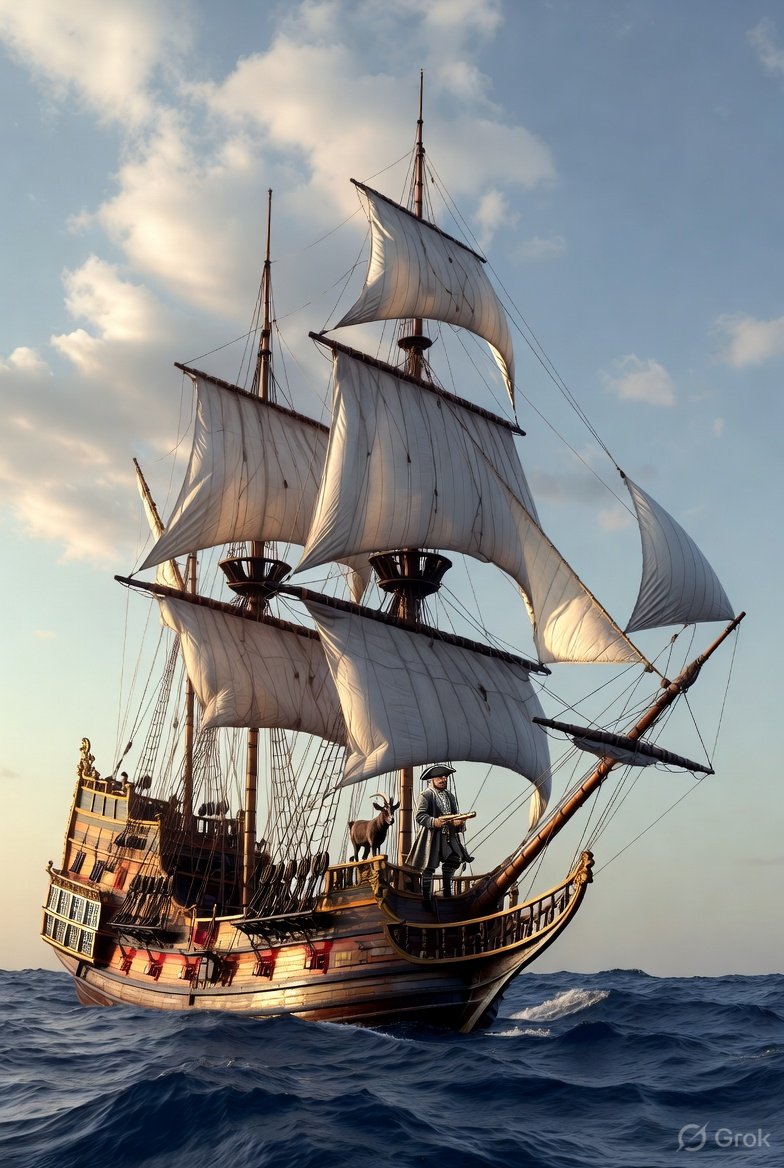
In late 18th century, one of history's most unlikely global travelers was not an explorer or scientist, but a simple goat.
The goat first sailed with Captain Samuel Wallis aboard the HMS Dolphin, completing a circumnavigation of the globe before most people had ever left their home county.
When James Cook prepared his famous first voyage aboard the Endeavour, the goat was loaded once again as part of the ship's livestock, alongside sheep, pigs, chickens, and other animals kept to provide meat, eggs, and milk for the crew.
Throughout the entire voyage — one of the most demanding oceanic journeys of the age — the goat reportedly never once stopped producing milk.
Upon the Endeavour's return, newspapers celebrated the animal with unusual enthusiasm, with one correspondent declaring that she had never gone dry and promising her a good English pasture for the rest of her days.
The naturalist Joseph Banks was so charmed by the goat that he commissioned none other than Samuel Johnson, the great literary figure and dictionary-maker, to compose a Latin poem in her honor.
Johnson produced a short distich that was engraved directly onto the goat's collar, comparing her to Amalthea, the mythological goat said to have nursed the god Jupiter himself.
Translated, the inscription read: "The globe twice circled, this the goat, the second to the nurse of Jove, is thus rewarded for her never-failing milk."
The goat lived out her retirement as a "pensioner" at Greenwich Hospital, one of England's most distinguished institutions, before dying at Mile End on April 28, 1772.
In 2006, author Jackie French wrote a children's book called The Goat Who Sailed the World, using the real animal as its inspiration and partly telling the story from the goat's own perspective.
The Well-Travelled Goat's story, while charming and seemingly trivial, reflects the deeply practical realities of long-distance seafaring in the Age of Exploration, where livestock were essential to crew survival and morale on voyages that could last years. The animal's celebrity upon return also illustrates how the public of the era embraced the Endeavour voyage with intense curiosity and wonder, attaching meaning and affection even to its humblest participants. Samuel Johnson's commissioned poem, however tongue-in-cheek, demonstrates how the voyage captured the imagination of Britain's intellectual elite, further elevating Cook's expedition in the cultural memory of the nation.
#archaeohistories
A new analysis of 38 human brains supports the idea that adults do, indeed, birth neurons—and that replenishing these cells might help preserve certain cognitive functions. https://t.co/Hvu8A5v2Pb
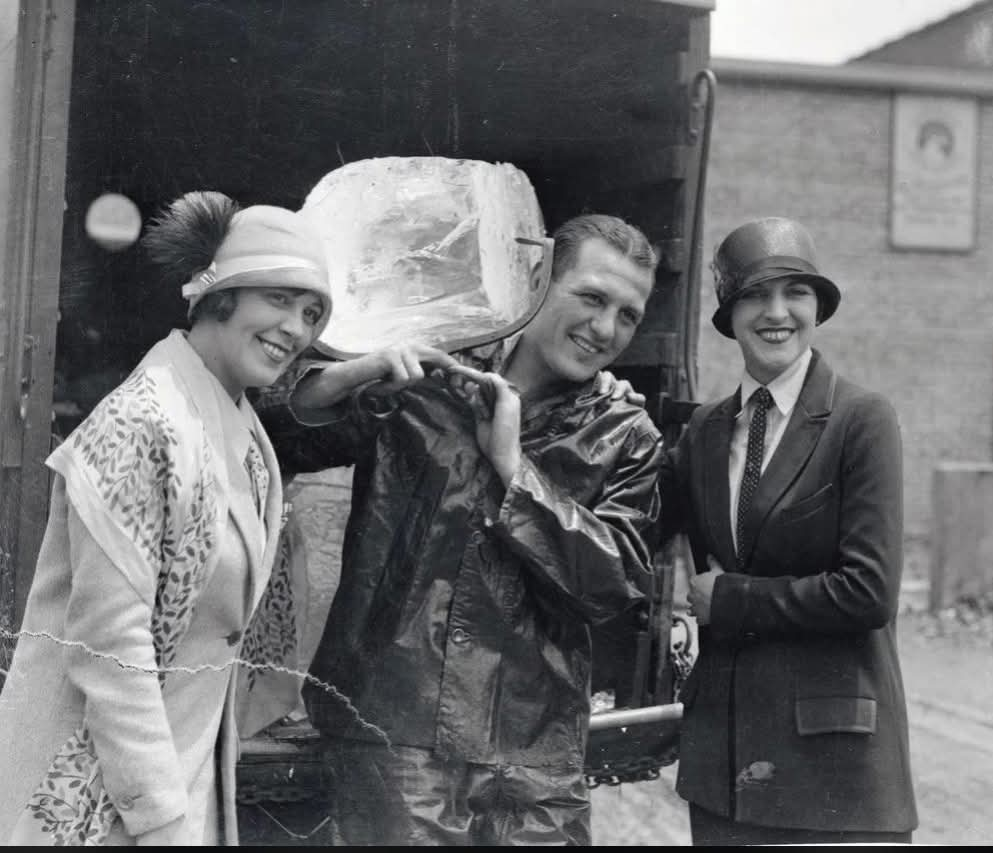
@archeohistories Well my grandmother married the ice man. Her mom was excited they'd get free ice! (GP job perk) She was 15 and he was 25 & they were married for over 60 years. They raised kids, lived, loved & laughed till death came a'calling. Lying eternally side by side.