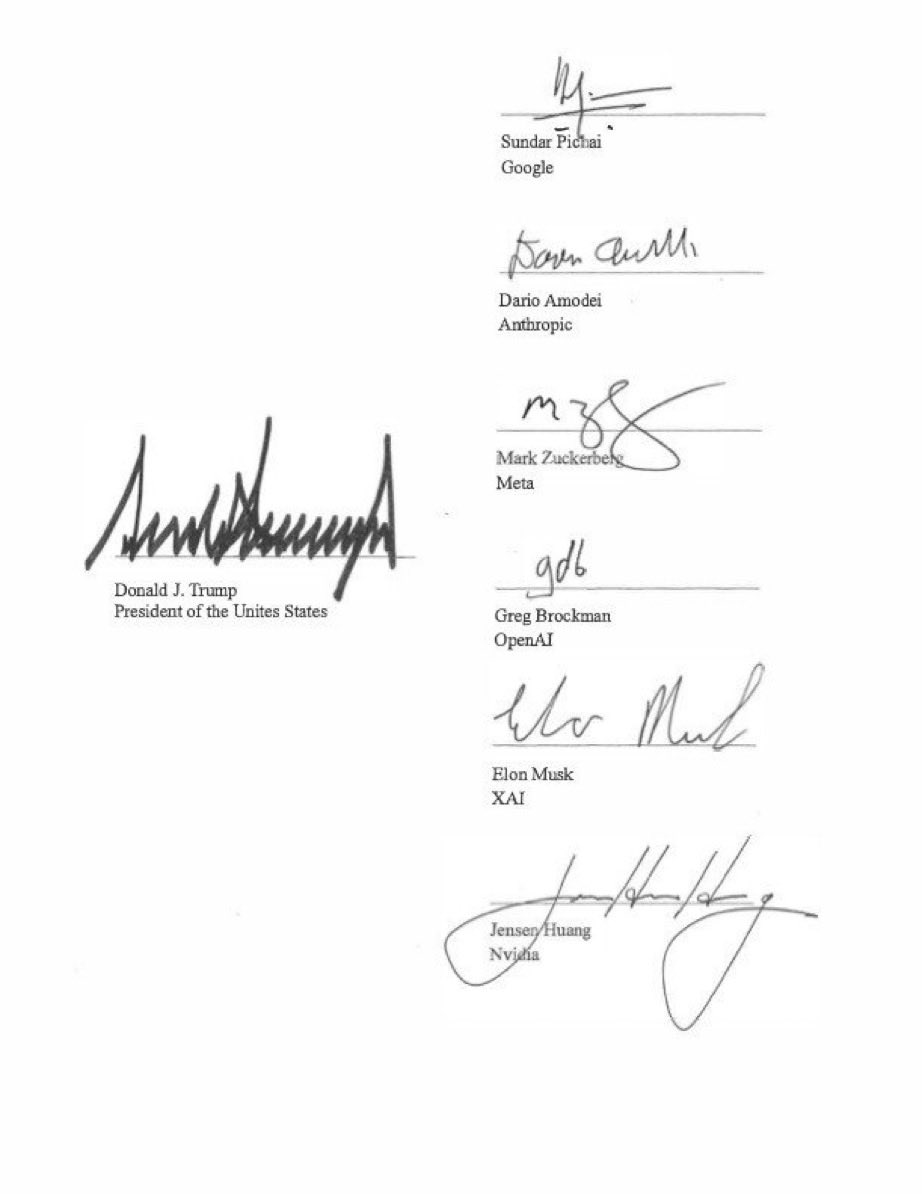
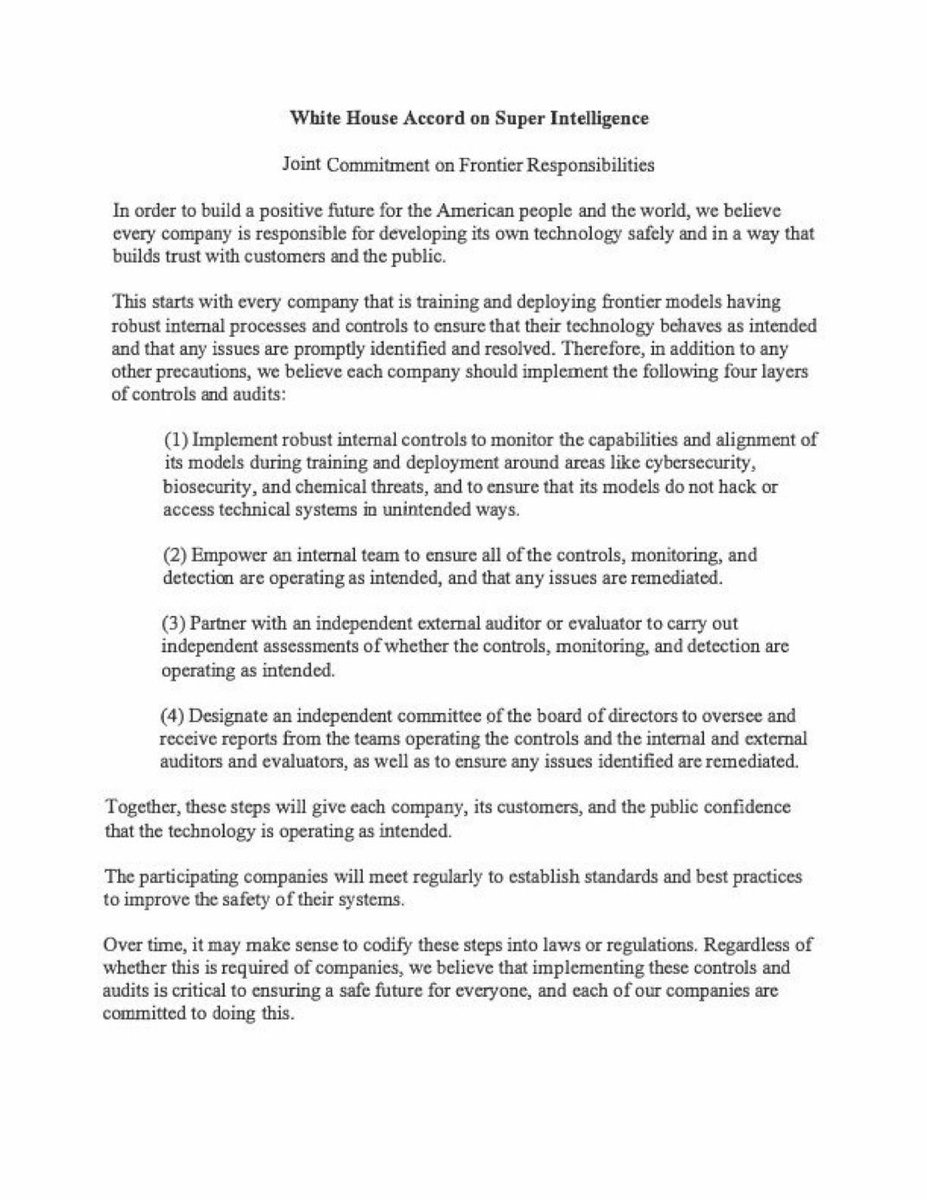
Only President Trump could convene all the leaders of the top companies developing chips, data centers and frontier models for Super Intelligence. This new Industrial Revolution has already created a million new jobs and is spurring a bigger infrastructure build-out than the railroads, canals and grid combined. I was honored to witness history as the leaders of the frontier lab companies signed the White House Accord on Super Intelligence, accepting responsibility for the safe development of their products and imposing new internal controls and external audits. This is far better than waiting years for some international agreement that would probably never happen. President Trump continues to ensure that U.S. remains the technology leader while putting Americans first.
WA State made a Promise
17 years ago my business partners and I decided CA was not good for our employees or our business. We looked around for alternative solutions.
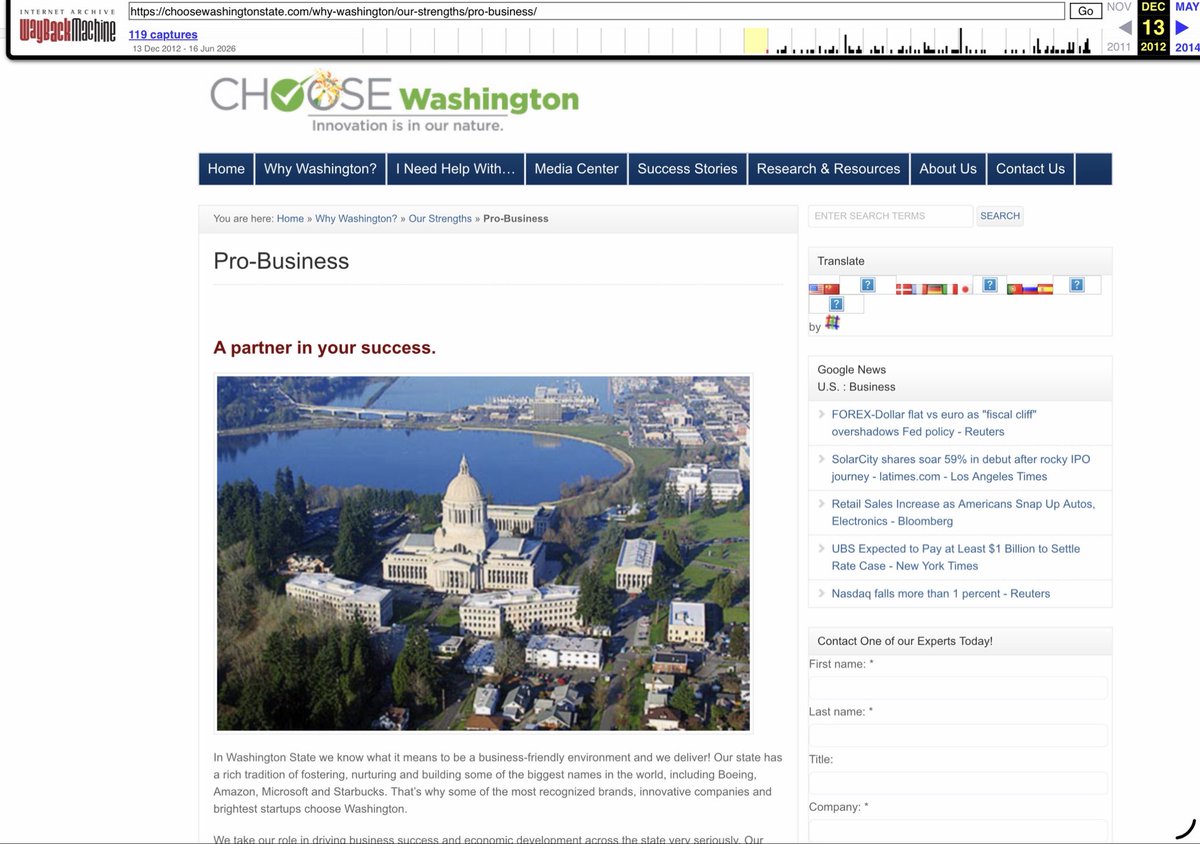
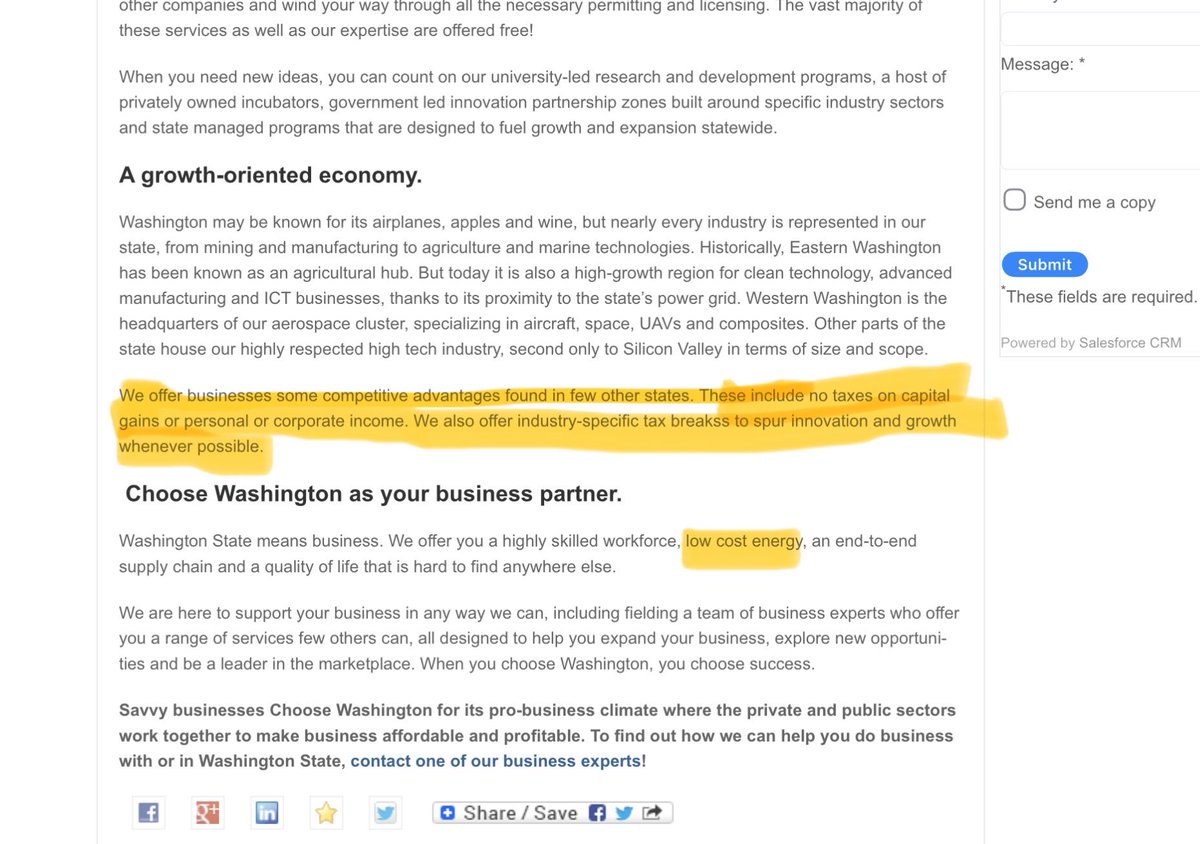
WA state came up on our radar with a promise directly on the State Department of Commerce Website.
“We offer businesses some competitive advantages found in few other states. These include no taxes on capital gains or personal or corporate income. We also offer industry-specific tax breakss to spur innovation and growth whenever possible.”
So we moved 40 families up to WA and established roots.
WA state’s economic success can absolutely be attributed to this business friendly approach that brought talent , technology, innovation, entrepreneurs, and jobs from all over the globe. I was thinking about this the other day wondering if I could find a screen shot of that promise the legislature has now trampled on. The interwebs are forever.
Vote Yes on I-645 To repeal the income tax and help Olympia keep the promise it made to thousands of businesses that chose Washington as their home.
@307Fool Ditto. Solid financials year after year. Solid growth year after year. It’s gonna keep continuing. Current sentiment is a PE ratio game in my opinion. At some point, it’ll come back into the Wall Street fashion show with glitter!
My latest memo discusses recent attempts to rein in long-dated government bond yields and why the only sustainable solution is responding to the underlying factors pushing interest rates up, even if politically uncomfortable.
You can read it here: https://t.co/RakxMnFvOY
@307Fool Are you expecting a lot of Volatility but up & to the right for all the cybersecurity stocks over this AI scare era? $BUG $CRWD $PANW $FTNT. Do you know much about $VRNS? Rule Breaker? I’m digging into IT again. Seems to me it was a MF Rec at one time
@stevenfiorillo It’s interesting! Yes, Siri is extremely annoying and inferior to Grok, GPT and now Muse. Been a shareholder since 2007 and what Apple has done for shareholders is nothing short of fabulous. Piece of mind 1000% return over last 10 years amazing. So, … IDK
In 2024, the Powell Fed cut 50bps 2 months before the presidential election with core CPI at 3.3%
In 2026, the Warsh Fed hikes 25bps 2 months before the midterms with core CPI at 2.4%
The Fed is about to repeat its worst mistake from 1973, and Wall Street is cheering it on:
- Brent just broke $100 for the first time since May. Diesel hit a record $6 a gallon. Both because the Iran war shut down the Strait of Hormuz.
- A quarter-point hike doesn't reopen that shipping lane. It doesn't refine a single gallon of fuel. Ending the war does this.
- The only thing it touches is demand, and the only way higher rates bring energy prices down is by beating the economy into submission until people stop spending (in 6 months.)
- In 1973, the Fed tried exactly this. Tightened into an oil shock expecting to look tough on inflation, and got a recession stacked on double-digit inflation instead.
- Nobody in Washington has figured out the difference between a supply problem and a demand problem in 50 years.
Raise rates now and you haven't fixed the oil shock. You've built a second one, and this one's homemade.
The strongest economic case against today’s Fed rate hike is simple because you cannot solve an oil supply shock with interest rates.
The Fed just raised rates 25 bps to 3.75%-4.00% while a significant portion of the inflation problem is being driven by energy and other supply-side pressures.
Raising the Fed Funds rate does not produce another barrel of oil, it does not repair disrupted supply chains and it does not increase refining capacity.
What it DOES do is increase the cost of capital throughout the economy. Consumers carrying credit card balances, auto loans and other variable rate debt will now face additional pressure.
Businesses that need to refinance debt face higher borrowing costs which can compress margins and potentially lead to reduced investment or hiring.
The federal government itself must continuously refinance trillions of dollars of debt. Keeping short-term rates higher increases the cost of financing that debt as securities mature and are refinanced.
This is the fundamental problem:
If inflation is being generated primarily by excess demand then tighter monetary policy can attack the source of the problem but if inflation is being generated by an external supply shock particularly energy then higher rates attack demand without fixing supply.
This risks creating the worst combination possible:
Higher energy costs
Higher borrowing costs
Higher government interest expense
Higher corporate financing costs
Weaker household purchasing power
The cure can become another part of the disease.
The Fed absolutely has an obligation to maintain price stability but monetary policy needs to distinguish between demand driven inflation and supply driven inflation.
You cannot hike your way into millions of additional barrels of oil and making capital more expensive across the entire U.S. economy will not solve an energy shortage.
@SecScottBessent@realDonaldTrump what is the next move? I am now concerned that the @federalreserve pushes the US into a recession in 2027.
Law enforcers already have authority to charge companies and their CEOs for creating and releasing dangerous, unvetted, or defective products. We shouldn’t let discussions about new legal regimes distract from the fact that there’s no AI exemption from laws already on the books — a point @FTC emphasized repeatedly during my tenure.
1. There is an extensive set of laws that govern dangerous and defective products. For example, releasing unvetted AI models or agents can violate consumer protection laws. Shipping flawed AI tools without implementing adequate measures to detect and stop rogue or defective AI agents can be an “unfair or deceptive” act or practice under the FTC Act (and analogous state laws). And some state AGs are already exploring holding AI firms and their CEOs criminally liable when their models participate in criminal activity.
2. Existing laws also prohibit “unfair methods of competition.” This covers instances where AI firms appropriate the competitively sensitive information of their customers, including through tracking their use of various tools. It can also cover instances where firms pursue dangerous behavior, aware that doing so may compel rivals to do the same.
As the Supreme Court has noted: “A method of competition which casts upon one's competitors the burden of the loss of business unless they will descend to a practice which they are under a powerful moral compulsion not to adopt, even though it is not criminal, was thought to involve the kind of unfairness at which the [unfair methods of competition] statute was aimed."
3. The highly concentrated and interconnected structure of these markets could be creating major risks and conflicts of interest. We had started investigating these partnerships and cross-investments across the stack (and released a preliminarily overview of some findings: https://t.co/jJ5cS3Pin3).
Both federal and state enforcers should be scrutinizing these opaque relationships and inter-dependencies. We are already seeing how these relationships could undermine accountability. For example, OpenAI could face liability given the Hugging Face incident, but Hugging Face being bought up by Nvidia means that we’re unlikely to see it file a lawsuit over this — given Nvidia’s strong incentive to see OpenAI continue full speed ahead.
4. As AI tools dramatically change the landscape of cybersecurity risks and hacks, all businesses should be doubling down on having core security protections in place. Firms that fail to invest in adequate data security measures or fix known vulnerabilities can also be breaking the law. A recent analysis showed that around 1/3 of Fortune 100 companies do not even have a way to notify them about security issues. During my @FTC tenure, we sued firms for poor data security practices and held CEOs liable when they were personally responsible.
https://t.co/nwZ5Av8fOK
https://t.co/KjRye8y9SY
5. As policymakers consider new legal regimes, we should be looking to lessons from prior efforts to govern major sectors, such as banking and other networks, platforms, and utilities. Tools like structural separations, nondiscrimination, and supervision could be key, and there’s a rich history of what works and what doesn’t. But we can and must pursue any new efforts alongside enforcing existing laws.
TRUMP CALLED JENSEN DURING THE ALL IN SUMMIT AND THEY PUT HIM ON SPEAKER PHONE:
Trump: "I'm telling you it's all a hoax. The data centers are great. They make people wealthy. They make states wealthy. AI is bigger than the internet. These people are playing right into the hands of China. We're not going to let that happen."
Jensen: "You're right, we're not going to let that happen sir."
This is quite the timeline we are living in folks.
Fascinating to see how fellow CEOs, especially cybersecurity players, are responding and interpreting Dario’s pacing moves…
CEO of Palo Alto:
“I do believe deep down this is a commercial strategy. A ninja strategy. The liability associated with a model gone rogue has the potential of wiping out the economic opportunity of any frontier company. How do you best show the duty of care? You show that you care. How do you make sure you don't lose out to your competitors? You get them to do the same!
In celebration of the anniversary of the Rule Breaker Investing book, I am going to give away a copy of the book to one follower (or whoever they choose to receive the book) who shares this post over the next week. I will announce the winner on Sunday. Great luck and Fool On!!
@307Fool@DavidGFool Love the podcast, but miss the deep dive and reference material that David and crew provided, specifically in the Rule Breaker service. BTW… @DavidGFool, I’m super grateful for what I’ve learned from you!