I was on stage of the 𝗡𝗲𝘄 𝗬𝗼𝗿𝗸 𝗦𝘁𝗼𝗰𝗸 𝗘𝘅𝗰𝗵𝗮𝗻𝗴𝗲 for @Vault__Summit last week and told a room full of Wall Street that they're flying blind into vaults.
A keynote that hit different. The NYSE is not just a building - it's the symbol of 200 years of capital markets infrastructure. And here we are, in 2026, arguing that the next chapter of that infrastructure needs to be built onchain. That's not a small claim. But I genuinely believe we are at an inflection point - and last week felt like proof.
𝗧𝗵𝗲 𝗮𝗿𝗴𝘂𝗺𝗲𝗻𝘁 𝗜 𝗺𝗮𝗱𝗲:
Vault allocators today deploy capital based on one signal: price. But a smart contract can be updated overnight. A legal opinion can be withdrawn. A PoR attestation can lapse. None of those events show up in price or volume data. Everything that can destroy your position happens before price moves - and today, there is no mechanism to see it coming.
𝗧𝗵𝗶𝘀 𝗶𝘀 𝗮 𝗿𝗶𝘀𝗸 𝗶𝗻𝗳𝗿𝗮𝘀𝘁𝗿𝘂𝗰𝘁𝘂𝗿𝗲 𝗽𝗿𝗼𝗯𝗹𝗲𝗺. Traditional approaches are static PDFs on weekly or monthly cycles - they can't be consumed by a smart contract, they don't travel with assets across chains, and they were not designed to capture what kills a tokenized position: technical failure, legal unwinding, governance collapse, reserve misreporting.
𝗪𝗵𝗮𝘁 𝗼𝗻𝗰𝗵𝗮𝗶𝗻 𝗰𝗮𝗽𝗶𝘁𝗮𝗹 𝗺𝗮𝗿𝗸𝗲𝘁𝘀 𝗻𝗲𝗲𝗱 𝗶𝘀 𝗱𝘆𝗻𝗮𝗺𝗶𝗰 𝗿𝗮𝘁𝗶𝗻𝗴𝘀 - continuously updated, event-driven, and propagated onchain the moment something changes. Not a report you pull. A signal that pushes.
That's what the @particula_io 𝗗𝗶𝗴𝗶𝘁𝗮𝗹 𝗔𝘀𝘀𝗲𝘁 𝗥𝗶𝘀𝗸 𝗣𝗮𝘀𝘀𝗽𝗼𝗿𝘁 (𝗣𝗗𝗔𝗥𝗣) does. A programmable credential attached to every asset - carrying live ratings, proof-of-reserve status, compliance scores, and technical risk signals - queryable by any smart contract, consumable by any protocol. When a rating changes, it propagates onchain automatically. A vault can enforce collateral requirements against it in real time. A lending protocol can adjust LTV. A curator can get alerted before price reflects anything.
𝗥𝗶𝘀𝗸 𝘁𝗵𝗮𝘁 𝘁𝗿𝗮𝘃𝗲𝗹𝘀 𝘄𝗶𝘁𝗵 𝘁𝗵𝗲 𝗮𝘀𝘀𝗲𝘁. 𝗥𝗶𝘀𝗸 𝘁𝗵𝗮𝘁 𝘀𝗽𝗲𝗮𝗸𝘀 𝘁𝗵𝗲 𝗹𝗮𝗻𝗴𝘂𝗮𝗴𝗲 𝗼𝗳 𝘁𝗵𝗲 𝗰𝗵𝗮𝗶𝗻.
The reception was beyond what I expected. @RwaLlama called it "the sharpest risk take from a stage this month." For us, being heads-down building, that kind of validation from this specific community means a lot.
I also joined a panel on DeFi risk infrastructure - the field has made real progress on liquidation modeling and cross-protocol exposure. But off-chain risk and governance risk remain largely unmeasured.
𝗧𝗵𝗲 𝗰𝗹𝗼𝘀𝗶𝗻𝗴 𝗰𝗼𝗻𝘀𝗲𝗻𝘀𝘂𝘀: standardized, machine-readable risk disclosure shifts from differentiator to baseline in the next 18 months. Either institutional capital demands it or the next major loss event forces it.
𝗧𝗵𝗲 𝗥𝗶𝘀𝗸 𝗣𝗮𝘀𝘀𝗽𝗼𝗿𝘁 𝗶𝘀 𝘁𝗵𝗮𝘁 𝘀𝘁𝗮𝗻𝗱𝗮𝗿𝗱. 𝗪𝗲'𝗿𝗲 𝗻𝗼𝘁 𝘄𝗮𝗶𝘁𝗶𝗻𝗴 𝗳𝗼𝗿 𝗲𝗶𝘁𝗵𝗲𝗿 𝗳𝗼𝗿𝗰𝗶𝗻𝗴 𝗳𝘂𝗻𝗰𝘁𝗶𝗼𝗻.
In my POV, the collateral velocity Stani is describing makes static ratings structurally inadequate.
---
Stani's framework makes a lot of sense architecturally - the hub/spoke model maps well to the structural segregation securities finance requires, and the existing liquidity depth + ethereum:0x40d16fc0246ad3160ccc09b8d0d3a2cd28ae6c2f cash leg is a real advantage.
The risk complexity scales with the opportunity though.
Repo collateral rights need legal enforceability beyond smart contract logic.
Securities lending creates onchain rehypothecation chains - transparent, but not inherently safer.
Atomic DvP doesn't eliminate counterparty risk, it shifts where it surfaces.
The @particula_io Digital Asset Risk Passport (PDARP) is the missing layer at repo cadence: when collateral composition changes intraday - as repo mechanics require - risk credentials need to update at that speed.
Not on a review cycle.
This is the infrastructure case for programmable risk credentials.
Archax launched GOVY this week - a tokenized UK gilt structured for direct beneficial ownership of the underlying security, not units in a money market fund. That distinction is the entire use case.
Standard tokenized fixed-income products give investors fund units.
The fund holds the gilts.
Under CRR/Basel III, those units are not HQLA Level 1, even when the underlying qualifies. 𝗛𝗤𝗟𝗔 - 𝗛𝗶𝗴𝗵 𝗤𝘂𝗮𝗹𝗶𝘁𝘆 𝗟𝗶𝗾𝘂𝗶𝗱 𝗔𝘀𝘀𝗲𝘁𝘀 - 𝗶𝘀 𝘁𝗵𝗲 𝗿𝗲𝗴𝘂𝗹𝗮𝘁𝗼𝗿𝘆 𝗰𝗮𝘁𝗲𝗴𝗼𝗿𝘆 that determines which assets banks can count toward their mandatory liquidity buffer: 𝘁𝗵𝗲 𝗿𝗲𝘀𝗲𝗿𝘃𝗲 𝘁𝗵𝗲𝘆 𝗺𝘂𝘀𝘁 𝗵𝗼𝗹𝗱 𝘁𝗼 𝘀𝘂𝗿𝘃𝗶𝘃𝗲 𝗮 𝟯𝟬-𝗱𝗮𝘆 𝗳𝗶𝗻𝗮𝗻𝗰𝗶𝗮𝗹 𝘀𝘁𝗿𝗲𝘀𝘀 𝘀𝗰𝗲𝗻𝗮𝗿𝗶𝗼.
Level 1 is the top tier, covering direct holdings of government bonds like UK gilts, counted at full face value with no regulatory haircut.
𝗛𝗮𝗶𝗿𝗰𝘂𝘁 = 𝗱𝗶𝘀𝗰𝗼𝘂𝗻𝘁 𝗮𝗽𝗽𝗹𝗶𝗲𝗱 𝘁𝗼 𝗮𝗻 𝗮𝘀𝘀𝗲𝘁'𝘀 𝗳𝗮𝗰𝗲 𝘃𝗮𝗹𝘂𝗲 𝗳𝗼𝗿 𝗿𝗲𝗴𝘂𝗹𝗮𝘁𝗼𝗿𝘆 𝗰𝗮𝗹𝗰𝘂𝗹𝗮𝘁𝗶𝗼𝗻 𝗽𝘂𝗿𝗽𝗼𝘀𝗲𝘀. Level 2 assets face 15-50% haircuts. Assets outside the HQLA framework don't count at all.
Fund units holding those same gilts fall into a lower tier or none at all - because the bank owns the fund, not the bond. The ownership chain runs through the fund wrapper, and that extra layer disqualifies the asset for bank liquidity coverage ratio purposes.
@ArchaxEx 𝗿𝗲𝗺𝗼𝘃𝗲𝗱 𝘁𝗵𝗮𝘁 𝗹𝗮𝘆𝗲𝗿.
𝗚𝗢𝗩𝗬 𝗵𝗼𝗹𝗱𝗲𝗿𝘀 𝗼𝘄𝗻 𝘁𝗵𝗲 𝗴𝗶𝗹𝘁 𝗱𝗶𝗿𝗲𝗰𝘁𝗹𝘆. 𝗛𝗤𝗟𝗔 𝗟𝗲𝘃𝗲𝗹 𝟭 𝘀𝘁𝗮𝘁𝘂𝘀 𝗿𝗲𝘀𝘁𝗼𝗿𝗲𝗱.
Under PDARF (@particula_io 𝗗𝗶𝗴𝗶𝘁𝗮𝗹 𝗔𝘀𝘀𝗲𝘁 𝗥𝗶𝘀𝗸 𝗙𝗿𝗮𝗺𝗲𝘄𝗼𝗿𝗸), this maps to the issuer and counterparties pillar - specifically custodial and service provider risk. The ownership structure changes who bears what. Direct ownership means custodian solvency (Clearstream, FCA regulated) is the primary exposure. There is no fund manager layer, no gate risk on redemption, no NAV-based pricing intermediary. The risk profile is different - not objectively better, but structurally cleaner for bank treasury use cases where HQLA treatment is the requirement.
𝗧𝗵𝗲 𝗱𝗲𝗲𝗽𝗲𝗿 𝗽𝗿𝗼𝗯𝗹𝗲𝗺 𝘄𝗶𝘁𝗵 𝗺𝗼𝘀𝘁 𝘁𝗼𝗸𝗲𝗻𝗶𝘇𝗲𝗱 𝗳𝗶𝘅𝗲𝗱 𝗶𝗻𝗰𝗼𝗺𝗲: 𝗳𝘂𝗻𝗱 𝘄𝗿𝗮𝗽𝗽𝗲𝗿 𝘀𝘁𝗿𝘂𝗰𝘁𝘂𝗿𝗲𝘀 𝗼𝗯𝘀𝗰𝘂𝗿𝗲 𝘁𝗵𝗲 𝗮𝗰𝘁𝘂𝗮𝗹 𝗿𝗶𝗴𝗵𝘁𝘀 𝗮𝗻𝗱 𝗿𝗶𝘀𝗸 𝗲𝘅𝗽𝗼𝘀𝘂𝗿𝗲 𝗯𝗲𝗵𝗶𝗻𝗱 𝗮 𝗹𝗮𝘆𝗲𝗿 𝗼𝗳 𝗳𝘂𝗻𝗱 𝗺𝗲𝗰𝗵𝗮𝗻𝗶𝗰𝘀.
Public market instruments have mandatory filings, analyst coverage, and secondary price signals that bound the fund manager's discretion. Here, the trust is almost entirely placed in the custodian and the legal structure of the instrument.
The Particula Digital Asset Risk Passport (𝗣𝗗𝗔𝗥𝗣) scores exactly this gap: what rights the token structure actually grants, derived from ownership mechanics and legal form - not from the issuer's name or the underlying asset's credit quality. A gilt is HQLA Level 1. Whether the token holder benefits from that depends entirely on the ownership layer.
SpaceX tokenized equity is now live across multiple chains simultaneously.
𝗧𝗵𝗶𝘀 𝗳𝗼𝗿𝗺𝘀 𝗮 𝗻𝗲𝘄 𝗿𝗶𝘀𝗸 𝗰𝗮𝘁𝗲𝗴𝗼𝗿𝘆.
SPCX, the tokenized representation of @SpaceX private equity, launched on multiple chains within days of its initial tokenization.
The premise is liquidity fragmentation risk: the same underlying asset represented across Ethereum, Solana, and additional L2s creates structural questions that traditional equity markets have never had to answer.
↳ Which chain holds the canonical record of ownership?
↳ What happens to redemption rights when liquidity is split across venues that settle at different speeds?
↳ How does a corporate action - a dividend, a buyback, a rights issue - propagate cleanly to token holders across chains that have no native coordination mechanism?
These are predictable operational scenarios for any company that goes from private tokenized equity to a more liquid public-adjacent instrument. The IPO pathway amplifies every one of them. At IPO, settlement finality becomes a regulatory requirement, not a best-effort.
Multichain token issuance introduces ambiguity into exactly the process that regulators scrutinize most.
Under 𝗣𝗗𝗔𝗥𝗙 (@particula_io 𝗗𝗶𝗴𝗶𝘁𝗮𝗹 𝗔𝘀𝘀𝗲𝘁 𝗥𝗶𝘀𝗸 𝗙𝗿𝗮𝗺𝗲𝘄𝗼𝗿𝗸), this triggers two structural clusters simultaneously: issuance structure & investor rights (which chain's token holder has enforceable rights?) and smart contract & network security (cross-chain bridge dependencies and oracle synchronization across venues).
𝗧𝗵𝗲 𝗰𝗼𝗺𝗯𝗶𝗻𝗮𝘁𝗶𝗼𝗻 𝗶𝘀 𝗮 𝗰𝗼𝗺𝗽𝗼𝘂𝗻𝗱 𝗿𝗶𝘀𝗸 - 𝗻𝗼𝘁 𝘁𝘄𝗼 𝗶𝗻𝗱𝗲𝗽𝗲𝗻𝗱𝗲𝗻𝘁 𝗳𝗶𝗻𝗱𝗶𝗻𝗴𝘀, 𝗯𝘂𝘁 𝗮𝗻 𝗶𝗻𝘁𝗲𝗿𝗮𝗰𝘁𝗶𝗼𝗻 𝘁𝗵𝗮𝘁 𝗮𝗺𝗽𝗹𝗶𝗳𝗶𝗲𝘀 𝗯𝗼𝘁𝗵 𝘀𝗰𝗼𝗿𝗲𝘀.
OpenCover deployed Covered Vaults for two platforms:
1 - Brazil's Picnic neobank
2 - Superform's Base app
Both operating on Sky Ecosystem's sDAI infrastructure, with up to $50M in Nexus Mutual underwriting capacity per vault.
That is worth unpacking carefully.
Picnic is Brazil's largest DeFi platform - $200M+ in transaction volume.
Superform Labs is a user-owned yield aggregator on Base.
Both platforms are building consumer-accessible DeFi products on top of yield-bearing vault infrastructure, which means institutional-grade risk tooling now reaches end users who have no visibility into the underlying risk mechanics.
𝗖𝗼𝘃𝗲𝗿𝗲𝗱 𝗩𝗮𝘂𝗹𝘁𝘀 𝗮𝗿𝗲 𝗮 𝗻𝗲𝘄 𝗘𝗥𝗖-𝟳𝟱𝟰𝟬 𝗽𝗿𝗶𝗺𝗶𝘁𝗶𝘃𝗲 𝗯𝘂𝗶𝗹𝘁 𝗯𝘆 @OpenCover 𝘄𝗶𝘁𝗵 @NexusMutual.
The mechanism is vault-native: users stake their existing vault shares into a Covered Vault to activate protection. No separate policy purchase, no fixed terms. Premiums stream directly from yield at a fixed annual rate while coverage is active.
Nexus Mutual locks underwriting capital onchain in real time to back the covered positions, with up to $50M capacity per vault. The system completed dual independent security audits by Nethermind and Sherlock before production launch.
Under 𝗣𝗗𝗔𝗥𝗙 (@particula_io 𝗗𝗶𝗴𝗶𝘁𝗮𝗹 𝗔𝘀𝘀𝗲𝘁 𝗥𝗶𝘀𝗸 𝗙𝗿𝗮𝗺𝗲𝘄𝗼𝗿𝗸), this is a structural event for any product built on this infrastructure. When a risk transfer layer is inserted between a vault and its depositors, three changes occur simultaneously.
First, a new counterparty enters scope: Nexus Mutual as underwriter. Their solvency, reserve adequacy, and governance process for claim assessment all become dependencies that did not exist in the vault's risk profile before this integration. Nexus Mutual has a real track record - billions in coverage, millions in payouts - but their governance-based claims process introduces a new discretionary layer that is not present in the underlying vault.
Second, a new smart contract layer is deployed above the existing vault. The ERC-7540 Covered Vault contract, even with two independent audits, adds execution surface. The premium streaming mechanism, real-time capital locking, and the on/off toggle each introduce new code paths with their own failure modes - separate from the vault's own audit history.
Third, the investor rights of a covered vault position differ materially from uncovered vault shares. A covered holder has claims rights governed by Nexus Mutual's assessment framework, a premium deduction from yield, and protection scoped to a defined set of covered events. What is and is not covered - and under what conditions claims are paid or disputed - is part of the risk profile for any institutional or advisory allocation to these products.
The underlying assets - sDAI on Sky's infrastructure - are unchanged. The risk surface around them has changed.
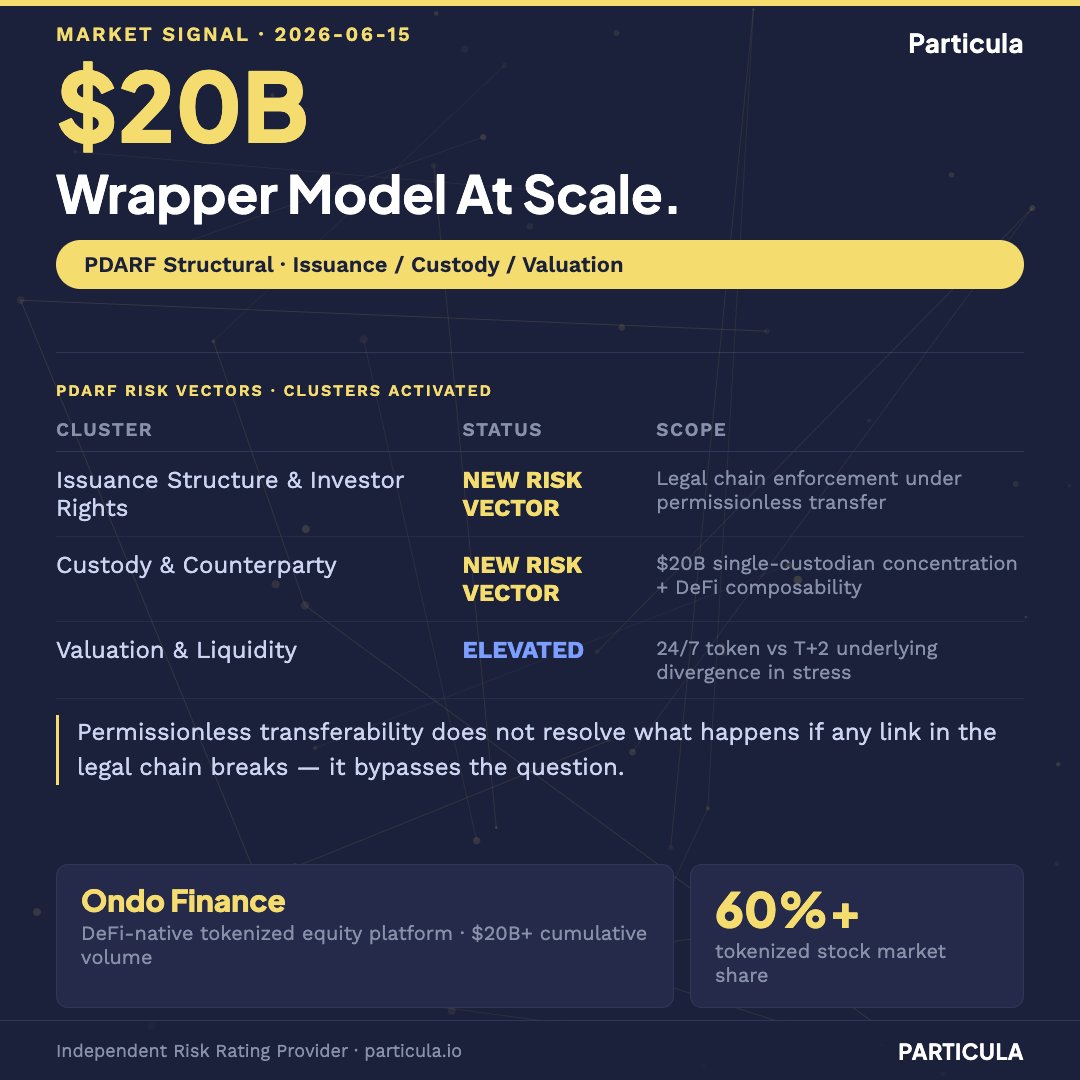
Tokenized stocks are the breakout RWA category of 2026. The wrapper model gains traction too.
@OndoFinance Global Markets is at $20B+ in cumulative volume across 260+ stocks and ETFs, with 60%+ market share and the permissionless wrapper model pulling away from transfer-agent-constrained competitors.
𝗧𝗵𝗲 𝘄𝗿𝗮𝗽𝗽𝗲𝗿 𝗺𝗼𝗱𝗲𝗹 𝘄𝗼𝗿𝗸𝘀 𝗹𝗶𝗸𝗲 𝘁𝗵𝗶𝘀:
Ondo acquires the underlying security through a registered broker, places it in custody, and issues a tokenized representation. The token can be transferred freely onchain - no whitelist, no KYC gate on transfer, composable in DeFi as collateral or within multi-step strategies. "Same protections of a structured security, same utility as a stablecoin," as Ondo's team put it.
That framing is commercially accurate. It is also the exact place 𝗣𝗗𝗔𝗥𝗙 (@particula_io 𝗗𝗶𝗴𝗶𝘁𝗮𝗹 𝗔𝘀𝘀𝗲𝘁 𝗥𝗶𝘀𝗸 𝗙𝗿𝗮𝗺𝗲𝘄𝗼𝗿𝗸) asks hard questions.
Under the Structural pillar, three risk clusters require assessment before treating a tokenized stock wrapper as equivalent to the underlying:
𝗜𝘀𝘀𝘂𝗮𝗻𝗰𝗲 𝗦𝘁𝗿𝘂𝗰𝘁𝘂𝗿𝗲 𝗮𝗻𝗱 𝗜𝗻𝘃𝗲𝘀𝘁𝗼𝗿 𝗥𝗶𝗴𝗵𝘁𝘀: The token represents a beneficial interest in the underlying equity, held by a custodian on behalf of Ondo's issuing entity.
The legal chain is: token holder → Ondo token → Ondo issuing entity → custodian → underlying security. Corporate actions - dividends, splits, rights offerings, voting rights - flow through this chain.
The question is not whether Ondo handles them correctly today, but whether the contractual and legal structure gives token holders enforceable rights if something goes wrong with any link in the chain. Permissionless transferability does not answer this question; it bypasses it.
𝗖𝘂𝘀𝘁𝗼𝗱𝘆 𝗮𝗻𝗱 𝗖𝗼𝘂𝗻𝘁𝗲𝗿𝗽𝗮𝗿𝘁𝘆: $20B in volume concentrates counterparty exposure in the custodian holding the underlying securities. If the custody arrangement fails - through insolvency, operational failure, or regulatory action - the token's claim on the underlying equity depends entirely on the legal segregation of client assets under the custodian's applicable law.
This is a standard structured product risk. What is non-standard is that the DeFi composability layer adds a second counterparty stack (lending protocols, oracles, liquidators) that operates without the oversight frameworks that apply to TradFi custodians.
𝗩𝗮𝗹𝘂𝗮𝘁𝗶𝗼𝗻 𝗮𝗻𝗱 𝗟𝗶𝗾𝘂𝗶𝗱𝗶𝘁𝘆: Tokenized stocks trade 24/7 against onchain liquidity pools. The underlying equity trades T+2 with exchange hours. In normal conditions the wrapper price tracks the underlying closely.
In stress - a halt on the underlying, a protocol exploit, a redemption run against shallow onchain liquidity - the two prices diverge. Under 𝗣𝗗𝗔𝗥𝗙 (@particula_io 𝗗𝗶𝗴𝗶𝘁𝗮𝗹 𝗔𝘀𝘀𝗲𝘁 𝗥𝗶𝘀𝗸 𝗙𝗿𝗮𝗺𝗲𝘄𝗼𝗿𝗸) this is a valuation and liquidity risk, not a market risk to be dismissed.
None of this is an indictment of Ondo's model, it's a description of how to assess it.
🚀 Particula x @infiniFi: Bringing Institutional-Grade Risk Intelligence to On-Chain Capital Deployment
The tokenized asset market is maturing fast, but scaling responsibly requires more than capital. It requires rigorous, standardized risk intelligence.
Today, we're proud to announce our strategic collaboration with infiniFi, a fractional reserve protocol enabling tranched on-chain capital deployment into tokenized assets.
Under this mandate, Particula will optimize and execute infiniFi's risk assessment process - end-to-end.
Explore how Particula & infiniFi are setting a new standard for tokenized asset allocation: https://t.co/qWlIeZ7HKM
Scaling tokenized asset allocation responsibly requires more than capital. It requires infrastructure that can actually underwrite what's being allocated into.
That's the gap we built @particula_io to close - and exactly why we're partnering with @infiniFi.
Under this mandate, we're not just providing ratings.
We're running the full risk assessment stack for infiniFi's capital deployment process: framework design, issuer documentation, continuous monitoring, and direct issuer engagement - end to end.
The market is maturing fast. Platforms like infiniFi are proof that onchain capital allocators are building institutional-grade processes to match.
Our job is to make sure the risk intelligence underneath is as rigorous as the capital.
🚀 Particula x @infiniFi: Bringing Institutional-Grade Risk Intelligence to On-Chain Capital Deployment
The tokenized asset market is maturing fast, but scaling responsibly requires more than capital. It requires rigorous, standardized risk intelligence.
Today, we're proud to announce our strategic collaboration with infiniFi, a fractional reserve protocol enabling tranched on-chain capital deployment into tokenized assets.
Under this mandate, Particula will optimize and execute infiniFi's risk assessment process - end-to-end.
Explore how Particula & infiniFi are setting a new standard for tokenized asset allocation: https://t.co/qWlIeZ7HKM
@StateStreet just launched the 𝗦𝘁𝗮𝘁𝗲 𝗦𝘁𝗿𝗲𝗲𝘁 𝗦𝘁𝗮𝗯𝗹𝗲𝗰𝗼𝗶𝗻 𝗥𝗲𝘀𝗲𝗿𝘃𝗲𝘀 𝗠𝗼𝗻𝗲𝘆 𝗠𝗮𝗿𝗸𝗲𝘁 𝗙𝘂𝗻𝗱 - a Rule 2a-7 government money market fund built specifically for stablecoin issuers to hold their reserves.
Initial investors are State Street Bank and Anchorage Digital.
𝗧𝗵𝗲 𝗳𝘂𝗻𝗱 𝗶𝘀 𝘀𝘁𝗿𝘂𝗰𝘁𝘂𝗿𝗲𝗱 𝘁𝗼 𝗮𝗹𝗶𝗴𝗻 𝘄𝗶𝘁𝗵 𝘁𝗵𝗲 𝗚𝗘𝗡𝗜𝗨𝗦 𝗔𝗰𝘁, positioning it as compliant reserve infrastructure for the $300B+ stablecoin market backed primarily by short-term US Treasuries.
𝗧𝗵𝗶𝘀 𝗺𝗮𝘁𝘁𝗲𝗿𝘀 𝗳𝗼𝗿 𝗵𝗼𝘄 𝗿𝗲𝘀𝗲𝗿𝘃𝗲 𝗿𝗶𝘀𝗸 𝗴𝗲𝘁𝘀 𝗮𝘀𝘀𝗲𝘀𝘀𝗲𝗱. A stablecoin issuer holding reserves in a State Street Rule 2a-7 fund is choosing a specific custodial and credit quality configuration: daily liquidity, government securities only, a regulated counterparty at the custody layer, and GENIUS Act alignment at the legal layer.
Under PDARF (@particula_io 𝗗𝗶𝗴𝗶𝘁𝗮𝗹 𝗔𝘀𝘀𝗲𝘁 𝗥𝗶𝘀𝗸 𝗙𝗿𝗮𝗺𝗲𝘄𝗼𝗿𝗸), this falls across two pillars. The counterparty pillar evaluates custodial and service provider risk - who holds the reserves and under what regulatory framework. The underlying risk pillar evaluates asset composition and credit quality - what the reserves actually consist of and how that affects the stablecoin's backing in a stress scenario.
What makes this technically significant is not the name at the custody layer. The fund structure creates a defined, auditable chain from issuer mandate to reserve composition to regulatory classification.
𝗧𝗵𝗲 𝗱𝗲𝗲𝗽𝗲𝗿 𝗽𝗿𝗼𝗯𝗹𝗲𝗺: 𝗺𝗼𝘀𝘁 𝘀𝘁𝗮𝗯𝗹𝗲𝗰𝗼𝗶𝗻 𝗿𝗲𝘀𝗲𝗿𝘃𝗲𝘀 𝗵𝗮𝘃𝗲 𝗻𝗼 𝗲𝗾𝘂𝗶𝘃𝗮𝗹𝗲𝗻𝘁 𝗲𝘅𝘁𝗲𝗿𝗻𝗮𝗹 𝘀𝘁𝗮𝗻𝗱𝗮𝗿𝗱 𝗳𝗼𝗿 𝗰𝘂𝘀𝘁𝗼𝗱𝘆 𝗼𝗿 𝗰𝗼𝗺𝗽𝗼𝘀𝗶𝘁𝗶𝗼𝗻. Regulated prime brokerage for public equity creates a mandatory counterparty layer with defined obligations. Here, the only constraint on reserve management has historically been issuer discretion - and that has been set by the issuer.
The 𝗣𝗮𝗿𝘁𝗶𝗰𝘂𝗹𝗮 𝗗𝗶𝗴𝗶𝘁𝗮𝗹 𝗔𝘀𝘀𝗲𝘁 𝗥𝗶𝘀𝗸 𝗣𝗮𝘀𝘀𝗽𝗼𝗿𝘁 (PDARP) scores exactly this gap: what the reserve holds and who holds it under what legal framework, derived from fund structure and custodial terms - not from the institutional name at the issuance layer.
A regulated government MMF as reserve vehicle is a custodial and credit quality factor. It does not substitute for investor rights that must be embedded in the stablecoin contract itself.
#stablecoins #RWA #TokenizedAssets
@Clearstream just unveiled its next-generation digital securities infrastructure.
That headline deserves context. Clearstream is @boersefrankfurt Deutsche Börse Group's post-trade division - the largest international central securities depository in Europe.
𝗘𝗨𝗥 𝟮𝟮 𝘁𝗿𝗶𝗹𝗹𝗶𝗼𝗻 𝗶𝗻 𝗮𝘀𝘀𝗲𝘁𝘀 𝘂𝗻𝗱𝗲𝗿 𝗰𝘂𝘀𝘁𝗼𝗱𝘆.
𝟱 𝗺𝗶𝗹𝗹𝗶𝗼𝗻 𝘀𝗲𝗰𝘂𝗿𝗶𝘁𝗶𝗲𝘀 𝗶𝘀𝘀𝘂𝗲𝗱 𝗮𝗻𝗻𝘂𝗮𝗹𝗹𝘆.
𝟲𝟬 𝗺𝗮𝗿𝗸𝗲𝘁𝘀 𝗰𝗼𝗻𝗻𝗲𝗰𝘁𝗲𝗱.
Core financial market infrastructure announcing that the hybrid digital era has started.
The architecture they are building is a fully hybrid platform where traditional and digital securities coexist in a single portfolio. Market participants will hold conventional bonds alongside tokenized instruments and multiple cash types - including stablecoins - without switching infrastructure rails.
Settlement will occur directly on blockchain for digital assets while traditional T+2 flows continue for conventional instruments. Coverage spans the full lifecycle: issuance, distribution, settlement, custody, asset servicing, liquidity, and financing.
𝗧𝗵𝗲 𝗿𝗲𝗴𝘂𝗹𝗮𝘁𝗼𝗿𝘆 𝗳𝗿𝗮𝗺𝗲𝘄𝗼𝗿𝗸 𝗶𝘀 𝗲𝘅𝗽𝗹𝗶𝗰𝗶𝘁: MiFID for traditional instruments, MiCA for digital assets, in one unified infrastructure.
𝗧𝗵𝗲 𝗱𝗲𝘁𝗮𝗶𝗹 𝘁𝗵𝗮𝘁 𝗺𝗮𝘁𝘁𝗲𝗿𝘀 𝗺𝗼𝘀𝘁 𝗳𝗼𝗿 𝗿𝗶𝘀𝗸 𝗮𝗻𝗮𝗹𝘆𝘀𝗶𝘀 𝗶𝘀 𝘁𝗵𝗶𝘀: "reusing the same assets as collateral across multiple transactions." Means: collateral velocity. When the same underlying asset can simultaneously serve as settlement collateral in one arrangement and collateral for a financing transaction in another, the traditional one-asset-one-claim model breaks down.
The asset's encumbrance state becomes dynamic, its availability uncertain under stress, and its contribution to systemic correlation increases. That's a new structural risk characteristic of any asset held on this infrastructure once that use case is live.
Under 𝗣𝗗𝗔𝗥𝗙'𝘀 (@particula_io 𝗗𝗶𝗴𝗶𝘁𝗮𝗹 𝗔𝘀𝘀𝗲𝘁 𝗥𝗶𝘀𝗸 𝗙𝗿𝗮𝗺𝗲𝘄𝗼𝗿𝗸) Structural pillar, hybrid settlement finality is a genuinely new risk category. When on-chain settlement and T+2 settlement coexist in the same portfolio, a stress event requiring simultaneous liquidation runs two incompatible timelines.
A counterparty failure or forced unwind does not wait for the slower settlement rail to complete. The interaction between these timelines under stress has no precedent in pure-TradFi or pure-DeFi frameworks - it is a hybrid architecture risk that requires explicit modelling.
Under 𝗣𝗗𝗔𝗥𝗙'𝘀 Counterparty pillar, Clearstream's entry into digital custody is an institutional-grade validation of the asset class. Their regulatory standing under both MiFID and MiCA provides legal clarity that smaller digital custodians cannot offer. But institutional-grade counterparty quality and counterparty concentration risk are not mutually exclusive. Single-infrastructure custody of EUR 22T across traditional and digital assets simultaneously creates a systemic dependency that scales with adoption.
This is a structural signal for any tokenized asset intended to be issued, settled, or held on the Clearstream infrastructure.
#RWA #DigitalSecurities #Clearstream #PostTrade
@coinbase is entering tokenized stocks with 1:1 backed equities and automatic dividend passthrough.
Armstrong's framing is precise: "other current solutions are some form of derivative or IOU - not real ownership."
That structural distinction is what PDARF (@particula_io Digital Asset Risk Framework) tracks directly: 1:1 backed ownership and synthetic exposure score differently under issuance structure and investor rights - even when the underlying asset is identical. Redemption mechanics, dividend treatment, and legal claim hierarchy all differ.
SpaceX was private company equity with limited disclosure. Coinbase is targeting public equities with mandatory filings. Different structures, different transparency regimes, same core question: what does the token actually confer to the holder?
The market is differentiating by structure type. That's progress.
#Tokenization #Equities #RWA
SpaceX's SPCX IPO ran a live stress test on tokenized equity infrastructure last Friday. The results split exactly along structural lines.
Two delivery models worked. One did not.
𝗪𝗵𝗮𝘁 𝗱𝗲𝗹𝗶𝘃𝗲𝗿𝗲𝗱 𝗼𝗻 𝗜𝗣𝗢 𝗱𝗮𝘆: @OndoFinance's SPCXon across Solana, Ethereum, and BNB Chain. xStocks' own DeFi token (SPCXx) on decentralized exchanges. Backpack's SPCX on Solana via Sunrise, redeemable for the underlying share. Kraken through its own broker-dealer, Payward Securities.
𝗪𝗵𝗮𝘁 𝗳𝗮𝗶𝗹𝗲𝗱: Bybit, Binance, and Bitget had contracted xStocks to source physical IPO shares from the allocation pipeline and deliver them to their platforms. xStocks could not. Binance unwound $557M in subscriber commitments. 𝗙𝘂𝗹𝗹 𝗿𝗲𝗳𝘂𝗻𝗱𝘀 𝗮𝗰𝗿𝗼𝘀𝘀 𝗮𝗹𝗹 𝘁𝗵𝗿𝗲𝗲. xStocks has made no public statement explaining why.
The failure was not blockchain technology. It was one specific architectural point: an intermediary holding the delivery obligation between the IPO pipeline and the exchange. The onchain paths succeeded precisely because they skipped that layer.
Under 𝗣𝗗𝗔𝗥𝗙'𝘀 (𝗣𝗮𝗿𝘁𝗶𝗰𝘂𝗹𝗮 𝗗𝗶𝗴𝗶𝘁𝗮𝗹 𝗔𝘀𝘀𝗲𝘁 𝗥𝗶𝘀𝗸 𝗙𝗿𝗮𝗺𝗲𝘄𝗼𝗿𝗸) Structural Risk Pillar - within the issuance structure & investor rights assessment - this distinction is the primary point. Ondo's SPCXon is a synthetic structured note providing price exposure, not ownership rights, not a direct claim against the issuer. Day-one tokenization means the token can exist before T+1/T+2 settlement completes. What a holder can claim, when, and against whom, is not yet standardized across issuers.
𝗢𝗻𝗲 𝘀𝘁𝗿𝘂𝗰𝘁𝘂𝗿𝗮𝗹 𝘀𝗵𝗶𝗳𝘁 𝗮𝗵𝗲𝗮𝗱: @The_DTCC plans to launch tokenized stocks with full ownership rights in October, with Nasdaq and NYSE trading support - token locked at custodian, ownership rights embedded at issuance. That is a materially different risk profile.
𝗣𝗗𝗔𝗥𝗣 (@particula_io Digital Asset Risk Passport) tracks structural characteristics as event-triggered updates - not quarterly reviews.
𝗧𝗵𝗲 𝗦𝗣𝗖𝗫 𝗜𝗣𝗢 𝘄𝗲𝗲𝗸 𝗱𝗶𝗱 𝗻𝗼𝘁 𝘂𝗻𝗱𝗲𝗿𝗺𝗶𝗻𝗲 𝘁𝗼𝗸𝗲𝗻𝗶𝘇𝗲𝗱 𝘀𝘁𝗼𝗰𝗸𝘀. 𝗜𝘁 𝗰𝗹𝗮𝗿𝗶𝗳𝗶𝗲𝗱 𝘄𝗵𝗶𝗰𝗵 𝘀𝘁𝗿𝘂𝗰𝘁𝘂𝗿𝗮𝗹 𝗮𝗽𝗽𝗿𝗼𝗮𝗰𝗵𝗲𝘀 𝗵𝗼𝗹𝗱 𝘂𝗻𝗱𝗲𝗿 𝗽𝗿𝗲𝘀𝘀𝘂𝗿𝗲, 𝗮𝗻𝗱 𝘄𝗵𝗶𝗰𝗵 𝗱𝗼𝗻'𝘁.
Standard Chartered. Same author. Six months apart.
October 2025: $2T tokenized #RWAs by 2028. "Vast majority" on Ethereum.
May 2026: $4T on-chain by 2028. Primary beneficiaries are DeFi protocols - not Ethereum, not Solana.
The forecast doubled. The beneficiary thesis flipped from L1 chains to the protocol layer.
Geoff Kendrick isn't contradicting himself - he's tracking a market that genuinely moved.
The driver: composability. DeFi protocols let one asset simultaneously earn yield, serve as collateral, and stay tradable - without splitting capital across intermediaries. @BlackRock's #BUIDL on @aave does all three at once. That's structurally impossible off-chain.
Kendrick's framing: "#DeFi protocols are the exchanges, clearinghouses, lending desks and asset managers of the tokenised world - running as autonomous software."
When one of the sharpest desks in institutional digital assets research revises this significantly in six months, the revision itself is the signal.
The market is moving faster than annual forecasting cycles were built to track
Citigroup is rolling out tokenized private company shares for HNW clients and institutions - starting with Kaleido, a blockchain infrastructure company whose shares have never traded on a public exchange. Private company equity, issued by a major US bank, wrapped as a digital token, now accessible onchain to qualified investors.
𝗣𝗿𝗶𝘃𝗮𝘁𝗲 𝗺𝗮𝗿𝗸𝗲𝘁𝘀 𝗮𝗿𝗲 𝗮 𝗺𝘂𝗹𝘁𝗶-𝘁𝗿𝗶𝗹𝗹𝗶𝗼𝗻 𝗱𝗼𝗹𝗹𝗮𝗿 𝗮𝘀𝘀𝗲𝘁 𝗰𝗹𝗮𝘀𝘀 𝗵𝗶𝘀𝘁𝗼𝗿𝗶𝗰𝗮𝗹𝗹𝘆 𝗴𝗮𝘁𝗲𝗱 𝗯𝗲𝗵𝗶𝗻𝗱 𝗟𝗣 𝗰𝗼𝗺𝗺𝗶𝘁𝗺𝗲𝗻𝘁𝘀, 𝗹𝗼𝗻𝗴 𝗹𝗼𝗰𝗸-𝘂𝗽 𝗽𝗲𝗿𝗶𝗼𝗱𝘀, 𝗮𝗻𝗱 𝗵𝗶𝗴𝗵 𝗺𝗶𝗻𝗶𝗺𝘂𝗺 𝘁𝗶𝗰𝗸𝗲𝘁𝘀.
1️⃣ The token wrapper changes the access layer.
2️⃣ The underlying asset and its structural realities do not change with it.
Under 𝗣𝗗𝗔𝗥𝗙's (@particula_io 𝗗𝗶𝗴𝗶𝘁𝗮𝗹 𝗔𝘀𝘀𝗲𝘁 𝗥𝗶𝘀𝗸 𝗙𝗿𝗮𝗺𝗲𝘄𝗼𝗿𝗸) structural pillar, the issuance structure and investor rights cluster activates at maximum. The legal characterization of the token is the only thing that determines whether holders have equity ownership, a contractual claim on distributions, or synthetic exposure to a private company's value. In a public company, securities law provides a floor of protections. In a private company tokenization, the token contract is the only document defining those rights - no SEC filing, no prospectus, no exchange floor.
𝗧𝗼𝗸𝗲𝗻 𝗲𝗰𝗼𝗻𝗼𝗺𝗶𝗰𝘀 𝗮𝗻𝗱 𝗺𝗮𝗿𝗸𝗲𝘁 𝗶𝗻𝘁𝗲𝗴𝗿𝗶𝘁𝘆 𝗮𝗹𝘀𝗼 𝗮𝗰𝘁𝗶𝘃𝗮𝘁𝗲𝘀:
↳ Tokenization does not create liquidity for an inherently illiquid asset.
↳ It creates a new trading mechanism for something with no public market reference price.
↳ Valuation relies entirely on issuer-provided data.
𝗧𝗵𝗲 𝗱𝗲𝗲𝗽𝗲𝗿 𝗽𝗿𝗼𝗯𝗹𝗲𝗺: private company tokenization removes every external reference point for risk assessment. Public company risk can be partially read from market signals, analyst coverage, and mandatory filings. Here, the token contract is the only independent document - and it was written by the issuer.
The @particula_io 𝗗𝗶𝗴𝗶𝘁𝗮𝗹 𝗔𝘀𝘀𝗲𝘁 𝗥𝗶𝘀𝗸 𝗣𝗮𝘀𝘀𝗽𝗼𝗿𝘁 (𝗣𝗗𝗔𝗥𝗣) scores exactly this gap: what rights the wrapper actually grants, derived from contract terms and structural characteristics - not from the institutional name at the issuance layer. An institution as issuer is a counterparty factor. It does not substitute for rights that have to be embedded in the token itself.
𝗣𝗗𝗔𝗥𝗣 𝗶𝘀 𝗮 𝗽𝗿𝗼𝗴𝗿𝗮𝗺𝗺𝗮𝗯𝗹𝗲 𝗼𝗻-𝗰𝗵𝗮𝗶𝗻 𝗿𝗶𝘀𝗸 𝗰𝗿𝗲𝗱𝗲𝗻𝘁𝗶𝗮𝗹, 𝗰𝗼𝗻𝘁𝗶𝗻𝘂𝗼𝘂𝘀𝗹𝘆 𝘂𝗽𝗱𝗮𝘁𝗲𝗱.
#TokenizedEquities #RWA #PrivateMarkets
16 US banks - including JPMorgan, Citi, Bank of America, and Wells Fargo - are building a shared tokenized deposit network by H1 2027.
Citi's Tokenization 2030 report projects the RWA market at $5.5T by 2030, up from $17B today.
When banks become issuer, custodian, and settlement agent within a single shared network, the risk question is not creditworthiness - it is architecture.
Under #PDARF's (Particula Digital Asset Rating Framework) counterparty risk pillar, the custodial & service provider risk captures this directly: what happens when the institution holding the deposit also controls token minting, settlement rails, and redemption logic?
Bank resolution regimes do not travel with the token. If the issuing bank enters resolution, the settlement finality guarantee breaks - and the token holder's recourse is the general creditor queue, not the ledger.
@particula_io's risk passport #PDARP tracks these positions continuously. Score recalculation is event-triggered, not calendar-based. A bank repricing its settlement SLA or changing custody arrangements is exactly the signal that moves a score onchain.
#TokenizedAssets #RWA #DigitalAssets
@The_DTCC reportedly selected @StellarOrg to tokenize its $114T securities pool.
XLM is up 78% on the week.
Stellar RWA transfer volume is up 317%.
Under PDARF's (Particula Digital Asset Risk Framework) structural pillar, looking at smart contract and network security, the chain selection sets the security perimeter of the entire issuance lifecycle. Validator composition, protocol upgrade governance, and transaction finality are now structural risk inputs for every asset routed through it.
The @particula_io Digital Asset Risk Passport (PDARP) tracks this onchain - chain infrastructure events trigger score recalculation directly.
No calendar-driven updates. Event-triggered.
$114T grabs attention. The question it forces - which chain properties become counterparty-level risk inputs at institutional scale - is where the real analytical work starts.
#tokenization #RWA #PDARP
Ethena ran a formal RFP, selected Centrifuge, and is opening with an allocation to a JAAA CLO ETF - tokenized AAA-rated CLOs managed by Janus Henderson Investors - as backing for USDe.
That's a specific credit product with a specific structure integrated into onchain collateral management.
Under 𝗣𝗗𝗔𝗥𝗙 (@particula_io Digital Asset Rating Framework) this touches three pillars simultaneously.
↳ 𝗨𝗻𝗱𝗲𝗿𝗹𝘆𝗶𝗻𝗴 𝗥𝗶𝘀𝗸: Asset Composition & Credit Quality shifts as USDe's collateral mix extends beyond delta-neutral positions into structured credit - a scored difference.
↳ 𝗖𝗼𝘂𝗻𝘁𝗲𝗿𝗽𝗮𝗿𝘁𝘆 𝗥𝗶𝘀𝗸: the Custodial & Service Provider Risk cluster now has two additional entries - Centrifuge as tokenization layer, Janus Henderson as credit manager.
↳ 𝗦𝘁𝗿𝘂𝗰𝘁𝘂𝗿𝗮𝗹 𝗥𝗶𝘀𝗸: ERC-7540 is the async redemption standard Centrifuge built because real-world assets cannot settle at block speed. The composability-vs-settlement mismatch has kept RWAs marginal in DeFi; this is one of the first integrations where the infrastructure is actually built for it.
The monitoring question as the collateral basket diversifies further: concentration risk per credit manager.
#PDARF #PDARP #RWA #Tokenization
@Uniswap now natively supports 260+ tokenized stocks and ETFs - across its Web App, Wallet, and API.
𝗧𝗼𝗸𝗲𝗻𝗶𝘇𝗲𝗱 𝗲𝗾𝘂𝗶𝘁𝘆 𝗷𝘂𝘀𝘁 𝗺𝗼𝘃𝗲𝗱 𝗳𝗿𝗼𝗺 𝗖𝗲𝗙𝗶 𝗱𝗶𝘀𝘁𝗿𝗶𝗯𝘂𝘁𝗶𝗼𝗻 𝗿𝗮𝗶𝗹𝘀 𝘁𝗼 𝗮 𝗗𝗘𝗫.
Under 𝗣𝗗𝗔𝗥𝗙's (@particula_io Digital Asset Risk Framework) counterparty pillar, this activates the exchange and trading venue cluster directly. When a tokenized equity trades on an AMM rather than a regulated exchange, the execution path loses circuit breakers, settlement finality guarantees, and regulated venue oversight.
𝗣𝗿𝗶𝗰𝗲 𝗱𝗶𝘀𝗰𝗼𝘃𝗲𝗿𝘆 𝗯𝗲𝗰𝗼𝗺𝗲𝘀 𝗽𝗼𝗼𝗹-𝘀𝘁𝗮𝘁𝗲 𝗱𝗲𝗽𝗲𝗻𝗱𝗲𝗻𝘁: slippage, LP concentration, and pool depth are no longer market microstructure concerns - they are issuer-level risk inputs that belong in the counterparty assessment.
𝗦𝗺𝗮𝗿𝘁 𝗰𝗼𝗻𝘁𝗿𝗮𝗰𝘁 𝗿𝗶𝘀𝗸 𝗶𝘀 𝗻𝗼𝘄 𝗮𝗱𝗱𝗶𝘁𝗶𝘃𝗲: issuance layer contract and trading layer contract are independent surfaces, each assessable separately.
This also surfaces a valuation methodology question. An AMM spot price diverges from fair value under low liquidity conditions. For assets that trade primarily onchain, the reference price methodology in a PDARF underlying risk assessment needs to account for DEX-specific price dynamics, not just exchange quotes.
The @particula_io Digital Asset Risk Passport (𝗣𝗗𝗔𝗥𝗣) credential updates when material changes to trading infrastructure are detected onchain.
A venue change of this type - from no #DEX exposure to native Uniswap integration - triggers an exchange and trading venue cluster reassessment, not a scheduled review.
SpaceX's SPCX IPO ran a live stress test on tokenized equity infrastructure last Friday. The results split exactly along structural lines.
Two delivery models worked. One did not.
𝗪𝗵𝗮𝘁 𝗱𝗲𝗹𝗶𝘃𝗲𝗿𝗲𝗱 𝗼𝗻 𝗜𝗣𝗢 𝗱𝗮𝘆: @OndoFinance's SPCXon across Solana, Ethereum, and BNB Chain. xStocks' own DeFi token (SPCXx) on decentralized exchanges. Backpack's SPCX on Solana via Sunrise, redeemable for the underlying share. Kraken through its own broker-dealer, Payward Securities.
𝗪𝗵𝗮𝘁 𝗳𝗮𝗶𝗹𝗲𝗱: Bybit, Binance, and Bitget had contracted xStocks to source physical IPO shares from the allocation pipeline and deliver them to their platforms. xStocks could not. Binance unwound $557M in subscriber commitments. 𝗙𝘂𝗹𝗹 𝗿𝗲𝗳𝘂𝗻𝗱𝘀 𝗮𝗰𝗿𝗼𝘀𝘀 𝗮𝗹𝗹 𝘁𝗵𝗿𝗲𝗲. xStocks has made no public statement explaining why.
The failure was not blockchain technology. It was one specific architectural point: an intermediary holding the delivery obligation between the IPO pipeline and the exchange. The onchain paths succeeded precisely because they skipped that layer.
Under 𝗣𝗗𝗔𝗥𝗙'𝘀 (𝗣𝗮𝗿𝘁𝗶𝗰𝘂𝗹𝗮 𝗗𝗶𝗴𝗶𝘁𝗮𝗹 𝗔𝘀𝘀𝗲𝘁 𝗥𝗶𝘀𝗸 𝗙𝗿𝗮𝗺𝗲𝘄𝗼𝗿𝗸) Structural Risk Pillar - within the issuance structure & investor rights assessment - this distinction is the primary point. Ondo's SPCXon is a synthetic structured note providing price exposure, not ownership rights, not a direct claim against the issuer. Day-one tokenization means the token can exist before T+1/T+2 settlement completes. What a holder can claim, when, and against whom, is not yet standardized across issuers.
𝗢𝗻𝗲 𝘀𝘁𝗿𝘂𝗰𝘁𝘂𝗿𝗮𝗹 𝘀𝗵𝗶𝗳𝘁 𝗮𝗵𝗲𝗮𝗱: @The_DTCC plans to launch tokenized stocks with full ownership rights in October, with Nasdaq and NYSE trading support - token locked at custodian, ownership rights embedded at issuance. That is a materially different risk profile.
𝗣𝗗𝗔𝗥𝗣 (@particula_io Digital Asset Risk Passport) tracks structural characteristics as event-triggered updates - not quarterly reviews.
𝗧𝗵𝗲 𝗦𝗣𝗖𝗫 𝗜𝗣𝗢 𝘄𝗲𝗲𝗸 𝗱𝗶𝗱 𝗻𝗼𝘁 𝘂𝗻𝗱𝗲𝗿𝗺𝗶𝗻𝗲 𝘁𝗼𝗸𝗲𝗻𝗶𝘇𝗲𝗱 𝘀𝘁𝗼𝗰𝗸𝘀. 𝗜𝘁 𝗰𝗹𝗮𝗿𝗶𝗳𝗶𝗲𝗱 𝘄𝗵𝗶𝗰𝗵 𝘀𝘁𝗿𝘂𝗰𝘁𝘂𝗿𝗮𝗹 𝗮𝗽𝗽𝗿𝗼𝗮𝗰𝗵𝗲𝘀 𝗵𝗼𝗹𝗱 𝘂𝗻𝗱𝗲𝗿 𝗽𝗿𝗲𝘀𝘀𝘂𝗿𝗲, 𝗮𝗻𝗱 𝘄𝗵𝗶𝗰𝗵 𝗱𝗼𝗻'𝘁.
SpaceX's SPCX - described as the largest IPO in history - is being tokenized on day one via Ondo Global Markets, accessible across @solana and other chains.
@OndoFinance reports nearly $4B TVL and 60%+ market share in tokenized stocks heading into this launch.
The day-one tokenization model is new territory.
At 60%+ market share in tokenized stocks, Ondo's infrastructure is real and scaling. What the PDARF methodology looks for is whether investor rights are structurally embedded or whether they rely on Ondo's intermediation - and how clearly that distinction is surfaced at the point of access.
Under PDARF (@particula_io Digital Asset Risk Framework), the structural risk pillar has a specific cluster for this: issuance structure and investor rights. Day-one tokenization means the token exists before traditional T+1 or T+2 settlement completes. The legal equivalence between the token and the underlying share - what a holder can claim, when, and against whom - is not yet standardized across issuers. That gap between token issuance and settlement finality is the primary assessment point in the issuance structure cluster.
PDARP (Particula Digital Asset risk Passport) tracks these structural characteristics as event-triggered updates: when issuance terms change or new underlying assets are added, scores update, not at calendar review.
#tokenization #RWA #equities
Ethena ran a formal RFP, selected Centrifuge, and is opening with an allocation to a JAAA CLO ETF - tokenized AAA-rated CLOs managed by Janus Henderson Investors - as backing for USDe.
That's a specific credit product with a specific structure integrated into onchain collateral management.
Under 𝗣𝗗𝗔𝗥𝗙 (@particula_io Digital Asset Rating Framework) this touches three pillars simultaneously.
↳ 𝗨𝗻𝗱𝗲𝗿𝗹𝘆𝗶𝗻𝗴 𝗥𝗶𝘀𝗸: Asset Composition & Credit Quality shifts as USDe's collateral mix extends beyond delta-neutral positions into structured credit - a scored difference.
↳ 𝗖𝗼𝘂𝗻𝘁𝗲𝗿𝗽𝗮𝗿𝘁𝘆 𝗥𝗶𝘀𝗸: the Custodial & Service Provider Risk cluster now has two additional entries - Centrifuge as tokenization layer, Janus Henderson as credit manager.
↳ 𝗦𝘁𝗿𝘂𝗰𝘁𝘂𝗿𝗮𝗹 𝗥𝗶𝘀𝗸: ERC-7540 is the async redemption standard Centrifuge built because real-world assets cannot settle at block speed. The composability-vs-settlement mismatch has kept RWAs marginal in DeFi; this is one of the first integrations where the infrastructure is actually built for it.
The monitoring question as the collateral basket diversifies further: concentration risk per credit manager.
#PDARF #PDARP #RWA #Tokenization