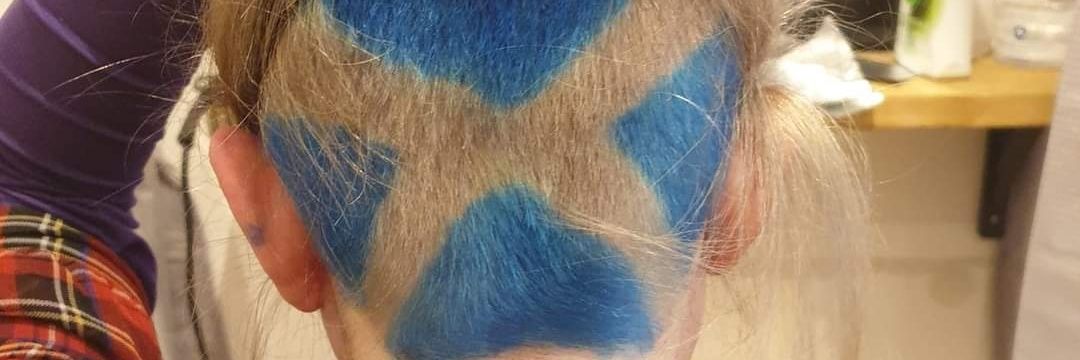
You may be thinking there’s more to this than meets the eye….and you would be right….
In good time I’ll share, just no the night….
In the meantime, if you like what you hear, please give me a like, comment or share, there are dark forces at work, this is true - but the light will always break through ❤️
Let’s go team 💪 #censorship #truth #freespeech
If you can spare something, however small, I would be enormously grateful. If you can’t, perhaps you could share his story. And if you’re someone who prays, please keep Ash, Sara, their baby and the whole family in your prayers.
https://t.co/TnqsS4pPa0
We spent last week in New York taking Scotland's national struggle straight to the heart of world diplomacy; meeting directly with United Nations delegations, seasoned diplomats, ambassadors, colonised peoples from Non-Self-Governing Territories, and prominent US civil society leaders. What unfolded across Manhattan was nothing short of a breakthrough. Despite administrative barriers and deliberate institutional gatekeeping designed to silence our presence, we shattered centuries of colonial deception in rooms where global power resides. And we can tell you that people are considering Scotland's colonial situation under English colonial rule very seriously; and considering Liberation Scotland very seriously.
Interlocutors across the international diplomatic corps, especially from the Global South (notably Africa and the Caribbean) but also from UN Security Council Permanent members and American civic spaces are genuinely stunned to learn the truth. And we are not forcing anything. We present facts and let people make their own opinion. Zero rejection. People in high level places understand very clearly Scotland's situation once the facts are presented.
For generations, English colonial propaganda has manufactured the myth that Scotland is dealing with a polite, internal domestic disagreement. We exposed the unvarnished reality. Scotland is an annexed, occupied nation enduring systematic economic extraction, standing on firm international law to demand the sovereign resumption of its statehood. The positive reaction from Global South and Non-Aligned Movement diplomats validates our case not as sub-state "separatism", but as a legitimate anti-colonial restoration that mirrors their own historic triumphs.
We also discussed the question of slavery and reparations with some of the key architects of the UN resolution recently passed, who are legitimately seeking reparations from the English colonial state. They understand that Scotland was and is annexed and colonized itself. Scots were exploited, deported, genocided etc. themselves. Scotland had no sovereignty and so cannot be blamed. However, given a very small minority of Scots (just like many other colonised people) were involved, a decolonised Scotland will need to refuse any proceeds from the English system of slavery and colonialism and thus create close links with countries victims of slavery and support them fully. But since Scotland's wealth is completely plundered by the English colonial state, Scotland benefited from nothing. Colonial collaborators like in all colonised systems did. It was a fully English empire. Scotland was just one of the first English colonies and remains as England's last major colony.
Far from an exercise in domestic separatism, Scotland's cause represents the legitimate international resumption of an annexed sovereign state, exposing the English state itself as the sole violator of Scottish territorial integrity and constitutional sovereignty under international law.
Certain American cultural figures, discovering how our energy and democracy are stripped away under London’s colonial grip, pledged immediate solidarity with an anti-colonial struggle they had never been allowed to see; comparing this to Vietnam notably. Americans have been fully gaslighted about Scotland, victims of English propaganda and lies.
The era of begging for permission within domestic colonial traps is over. Our cause has officially entered the arena of realpolitik and international law. We have forged unmediated diplomatic relationships, aligned directly with the global anti-colonial vanguard, and proved that Scotland’s liberation is a matter of international justice. The world is finally listening. The truth cannot be contained and must be told to everyone. Our march towards sovereign recovery is unstoppable.
Refuse English colonial control, lies and oppression. Time to support Scotland's liberation and emancipation.
Thirty years after Trainspotting, Scotland is still counting the dead while politicians count the votes.
@theSNP says Choose Scotland. But what happens when someone struggling with addiction tries to choose recovery and discovers the treatment they need isn't there?
After almost twenty years in power, perhaps it's time to talk less about the powers the SNP wants and more about what it's done with the powers it already has.
My latest piece asks some uncomfortable questions. And not just of politicians.
Read it here 👇
https://t.co/pGcxp4XfoA
This is an absolute scandal, and a textbook example of what happens when people spend other people's money without being held properly accountable for it.
£642,000 of taxpayers' money allocated to tackling Scotland's addiction crisis, and the public bodies responsible cannot produce sufficient evidence to demonstrate precisely how it was spent. Not £642. Not £6,420. Nearly two-thirds of a million pounds. A quarter of Aberdeenshire's alcohol and drug funding.
And here's the truly astonishing part. Auditors raised serious concerns in 2022. Four years later, the same fundamental failures remain. What exactly have these people been doing for four years, apart from attending meetings, producing reports and collecting salaries?
Milton Friedman famously described the problem of spending other people's money on other people. When you're spending your own money, you have a powerful incentive to control costs and demand value. When you're spending taxpayers' money, those incentives can become remarkably weak, particularly when there are no personal consequences for failure.
Scotland's addiction bureaucracy appears determined to prove his point.
Of course, the auditors haven't established that the money was stolen or misspent. They've established something quite damning enough: the system cannot provide adequate assurance about how substantial public funding was used.
And NHS Grampian's response is breathtaking. Apparently, changing the funding arrangements would create financial difficulties elsewhere. So institutional financial convenience becomes an argument for maintaining arrangements that auditors have identified as fundamentally inadequate. You really couldn't make it up.
Imagine a small recovery charity telling its funder that it couldn't adequately account for a quarter of its funding, despite having been warned about its financial controls four years earlier. Its funding would be at risk, its governance questioned and its trustees expected to explain themselves. Yet when it's the NHS and the addiction bureaucracy, we get another improvement plan and assurances that lessons will be learned.
This is institutional incompetence protected by institutional privilege.
Meanwhile, 1,133 people died drug-related deaths in Scotland last year. Families are burying their children, parents and partners while the institutions entrusted with tackling this catastrophe struggle to demonstrate where the money goes, never mind whether it's changing lives.
And that's the deeper scandal. We've created a system that can tell us how much money it has been allocated, how many committees have met and how many strategies have been published, but apparently cannot always demonstrate what the public has received in return.
The money doesn't belong to NHS Grampian, the Alcohol and Drugs Partnership or the officials administering it. It belongs to the public. It was allocated for the benefit of people whose lives are being devastated by addiction.
Yet those whose money funds the system have little meaningful oversight, while those whose lives depend upon it are left wondering what difference any of this expenditure has made.
Four years of warnings. £642,000 without adequate financial assurance. Another 1,133 people dead. And where is the personal accountability?
At what point does incompetence become grounds for dismissal rather than another taxpayer-funded action plan?
Other people's money. Other people's lives. Apparently nobody's responsibility.
https://t.co/X60hMKDnBs
This isn’t harm reduction. It’s institutionalised delusion and it would be hilarious if it weren’t so utterly lethal
Let me be blunt: no country on Earth has ever successfully legalised or decriminalised Class A drugs without unleashing a Pandora’s box of misery addiction, death, and chaos spilling out in every direction. Yet somehow, we’re meant to believe that Scotland with collapsing services and the highest drug death rate in Europe will be the one to crack it. I've written extensively about how this has been tried elsewhere if you dare to look beyond the facebook memes and legalisers propaganda - start here
1.
https://t.co/Ir4HbiIztQ
2.
https://t.co/mPaeZmIzf1
3.
https://t.co/HXKt0d67WX
4. https://t.co/rS3DKxJTy3
Day Three in Calgary, and the end of an extraordinary Recovery Capital Conference.
If yesterday was emotional for me personally, today gave me the chance to stand back and think about what I have actually been witnessing here.
Across these three days we have heard from medicine, research, government, Indigenous communities, workplaces, families, recovery organisations and people with lived experience.
And I think I finally understand what has impressed me most.
It is the ambition.
Not the ambition to create another programme, publish another strategy or manage addiction slightly better. The ambition to build a system around the belief that people can recover.
That sounds obvious. It isn't.
Systems reveal what they really believe about people through what they are designed to achieve. If our highest ambition is survival, we build around survival. If it is risk management, we build around managing risk.
But if we genuinely believe people can recover, the architecture has to look different.
Treatment and good medicine matter enormously. But so do family, housing, employment, community, relationships, responsibility, belonging and purpose.
That is recovery capital.
Much of my own work over the years has taken place in the awkward spaces between these worlds: government and community, treatment and recovery, policy and practice, professional systems and peer-led civil society.
Perhaps that is why I have found the conversations here so interesting.
I've spent years thinking about what makes a system genuinely recovery-oriented rather than simply capable of describing itself that way.
There is a difference.
You can put recovery into a strategy, an organisational chart and a set of performance indicators. The harder task is creating the culture, incentives and relationships in which recovery actually happens.
And eventually every system, however well intentioned, faces the same danger. It can become very good at measuring its own activity rather than asking whether people's lives are changing.
That is why independence, evidence and the voice of people who understand recovery from the inside matter so much.
Sometimes the useful question is still the simplest one
That's a lovely performance indicator. Now show me whether people are recovering.
Coming to Alberta from outside this system has given me an interesting vantage point. I recognise much of what is being attempted here from decades working across recovery, treatment, advocacy and policy in Britain, but I am also looking at it with fresh eyes.
I have found myself thinking not only about what Alberta is building, but about what makes recovery-oriented reform durable. How do you protect the original purpose as organisations grow? How do you translate principles into culture? How do you measure what actually matters? And how do you build something capable of surviving political cycles because its value can be demonstrated in people's lives?
Those questions travel rather well across borders.
There have been things this week I agree with, things I want to understand better and things I will probably continue arguing about. That is exactly how it should be.
But I leave enormously encouraged by the willingness here to ask bigger questions.
What would our systems look like if we designed them around what people might become, rather than merely around the problems they currently present?
I came to Calgary hoping I might contribute something to that conversation.
I'm leaving having learned a great deal myself, made some wonderful new connections, and with quite a few ideas about where this conversation might go next.
And my belief in recovery, if anything, strengthened.
#RecoveryCapital #RCC2026 #ROSC #AddictionRecovery #LivedExperience
I find the Minister’s response almost impossible to reconcile with the figures published today.
Scotland has recorded 1,133 drug deaths, an increase of 11 per cent in a single year. Eight hundred and thirty of those who died were men. Male deaths increased by 19 per cent while female deaths fell by 5 per cent. The highest death rates remain among people aged 35 to 54, and in our poorest communities the drug-death rate is now fifteen times that of our wealthiest.
These are catastrophic figures.
Yet we are told again about the “progress” of the National Mission and offered substantially more of the same.
At what point does failure actually count as failure?
Another fund. Another advisory forum. Another executive group. Another pilot. Another promise to listen, learn and redouble efforts.
Scotland has been "listening and learning " for years. People are still dying.
One of the fundamental problems is that government continually confuses activity with outcomes. We hear how many naloxone kits have been distributed, how many rehabilitation placements have been funded, how many projects have received money and how many times the Glasgow drug consumption room has been used.
Those are measures of activity. They are not measures of success.
The Glasgow consumption room opened in January 2025. Glasgow City subsequently recorded 196 drug deaths, up from 185, an increase of around 6 per cent.
It is not working as an answer to Glasgow's drug-death crisis.
Government can tell us how busy the facility is and how many emergencies have been managed inside it. But Glasgow ended the year with more dead people, not fewer.
Indeed, when the Scottish Government was asked for its analysis quantifying the consumption room’s impact on drug deaths, it confirmed that it held no completed internal analysis specifically quantifying that impact.
So stop presenting activity as outcome.
Now we are offered drug checking.
I support gathering accurate intelligence about an increasingly dangerous drug supply. Nitazenes were implicated in 247 deaths last year and cocaine in 589. If checking a substance prevents somebody dying tonight, good.
But checking somebody’s drugs is not treating their addiction.
There is a peculiar naivety in believing that people in the grip of severe addiction will behave like rational consumers if only we give them sufficient information about the product in front of them. Addiction is characterised precisely by the progressive loss of control.
Harm reduction and stabilisation have a proper place. Keeping someone alive tonight matters enormously. But keeping somebody alive must be the beginning of our ambition for that human being, not the end of it.
Scotland has become trapped in the belief that addiction can be indefinitely managed if only we become sophisticated enough at managing its risks.
And after years of catastrophic outcomes, remarkably little changes about who gets to decide what happens next.
The same system remains standing. Many of the same institutions remain influential. The response to failure is another structure populated by government, local government, “key partners” and the same professional establishment.
Where is the fundamental examination of why Scotland remains such an extreme international outlier? Where is the accountability? And where is the willingness to ask whether the institutions that designed, operated and defended this system should continue to dominate the conversation about reforming it?
People in recovery have been saying for years what is required. People need rapid routes into detoxification, treatment and residential rehabilitation. They need recovery communities, housing, relationships, employment, responsibility, belonging and purpose.
Above all, they need a system which believes they can get well rather than one organised around indefinitely managing their deterioration.
And we urgently need to confront something else.
What is happening to Scotland’s men?
Eight hundred and thirty men died from drugs last year. That is 131 more dead men in a single year.
These are sons, fathers, brothers, partners and friends, many dying in the middle of their lives. We need to examine drugs alongside alcohol, suicide, homelessness, deprivation, isolation, family breakdown and social disconnection. Something profound is happening to working-age men in Scotland, and we seem remarkably reluctant even to name it.
The Minister says: “We must be better.”
No.
Government must do something different.
After 1,133 deaths, another commitment to strengthen the existing approach is not change. It is doing substantially the same things again while hoping for a different result.
The families burying their sons, fathers, brothers, daughters and mothers deserve more than that.
Drug deaths in Scotland rose by 11 per cent in 2025, from 1,017 to 1,133. But buried inside that dreadful number is something even more disturbing. Male deaths rose by 19 per cent, to 830. The highest death rates remain among people aged 35 to 54. In our poorest communities, the drug death rate is fifteen times that of our wealthiest.
The UK's deregulated freezone architecture has now survived three Prime Ministers of two different parties without changing its function once.
Sunak designated Teesside as his flagship freeport in 2021.
Ben Houchen handed a 90% stake in Teesworks Ltd to two local businessmen who invested nothing, via a £1 per acre land option on land the public had already paid to remediate.
£560 million of public money spent or committed. 20 to 30 permanent jobs at the end of it.
Musgrave has since relocated to Dubai.
🧵
https://t.co/gNEnpZsJxB
It’s the constitution silly! https://t.co/g6CXNj2ClV
On the 18th of September 2014, 1,617,989 Scottish voters felt so motivated that they turned out at polling stations all over Scotland to vote YES to independence for their nation. In May of this year, at the Holyrood election, the SNP polled 877,077 votes. What happened to the 740,912 pro-independence voters? Every election since Nicola Sturgeon’s famous statement made in April 2015 has seen the number of independence voters remain at home rather than support a devolution prospectus promoted by the SNP.
Leader of the Scottish National Party (SNP), Nicola Sturgeon, has told ITV’s The Agenda she believes Scotland will be an independent country “one day” but insisted that a vote for her party “is not about independence.”
https://t.co/4gAlbqb5Nq
The repercussions of that statement a few weeks before the UK General Election possibly cost us the 3 seats out of 59 that remained in unionist hands. At that election the SNP garnered 1,454,436 votes in Scotland; the cause had already lost 163,553 votes!
By 2017, more and more Scots came to the realisation that the SNP of Sturgeon was a very different party to that of the Salmond party. This was highlighted in the 2017 GE when the SNP were delivered a very telling rebuke from the Scottish voters. The SNP vote at that time was 977,569 votes, down by 476,867 votes from just two years previously, and 640,420 down from 2014.
By the time of the UKGE of 2024, the number of pro-independence supporters staying at home was growing. On this occasion, the SNP polled 851,897 votes, down from 2017 by a further 125,672 votes. Bear in mind in 2017 the SNP took a huge hit in both votes and seats; therefore, the 2024 election was catastrophic for both the SNP and more importantly the cause.
The 2019 UKGE saw something of an SNP revival, and their vote and seat numbers both grew. In that election, the SNP vote rose to 1,242,380 and they gained 13 Westminster seats. To explain this upsurge is simple: “it’s the constitution, silly!” Sturgeon during the campaign led with the slogan “Stronger for Scotland”; during that election, every SNP spokesperson uttered the famous words of Ian Blackford “Scotland will not be dragged out of the EU against its will” Sturgeon promised a second independence referendum in 2020. This motivated the pro-independence supporters to turn out and give the SNP a huge victory.
Sadly, this turned out to be a blatant lie by Sturgeon. On the 31st January, just a month after the campaign, she made a speech in Edinburgh where she admitted that Scotland would indeed be dragged out of the EU and there would not be a second independence referendum in 2020! That was the final straw for many independence- supporting SNP voters. What followed only increased the divisions in the YES movement: the conspiracy to falsely imprison Alex Salmond, the promotion of queer theory, the Hate Crime Bill, the demonising of the pro-independence media and AUOB marchers. It all further eroded the trust and, ultimately, the votes for the SNP.
A similar pattern emerges in elections at Holyrood. This year was the lowest vote for the SNP since 2007. It doesn’t take a genius to work out exactly why this has been happening. Indeed, if you look at opinion polls over the past four to five years the evidence is there; those in favour of independence have been consistently 50%+ and always ahead of the unionist naysayers. At the same time, the SNP vote has been 30-35%. A 15 to 20%+ difference in support.
This week the voters gave the SNP yet another message in the two Edinburgh Council by-election contests. These elections were to replace two SNP councillors that have won seats at Holyrood. These on paper were safe SNP seats; they were trounced with one seat going to the Greens and the other to the British Labour Party. A party on life support no less.
These horrific losses came on the same week that the SNP leadership blocked any debate on routes to independence at their annual conference. As they say, every action has an equal and opposite reaction; in this case, it resulted in turnouts of 20% and SNP humiliation at the count.
In the 1992 US Presidential election, James Carville, Bill Clinton’s campaign strategist, came up with a now famous phrase: “It’s the economy, stupid.” He had said this because, George H Bush’s campaign team wanted to talk about anything else except the economy. That though, was the most important topic to the US voters. Having the economy front and centre in his campaign resulted in Clinton winning a landslide victory.
Therein lies a lesson for the SNP and it’s strategists: It’s all about the constitution, if the SNP do not wake up to that fact and react accordingly, they will go the same way as George H Bush and lose heavily. They might also want to acquaint themselves with the UK GE of 1918 in Ireland and see the fate of the IPP. Like the SNP for decades they seemed invincible in Ireland. The Irish voters of 1918 shattered that myth and sent the IPP into oblivion.
History teaches us lessons, if we are willing to heed them———over to you SNP. You may not want to talk about or action anything that advances the cause of independence, be warned that is the largest motivation for Scottish voters. The numbers dont lie; they are not motivated by school bags for kids or reducing health boards from 14 to 2. My fraternal advice,given freely, grant the wishes of 40 of your branches and allow an amendment at conference that discusses routes and strategies to independence, alternatively you can face oblivion at every election hereon.
This is the central topic of discussion by my panel of ; Eva Comrie, Phil Boswell and Terry Howson. Please like, watch and share.
The post It’s the constitution silly! appeared first on BarrheadBoy.
I feel totally broken right now. The pressure is so big.
I just wanted to share what anxiety, depression and juggling so many things for the dogs feels like.
Hopefully it helps someone somewhere. A longer watch but its a big problem in society