Justice Minister @mmkubayi has confirmed during a media briefing that Witness D, whose identity has now been revealed as Marius van de Merwe, was offered protection but declined because he owned his own security company.
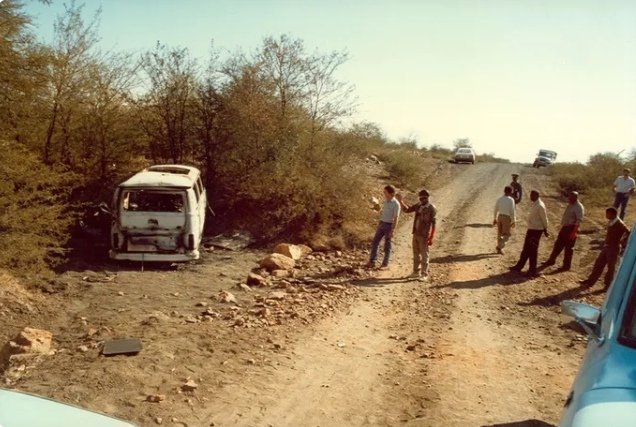
A police photograph from June 1986, of the burnt Kombi, in which the Mamelodi Ten lost their lives. The Mamelodi Ten were ten young teenage student activists from Mamelodi who were abducted and killed on June 26 1986, in a planned joint operation by the Northern Transvaal Security Police and the South African Defence Force's Special Forces. The ten students were persuaded by Joe Mamasela, posing as an MK operative, to leave the country for military training. However, they were taken to an area near Nietverdient where they were reportedly injected with chemicals to make them sleep and then placed into a kombi set alight. Their names: Abrahams Makolane, Samuel Masilela, Sipho Sibanyoni, Thomas Phiri, Jeremiah Magagula, Morris Nkabinde, Matthews Lerutla, Stephen Makena, Elliot Sathege, Rooibaard Geldenhuys. Image Source: iol
Missing Person Alert ‼️
Amogelang Molwagae (33), who has been missing since Saturday, 20 July 2025. Amogelang was last seen by her family in Heuwelsig when she left to go to a local shop.
Anyone with information is urged to contact D/Sgt Leeuw 073 331 8844,
Andile Matshaya followed protocol & died
Moses Tshake followed protocol & died
Zweli Duma followed protocol & died
Ignatius Nteso followed protocol & died
Lawrence Moepi followed protocol & died
Babita Deokaran followed protocol & died
Cloete Murray followed protocol & died
BREAKING: Three municipal officials have been arrested from the City of Tshwane for stealing transformers from Laudium Substation. The supervisor is not here and is expected to hand himself over. #eNCA
A group of older men meet in Washington to gossip about me. No significant amount of intelligence evidence has been produced about white genocide. We will not agree to compromise our political principles on land expropriation without compensation for political expediency.
South African President Ramaphosa is in Washington, DC, seeking a reset after President Trump repeatedly and rightly criticized South Africa for human rights violations and activities that undermine our national security. Ramaphosa is pivoting toward China and taking an aggressive position attacking Israel at the International Court of Justice, where he is pushing for precedents and policies that will not just undermine Israel but also expose American officials to vulnerabilities.
I have every confidence that President Trump will demand South African officials change their policies, and will hold them accountable if they don’t.
Watch my discussion today with Sec. Rubio on the topic at the Senate Foreign Relations Committee.
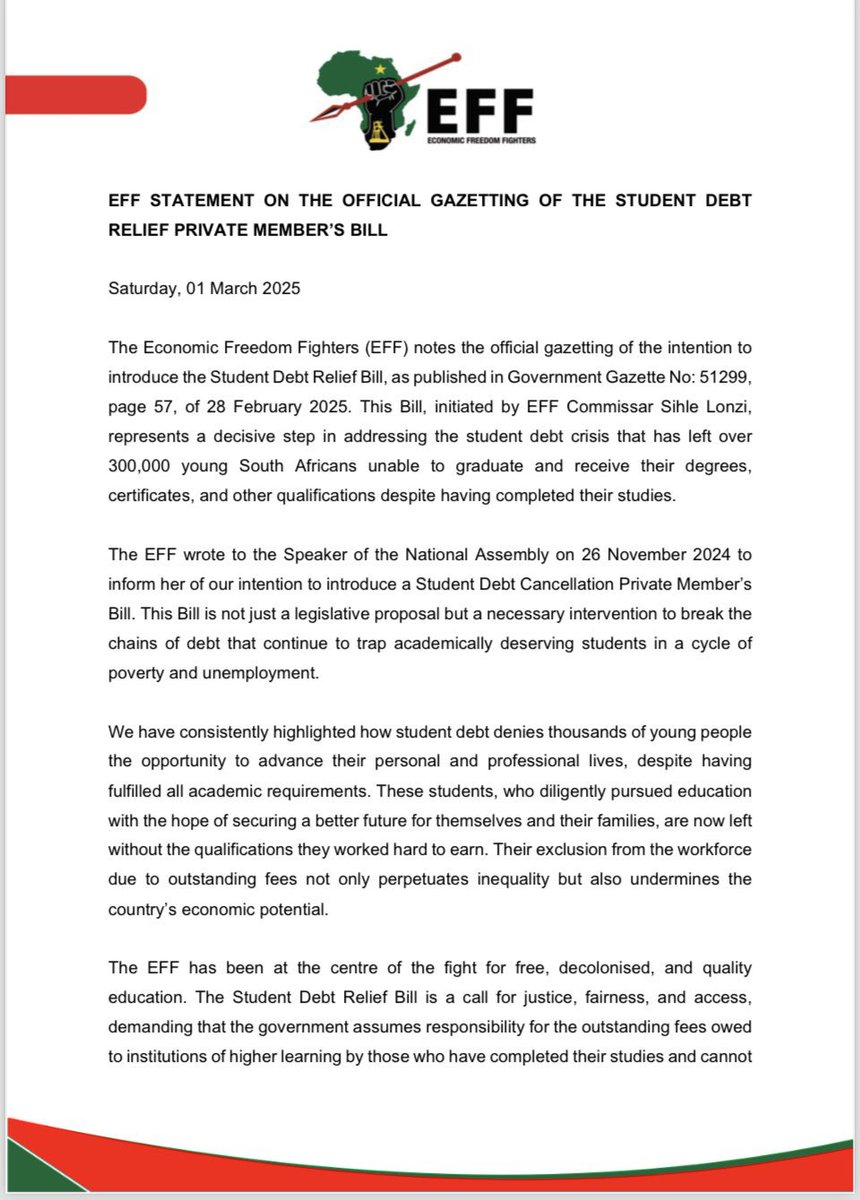
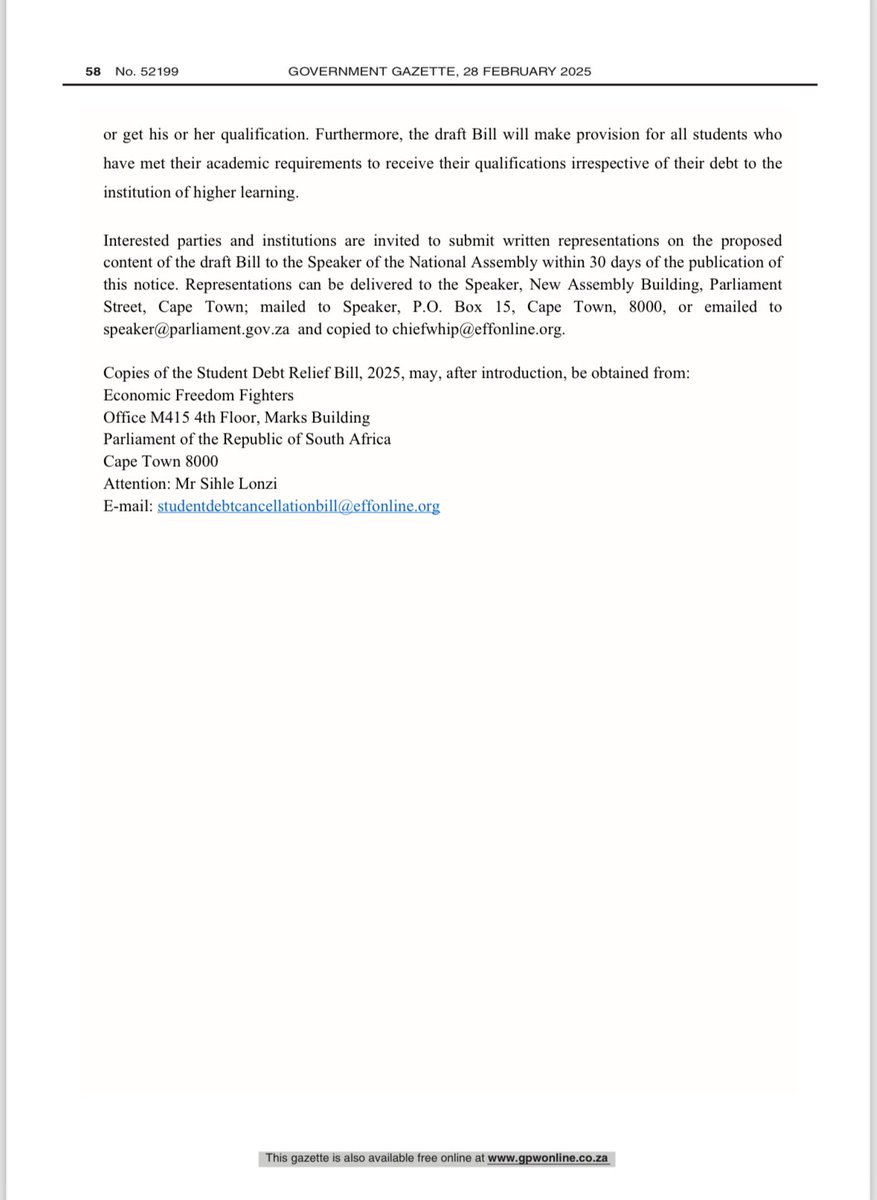
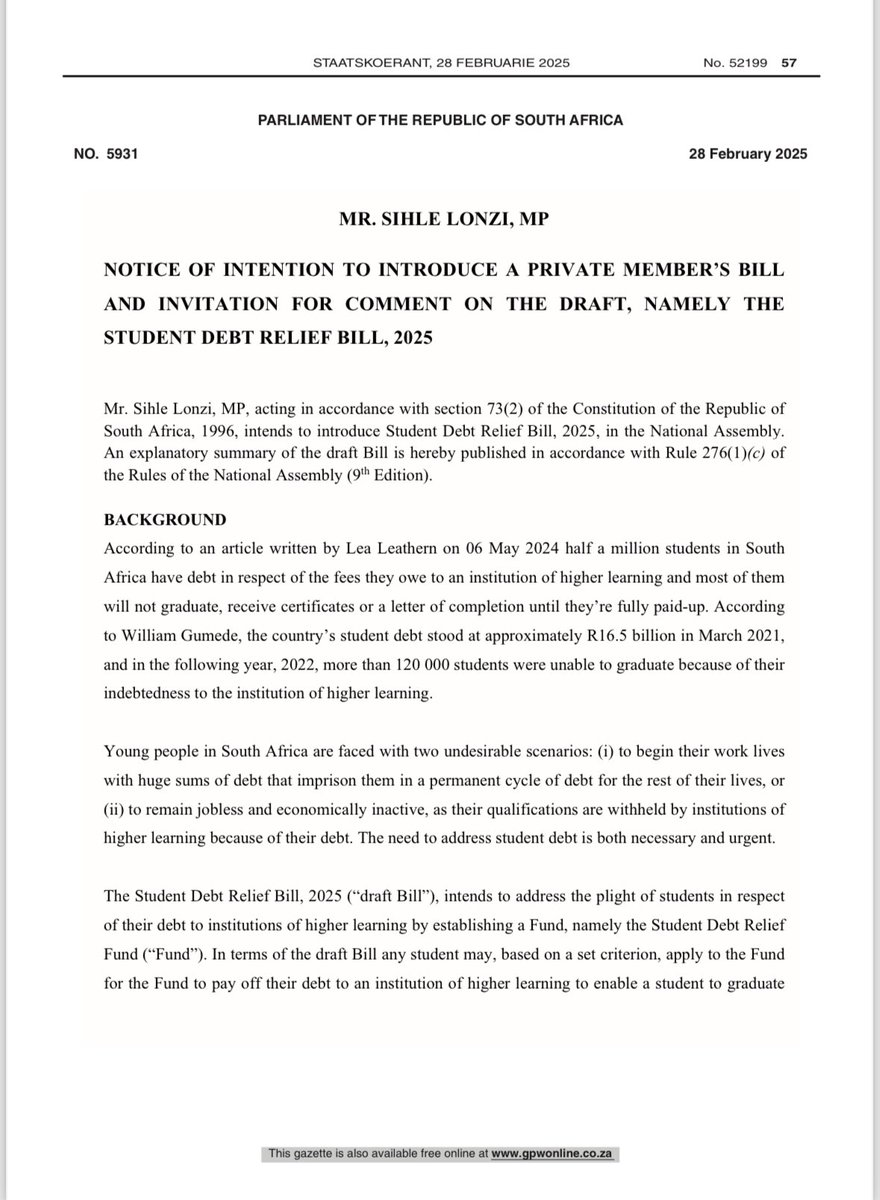
The Government Gazette is out!
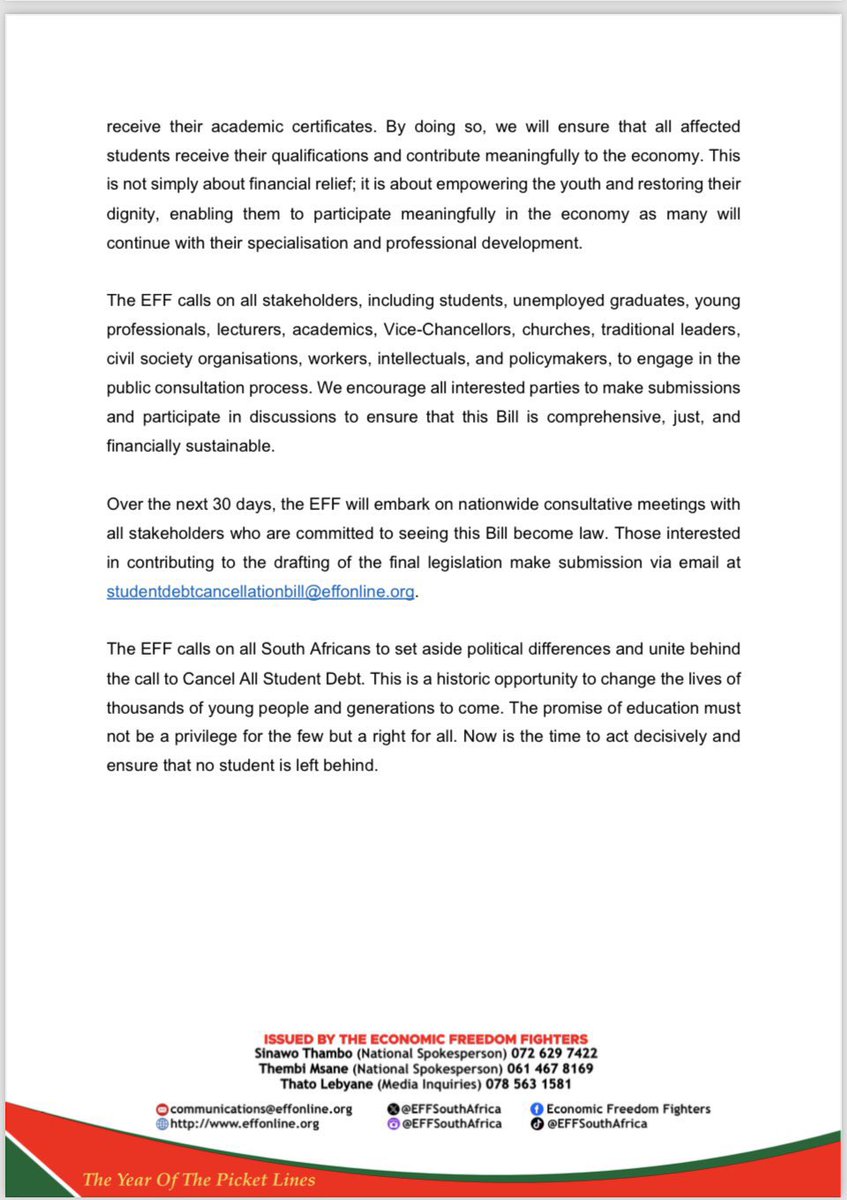
The Student Debt Bill will not only relieve over 300 000 young people IMMEDIATELY, it will create a legal foundation for future generations.
The EFF is demonstrating what it means to be a robust opposition party - on the ground, and in Parliament.
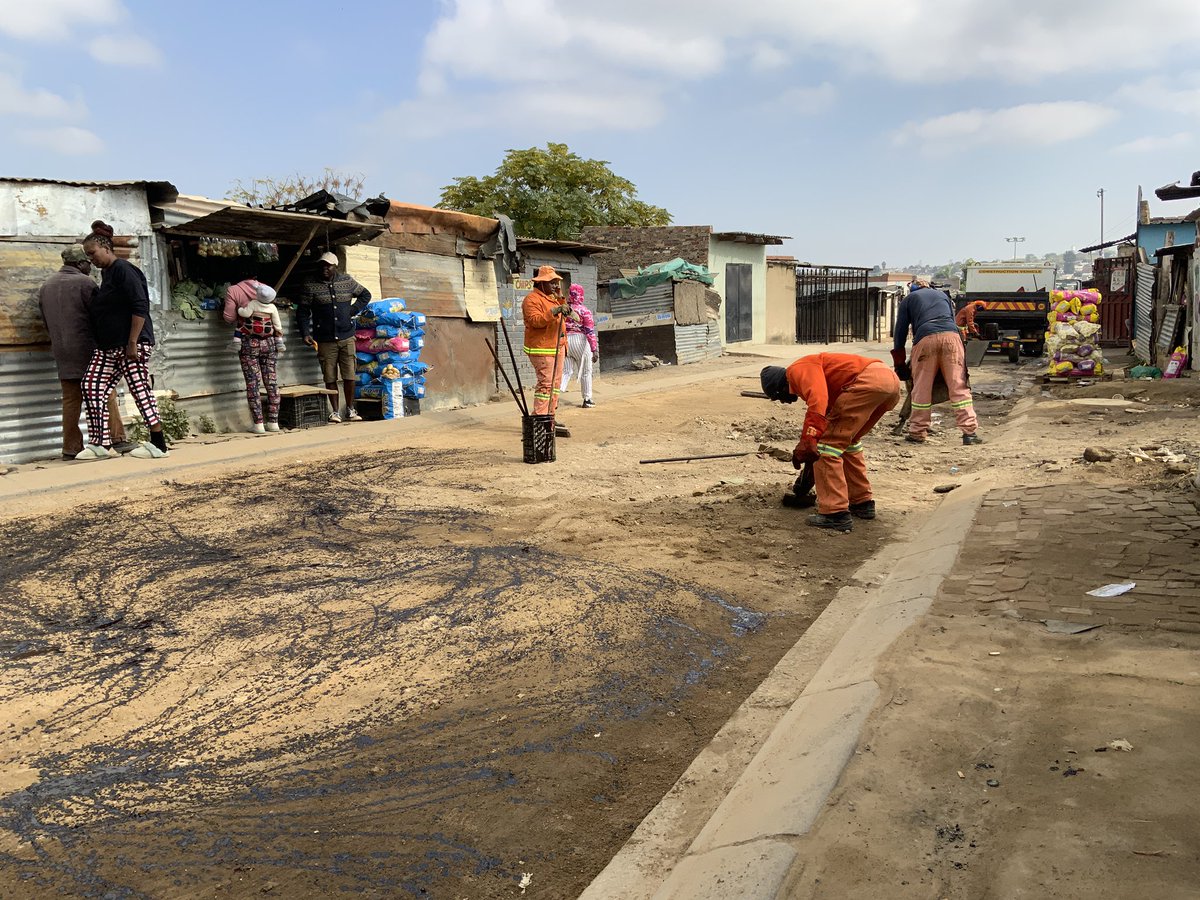
#OperationRestore is having an impact in Diepsloot under the direction of Acting CEO Mr. Lufuno Mashau and the JRA Executive Team, showcasing the City's dedication to service delivery.
#JoburgServices#JoburgCares ^SK
South Africans have been subsidising Europe’s luxury car pricing model for decades now.
Luxury European car brands like BMW, Mercedes-Benz, and Audi have always been seen as high-status in South Africa. But sales of these cars have dropped by 68% since 2014, raising questions about why they’re still so expensive when fewer people are buying them.
A clear indicator of the price differences lies in the pricing of identical models across different regions.
Consider the BMW 330i (2025 model). It costs $45 000 (approx. R850 000 including taxes) in the United States and R1 035 000 in South Africa.
The Mercedes-Benz C200 sells for roughly R780 000 in Germany but upwards of R961 000 in South Africa.
These figures show that South African consumers are paying a significant premium, not merely due to import duties and taxes, but as part of a deliberate pricing structure that treats the SA market as high-margin. (These numbers look exponentially worse for South African buyers when you adjust for Purchasing Power Parity, which we won’t get into here.)
According to automotive analyst Gugu Mhlongo, “South Africa’s automotive market has become a captive pricing zone, where prestige pricing meets low elasticity of demand. The brand loyalty and perceived status of ownership have, for decades, allowed manufacturers to charge more without pushback.”
In simple terms, South Africa’s car market has become a place where luxury brands can charge high prices without worrying about losing customers—even when those prices are unfair. This status-based pricing has created an environment where price is detached from production or shipping costs.
Economists like Dr Themba Moyo argue that these pricing dynamics mirror colonial-era extractive economics—where global brands extract value from high-status segments in developing markets without reinvesting locally.
Luxury carmakers often justify the price premium by pointing to higher logistical, operational, and compliance costs in South Africa. BMW South Africa, for instance, argues that prices reflect “local operating conditions, including taxes, dealer infrastructure, and customer service expectations.”
However, as the local economy contracts and competition grows, these justifications are getting boring.
The numbers are clear: In 2014, premium brands like Audi, BMW, Mini, and Mercedes-Benz, collectively sold over 74000 vehicles in South Africa. By 2024, that number had dropped to just under 24000—a 68% decline.📉
Mercedes-Benz saw an 82% reduction, Audi 70%, and BMW/Mini 50%.
The problem has gotten so bad that Audi South Africa is begging for support from the government, blaming falling sales, tough economic conditions, and cheap imported cars. The same companies that used to charge premium prices are now fighting to survive in a market that’s changing fast.
At the same time, Chinese and other Asian brands—like Haval, Chery, and Kia—have gained good market share with technologically superior, price-accessible models.
This European-style pricing strategy is not confined to automobiles. Luxury fashion, tech, and cosmetic brands often charge far more in South Africa than in their home or North American markets. A Chanel No. 5 bottle, for example, can cost up to 40% more in Johannesburg than in Paris.
These patterns suggest South Africa has served as a ‘prestige pricing buffer’ for brands seeking to balance global profit margins.
South Africans are becoming more cost-conscious, especially with economic stagnation, high unemployment, and rising living costs. The new middle class is broke and less concerned with buying for status.
Chinese manufacturers have capitalised on this with stylish, well-equipped products that offer better warranties, modern tech, and significantly lower price tags.
The Europeans don’t have too many choices. They might have to drop their prices or start selling directly online instead of through dealerships to save money.
Whatever happens, things are changing. So, either the prices come down or people will stop buying these overpriced cars altogether.
The Germans argue that the South African pricing model provides better after-sales service, prestige, and superior resale value. While this was historically true, the declining brand loyalty and growing trust in Asian after-sales service are eroding this advantage. South Africans still want to drive Beemers and Benzes, but not at these prices though.
In summation, for decades, South Africans have unknowingly subsidised European luxury car pricing strategies, paying more than their global counterparts while receiving diminishing relative value.
But as money gets tighter and buyers want more for their cash, South Africa’s luxury car market is in trouble. These brands must either change or fail. One thing is clear—people won’t keep paying sky-high prices just for a fancy badge much longer. No, Sir.