@SouthamptonFC Time to ban Southampton officials from every away game in the country next season.. likely fa ban for tonda coming up.. when you read the evidence it’s damning.. collusion at the highest level
On this day in 1944, the Japanese Imperial Army's greatest defeat in history was reaching its peak in a forgotten corner of India.
By nightfall on May 26, 1944, the battle that ended Japan's last offensive of the Second World War was effectively won.
Almost nobody outside the Burma campaign knows the story.
The Japanese 15th Army, 85,000 men under Lieutenant General Renya Mutaguchi, had launched Operation U-Go in March. The plan was ambitious to the point of fantasy. Three Japanese divisions would cross the Chindwin river out of Burma, climb 7,000 feet through monsoon-soaked jungle into India, capture the British supply bases at Imphal and Kohima, and trigger the collapse of British rule in South Asia.
Mutaguchi told his officers they would feast on captured British rations within weeks. He ordered them to bring only three weeks of food. After that, they would live off the enemy.
The British, under Lieutenant General William Slim, fell back into prepared positions on the Imphal plain and at a hill station 80 miles to the north called Kohima. They dug in. They waited.
What followed was 81 days of fighting in conditions that veterans on every other front of the war refused to compare to their own.
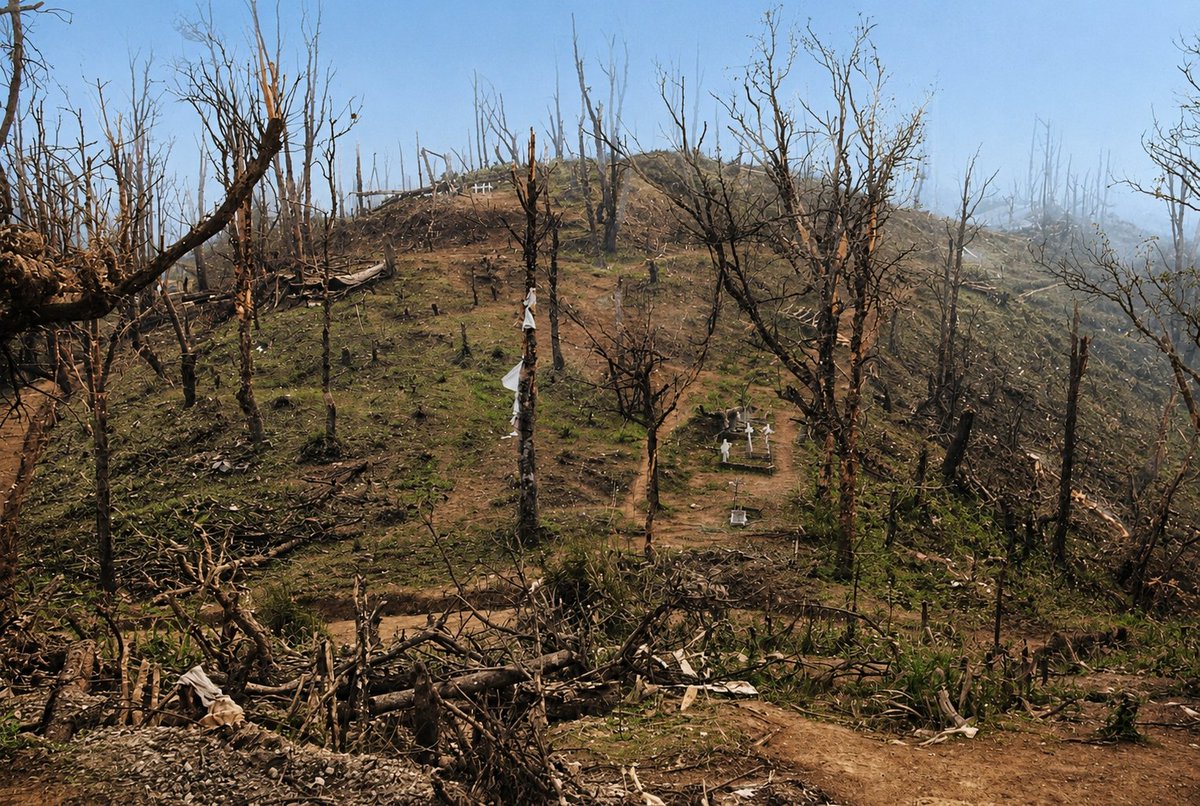
At Kohima, the centre of gravity of the entire battle compressed onto a single tennis court behind the District Commissioner's bungalow. British and Indian troops, mostly the 4th Battalion Royal West Kents and the 1st Assam Regiment, held one side of the tennis court. Japanese soldiers held the other. They fought across it for 16 days with rifles, grenades, and bayonets, at distances of less than 30 yards. Officers threw grenades back and forth like cricket balls. The clay court was churned into a graveyard.
The monsoon arrived in mid-May. Trenches flooded waist-deep. Wounded men drowned in their own foxholes. The dead were left where they fell because no one could reach them under Japanese fire. Bodies bloated in the heat. Disease killed almost as many men as bullets did. Typhus. Dysentery. Cerebral malaria.
By mid-May, the 2nd British Division had broken through to Kohima and begun counter-attacking south down the road toward Imphal.
By May 26, 1944, the Japanese 31st Division, which had attacked Kohima, was disintegrating. Out of food. Out of ammunition. Out of medical supplies. The men were eating roots, bamboo shoots, leaves, and in some documented cases, their own dead. Soldiers too weak to walk were left behind in the jungle with a single grenade and instructions to use it on themselves before the British arrived.
By that date, virtually every Japanese position in and around Kohima had been overrun. The road south to Imphal was open.
Mutaguchi refused to authorize a retreat. To withdraw was to admit failure, and Japanese military culture treated admitting failure as worse than annihilation. His subordinate divisional commanders, watching their men starve to death, began retreating anyway, in direct defiance of explicit written orders. Major General Kotuku Sato of the 31st Division simply marched his survivors back toward Burma without authorization and dared Mutaguchi to court-martial him. Mutaguchi did not.
When the Japanese 15th Army finally fell back across the Chindwin in July, of the 85,000 men who had started Operation U-Go in March, 53,000 were dead, missing, or so broken by starvation and disease that they were no longer combatants.
Most of those casualties were not from combat. They were from hunger, dysentery, malaria, exhaustion, and despair. The trail back to Burma was lined with skeletons in tattered uniforms. Indian villagers along the route remembered finding them for years afterward.
Mutaguchi was relieved of command, recalled to Tokyo, and forced into retirement. No Japanese ground offensive of comparable size was ever launched again in the Second World War. The defeat at Kohima and Imphal broke the offensive capacity of the Imperial Japanese Army in mainland Asia.
The British and Indian troops who held the tennis court are commemorated today by a small stone memorial at Kohima War Cemetery. The inscription on it has become one of the most famous epitaphs of the Second World War:
"When you go home, tell them of us and say,
For your tomorrow, we gave our today."
In 2013, British veterans and military historians voted Imphal-Kohima the greatest battle in British military history. Greater than Agincourt. Greater than Waterloo. Greater than D-Day.
Most people in Britain have never heard of it.
On this day in 1944, the Japanese Imperial Army's greatest defeat in history was reaching its peak in a forgotten corner of India.
By nightfall on May 26, 1944, the battle that ended Japan's last offensive of the Second World War was effectively won.
Almost nobody outside the Burma campaign knows the story.
The Japanese 15th Army, 85,000 men under Lieutenant General Renya Mutaguchi, had launched Operation U-Go in March. The plan was ambitious to the point of fantasy. Three Japanese divisions would cross the Chindwin river out of Burma, climb 7,000 feet through monsoon-soaked jungle into India, capture the British supply bases at Imphal and Kohima, and trigger the collapse of British rule in South Asia.
Mutaguchi told his officers they would feast on captured British rations within weeks. He ordered them to bring only three weeks of food. After that, they would live off the enemy.
The British, under Lieutenant General William Slim, fell back into prepared positions on the Imphal plain and at a hill station 80 miles to the north called Kohima. They dug in. They waited.
What followed was 81 days of fighting in conditions that veterans on every other front of the war refused to compare to their own.
At Kohima, the centre of gravity of the entire battle compressed onto a single tennis court behind the District Commissioner's bungalow. British and Indian troops, mostly the 4th Battalion Royal West Kents and the 1st Assam Regiment, held one side of the tennis court. Japanese soldiers held the other. They fought across it for 16 days with rifles, grenades, and bayonets, at distances of less than 30 yards. Officers threw grenades back and forth like cricket balls. The clay court was churned into a graveyard.
The monsoon arrived in mid-May. Trenches flooded waist-deep. Wounded men drowned in their own foxholes. The dead were left where they fell because no one could reach them under Japanese fire. Bodies bloated in the heat. Disease killed almost as many men as bullets did. Typhus. Dysentery. Cerebral malaria.
By mid-May, the 2nd British Division had broken through to Kohima and begun counter-attacking south down the road toward Imphal.
By May 26, 1944, the Japanese 31st Division, which had attacked Kohima, was disintegrating. Out of food. Out of ammunition. Out of medical supplies. The men were eating roots, bamboo shoots, leaves, and in some documented cases, their own dead. Soldiers too weak to walk were left behind in the jungle with a single grenade and instructions to use it on themselves before the British arrived.
By that date, virtually every Japanese position in and around Kohima had been overrun. The road south to Imphal was open.
Mutaguchi refused to authorize a retreat. To withdraw was to admit failure, and Japanese military culture treated admitting failure as worse than annihilation. His subordinate divisional commanders, watching their men starve to death, began retreating anyway, in direct defiance of explicit written orders. Major General Kotuku Sato of the 31st Division simply marched his survivors back toward Burma without authorization and dared Mutaguchi to court-martial him. Mutaguchi did not.
When the Japanese 15th Army finally fell back across the Chindwin in July, of the 85,000 men who had started Operation U-Go in March, 53,000 were dead, missing, or so broken by starvation and disease that they were no longer combatants.
Most of those casualties were not from combat. They were from hunger, dysentery, malaria, exhaustion, and despair. The trail back to Burma was lined with skeletons in tattered uniforms. Indian villagers along the route remembered finding them for years afterward.
Mutaguchi was relieved of command, recalled to Tokyo, and forced into retirement. No Japanese ground offensive of comparable size was ever launched again in the Second World War. The defeat at Kohima and Imphal broke the offensive capacity of the Imperial Japanese Army in mainland Asia.
The British and Indian troops who held the tennis court are commemorated today by a small stone memorial at Kohima War Cemetery. The inscription on it has become one of the most famous epitaphs of the Second World War:
"When you go home, tell them of us and say,
For your tomorrow, we gave our today."
In 2013, British veterans and military historians voted Imphal-Kohima the greatest battle in British military history. Greater than Agincourt. Greater than Waterloo. Greater than D-Day.
Most people in Britain have never heard of it.