🐢 It's World Sea Turtle Day! 🐢
We're spending today (and let's be honest, most days!) celebrating sea turtles. And now more than ever, these beloved animals need our help: https://t.co/A9EPvoLukM
🌿Calling All Nature Lovers🍃
There's a big campaign #votefornature trying to highlight and stop the destruction of our countryside
SIGN PETITION🔽
Pause housebuilding targets imposed on councils, review and identify local need
Follow @CommunityPlann1
https://t.co/PsDBDDhVv8
Saw a neighbours sheep on her back. So heavily pregnant she was stuck and could have died
If you see this - please stop and help by rolling them over!! 🙌🐑
📹 The Horned Beef Co
Beetles like ladybirds pollinate crops, keep harmful insects like aphids under control, and improve the quality of the soil. How to help them:
🐞 avoid pesticides
🐞 create a 'dead' hedge
🐞 don't be too tidy!
More: https://t.co/hcmMlvdbnd
Absolutely love our local Jackdaw roost in West Wales which is still going strong. Their chattering calls are something else. Just an amazing spectacle every evening. This is bioabundance for you!
Warren Farm in Southall has been officially declared a Local Nature Reserve, with the support of @BrentRiverPark.
The site, which is already home to skylarks, wildflowers, butterflies, and bees, will be rewilded to boost biodiversity.
(1/3)
🥾 🏴 There's a road in England older than the pyramids.
It's a public footpath.
Anyone can walk it.
Five thousand years ago, traders carried flint tools along a chalk ridge in southern England. They followed the high ground. Dry. Safe. Above the forests and the
swamps.
Eighty seven miles. Wiltshire to Buckinghamshire. They called it the Ridgeway.
It passed a white horse carved into the chalk. Three thousand years old. Still there.
It passed burial mounds where chieftains were laid to rest. Stone chambers older than Stonehenge.
Bronze Age farmers walked it. Iron Age warriors built hillforts above it. Romans crossed it. Anglo-Saxons named the villages along it. Medieval drovers herded cattle down it to London.
Five thousand years of feet on the same chalk.
And it's still there. Not in a museum. Not behind a fence. A national trail. Free.
You can drive to Wiltshire on a Saturday morning. Step onto the same chalk your ancestors walked. And follow their footsteps along the ridge.
The oldest road in Britain. Still open. Still free. Still yours.
You are the reason we can tell these stories. https://t.co/rih7iKwnvf 🙏
Be part of us. 🇬🇧
Be Proud Of Us. 🏴
It's that time of year again where gardens are being tidied up, seeds are being planted and new life is sprouting everywhere. Here's our take on why gardening at school benefits everyone!
https://t.co/eMao8fzVzW
#schoolgardening#gardening#outdoorlearning#outdoorclassroom
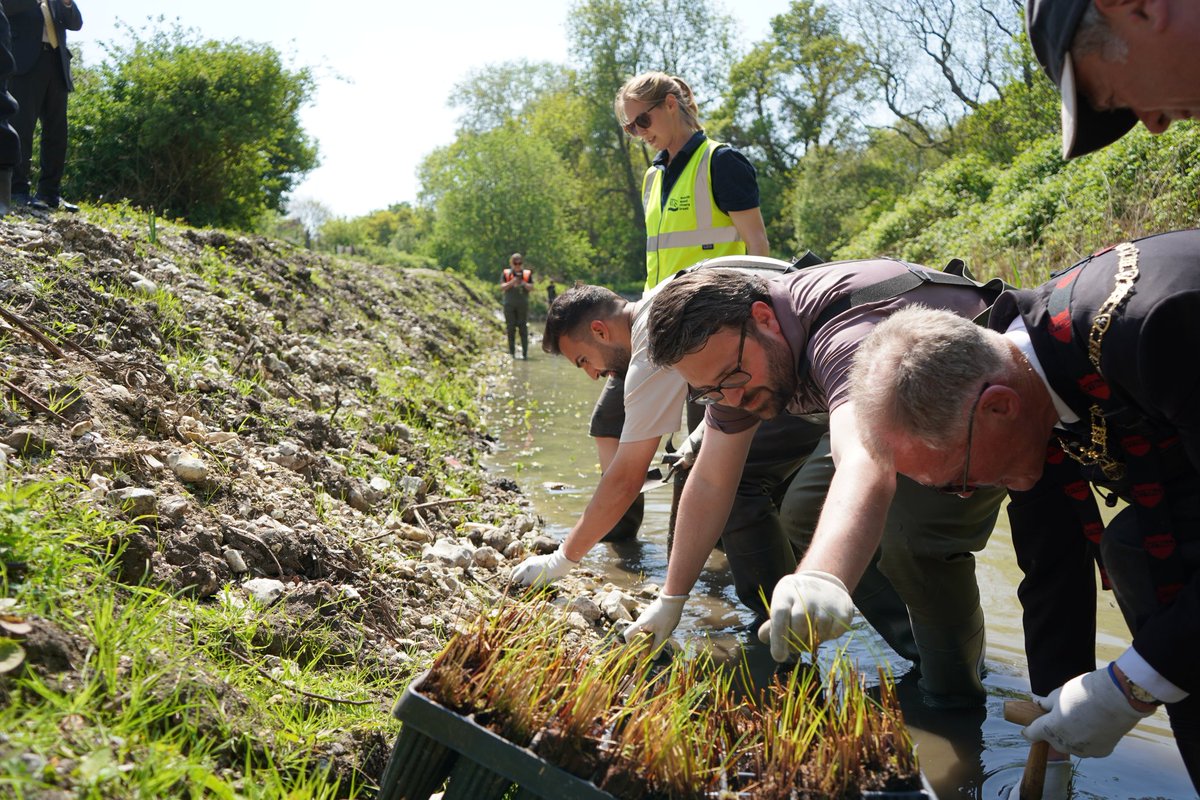
85% of the world's chalk streams are in England - including the River Cray that runs through Bexley and Bromley. We really can't risk these irreplaceable habitats.
We must do more to protect and enhance our rivers.
Lovely, but spoilt by the spreading of misinformation.
Hedgehogs don't feed on slugs.
Slugs carry lungworm which is deadly to all mammals, including hedgehogs.
If hedgehogs did eat slugs, which are abundant, they wouldn't be dying of starvation as they are now.
The longer this myth is propagated, the more hedgehogs will die of hunger, as folk won't change their ways and allow natural food to survive.
The hedgehog is one of Britain’s most quietly beloved creatures.
For generations it has wandered our gardens at dusk, rustling softly through leaves and hedgerows as the evening settles across the countryside.
Small, determined and unmistakably endearing, the hedgehog has long been part of the familiar rhythm of British life.
Here are five fascinating facts about this remarkable little animal:
1. Hedgehogs travel surprisingly far - In a single night a hedgehog may roam over a mile in search of food, quietly moving between gardens, hedges and fields.
2. They carry thousands of spines - An adult hedgehog has around 5,000 to 7,000 spines, forming a natural armour that protects it when it curls into its famous defensive ball.
3. They hibernate through winter - As temperatures fall, hedgehogs enter hibernation, lowering their heart rate dramatically and surviving on the fat reserves they built during autumn.
4. They are natural pest controllers - Hedgehogs feed on beetles, caterpillars, worms and slugs, quietly helping keep gardens and ecosystems in balance.
5. They have lived in Britain for thousands of years - Hedgehogs have been part of Britain’s natural landscape since the end of the last Ice Age, making them one of the country’s oldest native mammals.
Small, gentle and enduring, the hedgehog is one of the many little things that make Britain feel like home.