One top military officer provided a plausible explanation, behind closed doors on Capitol Hill, The Intercept has learned. In the briefing, a high-ranking officer on the Pentagon’s Joint Staff stated that some of the people killed by the U.S. military may have been the victims of human trafficking.
"If you find somebody's struggle, you can find their genius."
Brandon Stanton has interviewed over 10,000 people for Humans of New York. He told me the best stories emerge from struggle:
"If you can find somebody's struggle, you will find a plot. Find what this person is pushed against. Find what this person has overcome.
You have plot, you have transformation, and then you also have wisdom.
If you find somebody's struggle, you can find their genius. When I'm looking for something singular, it comes from something they've gone through."
Putin is counting on America to grow tired, divided, and distracted.
Tonight, the House answered with unity and resolve.
Following the successful bipartisan discharge petition I was proud to help lead, we have passed the Ukraine Support Act—comprehensive legislation to deliver critical support to Ukraine, impose further sweeping sanctions on Russia, and hold Putin accountable for his illegal war of terror.
Ukraine is fighting for its sovereignty and survival, but the stakes do not stop at Ukraine’s borders. Standing with Ukraine is a matter of American security, allied strength, and moral clarity. It tells the world that tyranny will not be met with hesitation, retreat, or silence.
From the start, I have worked to ensure America’s policy is rooted in peace through strength. This legislation gives force to that principle.
Tonight, the House stood on the side of freedom.
Now, the Senate must do the same.
This is our Churchill vs. Chamberlain moment. Stand with good or stand with evil.
Ukraine is a democracy invaded by a dictator who wants to erase its independence, culture and people.
Ronald Reagan would stand with Ukraine and vote yes tonight. He would choose Churchill.
NEWS: A @lawfare report finds that *97* Jan. 6ers who received clemency for their role in the attack were arrested, charged, or convicted of subsequent crimes—a number much higher than previously reported.
Incredible work from Katherine Pompilio:
https://t.co/AJMPxwb1al
The press scrum around Candace Owens says a lot about the world we live in.
Four years ago, I was facing a Russian death sentence after the destruction of Mariupol. Today, people who have never lived through the war are helping rehabilitate those responsible for it.
The normalization of war crimes should concern us all.
The Trump Presidential Library says it can't find any DMs sent by the president who tweeted more than 25,000 times.
His administration opted not to enable the setting which would have preserved them.
Free link below.
We wanted to conclude the first Drone Deal with the United States. The U.S. wanted to test all types of our drones. We agreed to the way they wanted to test, train with, and use our systems in the air, on land, and at sea. But we still don’t have a bilateral Drone Deal – a big framework document.
The Drone Deals we have are with some countries in the Middle East and Europe, and now we are preparing a big Drone Deal with the EU. I hope we will reach the same agreement with our American partners. I count on it.
American companies have advanced AI technologies we don't have. In turn, we have many things they don't have, due to our extensive experience on the battlefield.
I think this cooperation can be huge — the most powerful of its kind in the world. We need to negotiate, not just talk about it. Take the necessary steps and do it as quickly as possible. For this, we need President Trump to say yes.
From an interview with Face the Nation. (5/5)
NEW: The Trump administration's DOJ has been systematically removing materials from its websites regarding the many indictments and convictions related to the Jan. 6 attack on the U.S. Capitol.
In response, @lawfare has been systematically restoring them:
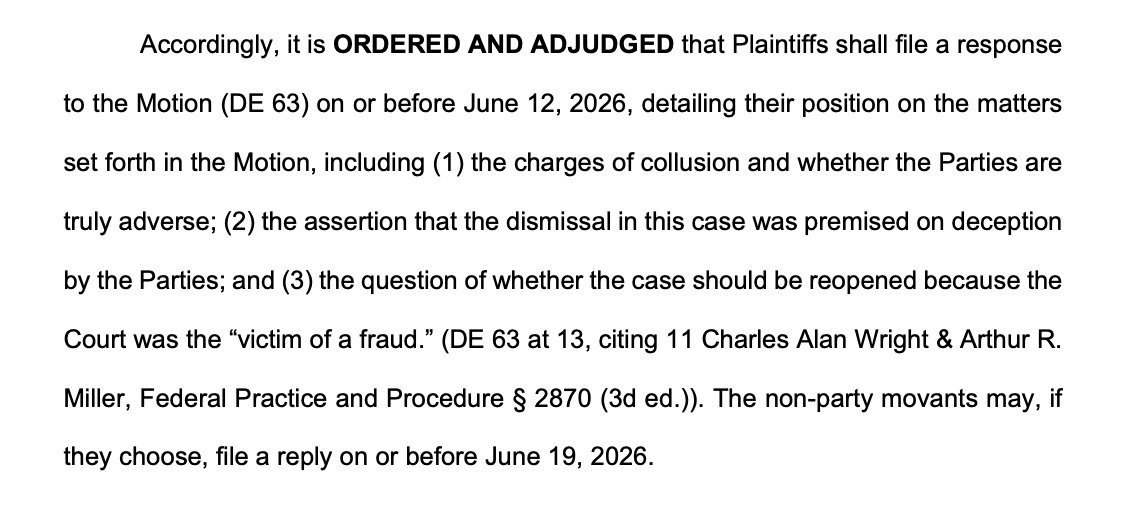
JUST IN: Judge Williams is pressing Trump's lawyers to answer for allegations that they committed a fraud on the court and filed the president's lawsuit against the IRS as a "collusive" effort to create the $1.8 billion "anti-weaponization" fund.
https://t.co/NtUv1PrYQ6
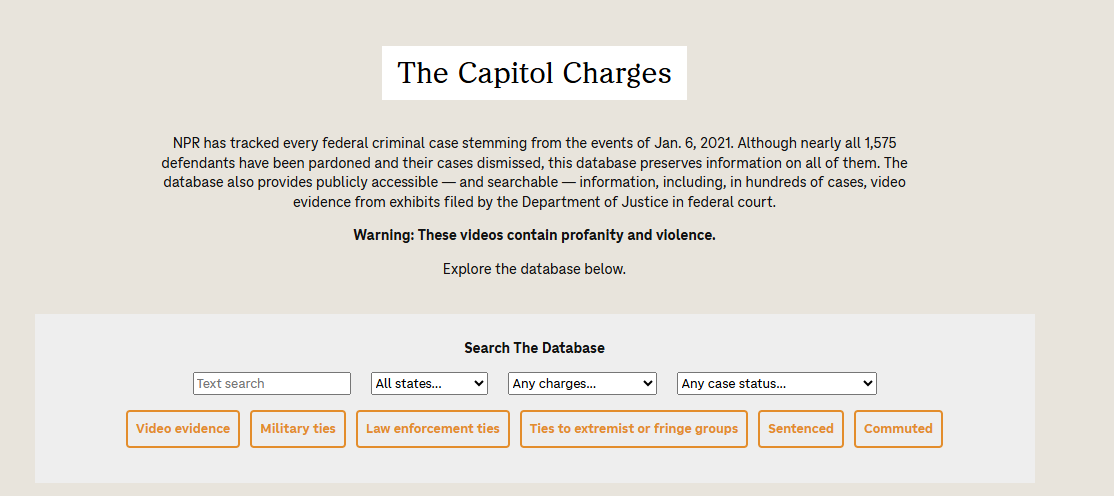
As the Trump DOJ mass-deletes government information about the Jan. 6 cases, reminder that you can still access NPR's database covering every single prosecution.
We also provide access to hundreds of videos presented in court.
We’re calling it: The war in Ukraine has entered a new phase.
@KatStepanenko and I have authored a new special report studying how Ukraine is actively challenging the positional character of the war that has dominated the battlefield since 2023.
Data on Russia’s battlefield performance indicates that the character of the war is shifting in favor of Ukrainian forces – at least for now. Russian forces rates of advances are stagnating while Ukrainian forces are employing novel tactics and operational concepts in efforts to break out of positional warfare. Neither Russia nor Ukraine can conduct operational maneuvers yet, however.
The bottom line is that the war in Ukraine is competitive and far from stalemated. Ukrainian forces are out-innovating Russian forces in both military technologies and in applying these new technologies in effective operational concepts that can help Ukrainian forces break out of positional warfare. Ukraine is employing mechanized equipment in tactical maneuvers in ways that were impossible 12 months ago. Russia’s ability to conduct infiltration missions will likely continue to degrade as Ukraine’s intermediate-range strike campaign pushes Russia’s logistics and forward operating bases further away from the frontlines, reducing resourcing to sustain infantry tasked with infiltration missions. Ukraine may be able to scale these effects if they resourced properly by international partners.
Ukraine’s advantage in intermediate range strikes is notably not permanent, and Russia will very likely eventually develop countermeasures to mitigate Ukraine’s advantages. Ukraine’s international partners thus have a rare and temporary opportunity to help Ukraine exploit favorable battlefield dynamics while Ukraine has the upper hand.
Key Points of the report:
• Russia’s rate of advance is plummeting during the Russian Spring-Summer 2026 offensive.
• Russia is losing more soldiers to make fewer gains, with monthly Russian casualty rates reportedly outpacing monthly recruitment since December 2025.
• Ukraine is starting to regain more ground than it is losing for the first time since 2023.
• Ukraine’ recent counterattacks feature unique characteristics and deviate from key trends that defined the positional character of the war since 2023.
• Ukraine is conducting a pattern of more frequent mechanized counterattacks at the tactical level for the first time since 2023.
• The Ukrainian command’s operational planning is maturing.
• Ukraine’s early 2026 counterattacks in the south were successful likely due to better planning and preparation of the battlefield.
• Ukraine has been conducting a coherent campaign to suppress and destroy Russian air defenses since late 2025, in order to shape the battlefield as part of more sophisticated campaign planning.
• Ukraine significantly intensified its intermediate-range strike campaign against dynamic targets in Spring 2026 in order to degrade Russian logistics at operational depths ahead of planned Ukrainian maneuver.
• Ukrainian forces started actively disrupting Russian railway logistics in occupied Ukraine and Russian western regions in Spring 2026.
• Ukrainian intermediate-range strikes are already achieving notable operational effects, including degrading Russia's ability to use the key Russian highway connecting Russia to occupied Crimea and GLOCs around Donetsk City.
• Ukrainian forces decisively seized the initiative in intermediate-range strikes by fielding new technologies such as the US-made Hornet strike UAV, among other systems.
• Ukrainian forces are achieving temporary tactical drone overmatch in some frontline sectors, which is slowing Russian offensive operations by degrading the effectiveness of Russian shaping operations.
• Ukrainian forces likely achieved tactical drone overmatch in certain frontline sectors after degrading Russia’s drone capabilities in late 2025 to early 2026 - primarily by suppressing drone launch positions and increasingly intercepting Russian tactical UAVs.
• Ukraine’s degradation of Russian forces at operational depth combined with tactical-level drone overmatch likely is creating vulnerabilities in the Russian lines.
• Ukraine’s intermediate-range strike campaign is likely far from its zenith, assuming continued support from Ukraine’s partners, and will likely intensify over 2026 as Ukraine fields new weapons capable of striking Russian’s operational rear.
Link to full report: https://t.co/rCeWbYJNiB
With oil prices high and sanctions lifted, Russia converts the windfall into a massive attack on Kyiv.
The American embassy warned of an impending Russian attack against Kyiv, which could include ballistic missiles. It was about midnight. My fiancée and I had just finished watching a nature documentary—zebras grazing in the Serengeti, sloths dangling from trees in Costa Rica. We had committed to going to sleep.
Thirty-two minutes later, we heard the dreaded phone alarm that signals an air threat. Something menacing was airborne, coming from Russia or the occupied territories. Too soon to know where it was headed or where it would land.
At about 1:00 a.m., I found out. They were coming to us. The air defense went into full mode. First came the sound of piston engines buzzing overhead. Hundreds of interceptor drones launched to intercept incoming drones. Machine guns opened fire, in case the interceptors failed.
Then came a massive blast—an American Patriot or a German IRIS-T (I can almost tell the difference by now). The cacophony of twenty-first-century warfare filled the sky. My fiancée, and I sat tense. We knew we would not sleep. She put on extra clothes. She fears being pulled from the rubble in too little clothing—a rational and practical fear many Ukrainians have quietly developed.
Then the ground vibrated. Not just the building foundation, but something deeper, almost tectonic. The Patriots missed and something powerful hit. Very powerful. An Oreshnik. It is a terrifying weapon: a ballistic missile capable of carrying nuclear warheads. It travels at Mach 10 and separates in the upper atmosphere to unleash six independent warheads, each containing smaller submunitions. It is almost impossible to stop.
For the four million people living under this aerial battle, there is only one primitive means of protection: go underground. We do not have a shelter in our building, so we move away from the windows and place our faith in probabilities. I have worked out the math before. Suppose this is a major attack: one thousand aerial threats. Ninety percent get intercepted. One hundred get through. Assume each kills ten people—one thousand dead. Kyiv has roughly four million residents. That gives you a one-in-four-thousand chance. About 0.025 percent. Many Ukrainians have done some version of this calculation, even if only subconsciously. For a former military officer, the helplessness is devastating. So we try to sleep through the onslaught.
At 10:00 a.m., neither of us knew how much we had slept, if at all. Mariia and I looked at each other, unsure if it was all a nightmare. It was—a living nightmare that has now played out for more than 1,550 days.
When I checked the news, the scale of the damage was devastating. Six hundred Shahed drones, thirty-three ballistic missiles, and fifty-seven cruise missiles. A popular market near us—normally packed with thousands of shoppers on a Sunday morning—had become twisted steel and ash. Completely destroyed. The recently reopened Chernobyl Museum suffered a collapsed roof, and artifacts that had survived one disaster did not survive this one.
One cruise missile, which ignites a booster rocket during its final descent to evade interception, crashed through the base of a high-rise building, carving a massive hole into the underground parking structure. A water supply station, the Institute for Religious Studies, the Podil Opera Theatre, and the Kyiv School of Economics—all civilian sites—were damaged. More than one hundred people were wounded, but it was still too early to know how many will end up dead.
Living in a war zone for four years, I see both the worst of humanity, and the best of humanity side by side. Air defense brigades—many composed of former college students, teachers, and retirees—intercepted 92 percent of drones and 60 percent of missiles. They validated my estimate of survivability.
Rescue workers, poorly paid and fully aware that secondary strikes are possible, rummaged through rubble searching for survivors, including pets.
Yevhen, is a slim man in his early forties. He had sold his home to open a café in Kyiv. The café had opened for business the day before. Overnight, it was heavily damaged. But because some of his machines and coffee supplies survived, he reopened, handing out free coffee through shattered windows.
On the military front, Russia has failed to make meaningful progress. Several Ukrainian volunteer projects have compared the pace of the Russian advance to the slowest animals in the world. https://t.co/JfKicUacBU. During Russia’s attempt to take Kupiansk in Kharkiv Oblast, one website quipped: “The three-toed sloth sleeps eighteen hours a day, defecates once a week, and is still making better time than the 11th Army Corps.” The sloth, according to the site, would have advanced 74 percent faster and at a far lower cost. Over 35,000 Russian personnel were reportedly killed or severely wounded during April, the deadliest month on record, according to Ukraine’s Ministry of Defense.
In Moscow, where Putin had banked on public support and minimal disruption to daily life, residents can no longer dismiss the war as a distant “special military operation.” Drone attacks are increasingly common. Military-linked industrial facilities have been hit. Refineries and oil terminals far from the Ukrainian border have also reportedly been targeted. The road connecting Russia to Crimea along the Sea of Azov has increasingly become a highway of death, where Ukrainian drones strike military logistics almost at will.
Unable to produce a decisive victory on the battlefield, Putin has increasingly resorted to the one tactic he can always sell to his public as a victory: terrorism. Hence tonight’s attack.
These attacks were enabled by a recent financial windfall. The war in Iran pushed oil prices upward, while Trump recently lifted sanctions on Russian oil, giving Putin a lifeline and replenishing the Russian treasury with at least a billion dollars a day.
The American government, through its embassy in Ukraine, warned of the attack. But it made no effort to use its considerable leverage over Russia to help prevent it, even though it could have.