Every design decision, every dead end, every "why is this pin here" — written to docs as it happens.
Not the engineer's memory. The project's memory.
New hire onboards in a day. Software team gets a repo, not a board.
Three meetings collapse into one git link.
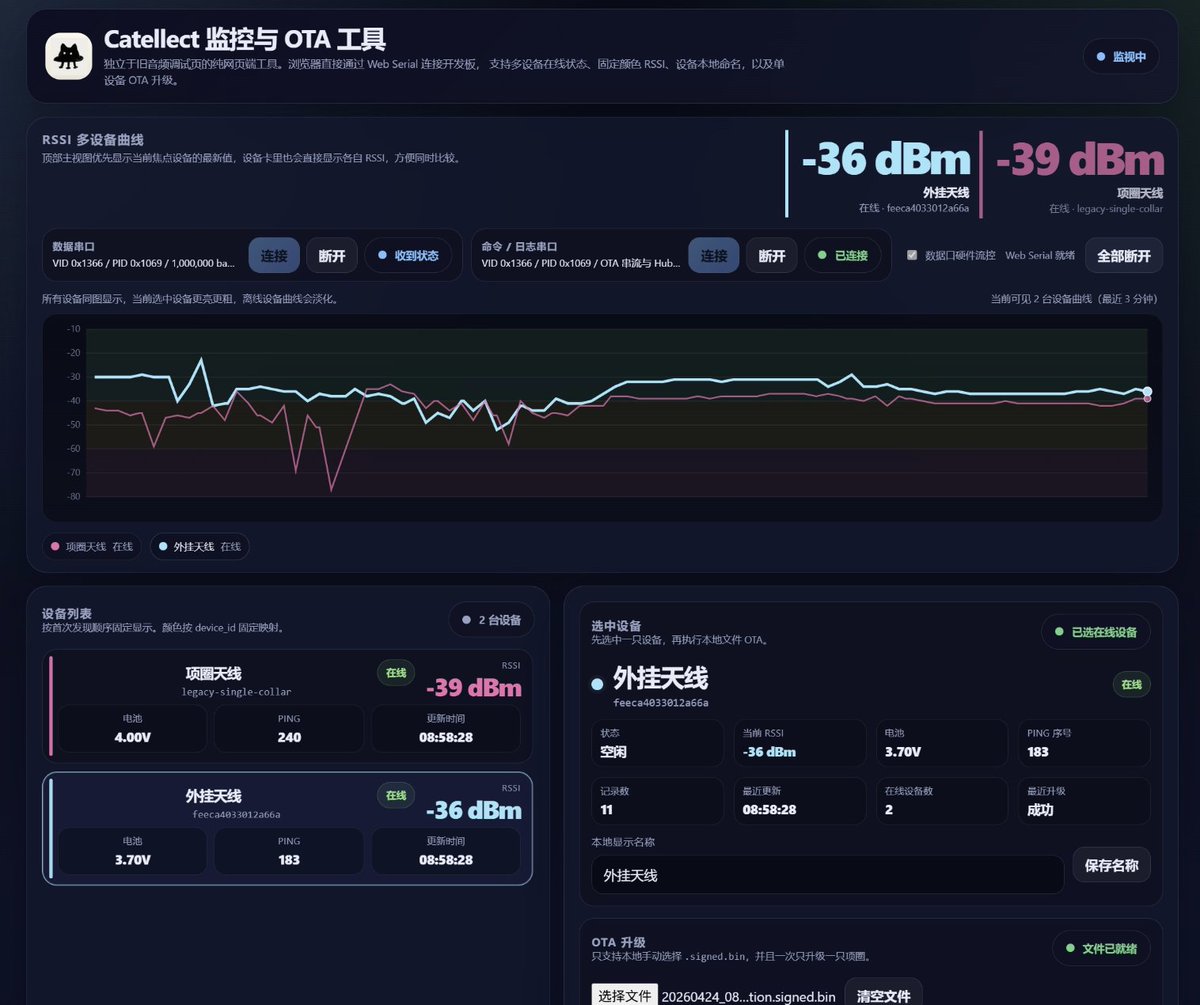
With the netlist in context, AI stops reviewing and starts building: — firmware config — drivers — comms protocol — cross-platform host debug tool Host tools used to need their own sprint.
In our pipeline, they ship with the board.
Most teams feed AI schematics. Wrong file. The unlock is the netlist — every pin and trace, explicit.
Schematic = AI has seen your board.
Netlist = AI understands it.
Higgsfield: 24.7M visits/mo.
Liblib: 2.6M.
AI products don’t win by listing more use cases. They win by making creation feel cool.
For Catellect’s AIGC cat effects, the goal isn’t just cute videos. It’s making owners want to play, share, and feel closer to their cats.
Most AI waits for a prompt.
Cats don't prompt.
A cat won't say “my routine changed this week.” It just sleeps elsewhere, eats slower, hides longer, or stops doing one tiny thing.
Care AI starts with noticing before anyone asks.
Today we got our first real, high-intent user.
The joy was so simple and pure.
This is why we build: from nothing, you make something — and one day, someone across the world finds it, tries it, stays.
In that quiet moment, a real connection forms.
Still feels magical.
Regular collars almost killed cats I love. They hide pain like pros. I couldn’t wait for disaster. So I built Catellect. Safer. Smarter. No more guessing.
#CatSafety#CatHealth#PetTech#CatLovers
So good design for cats isn’t about standing out.
It’s about disappearing.
Removing anything unnecessary.
Until nothing distracts. Nothing presses. Nothing reminds.
If a cat forgets it’s wearing something,
that’s not minimalism.
That’s respect.
What cats tolerate vs what humans like.
Most pet products are designed for humans first.
Bright colors. Decorative shapes. Expressive details.
Because humans experience design visually.
We choose with our eyes.
But the wearer isn’t human.
Cats don’t experience design.
They experience it physically.
Weight against the neck.
Sound when they move.
Friction on fur.
Pressure that never turns off.
What humans call “cute” often becomes constant.
And when something is worn every day, constant matters more than character.
We get asked this a lot: "Why no laser pointer on the base station?"
Short answer: Lasers trigger the hunt-catch cycle… but there's never a catch. That unresolved chase often builds frustration, stress, or even obsession over time.
I need your stories — does your cat hate bells? Get anxious? Hide more? Refuse food from the constant noise? Drop them below. These break my heart and piss me off equally. We have to talk about this.
🧵 I’m fucking done. Why do so many collars still have bells like it’s nothing? Endless jingling right by their ears — cats hear everything we don’t. It’s not cute. It’s constant torture. I can’t stand it anymore.
If your cat ever flinched at that damn bell, or just acted off and withdrawn… You’re not imagining it. You’re seeing real stress. Cats hide it like pros. But the jingling never stops. It builds up. It hurts.