Thank you @SciencNews for sharing such valuable content! The “Traps to avoid” section is especially relevant. The reminder not to become overly attached to our initial research questions is an important one.
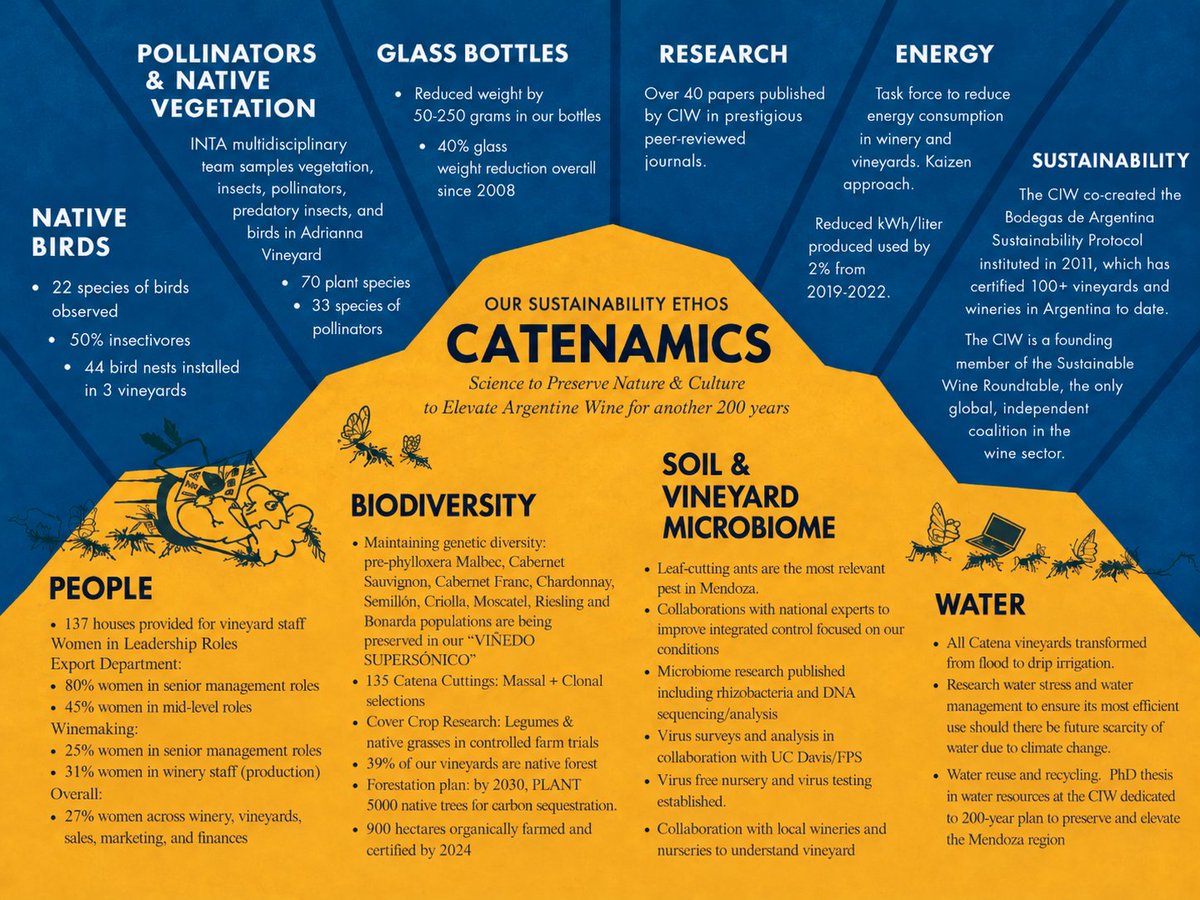
From vineyard soils to genetic diversity, research helps us better understand Mendoza's distinctive growing conditions.
Thank you to @lisathewinechef of The Wine Chef for highlighting the work of the Catena Institute of Wine.
Read more: https://t.co/8QTdrL5Qw6
We congratulate our colleague Silvina van Houten on successfully defending her master’s thesis on natural genetic variation in fruit set among Malbec grapevine clones. This work has already contributed to two scientific publications exploring Malbec and its potential adaptation to climate change.
Dr. Mariano Masiokas from @ianigla shared with us an insighfull session about El Niño and the potential scenarios associated with a particularly strong event, often referred to as a “Super El Niño.”
It was an opportunity for our technical to learn and ask questions to help us anticipate and plan for what could be a challenging season.
@LuisReginato1@LauraCatena@alevigilmalbec
Source: van Houten S. et al. (2020). Natural Genetic Variation for Grapevine Phenology as a Tool for Climate Change Adaptation. Applied Sciences 10, 5573. DOI: 10.3390/app10165573
Budbreak brings Malbec diversity into focus. van Houten et al. (2020) found >16 days of variation from flowering to veraison among 21 Malbec clones. Catena Cuttings preserves diverse Malbec plant material for continued study.
— Fernando Buscema, Director
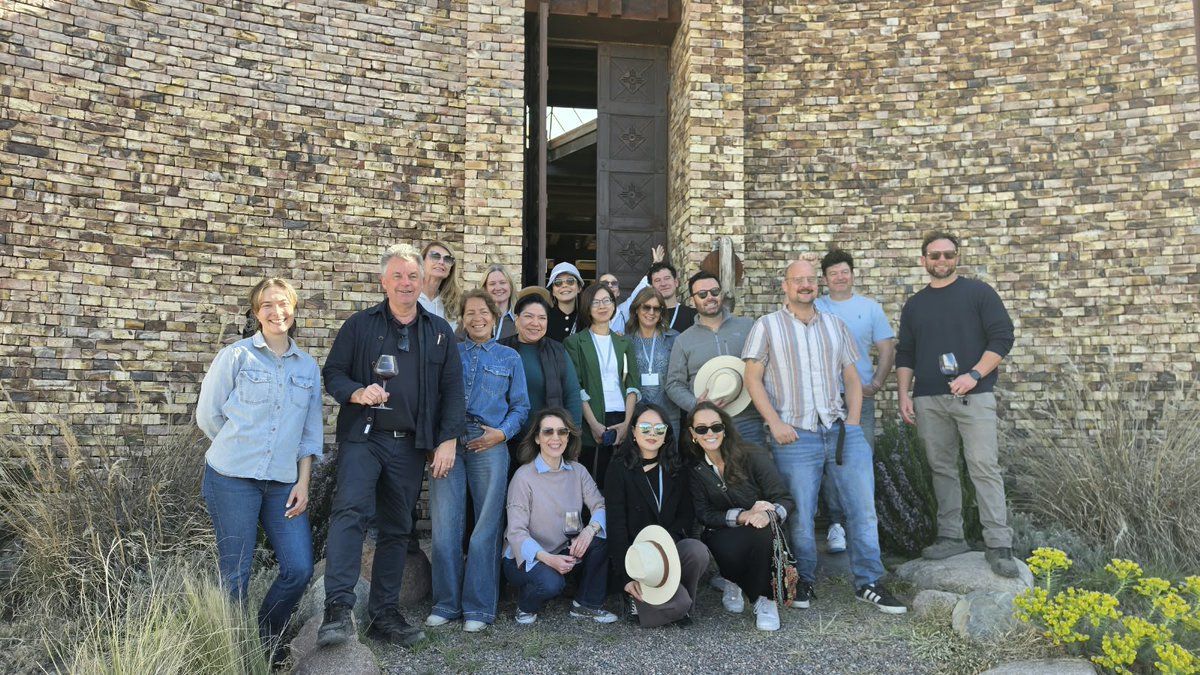
This week, the @WSETglobal Educators Trip visited Adrianna Vineyard in Gualtallary. Guillermina Van Houten, @royurvieta and @LuisReginato1 shared our work on terroir, soils, climate and altitude, followed by a tasting of Catena wines. Thank you for visiting! — Roy Urvieta
𝐑𝐞𝐠𝐢𝐬𝐭𝐫𝐚𝐭𝐢𝐨𝐧 𝐜𝐥𝐨𝐬𝐞𝐬 𝐨𝐧 𝟓 𝐎𝐜𝐭𝐨𝐛𝐞𝐫 𝟐𝟎𝟐𝟔❕️ There is now less than two weeks to register for the 𝟒𝟕𝐭𝐡 𝐎𝐈𝐕 𝐖𝐨𝐫𝐥𝐝 𝐂𝐨𝐧𝐠𝐫𝐞𝐬𝐬 𝐨𝐟 𝐕𝐢𝐧𝐞 𝐚𝐧𝐝 𝐖𝐢𝐧𝐞
12-16 October 2026, Yinchuan, Ningxia, China.
https://t.co/qvEG85wpzJ
A lot’s happened at the Catena Institute of Wine over three decades.
Our new website brings it all together: our philosophy, 40+ peer-reviewed papers, research at Adrianna Vineyard, preservation initiatives, and our current research projects.
Come explore, and stay in touch with us at https://t.co/728ag9ybEl
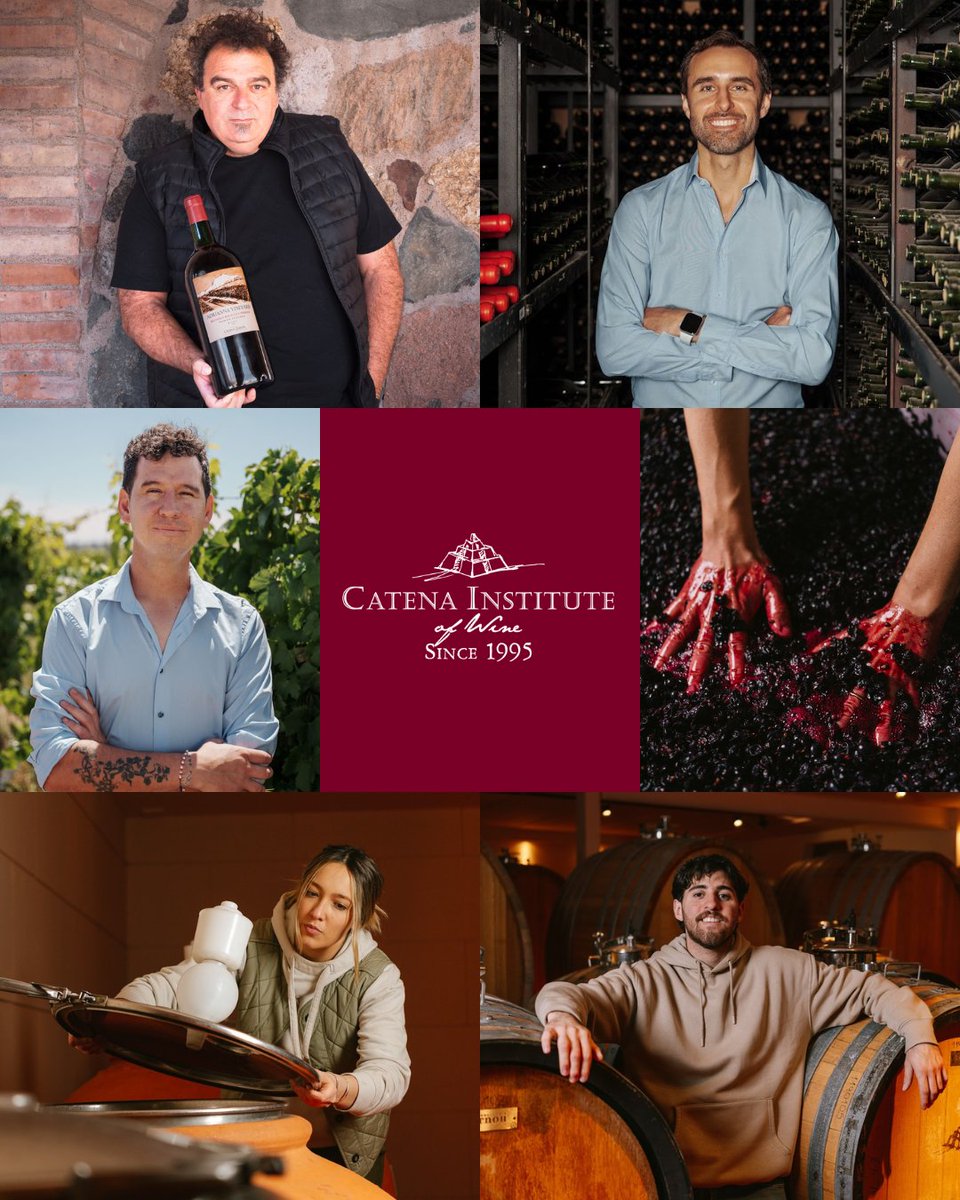
Why does Argentina mark Winemaker’s Day on September 7? It commemorates Quinta Normal, the first school that trained early wine professionals. At the Catena Institute, we carry that legacy forward through science, research and winemaking. This week, we celebrate our team.
Science helps us document—and preserve—viticultural heritage.
In 1997, @UCDavis researchers used DNA markers to show that Cabernet Sauvignon is the progeny of Cabernet Franc and Sauvignon Blanc.
- @ferbuscema
At @CatenaScience experiments like this are not about replacing nature with technology.
They are about understanding how climate conditions influence grape and wine quality, so we can better preserve nature, culture, and terroir in a changing climate.
How much shade is enough? We are comparing 17% and 50% shade nets with unnetted vines.
A preview of Miguel's work is featured in @SevenFiftyDaily. Check out the link: https://t.co/yVSx9suG0j
@LauraCatena@LuisReginato1@alevigilmalbec
Jenifer Cugat, viticulture specialist.
On International Pinot Noir Day 🍇, we’re sharing a recent scientific paper published in Food Chemistry: X, developed in collaboration with @univbourgeurope.
Across 13 wine regions and 3 consecutive vintages, including Burgundy and the Uco Valley, we studied how Pinot Noir and Chardonnay respond across different climates, elevations, and levels of water availability.
This international study provides new insights into how these varieties respond across different environments, giving us valuable information to better understand and prepare for the challenges of a changing climate. - Roy Urvieta
@LauraCatena@alevigilmalbec@ferbuscema@royurvieta
#PinotNoirDay
Open-access scientific paper:
https://t.co/X8xFEOhG9f
Las variedades criollas no son una nota al pie en la historia del vino argentino.
Son un reservorio vivo de diversidad genética, cultural y territorial.
Preservarlas no es nostalgia: es una forma de mantener abiertas opciones para el futuro de la viticultura.
¡Gran trabajo!
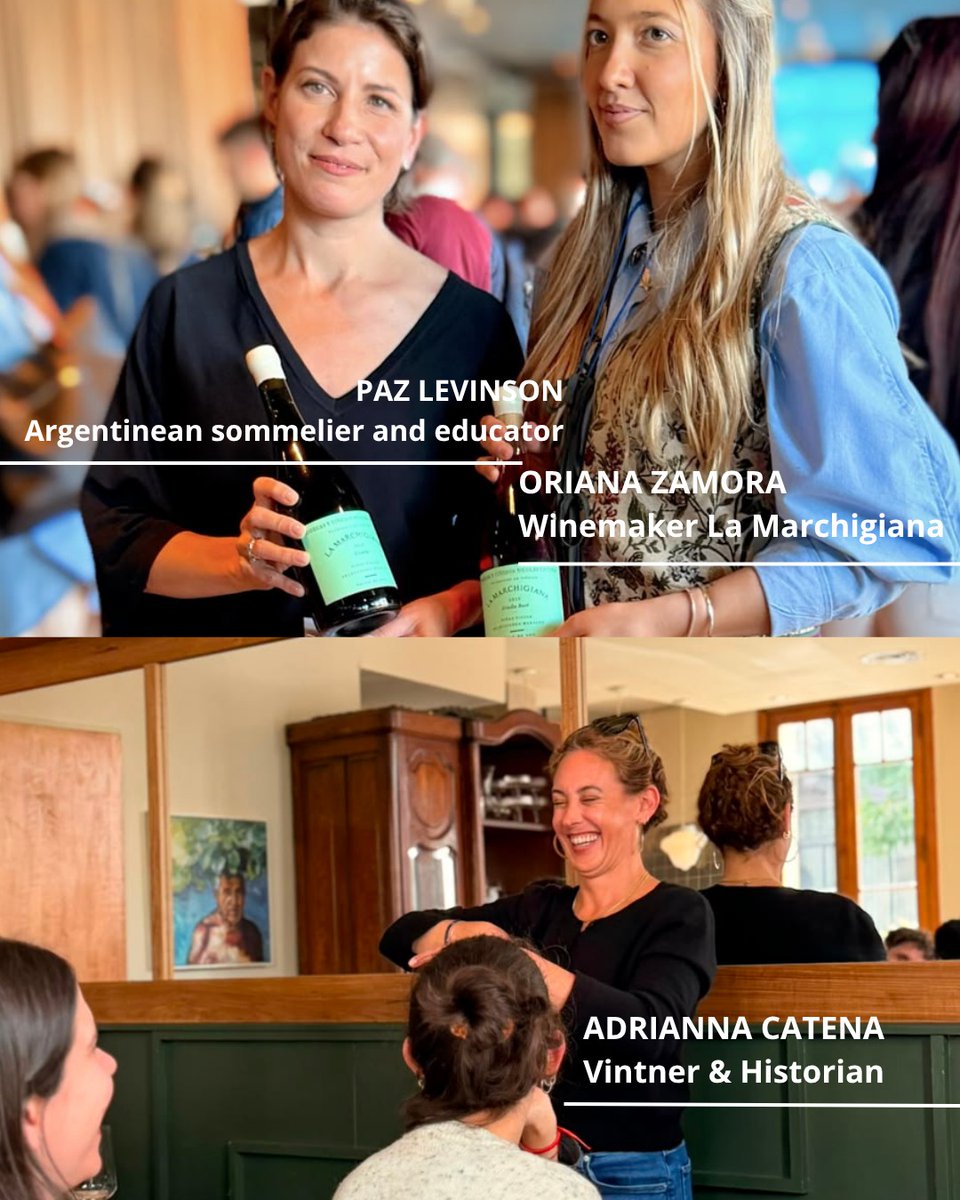
Did you know nearly 30% of Argentina’s vineyards are planted with #Criolla varieties? La Marchigiana explores old vines of Criolla varieties to preserve genetic diversity. This week in Buenos Aires, we shared our work at #ArgentinaReloaded. —Oriana Zamora, winemaker