Daily reflections on the Gospel, Divine Mercy, saints, feasts, prayers, and more. Presenting the beauty of the Catholic faith in a practical, down-to-earth way!
July 1: Saint Junípero Serra, Priest—USA Optional Memorial
1713–1784
Patron Saint of vocations, Hispanic-Americans, California
Canonized by Pope Francis on September 23, 2015
Quote:
I am writing this letter in farewell, while we are getting ready to leave the city of Cádiz and embark for Mexico. The day fixed upon is unknown to me, but the trunks containing our baggage are locked and strapped, and they say that after two, three, or possibly four days, the ship called Villasota, in which we are to embark, will sail…Friend of my heart, on this occasion of my departure, words cannot express the feelings of affection that overwhelm me. I want to ask you again to do me the favor of consoling my parents, who, I know, are going through a great sorrow. I wish I could give them some of the happiness that is mine: and I feel that they would urge me to go ahead and never to turn back. Tell them that the dignity of Apostolic Preacher, especially when united with the actual duty, is the highest vocation they could have wished for me to follow… ~Letter of Saint Junípero Serra
Reflection: Miguel José Serra y Ferrer was born as the third of five children in the village of Petra, on the island of Majorca, Spain, in the Mediterranean Sea. In his youth, he worked on the family farm but frequently visited the nearby Franciscan church where he was enrolled in school. The friars were so impressed with him that they encouraged him to join them in their vocation. Around the age of sixteen, Miguel moved to Palma, the capital of Majorca, where he entered the Franciscan order. After taking his vows, he was given the name Junípero, in honor of one of Saint Francis of Assisi’s companions. At the age of twenty-four, Brother Junípero was ordained a priest.
Following his ordination, Father Junípero continued his studies, earning a license in philosophy and a doctorate in theology. Word of his gifts as a brilliant scholar and preacher quickly spread, leading to his appointment as a teacher at the University of Palma. He lived a prayerful, penitential, and simple life as a friar, and enjoyed reading about Franciscan missionaries in his free time. These missionaries so inspired Father Junípero that, in 1748, at the age of thirty-five, he requested permission from his superiors to travel to New Spain, modern-day Mexico, to become a missionary himself. Permission was granted.
In 1749, Father Junípero sailed to the Spanish port city of Cádiz where he and a close companion waited for a Spanish ship to take them to New Spain. While at the port, he wrote a touching letter to his parents, whom he knew he would never see again, encouraging them to rejoice in the mission on which he was being sent. After setting sail on August 30, Father Junípero arrived in Veracruz, modern-day Mexico, on December 7, 1749. He spent the next month walking nearly 300 miles to Mexico City through tropical forests, plains, and high mountain ranges, enduring extreme weather conditions. During the journey, Father Junípero was bitten either by a bug or a snake, leaving him with a serious leg wound that would plague him for the rest of his life. Despite this, in the decades that followed, Father Junípero would travel many thousands of miles on foot, up and down the coast of what are today northern Mexico and southern California.
After arriving in Mexico City, Father Junípero was assigned to the Sierra Gorda Missions, just north of Mexico City, where he worked for the next nine years. During that time, he helped to found five missions among the indigenous Pame people, learning their language, evangelizing, baptizing, and teaching them European skills, such as farming, construction, and governance.
From 1758–1767, Father Junípero served as Guardian of the Convent of San Fernando in Mexico City, where he also taught. During this time, he made frequent trips into the surrounding mission territory to evangelize the natives. In 1767, he was sent to the Baja Peninsula where the Jesuits had founded eighteen missions over the previous seventy years. With the Jesuits suppressed and expelled from all Spanish territories in 1767, the Baja missions were turned over to the Franciscans with Father Junípero put in charge. He oversaw those missions until 1769 when he was sent north into what is modern-day California (Alta California), to assist with Spanish expansion by establishing new missions among those who had never heard the Gospel. This was Father Junípero’s dream. Up until that point, his missionary activity was directed towards those who had already begun to be evangelized. In Alta California, however, he and his companions would be the first to preach Christ to the native people.
At the age of fifty-six, Father Junípero and his companions made a 900-mile journey north into the unknown world of Alta California. In July of 1769, they arrived in the territory of what is now San Diego and founded the Mission of San Diego de Alcalá, named for the fifteenth-century Franciscan missionary Brother Diego of Alcalá. This was the first of twenty-one missions that would be founded along the California coast over the next fifteen years, nine of which Father Junípero founded himself.
Though the establishment of the California missions by Father Junípero and his Franciscan companions was for the purpose of evangelization, the Kingdom of Spain had ulterior motives. Alongside the missions, military forts and civilian towns were established. The Spanish government wanted to colonize California for economic and political reasons. By claiming California for itself and establishing a military presence there, Russia, England, and other nations were deterred from claiming the land. Despite the Spanish government’s ulterior motives, Father Junípero and the Franciscans worked tirelessly to treat the natives as true children of God.
A mission was set up as a self-contained area of land and buildings. When the natives chose to join the mission, they separated themselves from their former community and lived on the mission lands, in housing provided by the Friars. They were not only taught about the faith and instructed in prayer, they were also taught how to raise and harvest crops, tend animals, and European trades such as weaving and construction.
The policies that governed the California missions have drawn modern-day critics. For example, to guard the newly developing faith within the converts, the friars had strict rules about the converts leaving and returning to their native communities, even for visits. Punishment for such unapproved departures often included corporal punishment. Many natives also suffered from exposure to diseases that the European settlers brought with them, to which the natives had not developed immunity. While twenty-first-century anti-Catholic critics tend to overemphasize and misrepresent these aspects of the missions, it is abundantly clear from his diary and many letters that Father Junípero and his friars had a deep love for the native people and sought only to introduce them to the saving grace of Christ, which they did in great numbers. By the time of his death, it is estimated that Father Junípero had personally baptized as many as 6,000 natives, with many more thousands being baptized by the other friars at the missions he established. Father Junípero also succeeded in protecting the natives from the many abuses of the Spanish military and colonizers, one time even walking 1,800 miles to Mexico City to convince the Spanish Viceroy to enact a new bill of rights for the native people. This “Reglamento” was the first of its kind, written more than 150 years before the United States government would guarantee Native Americans similar rights.
As we honor Saint Junípero, we also honor his companion friars, as well as all those who came to receive the gift of eternal salvation through them. Had Saint Junípero chosen to remain in Spain, living a more comfortable and easy life, the evangelization effort in California might have taken a different turn. Today, many souls have been saved on account of his selfless sacrifices, and those souls are honored as much today as is Saint Junípero Serra.
Prayer: Saint Junípero Serra, though you had a wonderful life in Spain, God spoke to your heart, calling you to leave everything behind and to bring the saving love of Christ to those who had never heard the Gospel. You responded with generosity and selfless courage. Please pray for me, that I will be open to all that God asks of me and will respond to God’s will with the same generosity and resolve as you did. Saint Junípero Serra, pray for me. Jesus, I trust in You.
Image: St Junipero Serra as Evangelist, by Lawrence OP, CC BY-NC-ND 2.0.
Read entire reflection: https://t.co/bdejPij7yD
#SaintoftheDay
Being Set Free!
July 1, 2026
Wednesday of the Thirteenth Week in Ordinary Time
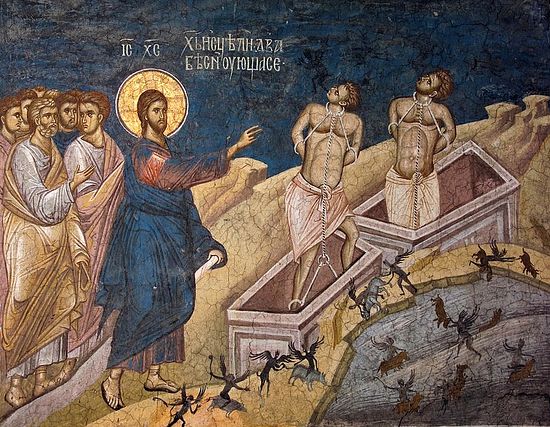
When Jesus came to the territory of the Gadarenes, two demoniacs who were coming from the tombs met him. They were so savage that no one could travel by that road. They cried out, “What have you to do with us, Son of God? Have you come here to torment us before the appointed time?” Matthew 8:28–29
After delivering His Sermon on the Mount and performing many miracles among His own people, Jesus intentionally journeys across the Sea of Galilee into Gentile territory—the region of the Gadarenes, near Gadara, a town within the pagan Decapolis. His choice underscores His mission to extend salvation beyond Israel.
The location where Jesus and His disciples arrived was no accident. It was a desolate area filled with tombs, symbols of death, impurity, and spiritual desolation. According to Jewish law, contact with graves rendered one ritually unclean (cf. Numbers 19:16). Spiritually, these tombs vividly illustrate the isolation, emptiness, and lifelessness that sin imposes upon the human soul.
The note that the demoniacs “were so savage that no one could travel by that road” further reveals the effects of grave sin. Evil seeks dominance and destruction; it isolates, destroys relationships, and makes peaceful coexistence impossible. This passage reflects the devastating consequences of allowing evil to reign unchecked within one’s soul: It becomes uncontrollable, violent, and destructive. Evil never leads to peace, but rather to chaos, isolation, and fear.
By entering into this territory, our Lord reveals His willingness to enter the isolation and desolation we all experience due to sin and every evil attack. He comes to us precisely when we are at our worst, most vulnerable, to set us free from the grip of the evil one and from all of his destructive works.
When these two men see Jesus, the demons possessing them immediately recognize Him as the Son of God and acknowledge His authority over them. Their recognition raises an important spiritual question for each of us: Do I also recognize Christ’s presence in my life? Am I aware of His divine authority over sin and evil, and do I trust in His desire and power to set me free?
When the demons ask Jesus, “Have you come here to torment us before the appointed time?”, they reveal their full knowledge of their ultimate fate: eternal damnation. They understood this clearly because, even after their fall, demons retain their natural angelic powers. Among these powers is their exceptional intelligence and their capacity to tempt humans by subtly suggesting deceptive thoughts, drawing us persistently away from God’s truth.
Because demons know their eternal fate with clarity, they seek to use their intellect and suggestive powers to lead us into the very despair they themselves experience. They have no hope of eternal life. Out of their hatred for God and humanity, they attempt to conform us to their hopelessness, convincing us that we cannot escape sin, that hope is lost, and that we are doomed to misery.
Only our Lord can shatter these demonic lies. Only Christ can break the chains of despair, isolation, and sin. By setting these two demoniacs free, Jesus illustrates His deep longing to do the same for us. By demonstrating His authority over the most severe effects of evil, Jesus reveals His absolute authority over every evil we encounter: every sin, temptation, oppressive thought, confusion, and especially despair.
Reflect today on Jesus’ choice to cross the Sea of Galilee for the sole purpose of setting these two demoniacs free from their oppression. Our Lord journeys to you with the same resolve. What is it that oppresses you? What thoughts tempt you to fear or despair? What sins do you habitually struggle with? Jesus wants to enter into every form of isolation and desolation you experience. Look for Him, recognize Him when He comes, profess your faith in His authority, and let Him fulfill His deepest desire by setting you free.
Most powerful Lord, You have all authority over evil. In my weakness, I cry out to You and plead for Your mercy. Please set me free, O Lord, and protect me from the evil one. Forgive my sins and restore me to deeper communion with You and all Your children. Jesus, I trust in You.
Image: Serbia. Kosovo. Visoki Dečani. XIV century
Read entire reflection: https://t.co/gy1Mha1FNO
#GospelOfTheDay
Reflection 182: Wisdom to Penetrate the Secrets of Pride
Pride can consume us. When it does, all we think about is ourselves and our own pain. Perhaps you can relate to this. Maybe you’ve encountered a wound and you sit and sulk over that wound. It creates bitterness in your heart and you seek to heal that wound. But when this happens, it is often our pride that leads us to remedy hurt through a form of revenge, anger or self-pity. We can even fool ourselves into thinking that our desire to solve our problem and rid ourselves of the hurt is justified by God. But if you are willing to let the Lord penetrate the inner secret of your soul, you will see that your motivation in many things is your wounded pride. This is not the solution. What is needed is Mercy. Mercy solves every problem. First, you must seek Mercy from God, then you must offer it unconditionally to others. There is no other way to resolve the hurt and confusion present in your soul. This is a hard lesson to learn, but necessary (See Diary #958).
What is it that motivates you? Perhaps you have some interior obsession that you can’t seem to shake. Perhaps it lingers in your mind day and night. Be attentive to this and identify it as your own sin. Do not hesitate to humble yourself to the fullest extent and do not be afraid to take ownership of the pain you feel. Pointing the finger at another does not heal and does not remedy anything. We are solely responsible as a result of our pride. Seeing this is a grace of the Lord’s mysterious and unfathomable Mercy.
Lord, I cannot shake the anger, the hurt and the pain I feel at times. It is overwhelming and all-consuming, subtle and deceptive. But it is my sin, lurking within me drawing me from You, keeping me from true repentance. Lord, I do repent and I beg You to humble me so that I may love You with my whole being. Jesus, I trust in You.
Image: The story of the Bible from Genesis to Revelation, by Gustave Doré
Read entire reflection: https://t.co/PiDptziEfV
#divinemercy
June 30: First Martyrs of the Church of Rome—Optional Memorial
Died c. 64
Pre-Congregation canonizations
Quote:
At Rome, in the time of Nero, the commemoration of many holy martyrs, who were accused of having set fire to the city, and cruelly put to death in various manners by the emperor’s order. Some were covered with the skins of wild beasts and lacerated by dogs; others were fastened to crosses, others again were delivered to the flames to serve as torches in the night. All these were disciples of the Apostles, and the first fruits of the martyrs, which the Roman Church, a field so fertile in martyrs, offered to God before the death of the Apostles. ~Roman Martyrology
Reflection: Nero Claudius Caesar Augustus Germanicus was the fifth Roman Emperor who reigned from 54–68 A.D. He was known to be extravagant, impulsive, tyrannical, violent, and a madman. He murdered his first wife and even his own mother. In the year 64, when Nero was twenty-seven and had been Roman emperor for ten years, a fire broke out in Rome. The fire burned for nine days, destroying most of the city. Many believe that Nero himself had the fire set to make room for a new palace. When people started to question him, he blamed the Christians for the fire. At that time, Christians were a small minority within Rome and were seen as a menace and disruption to the traditional Roman way of life and the traditional Roman gods. Nero then systematically had as many Christians as he could arrested, tried, and murdered in the most brutal ways. One ancient pagan historian from that time named Tacitus recounts it this way:
Nero fastened the guilt and inflicted the most exquisite tortures on a class hated for their abominations, called Christians by the populace…Accordingly, an arrest was first made of all who pleaded guilty; then, upon their information, an immense multitude was convicted, not so much of the crime of firing the city, as of hatred against mankind. Mockery of every sort was added to their deaths. Covered with the skins of beasts, they were torn by dogs and perished, or were nailed to crosses, or were doomed to the flames and burnt, to serve as a nightly illumination, when daylight had expired.
Nero offered his gardens for the spectacle, and was exhibiting a show in the circus, while he mingled with the people in the dress of a charioteer or stood aloft on a car. Hence, even for criminals who deserved extreme and exemplary punishment, there arose a feeling of compassion; for it was not, as it seemed, for the public good, but to glut one man’s cruelty, that they were being destroyed.
These first Christian martyrs in the city of Rome are remembered and honored by the Church today. Saints Peter and Paul were among them, but numerous unknown others also gave their lives. Some of them were sewn into the bellies of animals while still alive and then fed to wild dogs to be torn to pieces. Others were coated with wax and lit on fire at night as torches in Nero’s gardens while he entertained guests. Still others were crucified like our Lord. These persecutions went beyond mere execution for a crime. They manifested an evil of the most diabolical nature.
Though these martyrdoms were expected to eliminate Christianity from the Roman Empire, those expectations were never realized. Instead, the courageous witness of these men and women planted and watered the seeds of faith that would continue to grow, blossom, and produce an abundance of good fruit.
For nearly three centuries, the persecution of Christians varied under different Roman Emperors. The most severe persecutions within the empire would occur two centuries later during the reigns of Emperors Decius (249–251) and Diocletian (284–305). It was not until the year 313, when Emperor Constantine the Great legalized Christianity with the Edict of Milan, that imperial persecutions ceased.
Today’s feast is strategically placed just one day after the Church honors Saints Peter and Paul, the two most notable martyrs during this Neronian persecution. By celebrating Saints Peter and Paul first, followed by a feast for every other martyr who died alongside them, the Church invites us to place ourselves not only in the shadow of Saints Peter and Paul, but also to join with these many unknown Christians who shed their blood for their faith. Though the physical shedding of one’s blood for Christ is a rare occurrence today, the depth of resolve Christians must have is the same. Every Christian, of every time and circumstance, must be so completely devoted to Christ that nothing, not even martyrdom, must deter us from our resolve.
As we ponder these unnamed heroes of our faith, prayerfully unite yourself to them. Look to Saints Peter and Paul as your chief inspiration and then resolve to become one of these unnamed witnesses who follow behind them. In Heaven, every sacrifice will be known and will become a cause for the glory of God. For now, many of our sacrifices are hidden and known only to us and to God. Rejoice in your own hidden sacrifices and know that those sacrifices unite you with those whom we honor today.
Prayer: Holy First Martyrs of Rome, you each endured much torment, hatred, and abuse, ultimately shedding your blood as the result of your deep courage and love of Christ. Please pray for me, that I may be counted among your numbers in Heaven by manifesting the same depth of love and courage that you did. First Martyrs of Rome, pray for me. Jesus, I trust in You.
Read entire reflection: https://t.co/q4fkwuRHAN
#SaintoftheDay
Rejecting the Storm of Vengeance
June 30, 2026
Tuesday of the Thirteenth Week in Ordinary Time
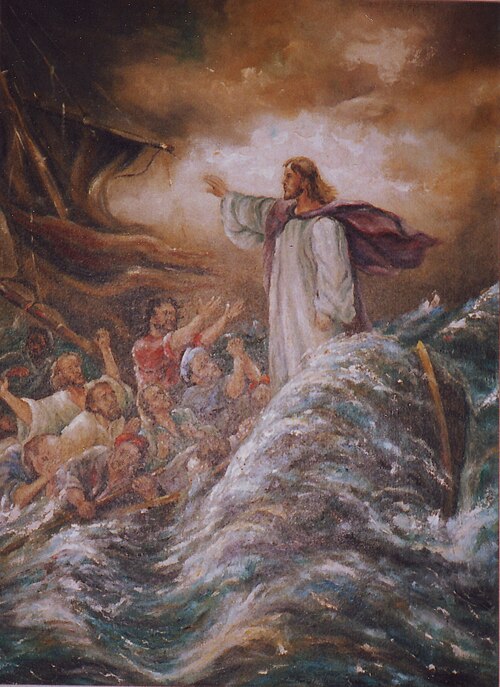
As Jesus got into a boat, his disciples followed him. Suddenly a violent storm came up on the sea, so that the boat was being swamped by waves; but he was asleep. They came and woke him, saying, “Lord, save us! We are perishing!” He said to them, “Why are you terrified, O you of little faith?” Then he got up, rebuked the winds and the sea, and there was great calm. Matthew 8:23–26
While we should understand Jesus’ teachings and actions in a literal sense, the Early Church Fathers also point to a deeper, symbolic meaning—what is known as the Spiritual Sense of Scripture. As the inspired Word of God, the Gospels contain limitless depth and wisdom. The message found in Jesus’ words and actions can be applied to any part of our lives and answer any questions we struggle with.
One such question is how we deal with the storms of life. Some storms come upon us externally, through illness, persecution, or unforeseen trials. When a storm sets in, we often react with fear and anxiety. When the storm is of our own making, such as from sin, the trial is often more severe. Though fear and anxiety are often the ill effects of life’s storms, another more deadly fruit can also arise: the anger that leads to vengeance.
In his preaching on this passage, Saint Augustine offers such an insight: “You have heard an insult—it is the wind; you feel anger—it is the wave. When the wind blows and the waves rise, the ship is in danger; so too, when insults stir your heart, your soul is tossed about and put at risk” (Sermon 63 on the New Testament, 2).
Because we live and interact with sinful people every day, we will inevitably experience the “wind” of an insult which can lead to the “wave” of angry feelings. When that happens, the question is: What am I going to do with that angry feeling? Augustine warns that insults, which stir up anger, pose a real spiritual danger. He continues: “If, upon hearing an insult, you desire vengeance, the storm swells within you. And behold, if you take vengeance, you may think you have triumphed—but in rejoicing over another’s harm, you have suffered shipwreck yourself.”
At some point, we have all allowed a storm to swell within us by seeking vengeance, which inevitably leads to our downfall. When anger gives way to irrational arguments, judgment, condemnation, or passive aggression—such as the “silent treatment”—our “boat” begins to sink.
Just as the wind and waves battered the Apostles, leading them to fear, so too does anger batter us, driving us toward vengeance and making things worse. In such moments, there is only one remedy: to cry out with the Apostles, “Lord, save us! We are perishing!”
What a perfect prayer in the midst of a trial that is turning into a storm! Had the Apostles ignored the presence of the Son of God—who was with them, asleep, awaiting their call—the storm would have continued, and they might have been shipwrecked. But they cried out, seeing that things were getting out of control.
When Jesus woke up, He first gently rebuked them, saying, “Why are you terrified, O you of little faith?” Applying this to our analogy of anger and vengeance, we can hear our Lord asking, “Why did you allow anger to take hold of you and swell into a storm?” Though Jesus, in His mercy, can calm the storm caused by our sin, a deep and abiding faith helps us to forgive the initial insult before it takes root, preventing it from growing into anger and vengeance.
Reflect today on any initial “wind” that tempts you toward anger. Choose to forgive and offer mercy in return. If a storm is already brewing in your heart, cry out to Jesus as the Apostles did. Though at times it might seem as if our Lord is asleep, He is always with you. Reject fear and anger the moment they begin to stir; but if they do arise, call upon Him in faith: “Lord, save me! I am perishing!” He will calm the storm.
My sleeping Lord, I know that You are always with me, calling me to faith and obedience to Your Word. Strengthen me in moments of temptation, that I may remain faithful and choose mercy over vengeance. When storms arise from my sin, forgive me, Lord, and calm the tempest within, healing the wounds caused by my lack of faith. Jesus, I trust in You.
Image: Ernst Georg Bartsch, CC BY-SA 3.0, via Wikimedia Commons
Read entire reflection: https://t.co/WEc2ewRgxS
#GospelOfTheDay
Reflection 181: Holy Indifference
Does it matter what the Will of God is for you? That may sound like a strange question at first. But think about it. Does it matter what God wills of you? What if He were to call you to constant work? Or what if He were to call you to a restful repose? Or what if He were to fill you with delight? Or remove all delight from your soul? Or call you to be extolled and honored in the sight of many? Or draw you into the desert of solitude and hiddenness?
The truth is that it matters not what God’s call is in our lives, it only matters that He calls. We must strive for a holy indifference in our lives. A “holy” indifference is not indifference to God and His Will; rather, a holy indifference is a detachment to all preferences regarding what the Lord asks of us. We must be ready for all but we must be willing to receive nothing. The goal is to be ready for God and His Will, whatever it may be (See Diary #952).
Reflect upon whether or not you are ready and willing to accept whatever God wills of you. What He wills is not as important as the fact that He wills. This may be a difficult subtlety to grasp at first. But it’s important to understand. The simple truth is that we should be ready for anything God asks of us without clinging to our personal preference. If you can achieve this level of detachment, the Mercy of God will begin to flow in abundance in your life, and through you into the lives of many others.
Lord, I surrender to You all my selfish preferences in life. I give You complete freedom to do whatever You will in my life. No matter what You ask of me, I accept, and no matter what You take from me, I give to You. Give me, dear Lord, the grace of a holy indifference so that I may be free to love You and Your holy Will more than life itself. Jesus, I trust in You.
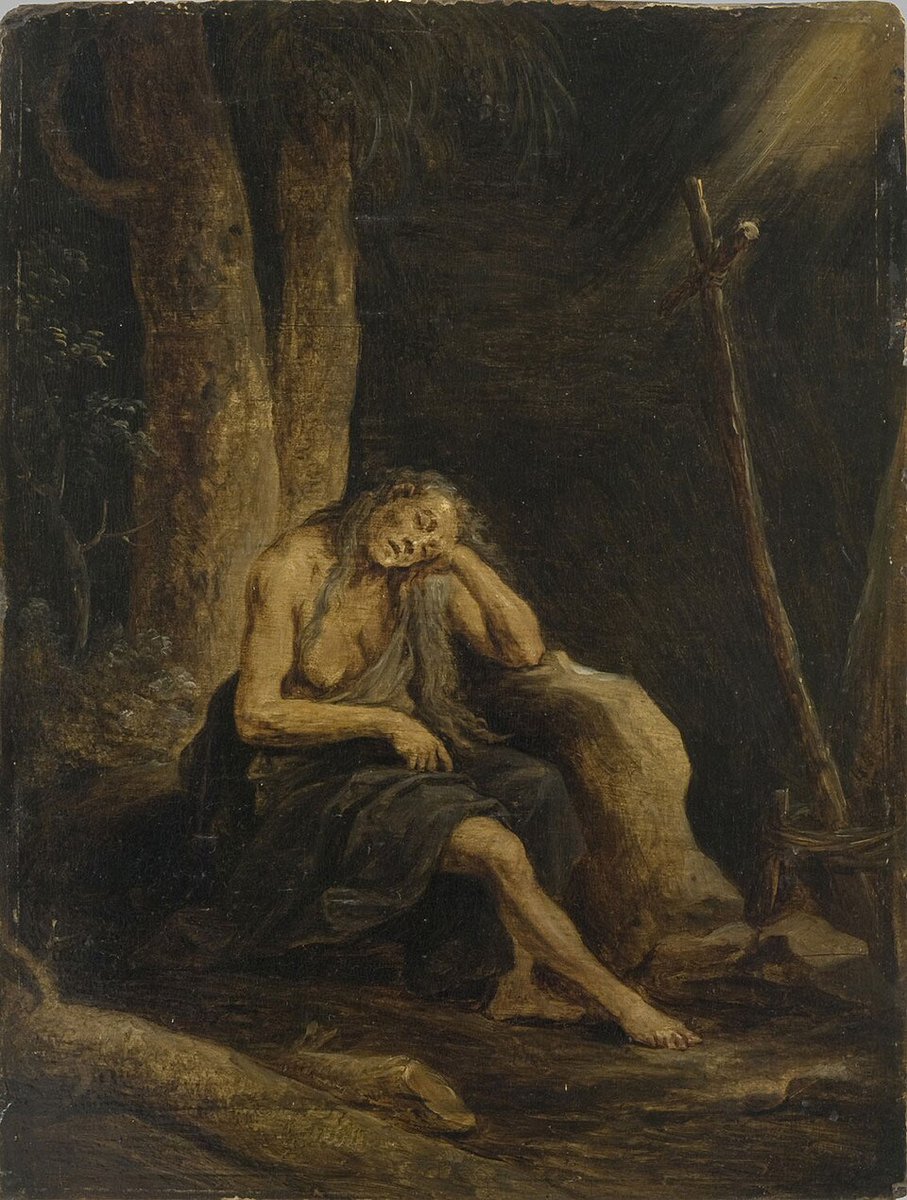
Image: Saint Mary of Egypt in the Desert, by David Teniers the Younger
Read entire reflection: https://t.co/qZDGMo59X7
#DivineMercy
June 29: Saints Peter and Paul, Apostles—Solemnity
Saint Peter: c. 1–c. 64
Patron Saint of Rome, bakers, brickmakers, masons, bridge-builders, butchers, clockmakers, cobblers, fishermen, harvesters, watchmakers, locksmiths, netmakers, the papacy, and the Universal Church
Invoked against feet problems, fevers, and frenzy
Saint Paul: c. 3–c. 64
Patron Saint of Rome, evangelists, theologians, musicians, public relations personnel, writers, publishers, and reporters; rope-, saddle-, and tentmakers; Gentiles; Cursillo movement; and Catholic Action
Invoked against snakes and hailstorms
Pre-Congregation canonizations
Quote:
Both apostles share the same feast day, for these two were one; and even though they suffered on different days, they were as one. Peter went first, and Paul followed. And so we celebrate this day made holy for us by the apostles’ blood. Let us embrace what they believed, their life, their labors, their sufferings, their preaching, and their confession of faith. ~Saint Augustine of Hippo
Reflection: According to ancient Roman mythology, in the seventh century BC, King Numitor was forcefully removed from his throne by his brother, Amulius. Amulius then forced Numitor’s daughter, Rhea Silvia, to become a Vestal Virgin so that she would not have children who could later attempt to reclaim the throne. However, one myth relates that Mars, the god of war, impregnated Rhea Silvia, and she bore twin sons Romulus and Remus. Amulius threw them into the river, but they were rescued by a she-wolf. When they grew up, they killed Amulius and restored their grandfather to his throne. They then decided to found a city but disagreed on its location, so Romulus killed Remus and founded a city, calling it Rome, after his own name. After his death, or ascension, he was said to have been deified as the god Quirinus. To this day, one of the seven hills of Rome is named after him, the Quirinal Hill. This ancient myth helped make up the religious beliefs of the people of Rome at the time when today’s saints, Saints Peter and Paul, entered Rome and preached the Gospel, laying down their lives as martyrs.
Myths that explained a city’s founding were important. These myths were often central aspects to the cultural and historical festivities in ancient times. This was especially true in Rome. Therefore, as the early Church began to take root in Rome, rather than dismissing this cultural practice, the early Church Christianized the story of Romulus and Remus by introducing a new festival for the new founders of Rome, Peter and Paul, on June 29.
Simon was born in Bethsaida, near the Sea of Galilee. He was a fisherman by trade, along with his brother Andrew. Matthew’s Gospel records that Simon and Andrew were the first whom Jesus invited to follow Him. After Jesus was baptized by John the Baptist and completed His forty days of prayer and fasting in the desert, He went to the Sea of Galilee, saw Simon and Andrew fishing and called to them saying, “Come after me, and I will make you fishers of men” (Matthew 4:19). At that, these two brothers dropped everything and became Jesus’ first disciples. John’s Gospel relates a slightly different timeline, stating that Andrew first followed Jesus and brought Simon to Jesus the next day. When Jesus met Simon, He said, “‘You are Simon the son of John; you will be called Cephas (which is translated Peter)” (John 1:42). Matthew’s Gospel relates that Jesus changed Simon’s name to Peter when He said to him, “I say to you, you are Peter, and upon this rock I will build my church, and the gates of the netherworld shall not prevail against it. I will give you the keys to the kingdom of heaven. Whatever you bind on earth shall be bound in heaven; and whatever you loose on earth shall be loosed in heaven” (Matthew 16:18–19).
With his new name and unique spiritual authority in which he held the “keys to the kingdom of heaven,” Peter emerged as the central leader of the Church after Pentecost. He spent about a decade in Jerusalem, preaching powerfully, performing miracles, and converting many. He eventually traveled to Rome where he established the Church there, becoming its first bishop. Around the year 64, he was martyred during the persecutions of Emperor Nero. Tradition states that Peter requested to be crucified upside down because he did not consider himself to be worthy of dying the same way Jesus died. His tomb is located under the main altar of Saint Peter’s Basilica.
Saul was born as a Roman citizen in Tarsus, modern-day Turkey. As a young man, he went to Jerusalem to study at the renowned school of the rabbi Gamaliel. After Jesus’ ascension into Heaven, Saul became one of the fiercest persecutors of the early Church, being partly responsible for the death of the proto-martyr Saint Stephen (Acts 7:58). However, within a few years, as Saul was traveling to Damascus to persecute other Christians, he was knocked to the ground and struck blind. He heard Jesus say to him, “Saul, Saul, why are you persecuting me?” (Acts 9:4). Jesus then directed him to a disciple of the Lord in Damascus named Ananias who baptized Saul. Saul spent about three years in Arabia where he went through an intense time of prayer and study, eventually returning to Damascus and then to Jerusalem where Barnabus introduced him to the other disciples, testifying to the veracity of his conversion.
In Jerusalem, Saul began to use his Roman name, Paul, and then spent approximately the next ten years as a missionary throughout the Mediterranean. Back in Jerusalem, he was imprisoned for a couple of years and then was sent to Rome for trial since he was a Roman citizen. In Rome, he met up with Saint Peter. According to tradition, Paul was beheaded just outside the city of Rome. When his head fell to the ground, it bounced three times, each time giving rise to a spring of water. The place is marked today by the Abbey of the Three Fountains.
Saints Peter and Paul are considered the foundational pillars of the Church. Peter represents the stability of the Church and the office of the Vicar of Christ. Paul represents the mission of evangelization that was entrusted to the Church by Jesus Himself. He was also the Church’s first theologian, which is seen in his numerous letters that expound on the Gospels. Though unlikely, one tradition states that they were both martyred on June 29, in Rome, making them twin martyrs. Their twin martyrdom reminds us that the Church must be both stable and mission-oriented. It must remain grounded in the ancient Truth, yet grow and flower with an ongoing understanding of the mysteries of faith.
As we honor these two pillars of the Church, recall the fact that, though they are great saints, they were also ordinary men called to extraordinary vocations. They responded and God used them in ways they could have never imagined. Ponder your own calling in light of theirs and resolve to lay your life down for the Church, joining yourself to these two men so that God can continue their holy mission through you.
Prayer: Saints Peter and Paul, once Christ called you, you responded with total abandonment to His holy will. Through you, the Church was founded and began to grow. Please pray for me, that I will fully devote myself to the ongoing mission of the Church, so that God can use me according to His holy will. Saints Peter and Paul, pray for me. Jesus, I trust in You.
Image:Madonna and Child with Sts. Peter and Paul by, Giuseppe Cesari
Read entire reflection: https://t.co/PI1YjK6K2p
#SaintoftheDay
The Church Shall Prevail
Monday, June 29, 2026
Solemnity of Saints Peter and Paul, Apostles
“Blessed are you, Simon son of Jonah. For flesh and blood has not revealed this to you, but my heavenly Father. And so I say to you, you are Peter, and upon this rock I will build my Church, and the gates of the netherworld shall not prevail against it. I will give you the keys to the Kingdom of heaven. Whatever you bind on earth shall be bound in heaven; and whatever you loose on earth shall be loosed in heaven.” Matthew 16:17–19
Though the Church will suffer in many ways, She will ultimately overcome all things. As we celebrate the Solemnity of Saints Peter and Paul, we are reminded of this truth by pondering their lives as two of the greatest pillars of the Church. Neither imprisonments, persecutions, nor apparent defeats kept them from fulfilling the mission God gave them. Likewise, the Church will never be overcome, for She remains under the guardianship of divine providence.
The Church shall prevail for one simple reason: Jesus said so. He founded the Church upon the Twelve Apostles, giving unique and supreme authority to Peter: “I will give you the keys to the Kingdom of heaven. Whatever you bind on earth shall be bound in heaven; and whatever you loose on earth shall be loosed in heaven.” Though Peter’s given name was Simon, Jesus changed it to Peter—Petros in Greek and Cephas in Aramaic. Both terms can be used as a man’s name but also mean “rock.” Hence, Peter, and the Apostles in union with him, become the rock and immovable foundation upon which the Church is built.
By giving Peter “the keys to the Kingdom of heaven,” Jesus granted him singular authority to teach, govern, and sanctify with divine authority. This authority did not end with Peter; it is passed on to his successors through the office of bishop. Since Peter died in Rome, Rome remains the see of the Church’s divinely established governance.
Though Peter offers the Church the stability and clarity necessary as the immovable rock foundation, Paul reflects the Church’s missionary role to bring the Gospel to the ends of the earth. This is seen especially in today’s second reading, where Paul, facing the end of his earthly life, proclaims that he has “competed well,” “finished the race,” and “kept the faith.” His life was poured out as a libation for Christ, tirelessly laboring to make the Gospel known to all nations. While Peter ensures the Church’s unity and fidelity to divine truth, Paul embodies her zeal to spread that truth to every corner of the world, calling all people into communion with Christ and His Church.
Peter and Paul remain spiritually alive and active today through the unbroken tradition God established through them. Often at World Youth Day, when the Holy Father is present, young people chant, “You are Peter!” It is a beautiful expression of their faith in this foundational truth Christ established. Though every pope is a sinner like the rest of humanity, faith leads us to look beyond human weakness to see the successor of Saint Peter, the solid rock to whom Christ entrusted the keys to the Kingdom of Heaven. Thus, Peter’s mission remains alive today, not only in the person of the Holy Father, but also in our faith in his divinely given authority.
Saint Paul remains alive today through the ongoing fulfillment of the mission God gave him. His burning zeal to proclaim the Gospel lives on in every missionary endeavor, every act of evangelization, and every effort to spread the Good News to the ends of the earth. His spirit is especially present in those who courageously preach the Word, catechize the young, defend the faith, and labor tirelessly for the salvation of souls. Just as Peter ensures unity and fidelity, Paul inspires action and outreach, so that the Church may extend Christ’s Kingdom to every land and heart.
Reflect today on these pillars of the Church and acknowledge the living witness they gave and continue to give. Renew your faith in Peter, alive in the Holy Father, professing him as the rock foundation. See Paul at work by recognizing the missionary activity of the Church, carried out by countless souls with zeal and courage. Allow their witness to inspire within you a deeper love for the Church, and commit yourself anew to the mission entrusted to you: to remain firmly rooted in the truth and to bring that truth to the world with boldness and charity.
Saints Peter and Paul, God called you in powerful and unique ways, making you pillars of the Church. Please pray for us, and for the entire Church, that we may continue the mission Christ entrusted to you. I especially entrust myself to that mission and pray that I may remain faithful to it in imitation of your example. Saints Peter and Paul, pray for us. Jesus, I trust in You.
Image: Saint Peter & Saint Paul, by Lawrence OP, CC BY-NC-ND 2.0.
Read entire reflection: https://t.co/LtqydbjZf0
#GospelOfTheDay
Reflection 180: The Passion of Jesus
We who are familiar with the Gospels may suffer, at times, from a certain indifference to the sufferings of Christ. We hear the story read each year, have seen many images of the Passion, and as a result of this familiarity, we can fail to allow it to have the proper effect on our lives. But the Passion is real, it happened, and we should give it our full attention. Though it may not be pleasant, on one level, it is an act of love so mysterious that it requires much grace to enable us to penetrate its meaning and significance in our lives. Every scourge, ridicule, nail and thorn wounded not only our Lord’s body, but it caused excruciating pain to His soul. But every pain that He endured He took into His Heart and redeemed it, offering it to the Father for the salvation of all. We must see this great mystery of our faith and gaze upon it in awe and holy wonder (See Diary #948).
Have you gazed upon the suffering Jesus? Have you allowed yourself to see His pain and His suffering? Have you seen Him endure all in silence and acceptance? Reflect upon this incredible mystery of our faith this day and allow yourself to grow in love and compassion for Him who endured so much for you. Know that His suffering destroyed the effects of sin and transformed suffering itself into the instrument of His Divine Mercy.
Precious Lord, I thank You for Your suffering. For in this act You took human suffering into Your glorious soul and redeemed it. You endured the effects of my sin and said not a word. Lord, You paid the price for my sins and You did so with perfect love and resolve. Give me the grace, dear Lord, to embrace all that I suffer and to unite it to the redeeming power of Your holy Cross. In that unity, free me from my sins and pour forth Your abundance of Mercy. Jesus, I trust in You.
Image: Christ as the Suffering Redeemer, by Andrea Mantegna
Read entire reflection: https://t.co/EXfJb8X1Ld
#DivineMercy
Receiving and Expressing Love
June 28, 2026
Thirteenth Sunday in Ordinary Time (Year A)
Jesus said to his apostles: “Whoever loves father or mother more than me is not worthy of me, and whoever loves son or daughter more than me is not worthy of me; and whoever does not take up his cross and follow after me is not worthy of me.” Matthew 10:37–38
When a scribe approached Jesus and asked Him which of the commandments was the greatest, He replied: “‘You shall love the Lord your God with all your heart, with all your soul, with all your mind, and with all your strength.’ The second is this: ‘You shall love your neighbor as yourself.’ There is no other commandment greater than these” (Mark 12:30–31).
Today’s Gospel offers a similar teaching: We must love God above all else—even more than father, mother, son, or daughter. By contrasting love for God with love for family, Jesus is not diminishing familial affection; rather, He is revealing that the only way to truly love others is by loving God first.
Saint Thomas Aquinas teaches: “God must be loved above all things and before all others out of charity, for He is loved as the source of happiness, whereas our neighbor is loved as one who shares in that happiness along with us” (Summa Theologiae II-II, Q.26, A.2). In other words, God must be loved first because He is the ultimate cause and source of beatitude—the only true happiness. Though we are called to love our families and our neighbors, Christian charity dictates that we love them in relation to God—as fellow recipients of divine happiness.
One reason this Gospel is challenging is that our natural affections, though good, must be transformed by divine charity. It is natural to love our parents and children—God designed us with these affections. Even animals instinctively care for their offspring. But Jesus calls us to something higher: a love that is perfected by divine charity, transcending mere emotional attachment or duty. His teaching does not negate natural love; rather, it purifies, elevates, and directs it toward the highest good—God Himself.
When Jesus speaks of loving “father or mother” or “son or daughter” more than Him, He is addressing the inner conflict we sometimes experience in our emotions. When natural affection is not transformed by spiritual charity, the love we offer another can do more harm than good. Disordered affection replaces the ultimate good—God—with the lesser good of emotional attachment and human consolation. The real danger arises when our loved ones stray from God’s will, and we, out of misguided affection, affirm them in their error, thereby confirming them in a state lacking true beatitude.
The foundation of true love is this: God alone is the source of perfect happiness, for us and for our loved ones. Our belief in God transforms the way we love others. No longer do we merely seek their earthly comfort or emotional well-being; rather, we direct them to the eternal Good—God Himself—who alone fulfills every longing.
When we love God first, all our relationships are purified. Instead of loving others with human affection alone, we love them with the very love of God, seeking their ultimate good: eternal life in Him. This purified love does not exclude human affection; rather, it elevates and directs it, ensuring that our love is not merely sentimental but truly transformative through divine charity.
Reflect today on those closest to you—those whom God calls you to love with the highest form of love. Are your affections rightly ordered, or do they sometimes compete with the charity God desires to instill in you? If so, turn your heart to God. Seek to love Him above all else. Let Him become the object of your deepest love and desire. When God is first, His love will transform you from within, enabling you to love others not just with natural affection, but with the very love of Christ, leading them to the eternal joy of union with Him.
Lord of perfect charity, Your love is pure, holy, and beyond all understanding—so vast, so encompassing, that I will never fathom its depths. Draw me into this love, O Lord, that I may love You above all things. From that love, let the charity of Your Sacred Heart flow through me to others, so that in loving them, I love You. Jesus, I trust in You.
Photo by form PxHere, CC0
Read entire reflection: https://t.co/pxwzyF1dbK
#GospelOfTheDay
Reflection 179: Dealing with Interior Desolation
“The Lord giveth and the Lord taketh away…” (Job 1:21). How true this is. There are times in life when we experience the abundant consolation of God. It may be at moments of great family joy, or when we experience the unconditional love of another. At times we sense the powerful presence of God in our life of prayer and are filled with joy. But there are many other moments in life when God seems distant and our souls feel desolate. Do not worry about this. If this is caused by sin, then face that sin, confess it and move on. But if it’s not a result of any sin, then know it’s an opportunity for you to deepen your faith and your love of God despite how you feel. This is a true grace and we should be grateful that God loves us enough to call us to faith even when we feel very little inside (See Diary #943).
What do you experience in your soul right now? Do you sense the closeness of God and does that closeness give you great consolation? Or do you feel dry and desolate as if God is hidden from you? We must rejoice in each experience and know that God offers the grace we need for each moment. Renew your faith this day no matter how you feel. Do it especially in moments of much desolation. Your act of faith in those moments will open the gates of God’s Mercy to you and to the world more than you may realize.
Lord, I love You now and always and renew my love for You no matter how I feel. In good times and in difficult ones I choose to love You, to have faith in You and to trust in You. You are the God of consolation and the God of desolation. I choose You no matter what. Jesus, I trust in You.
Image: Saint Jerome in the Wilderness, by Pinturicchio
Read entire reflection: https://t.co/liuJW5QfrR
#DivineMercy
June 27: Saint Cyril of Alexandria, Bishop and Doctor—Optional Memorial
c. 376–444
Patron Saint of Alexandria, Egypt
Invoked against Christological heresies
Pre-Congregation canonization
Declared a Doctor of the Church by Pope Leo XIII in 1883
Quote:
The entire population of the city stood from dawn to dusk, waiting for the decision of the holy council. When they heard that the wretched man was deposed, they all began to cry out with one voice in praise of the holy council, glorifying God because the enemy of the faith had fallen. When we came out of the church, they made a procession ahead of us to the lodging house, for it was getting dark by this time, and even the women came out with incense to perfume the path before us. ~Letter of Saint Cyril, describing the Council of Ephesus, 431
Reflection: After Jesus’ life, death, and resurrection, it is believed that Saint Mark, the Evangelist and Gospel writer, preached in Alexandria, Egypt, thus establishing the Christian faith in that city. Alexandria, founded in 331 BC by Alexander the Great, was situated on the northern edge of Africa, along the coast of the Mediterranean Sea. This strategic location rapidly turned it into an important trade center for Egypt, as well as a renowned hub for science, the arts, and learning. In 30 BC, Alexandria became a province of the Roman Empire, a status it would maintain for the next 700 years.
Christianity was legalized in the Roman Empire by Constantine the Great in 313. After that, major centers of Christian learning, such as Rome, Jerusalem, Antioch, Constantinople, and Alexandria became the stage for intense debates and developments in theology. Notably, these debates often revolved around Christ’s divine and human natures, His relationship with the Father and the Holy Spirit, and the appropriate title for the Blessed Virgin Mary. The outcomes of these debates provided the Church with a clear and foundational understanding of faith, which continues to deepen and evolve even today.
The fourth century saw the emergence of the Arian heresy, which taught that the Son was subordinate to the Father and not co-eternal. Saint Athanasius, then Bishop of Alexandria, tirelessly fought this heresy, enduring years of exile as a result. After the defeat of Arianism, other heresies surfaced. Fifty years after Athanasius’ death, Bishop Cyril of Alexandria would battle Nestorianism.
Cyril was born in the town of Theodosius, about eighty-five miles east of Alexandria. Given its proximity to Alexandria, Theodosius shared in the rich Greco-Roman culture and learning. Its close location to the Nile Delta also meant that farming and fishing were common activities. As a youth, Cyril’s uncle, Theophilus, the Patriarch of Alexandria, ensured that Cyril received an excellent education in theology, philosophy, rhetoric, and science. However, his uncle was a controversial figure in the Church. Less of an intellectual and more of a politician, Theophilus was power-hungry, harsh, often antagonizing Jews and pagans, and was known for stirring up controversy and violence. He was even responsible for deposing Saint John Chrysostom as Patriarch of Constantinople.
Around the year 412, Cyril succeeded his uncle as Patriarch, quickly discovering the challenge of following in his controversial footsteps. After a group of violent monks murdered a prominent pagan philosopher, astronomer, and mathematician, Cyril was blamed, despite his lack of involvement. Being the nephew of Patriarch Theophilus had its drawbacks, and Cyril proceeded in his ministry with caution. He eventually moved out of the shadow of his uncle, establishing himself to be an intelligent and faithful servant of God and His Church. He began to write Scripture commentaries with theological precision, especially when it came to the nature of Christ, addressing the various heresies of the time. Within a decade of being a bishop, Cyril had established the reputation of being a trustworthy and articulate teacher of the faith.
In 428, the emperor appointed Nestorius as Patriarch of Constantinople. Shortly afterward, Patriarch Nestorius assigned a priest from Antioch to preach throughout Constantinople. The priest began challenging the widely accepted notion that Mary was rightly called the Mother of God (Theotokos), suggesting instead she should only be referred to as the Mother of Christ (Christotokos). This proclamation stirred controversy among the faithful in Constantinople, and news quickly spread across the empire, eventually reaching Patriarch Cyril, over 1,000 miles away in Alexandria.
Cyril vehemently disagreed with this new heresy, which later became known as Nestorianism. He began to preach and teach against it among his own people, clarifying that Mary was rightfully termed the Mother of God. He explained that this title was not solely about the Blessed Mother, but also about the essence of Christ. If Mary wasn’t the Mother of God, then Christ’s essence was divided. Nestorianism proposed that Jesus was a divine person somehow united with a distinct human person, and Mary was only the mother of His humanity. Cyril corrected this misinterpretation, emphasizing that there was only one Person in Christ, both human and divine. This made Mary not only the mother of her human Son but also the mother of His personhood, thereby justifying her title as the Mother of God. After teaching his people, Cyril wrote private letters to Nestorius to correct him. Nestorius rejected the correction. Consequently, Cyril broadened his correspondence, involving other bishops, members of the emperor’s court, and the pope in Rome. This pleased the faithful in Constantinople but enraged Nestorius. The pope investigated and authorized Cyril to deal with Nestorius with the pope’s authority.
In 431, the Roman emperor felt the need to intervene and called a Church Council in Ephesus to settle the dispute. Ephesian Christians were known for their devotion to the Mother of God, partly due to the deeply held tradition that Mary had settled in Ephesus later in life with Saint John. Thus, the council’s location signaled the emperor’s opposition to Nestorius. Once many of the bishops from across the empire had gathered, but before Nestorius and his supporters arrived, Cyril opened the council. He took the lead and eloquently articulated his position, which was consistent with the teachings of earlier Church Fathers. The bishops present at the council accepted his explanation and voted to condemn Nestorius. On arrival, Nestorius and his supporters were outraged that the council had proceeded without them. In retaliation, they held their own meeting, voted in opposition, and attempted to depose Cyril. When the emperor heard of this, his representative attempted to resolve the dispute by jailing both Nestorius and Cyril to force an agreement. Eventually, however, the emperor sided with Cyril, due to his popular support among the people. When Nestorius refused to accept this position, he was exiled to the Egyptian desert.
Upon returning to Alexandria, Cyril continued to write and teach. Later generations conferred upon him the titles “Guardian of Exactitude” and “Seal of the Fathers,” for he successfully synthesized the teachings of the Church Fathers who preceded him, applying those teachings to the present disputes. As we honor him today, ponder the significance of precision in your faith. Without precision that is consistent with all that has been taught before us, we risk failing to fully understand Christ. Reflect on your commitment to a deep and clear understanding of God and our faith, and reaffirm your fidelity to the truth.
Prayer: Saint Cyril, you were courageous, firm, and exact in your fidelity to the truth. You placed your gifts at the service of Christ and His Church, and edified the faith of the people of God. Please pray for me, that I will always remain steadfast in my fidelity to the truth, even to the minutest degree, so that I will more fully know and love our Lord, His Blessed Mother, and our one, holy, catholic, and apostolic faith. Saint Cyril of Alexandria, pray for me. Jesus, I trust in You.
Read entire reflection: https://t.co/qQdfpwekxf
#SaintoftheDay
Faith Beyond Expectations
June 27, 2026
Saturday of the Twelfth Week in Ordinary Time
When Jesus entered Capernaum, a centurion approached him and appealed to him, saying, “Lord, my servant is lying at home paralyzed, suffering dreadfully.” He said to him, “I will come and cure him.” The centurion said in reply, “Lord, I am not worthy to have you enter under my roof; only say the word and my servant will be healed.” Matthew 8:5–8
From the beginning of time, God continually reached out to humanity, calling them to Himself. After the Great Flood, God established a covenant with Abram—later named Abraham—who responded in faith and obedience. God promised him that his descendants would become a great nation and that “All the families of the earth will find blessing” in him (Genesis 12:3). In today’s Gospel, we see a sign of this promise being fulfilled in the faith of the Roman centurion, a Gentile who recognizes the divine authority of Jesus. His trust in Christ foreshadows the inclusion of all nations in the blessing promised through Abraham.
At the time of Jesus, kindness between Jews and a Roman centurion was virtually unheard of. The Romans had conquered Israel, imposing their rule and extracting heavy taxes from the people. Though the Jews were allowed to continue Temple worship and practice their faith in the synagogues, many harbored deep resentment toward their Roman occupiers, longing for the day when the Messiah would come to liberate them.
When the Messiah did come, however, many of the Jewish people did not recognize Him—perhaps because their expectations were fixed on a powerful military leader who would restore Israel’s national sovereignty. Instead, Jesus came not as a warrior, but as the Lamb of God, bringing a far greater liberation: freedom from sin and death. He understood the deep-seated bitterness toward the Romans but saw beyond earthly conflicts, viewing all people through the lens of divine Wisdom.
Jesus bore no animosity toward the Romans, nor did He seek their political overthrow. Instead, He desired their conversion. While many of the Jews—including the scribes and Pharisees—viewed the Romans as enemies, Jesus extended His compassion even to them, knowing that the promise made to Abraham was not merely for one nation but for all peoples. The centurion’s faith is a sign of this unfolding fulfillment: A Gentile, once an outsider to the covenant, now stands as an example of trust and humility before the Messiah.
One of the qualities that could have enabled this Roman centurion to manifest such remarkable faith was his experience of duty and authority as a military officer. Having spent his life exercising command over others, he understood the nature of authority firsthand. He applied this natural understanding to the supernatural authority Jesus possessed. Unlike the Jewish people, the centurion likely had little or no knowledge of the Torah, salvation history, or the prophecies concerning the Messiah. Yet, when he witnessed Jesus’ miraculous power, he recognized in Him an authority far greater than that of earthly rulers. Drawing from his own experience of command—where a word spoken in authority is immediately obeyed—he concluded that Jesus, possessing divine authority, could heal his servant from a distance, merely by speaking the word.
Reflect today on the faith of the Roman centurion, whom Jesus praised above all in Israel, saying, “In no one in Israel have I found such faith” (Matthew 8:10). His trust was not based on knowledge of the Law but on a firm belief in Christ’s divine authority. Like him, we must approach Jesus with humility, acknowledging our unworthiness while having absolute confidence in His power to heal and restore our souls. While the centurion’s servant was physically healed, God wills for us whatever draws us closest to Him—whether physical healing or the deeper healing of the soul. Imitate the centurion’s unwavering faith, entrusting yourself to Christ, and He will say to you, “You may go; as you have believed, let it be done for you” (Matthew 8:13).
All-powerful Lord, You can do all things and always will what is best for us. Grant me the faith of the centurion, that I may trust in Your power—not only to heal the body but to restore the soul. May I seek Your will above all else and desire the good of others more than any earthly hope. Jesus, I trust in You.
Image: Lord, I am not worthy to have you come under my roof, by Carl Geyling’s Erben
Read entire reflection: https://t.co/IAaEK43AkM
#GospelOfTheDay
Reflection 178: Sanctity is Never Achieved on Our Own
Do you aspire to holiness of life? If so, you cannot do this on your own. You need the help of another, and even many others. The Lord has given us numerous ways to be directed by the loving hand of others. Some are blessed to have a spiritual director of many years who directs them in accord with the Mind and Heart of Christ. But most are called to rely upon the general direction offered by Christ through His Church. We do so when we find a confessor to whom we regularly confess our sins. We do so when we study the lives of the saints and learn from their wisdom. We do so when we listen attentively at Mass seeking to soak in the words our Lord wishes to speak. And we do so when we allow people of true holiness to come to know our souls so as to offer their humble counsel (See Diary #938).
How do you allow the Lord to direct your soul? Do you listen to Him speak to you in Confession? Do you listen attentively at Mass, through the wisdom of the saints and through the teachings of the Church? Do you seek out those people whom God has placed in your life to help you on your way? Reflect, today, upon the ways that God wants to use others to help direct your life toward holiness and embrace this gift as His act of abundant Mercy.
Lord, You and You alone are my Director and Guide. But You choose to guide me through the mediation of others. May I always be willing to humble myself so as to receive the many helps You offer me through this journey of life. I pray I will never turn away from these instruments of Your Mercy and grace. Jesus, I trust in You.
Image: St Peter Preaching in the Presence of St Mark, by Fra Angelico
Read entire reflection: https://t.co/PdevyizP8U
#DivineMercy
Saint Josemaría Escrivá, Priest
1902–1975
June 26—Optional Memorial (in various ecclesiastical provinces)
Though not on the General Roman Calendar, Saint Josemaría is inscribed in the Roman Martyrology for today and he may be celebrated liturgically when this day falls on a weekday in Ordinary Time.
Liturgical Color: White
Patron Saint of diabetics
The earth is our altar, and work is our sacrifice
When today’s saint was a young priest, he was a rather well-known speaker in Madrid, Spain. Besides being an excellent homilist, he also preached retreats, gave parish missions, and taught classes. A young woman heard that Father Josemaria was scheduled to give some lectures nearby and, in light of his reputation, was eager to hear him. But first she went to one of his Masses. After that, the woman had no interest in hearing him lecture; instead she wanted to discover God’s will for her life. Saint Josemaria’s example of intense devotion and prayerfulness in saying Mass made her rethink her entire vocation. A good priest disappears into his vocation, submerges himself in Christ, and communicates a divine, not a personal, message. He makes people think of God, not him. At Mass the priest is not himself, yet is fully himself. He performs a sacrament because he is a sacrament. The Sacrament of Holy Orders is hidden behind the aspects of a man, the Holy Eucharist under the aspects of bread and wine.
It is the theology of the Church that every sacrament validly performed is efficacious, that it transmits sanctifying grace to the soul. But the fruitfulness of a sacrament for its recipient, either psychologically or spiritually, fluctuates. It can hinge on any number of factors, from the beauty of a Church, the quality of a homily, the sacredness of the music, or the intellectual preparation and ardor of the one receiving the sacrament. A holy, charitable, and educated priest infuses every sacrament he celebrates with a theological meaning that yields spiritual fruit that goes beyond efficaciousness. Saint Josemaria’s writings, preaching, lectures, and talks were so rich, so chock-full of practical purpose and high meaning, that a great international family gathered around him, harvesting from his sustained example and insights an abundant banquet for their spiritual table.
Josemaria Escriva was born in a small town in rural Spain. He attended diocesan seminaries in the nearby city of Zaragoza and was ordained a priest in 1925. In 1928 he experienced a vision which spurred him to found Opus Dei, an institution that quickly spread to all the major Christian countries. Opus Dei consists primarily of married lay men and women, while some members are unmarried and consecrated celibates. A few members are priests. After two thousand years of Catholic spirituality, it might be asked what new insight warranted the foundation of a new Church institution? It is a sign of the Church’s theological and spiritual fecundity that Saint Josemaria did offer a new, innovative approach to living as a disciple of Christ nineteen hundred years after Christ returned to the Father.
In a homily from 1967, Josemaria states his spirituality in clear terms: “…God is calling you to serve Him ‘in and from’ the ordinary, material, and secular activities of human life. He waits for us every day in the laboratory, in the operating room, in the army barracks, in the university, in the factory, in the workshop, in the fields, in the home and in the immense panorama of work. Understand this well: there is something holy, something divine hidden in the most ordinary situations, and it is up to each one of you to discover it.”
In other words, there is no need for a serious lay Catholic to abandon his work and routine, his family life, or his everyday relationships to fulfill God’s will. God is found in and through ordinary life. Cardinal Albino Luciani, later Pope John Paul I, perceptively noted that Saint Josemaria was not teaching a ‘spirituality for lay people,’ as Francis de Sales taught, but a ‘lay spirituality.’ It is not a question of praying the rosary while sweeping the floor, or contemplating scripture while driving. It is about “materializing” holiness by converting ordinary, well-done work into a sacrifice and prayer to God. Ordinary work, then, is not just the context, but the raw material, for lay holiness. All jobs are important. Daily life is not a distraction from God’s will for us. Daily life is God’s will for us. When we get to work we get to God.
Saint Josemaria, may your intercession help us to follow your teachings in making our daily labors divine labors. May our work, well done, mingle with Christ’s work and sacrifice to form one perfect offering of praise and thanksgiving to God the Father.
Read entire reflection: https://t.co/2QHehJ81L6
#SaintoftheDay
Spiritually Cleansed and Restored
June 26, 2026
Friday of the Twelfth Week in Ordinary Time
When Jesus came down from the mountain, great crowds followed him. And then a leper approached, did him homage, and said, “Lord, if you wish, you can make me clean.” He stretched out his hand, touched him, and said, “I will do it. Be made clean.” His leprosy was cleansed immediately. Matthew 8:1–3
After leading the Israelites out of Egypt, God gave Moses not only the Ten Commandments but also laws governing daily life, including regulations on ritual purity. Among these were strict laws regarding leprosy, a contagious and incurable disease at the time. Lepers were forbidden to touch anyone, were isolated from the community, barred from worship, and required to cry out “Unclean, unclean” when approaching others. Beyond preventing disease, these laws had a deeper spiritual meaning: leprosy became a symbol of sin, which defiles the soul and separates us from the holiness of God, necessitating divine purification.
In today’s Gospel, Jesus fulfills and transcends the requirements of the Mosaic Law by touching and healing a leper. Under the Law, contact with a leper rendered a person unclean, yet Christ’s divine power reverses this order. The leper’s touch does not defile Jesus; instead, it purifies the leper. In this miraculous act, Jesus reveals a deeper spiritual reality: it is only through His touch of divine grace that sinners are truly cleansed and restored to communion with God. No longer does impurity separate man from holiness; rather, in Christ, holiness overcomes impurity, offering reconciliation and healing to all who seek Him in faith.
The scene unfolds immediately after Jesus concludes His Sermon on the Mount and descends from the mountain. This imagery echoes Moses descending from Mount Sinai after receiving the Ten Commandments. Yet, while Moses brought down a law written on stone, Jesus, the new and greater Moses, descends not merely as a lawgiver but as the very embodiment of the New Covenant. In Him, the Law is not only taught but fulfilled and perfected. Whereas the Mosaic Law prescribed ritual separation from impurity, Christ now draws near to the unclean, extending the Divine Mercy that alone can fully restore and sanctify.
The leper perfectly models how we ought to approach Jesus and the New Law of grace. He does not demand healing, nor even explicitly ask for it; rather, he simply professes faith in who Jesus is and what He can do: “Lord, if you wish, you can make me clean.” In addressing Jesus as “Lord,” the leper acknowledges His divine authority, recognizing Him not merely as a miracle-worker, but as the One who has dominion over sickness, impurity, and all creation. Furthermore, the leper displays not only trust in Jesus’ power but also surrender to His divine will. He does not presume to dictate the outcome but submits himself entirely to the Lord’s mercy.
Too often, we approach God with a kind of spiritual wish list, treating prayer as a means of securing our desires rather than aligning ourselves with His will. Like the leper, we must transform our prayer from self-centered petitions to acts of faith and trust. First, we acknowledge God’s sovereignty—that He alone is the all-powerful Lord, capable of healing every wound and forgiving every sin. Second, we surrender completely to His will, trusting that He knows and desires what is best for us. How beautiful it is to pray, “Lord, if You wish…” or “Lord, as You will…”—a prayer that reflects a petition Jesus had just taught on the mountain: “Thy will be done.”
Reflect today on this humble leper and the example he sets for perfect prayer. We do not need to convince God to help us; He desires it far more than we do. Call to mind those areas of your life that, like leprosy of old, separate you from God and His Church, leaving you in need of His healing grace. Entrust your wounds to the Lord with humility and trust, laying them before His mercy. Seek Him in prayer and especially in the Sacrament of Reconciliation, and like the leper, you too will hear Him say, “I will do it. Be made clean.”
Lord of perfect mercy, You desire my cleansing far more than I do, and You alone can accomplish it. Like the leper, I profess my faith in You as the New Moses, the Perfect Lawgiver, and the Divine Healer. All that You say and do is holy, restoring my soul and leading me to life. I surrender myself entirely to You—my wounds, my sins, my weaknesses. Let Your will alone be done in me, O Lord, for through Your touch, I find my healing and peace. Jesus, I trust in You.
Image: Georg Pencz, CC0, via Wikimedia Commons
Read entire reflection: https://t.co/pxwvfr0xNr
#GospelOfTheDay
Reflection 177: Holy Obedience
One of the greatest safeguards against doing our own will rather than God’s is holy obedience. Those in religious life are blessed to live this in a literal and external way, allowing the external practice to be interiorized so as to become certain that they are living the Will of God. But obedience must be lived in every life, not only religious. Obedience is achieved in many ways. It’s achieved in family life when we submit our will to the preferences of others, subjecting ourselves in a form of obedience so as to foster love and unity. It’s achieved in a profound way when we submit our will to the voice and teaching of our Church. We will never go wrong by living holy obedience to that which the Lord speaks through His Church. When we live this obedience, the Will of God will not be imposed upon us from outside; rather, we will hear Him speak first in our heart and then it will be confirmed exteriorly (See Diary #932-933).
Do you hear God calling you, gently and subtly, to submit to the preference of another? You ought not submit to those things that are contrary to the Will of God, but there are numerous opportunities each day to die to yourself and “obediently” embrace the will of another. If you can do this always in regard to the Will of God spoken through His Church, you will see the gates of Mercy opened and your humble submission will bring you great holiness.
Lord, it is so very hard at times to let go of my own will and to embrace the will of another. Help me to see these small acts as acts of true love and holy submission to You. May I allow You to mold my will into Yours as I act in holy obedience, especially when this requires great sacrifice. I also choose Your Will as it is revealed through Your Church and always submit to that revelation over my own ideas. Jesus, I trust in You.
Image: Ex Voto, by Philippe de Champaigne
Read entire reflection: https://t.co/4D6QYERu5T
#DivineMercy
Faith and Obedience
June 25, 2026
Thursday of the Twelfth Week in Ordinary Time
“Not everyone who says to me, ‘Lord, Lord,’ will enter the Kingdom of heaven, but only the one who does the will of my Father in heaven. Many will say to me on that day, ‘Lord, Lord, did we not prophesy in your name? Did we not drive out demons in your name? Did we not do mighty deeds in your name?’ Then I will declare to them solemnly, ‘I never knew you. Depart from me, you evildoers.’” Matthew 7:21–23
Jesus’ words are shocking because they challenge the assumption that prophesying, casting out demons, and performing mighty works in His name guarantee entrance into the Kingdom of Heaven. However, mighty works without obedience and love are insufficient. The passage warns against a distorted discipleship that promotes our own will rather than relying on the interior conversion required to do the will of the Father.
Saint Paul echoes this truth: “And if I have the gift of prophecy and comprehend all mysteries and all knowledge; if I have all faith so as to move mountains but do not have love, I am nothing” (1 Corinthians 13:2). Even the most extraordinary spiritual gifts—prophecy, knowledge, and faith to move mountains—are worthless unless they are animated by the infused virtue of charity, the love that comes from God and enables us to act according to His will.
Jesus’ warning is particularly relevant to those who bear responsibility for preaching, teaching, or guiding others in the faith. Those who work in God’s name can sometimes act according to their own will rather than His. At times, even devout Christians fail to be authentic instruments of God’s pure and perfect will, mistaking their own judgments or desires for His divine guidance.
It is essential that everyone who claims to follow Christ regularly reflect on Jesus’ words. He did not teach this lesson as a mere theoretical warning but because He knew that many of His followers would need it. This passage is not meant to encourage us to judge others within the Church, presuming to identify those who fit His description. Rather, it is a personal exhortation meant for each of us. Jesus preaches these words so that we might examine our own hearts, asking whether we truly seek to do the Father’s will or merely profess faith in name alone.
As a source of self-reflection, consider the words “Lord, Lord.” If you use those words—if you pray and call on God as the Lord of your life—that is a good start; but it is only a start. Many people struggle even to reach that personal level of prayer and attentiveness to God.
Presuming you do pray, how do you pray? Do you list for God the many things you do for Him, expecting Him to be impressed? Do you prophesy in God’s name, meaning you speak about Him to others? Do you cast out demons in God’s name, meaning you combat satan and all evil? Do you do mighty deeds in God’s name, meaning you engage in works that reflect Christian discipleship?
If so, that is good—but based on today’s Gospel, it is not enough. According to our Lord, some who answer “Yes” to those questions will hear at the time of their judgment: “I never knew you. Depart from me, you evildoers.”
Reflect today on Jesus’ challenging call to listen clearly to His voice alone and then act in accord with His will. Doing so requires us to set aside our own agenda and preconceived notions of what God wants. Serving Christ is not a matter of doing Him favors for which He will be grateful. It’s a matter of unwavering obedience by which we do God’s will alone—nothing less, nothing more, and nothing other. Heed Jesus’ challenge and reexamine how you serve Him. Listen first, then act on what you hear. Doing so will guarantee that your life is built on a solid rock foundation of the faith that leads to the divine gift of charity.
My demanding and just Lord, flood my mind with Your Word, that I may know Your ways. As I listen to Your voice, grant me the courage to act on all You say, never seeking my own will but Yours alone. Use me as You will for Your glory and make me obedient to Your Word, that my life may be built upon the solid foundation of faith and love. Jesus, I trust in You.
Image: Jesus teaches, by Jaroslav
Read entire reflection: https://t.co/abqZw5QP1w
#GospelOfTheDay
Reflection 176: Combating the Sin of the World
When God looks at the world, what does He see? Most certainly He sees the beauty of His creation, the perfect order of His design and the presence of His sons and daughters. But He also sees the horror of the multitude of sins. Even the slightest sin or imperfection cannot escape His sight. Imagine trying to take in the sins of the world with one glance. But in His perfect Mercy He allows Himself to be consoled by those humble and holy souls who are specially chosen by Him. Yes, all people are chosen, but certain souls respond to the heights of holiness more than others, and in so doing, combat the evils of our world in a powerful way. This is one of the unique callings of those living in the cloistered religious life, hidden from the world with a single focus on interior conversion. We may not see the benefit to such holy souls, but God does and His wrath is turned into Mercy, especially on account of these and all holy souls (See Diary #926).
Reflect upon the fact that you are one of these chosen souls. You may not be called to the hidden life of a cloister, but you are called to achieve great sanctity. As God sees the holiness of your life, His justice is satisfied and His Mercy flows forth. Though the things you say, the thoughts you have and the prayers you pray may never be known by another, God who sees all things sees your heart and the holiness that you achieve in life. This holiness will do more than all the words and actions you could ever accomplish on your own. You are a chosen soul. Fulfill that mission and you will become a powerful instrument of the Mercy of God.
Lord, I thank You for choosing me for holiness. I accept this calling and seek to serve You with my whole heart. My life is Yours, dear Lord, do with me what You Will. Jesus, I trust in You.
Image: Young Nun at Prayer, by Sergei Gribkov
Read entire reflection: https://t.co/y7brSSahiM
#DivineMercy
June 24: Birth of Saint John the Baptist—Solemnity
First Century
Patron Saint of baptism, bird dealers, converts, monastic life, motorways, printers, tailors, lambs, and prisoners
Invoked against epilepsy, convulsions, hailstorms, and spasms
Pre-Congregation canonization
Quote:
When the time arrived for Elizabeth to have her child she gave birth to a son. Her neighbors and relatives heard that the Lord had shown his great mercy toward her, and they rejoiced with her. When they came on the eighth day to circumcise the child, they were going to call him Zechariah after his father, but his mother said in reply, “No. He will be called John.” But they answered her, “There is no one among your relatives who has this name.” So they made signs, asking his father what he wished him to be called. He asked for a tablet and wrote, “John is his name,” and all were amazed. Immediately his mouth was opened, his tongue freed, and he spoke blessing God. ~Luke 1:57–64
Reflection: At the time of Saint John the Baptist’s birth, it was commonly thought that a woman’s inability to conceive was a sign of God’s disfavor and a punishment for sin. Although we know that’s not the case, it’s important to understand that God often brought forth great leaders from those who had long begged God for a child. Sarah was barren before conceiving Isaac. Rebekah was barren before giving birth to Esau and Jacob. Rachel was barren before giving birth to Joseph. Manoah’s wife was barren until she gave birth to Samson. And Hannah was barren until she gave birth to Samuel. Today’s solemnity celebrates one of the greatest births in history. Recall that Jesus himself would later say, “Amen, I say to you, among those born of women there has been none greater than John the Baptist” (Matthew 11:11).
When Elizabeth conceived John the Baptist, she and her husband, Zechariah, “were advanced in years” (Luke 1:7). The announcement of the child’s birth came to Zechariah when he was chosen by lot from his priestly clan to enter the Temple sanctuary to burn incense to the Lord. This was among the highest honors of the Old Testament priests. While in the sanctuary, the Archangel Gabriel, who stands before God, appeared to him to announce the good news. Zechariah was told that his wife would not only conceive and bear a son, but that his son “will be great in the sight of the Lord…be filled with the Holy Spirit even from his mother’s womb…turn many of the children of Israel to the Lord…will go before him in the spirit and power of Elijah…turn the hearts of fathers toward children…to prepare a people fit for the Lord” (Luke 1:15–17). This announcement of the birth of Saint John the Baptist was not only a joyous announcement, it was almost beyond belief. Zechariah certainly would have been sorrowful throughout his marriage that he had no children, and now an Archangel was telling him that his soon-to-be-conceived child would be great beyond belief. Of course, we know that Zechariah did, at first, disbelieve and was struck mute until John was born.
The next glorious chapter in the story of Saint John the Baptist came when that same Archangel, Gabriel, appeared to Mary, the Immaculate Conception, and announced that she would conceive the Savior of the World by the overshadowing of the Holy Spirit. After that announcement, Gabriel said to her, “And behold, Elizabeth, your relative, has also conceived a son in her old age, and this is the sixth month for her who was called barren; for nothing will be impossible for God” (Luke 1:36–37). This reveals the fact that, in the Father’s plan of salvation, John’s mission was intimately connected to that of Jesus. This is further confirmed when Mary travels in haste to her cousin Elizabeth to help her in the final months of her pregnancy. At the sound of Mary’s greeting, the unborn infant, John, leaped for joy in Elizabeth’s womb. Of this event, Saint Thomas Aquinas teaches that John was sanctified in the womb at that moment, meaning he was freed from sin and prepared for his sacred mission of preparing the way for Jesus’ ministry. Saint Thomas even goes so far as to speculate about that moment of sanctification as follows: “Perhaps also in this child the use of reason and will was so far accelerated that while in his mother’s womb he was able to acknowledge, believe, and consent, whereas in other children we have to wait for these things till they grow older: this again I count as a miraculous result of the divine power” (Summa Theologica 3.27.6).
John’s birth, which we celebrate today, was surrounded by mystery, amazement, awe, and intrigue. The reaction to John’s birth is recorded this way by Saint Luke: “Then fear came upon all their neighbors, and all these matters were discussed throughout the hill country of Judea. All who heard these things took them to heart, saying, ‘What, then, will this child be?’ For surely the hand of the Lord was with him” (Luke 1:65–66).
Other than the Solemnity of the Birth of Christ (Christmas), Saint John the Baptist is the only person whom the Church honors with a solemnity to celebrate his birth. Our Blessed Mother’s birth is celebrated with a feast, although her Immaculate Conception is commemorated with the greater honor of a solemnity. It is a great honor, indeed, to honor this unique man’s birth with the highest rank of celebration within our Church.
As we mark the birth of Saint John the Baptist, ponder this birthday from two perspectives. First, look at it from a Heavenly and eternal perspective. The angels and saints will forever glorify God for this great event and for the significant role that John played in the history of salvation. Second, look at it from a purely human perspective. Try to ponder the wonder and awe that would have enfolded Elizabeth and Zechariah. Consider their humanity. They were real people who became real parents and were told great things about their child. Despite that, John was still their child, just as Jesus was Mary’s Child. The proper perspective of every event we celebrate in salvation history is to unite the human and divine perspectives, the transcendent and the imminent, the personal and the supernatural, to more fully understand, participate in, and believe these glorious and historical events that have opened the gates of Heaven to all who have faith.
Prayer: Saint John the Baptist, you were conceived by God’s special grace and given to parents who were barren and advanced in years. Through your conception and birth, God spoke to the world that He can do anything He so chooses and bring forth His saving grace simply because He wills to do so. Please pray for me, that I will more fully understand the role you played in the history of salvation and be more open to all that God has revealed to the world through your holy life. Saint John the Baptist, pray for me. Jesus, I trust in You.
Image: Francesco Granacci, CC0, via Wikimedia Commons
Read entire reflection: https://t.co/nppFqFTs0O
#SaintoftheDay #JohnTheBaptist