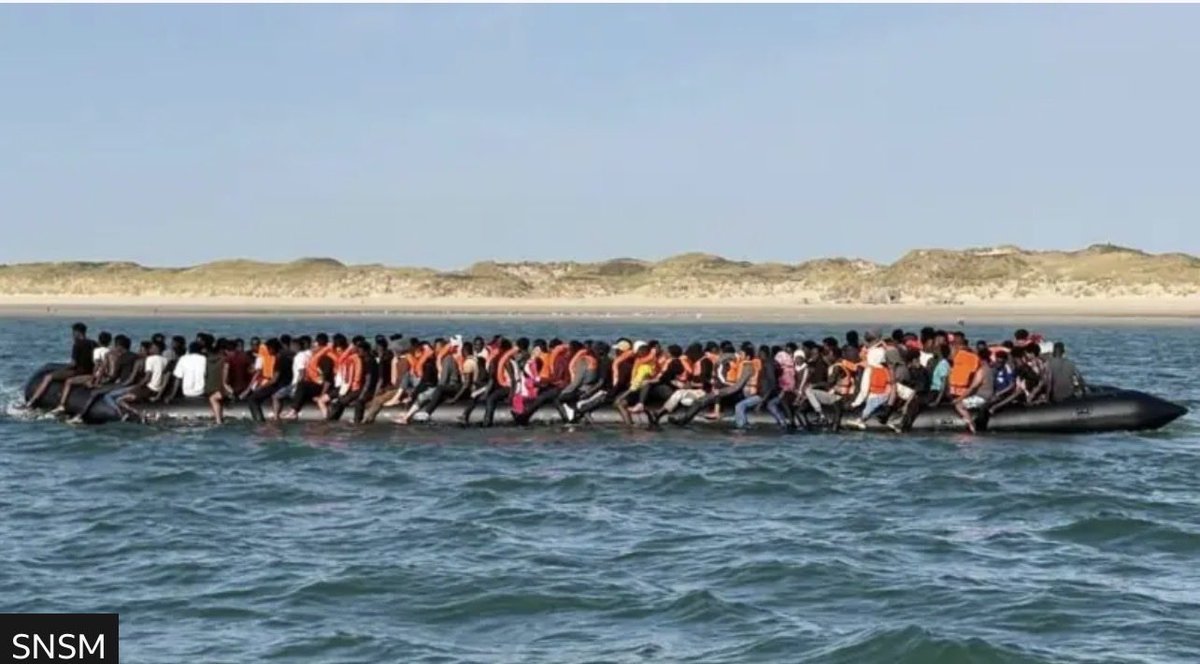
The 230 people on this boat will cost the British Government more than £115 million over their lifetimes.
You could train and employ 90 nurses over a 35-year career for that. But instead, we’ll be paying for people who broke into our country.
That is, unless Reform gets into Government. In which case we’ll deport each and every one of these criminals and use the money to improve services and cut taxes for you instead.
@ZiaYusufUK I mean, are we really surprised that people watching GB News voted 'yes' to a Reform policy? That’s like asking a room full of cats if they like fish. Classic echo chamber stuff
Jeremy Clarkson lets slip a number on Clarkson's Farm that explains almost everything wrong with British food. A sausage from his own pigs costs 74p. The identical sausage made from imported pig meat costs 18p.
Most people hear that and assume the foreign farmer is simply better at it.
Britain outlawed the sow stall in 1999, alone in Europe bar Sweden, because the public here decided a pregnant animal ought to be able to turn around. The national pig herd then fell by roughly half.
British people did not eat half as much bacon.
Work out where the difference went. Twenty-seven years on, the National Pig Association reckons around 95 percent of the countries selling pork into Britain still permit the stall. Most of the EU allows four weeks of every cycle. Much of America allows the full sixteen-week gestation. Brazil allows it outright.
The sow was never spared. She was moved abroad, into a shed with looser rules and no British inspector, and the farm that would have kept her shut its gate.
Now watch the same thing happen to beef and lamb, on a far bigger scale.
British beef is grass. Native cattle standing out in the rain on ground that grows nothing else, doing what they have done on those hills since before the language was written down. What the NFU says we are being asked to compete against is a feedlot finishing up to 50,000 head on one site, which it called unacceptable here on both moral and environmental grounds.
The deals were signed anyway. Australian and New Zealand beef rises to a quota of 110,000 tonnes by 2033, and after that there is no tariff at all. Lamb runs to 60,000 tonnes this year and climbs from there, and we already import between a quarter and a third of what we eat.
Every one of those deals was announced with a firm assurance that food standards would not fall. That assurance is true, and it is beside the point.
The standards enforced at our border cover what is in the meat. Hormones stay banned, and rightly. What crosses untouched is how the animal lived. There is no border check for a feedlot, no tariff on a gestation crate, no form anywhere asking whether the thing we made illegal here was used to make the thing arriving here.
So a minister can say food standards are protected and back British farming in the same breath, and be telling the truth twice, while signing the document that finishes the job.
The pattern runs through the lot. Barren cages banned here in 2012, egg products still arriving from countries that use them. Force-feeding outlawed in 2007, foie gras on sale every Christmas.
And the campaigners who won those bans never once came back to see what happened next, because the victory was legislative and the consequence was six thousand miles away. Nobody counts sows in Iowa. Nobody films a feedlot in Queensland.
Clarkson absorbs that 56p on every plate that leaves his kitchen, on television, which is the only reason anybody can see the number at all. Inside a supermarket price it has been invisible for a quarter of a century.
Fifty-six pence is what this country charges a man for obeying it.
He is not competing with foreign farmers. He is competing with his own ban, on a shelf, standing next to the version of himself he was forbidden from being.