“To secure the rights of the person, give primacy to community. To build a genuinely human community, give primacy to the person. Such is the Catholic Whig tradition”
#Catholic#community#tradition#liberty https://t.co/jsM5EIkGyu
Excellent essay by @DrJeffDegner of @aier for @CivitasInst on family engineering by both the left & the right.
"The family is a pre-political institution, but it can be snuffed out by the political economy of interventionism."
https://t.co/OsF4dTjSYk
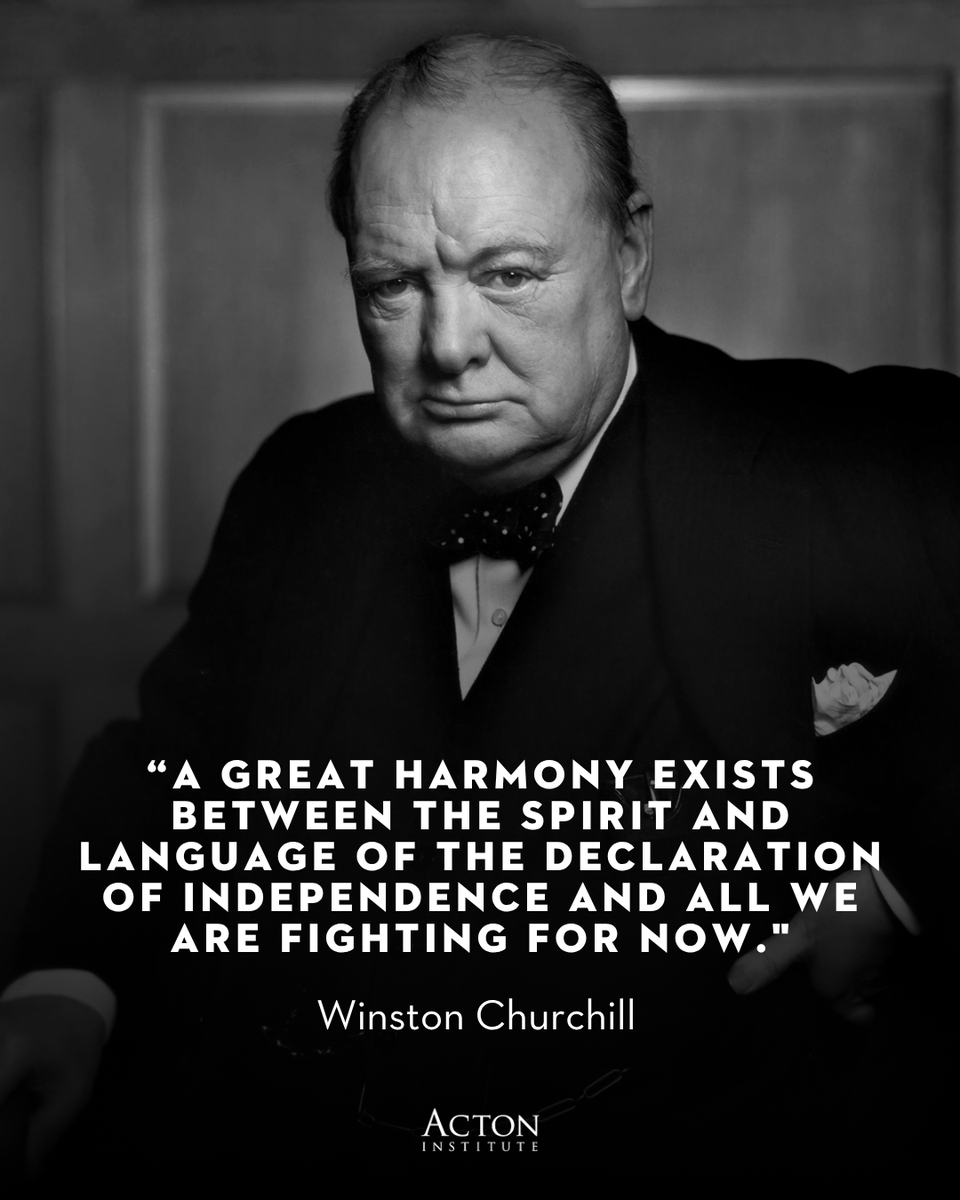
Winston Churchill may have understood America better than most Americans do.
"The Declaration of Independence is not only an American document. It follows on Magna Carta and the Bill of Rights as the third great title-deed on which the liberties of the English-speaking people are founded."
The roots of American liberty run deeper than 1776.
Michael Lucchese reflects on what Churchill still has to teach us about America at 250, in Religion & Liberty.
https://t.co/n7Gp5N6Hj9
#churchill #america250
Catholics who fought for American Independence
Marquise de Lafayette
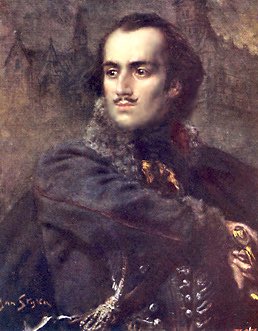
Casimir Pulaski, father of the American Cavalry
Michael Kovats de Fabriczy, co-founder of American cavalry, serving beside Pulaski
Maybe it is because I am an immigrant to this country, and thus an American by choice, but every year I become ever more conscious of the greatness of both the #AmericanExperiment and the American achievement. 2/2 #America250 🇺🇸
https://t.co/p4bRQKEpgS
Before there was a United States, there were people who believed their freedom came from God and not from a king. They risked their lives, fortunes, and sacred honor to secure it.
@Hillsdale's Revolutionary America tells that story. A fitting watch for America's 250th.
📺 https://t.co/RG52NJEO47
I’m looking forward to writing my review of @washingtonmovie this afternoon for @LawLiberty.
I hope John Grove and his eds. will stick with my proposed title:
"Natural Right on Horseback"
"If all men are created equal, that is final. If they are endowed with inalienable rights, that is final.
"If governments derive their just powers from the consent of the governed, that is final.
"No advance, no progress can be made beyond these propositions.
"If anyone wishes to deny their truth or their soundness, the only direction in which he can proceed historically is not forward, but backward toward the time when there was no equality, no rights of the individual, no rule of the people.
"Those who wish to proceed in that direction cannot lay claim to progress."
Brad Birzer on the latest episode of The Economist Next Door.
The Declaration of Independence recorded a revolution already underway. James Wallner (@jameswallner) explores how years of colonial self-government prepared Americans for independence. https://t.co/cW0441bJti
“The economy is a tool…” an erroneous statement by @JDVance
The economy is not a machine to be tinkered with. This is a progressive mindset.
The economy is an emergent phenomenon from billions of people acting purposefully in pursuit of their goals.
This is essentially my most distilled mission statement for @DadSavesAmerica and I’m really grateful for @ARC_Conference providing a platform to share it with more people. The fight for our future is on.
1/10 @McGillPatterson’s & @ThomasDHowe’s “Why Postliberalism Failed” is a genealogical critique of the American Catholic turn against liberalism. The target: Catholic integralism, Catholic right-wing authoritarianism and several American postliberal intellectuals. The book invites friends and foes of postliberalism to confront Catholic authoritarianism, integralist coercion and the romanticization of failed regimes. The book is worth the reader’s time and effort. Those interested in postliberalism will find it useful; readers wanting a deeper philosophical critique of postliberalism should consider also reading @PaulDeHart’s “The Social Contract in the Ruins.” In this ten part thread: my summary and assessment of where Patterson and Howes succeed and where they fall short, and in the process I reference a few seriously critics of liberalism that are worth reading and that are not address in this book nor other critics of postliberalism.
"Freedom and peace emerge not from the river or the rambling life per se but from the benevolent actions of good people."
As the nation's 250th birthday approaches, Cassandra Nelson revisits Mark Twain's The Adventures of Huckleberry Finn in Religion & Liberty Online. "The Great American Novel" still has plenty to say about freedom, conscience, and who we want to be.
Read the full piece --> https://t.co/KBxzm8mXWY
@cmnelson71 #america250 #marktwain
So many new books on conservatism seem weak when compared with these two collections, one by @PhiladelphiaSoc and the other by @ISI , I am a privileged member of these two great organizations. Some of the past discussions are very similar to today’s. Both books are essential for serious intellectuals. From Buckley to Meyer, and even Rothbard and Friedman. The only chapter by a priest reads like the writings of those who today question current market arrangements. @JonahDispatch wrote the introduction to the re-edition of “What is Conservatism” and reads like the pre Trump Jonah.
John O. McGinnis (@joldmcginn) explores why Americans increasingly see one another as rivals rather than partners and how rebuilding institutions of mutual cooperation could reverse that trend. https://t.co/30abbmqr2f