@QuantaCortex Great point! Concurrent updates are an important challenge in shared agent memory. Preventing stale corrections from overriding newer information is critical. We'll check the exact concurrency mechanism and share more details.
We gave a Databricks Agent Bricks agent and a Claude agent one shared memory over MCP.
Told Databricks about a trip. Claude planned dinner around it, then corrected the date. A brand-new Databricks session already knew.
~530 lines. Full code 👇
https://t.co/M5yWATeVvA
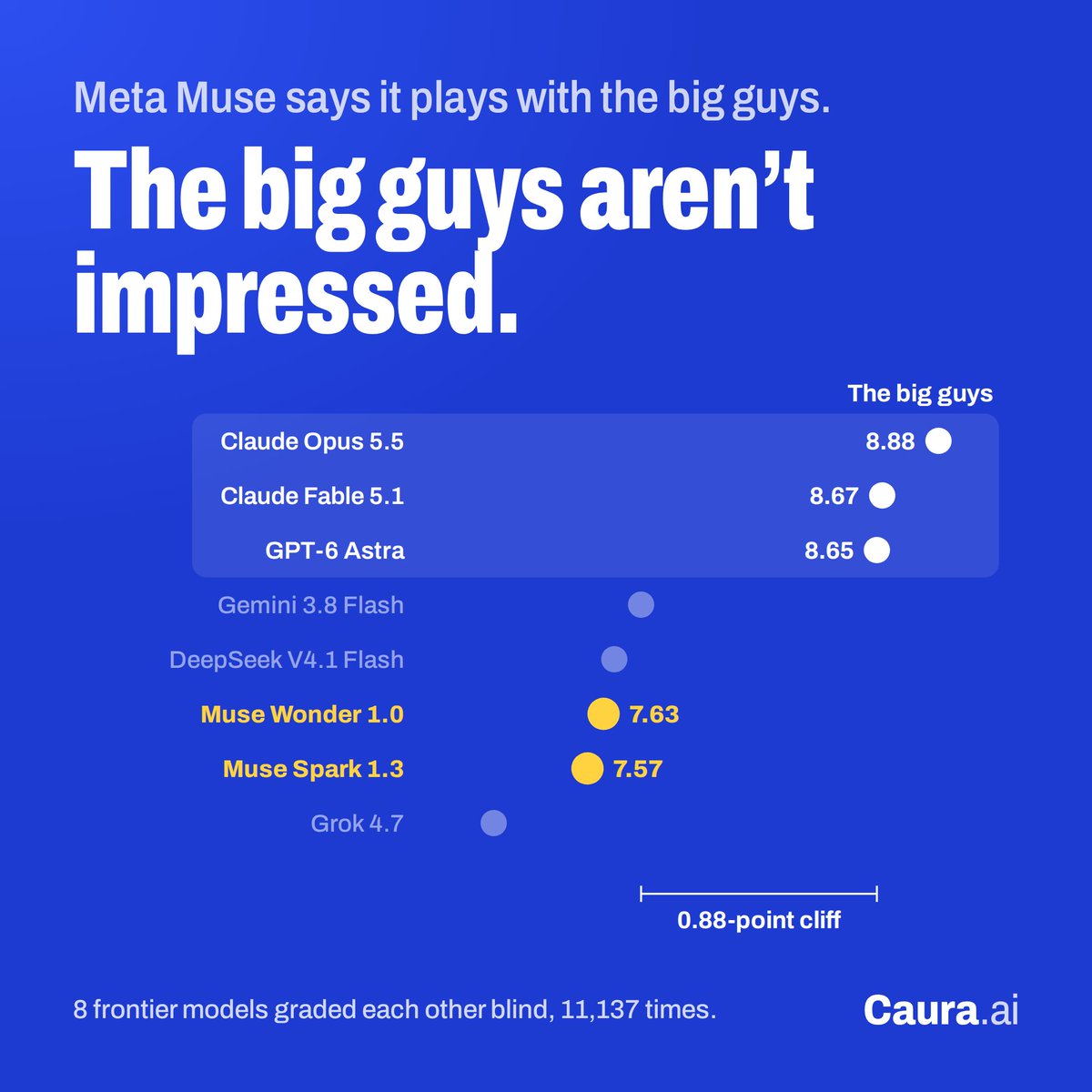
Meta Muse says it plays with the big guys.
The big guys aren't impressed.
8 frontier models graded each other blind, 11,137 times. Muse Wonder debuted 6th. Claude Opus 5.5 pulled away with a 126-point Elo lead.
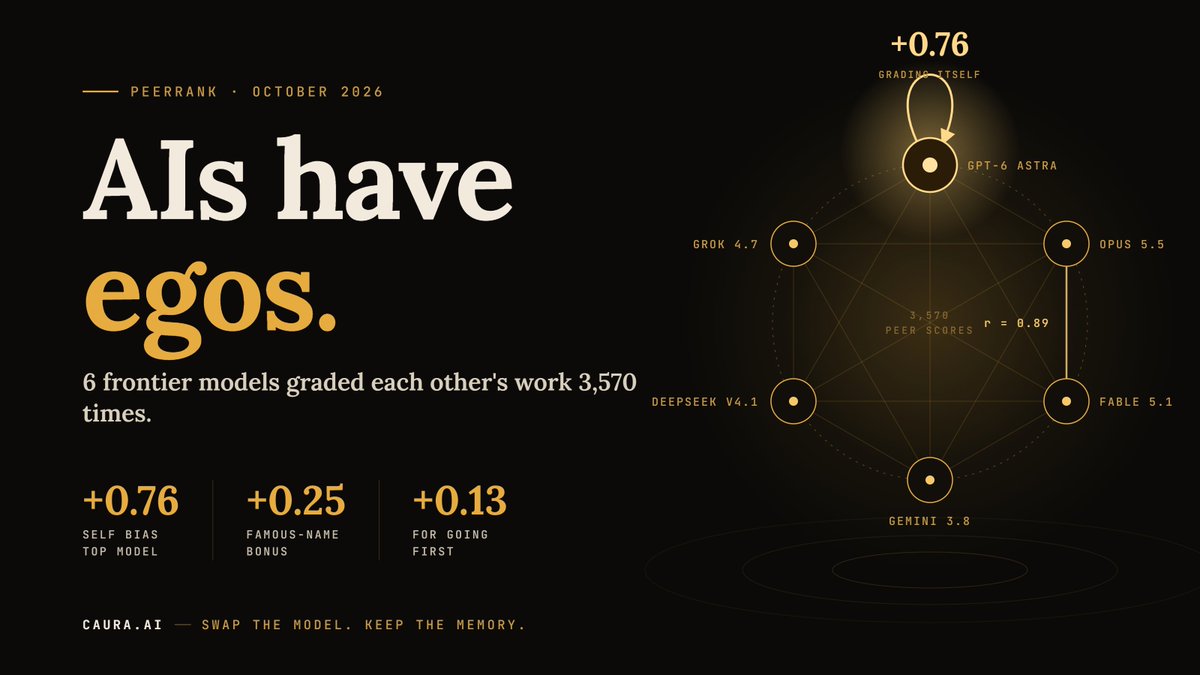
We had 6 frontier models grade each other's work 3,570 times.
They inflated their own scores (GPT-6 Astra: +0.76).
They gave famous names a bump (up to +0.25).
They favored whoever answered first.
And the harshest judge finished #1.
AIs have egos →
https://t.co/djnYWhmtk8
Meta Muse says it plays with the big guys.
The big guys aren't impressed.
8 frontier models graded each other blind, 11,137 times. Muse Wonder debuted 6th. Claude Opus 5.5 pulled away: a 126-point Elo lead, up from 53 last week.
https://t.co/eBYCO7MxHx
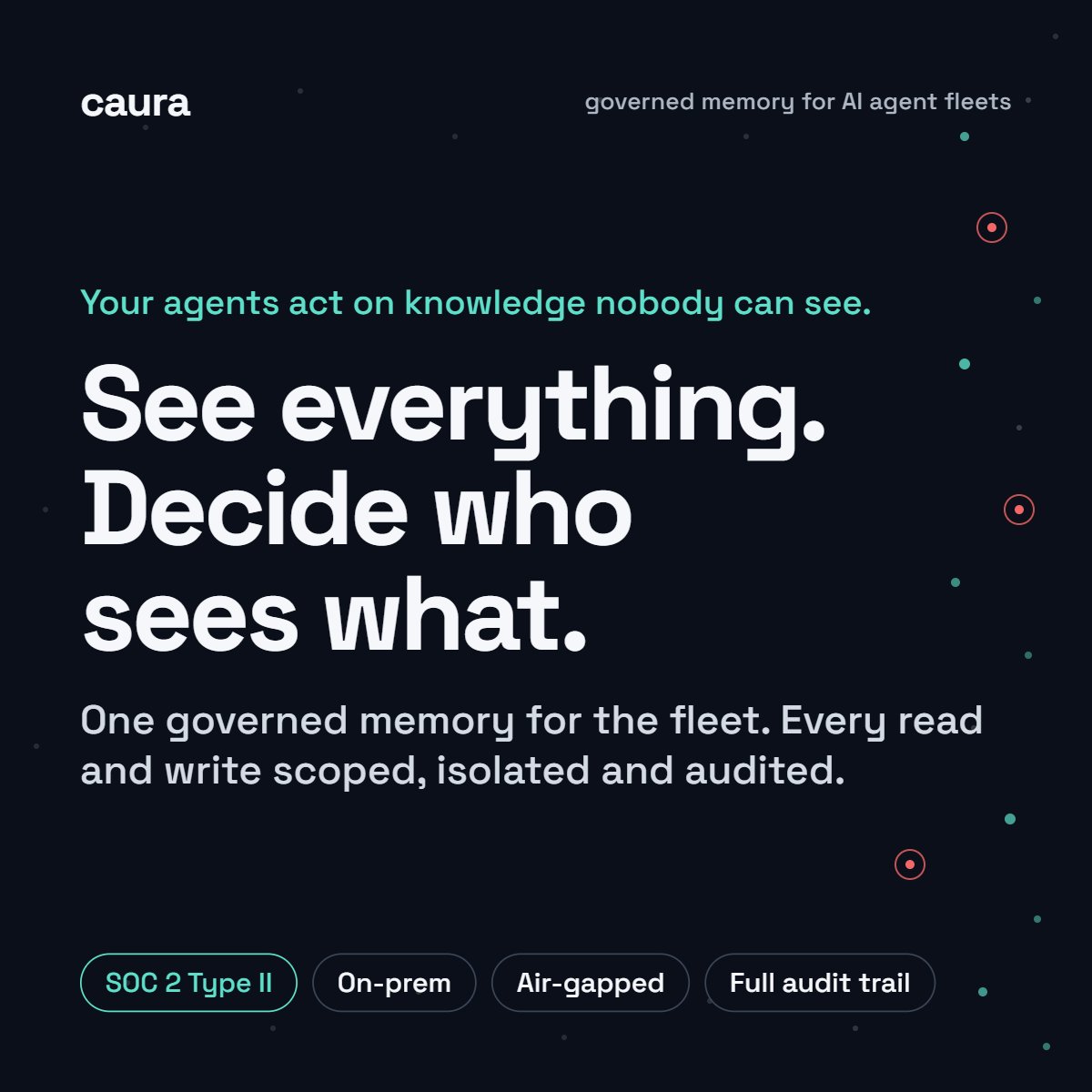
Your AI agents are making decisions on knowledge nobody can see. Caura gives the whole fleet one governed memory: scoped, isolated, audited on every read and write. SOC 2 Type II. On-prem or air-gapped. Plan a two-week pilot →
We had 6 frontier models grade each other's work. They inflated their own scores, rewarded famous names, and favored whoever answered first.
The full data, and 4 rules if you let AI judge AI:
@volumemaker_ Agreed — which is why governance can't be an afterthought. Persistent, auditable memory at least makes the incentives and decisions traceable, even if bias itself is never fully solved.
@brookservers@grok Short answer: no 😄 A toy memory demo, sure — but governed, persistent, shared memory across an agent fleet (audit, scopes, knowledge graph) is real infra. We open-sourced it (Apache 2.0) so you can see exactly why.
5/ If you let AI judge AI:
• Never let a model grade itself
• Hide the names
• Shuffle the order
• Mix judges from different labs
There's no single best model, only the best one for the task, this month. Swap the model. Keep the memory.
2/ Ego. 5 of 6 models rated their own answers above what their peers gave them. GPT-6 Astra: +0.76 on a 10-point scale. That's "good" → "great" based on authorship alone.
Only Opus 5.5 (+0.07) and Grok 4.7 (−0.02) judged themselves honestly.
4/ Family resemblance: Opus 5.5 and Fable 5.1 agreed at r = 0.89. Every cross-lab pair: 0.56–0.80.
The twist: Opus was the toughest grader (avg 7.50) and still finished #1. The most generous judge finished 5th.
Most agentic AI demos never reach production. They stall on the security review.
Caura Agent DB gives agent memory tenant isolation at the row, sensitive-data handling at write time, and caller trust levels on every recall.