A great summary of the @EDAustralia Brisbane Roadshow https://t.co/BpZhkcXLjO It was a timely reminder that Australia’s regional economic future depends on how well we understand place and plan for 50 years into the future. Thanks to Julie Callaghan of Preternatural.
My comments to council.
Members of council and fellow Vancouverites,
The Official Development Plan before you rests on a simple but mistaken premise: that adding more housing supply will make housing more affordable.
It is an appealing idea.
But Vancouver’s own history shows it simply isn’t true.
For more than fifty years this city has been the most aggressive builder of new housing in North America. Since the 1960s our housing stock has increased by 200 percent, while population has grown by only 78 percent.
We have densified our neighborhoods, built towers, embraced mixed-use, and added units at a pace that outstrips most comparable cities.
No other centre city matches this feat. And yet our housing, when measured against average household income, is the least affordable anywhere on the continent . Proof of what I say was supplied to the council in the data provided by mail.
Working families - the very people who make the city function—are being pushed out. Density has brought real benefits: lower emissions, healthier communities, better transit.
But affordability has not followed supply. The market does not naturally produce housing ordinary wage earners can afford. It produces what the highest bidder can pay for.
That is why this plan needs a different foundation.
If we want a city that still houses its teachers, nurses, tradespeople, and young families, then at least half of all new housing must be permanently affordable - homes costing no more than 30 percent of income.
We have tested the supply theory for decades. Vancouver’s own experience tells us it is time to try something that actually works.
@CallieBuddy@just_brash I got a similar message, the instructions did not match the heading structure on the account; and I forwarded it to their security people to ask if it was a hoax. No answer so far.
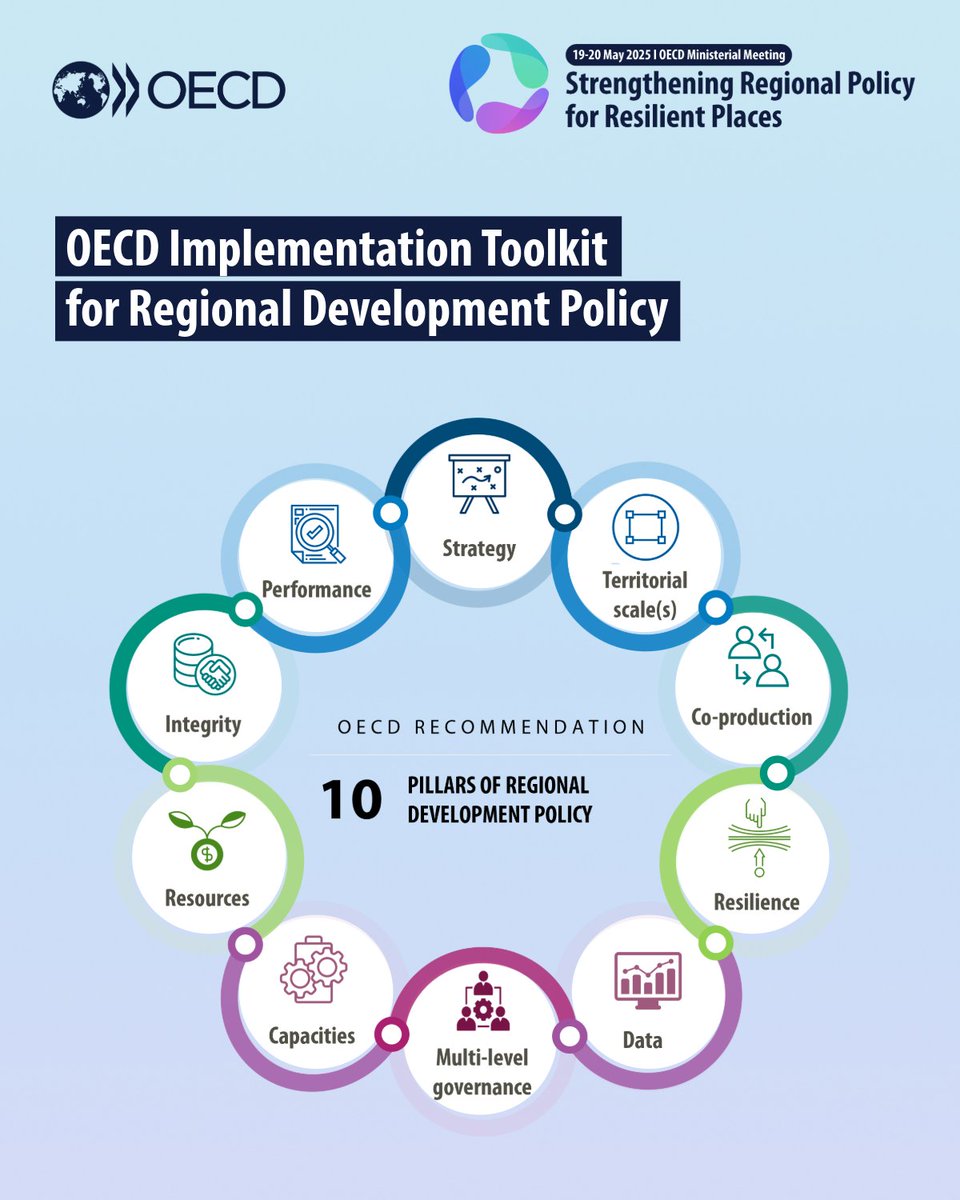
💡How can governments design better regional policies?
The @OECD Regional Development Policy Toolkit offers guidance to foster growth and build #ResilientPlaces.
🟣 Explore 40+ good practices
🟣 Use the self-assessment to identify policy gaps
🔗 https://t.co/xhepYLDSXi
A very good article on Economic Gardening, which supports the growth of existing businesses, focusing on second-stage growth businesses, highlights the pioneering work of Chris Gibbons @EGman and others in Littleton, Colorado https://t.co/obW3cAqjrG
A great conversation with @engage_ben. Startups and attracting new businesses are important, but the biggest potential comes from supporting second stage businesses already in the region. https://t.co/0mCCr6MLie