Fear not! The rise in inflation in France is not an indication that other countries in Europe will follow.
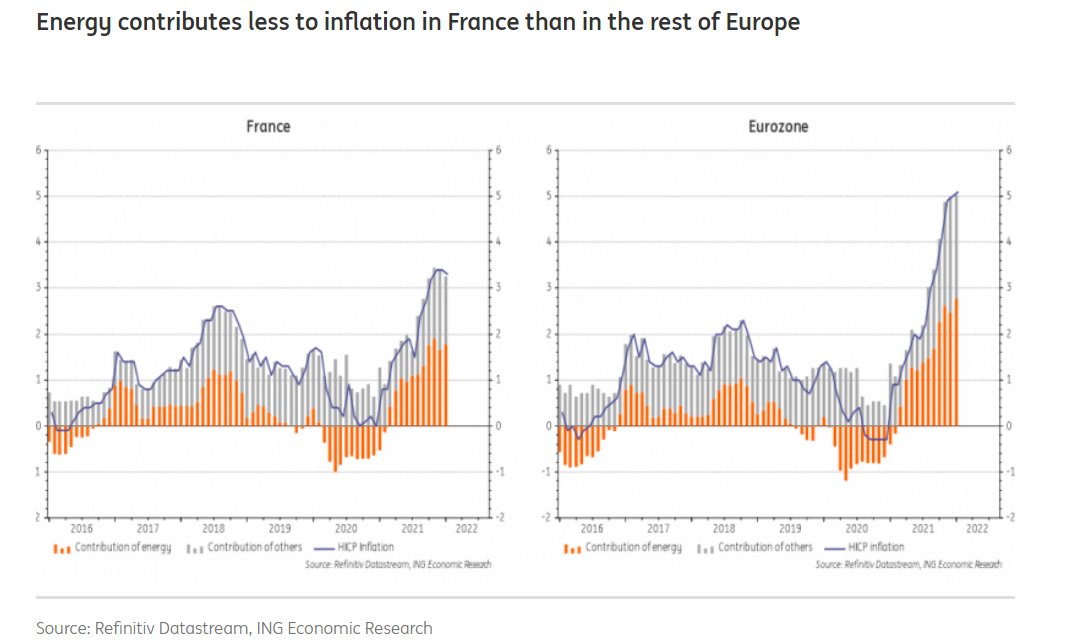
Inflation in France is being driven by rising energy costs.
Because of the tariff shield and fuel price rebates, energy prices rose less dramatically in France than in other European countries last year. The starting point is therefore much lower, and energy inflation will be more of a problem in France than elsewhere in the coming months.
https://t.co/VE5DMuwDpc
@NBB_BNB_FR@EU_Eurostat@WautersJoris@NBB_BNB_FR, y-a-t-il un projet de publication des séries de données d'inflation instantanée mentionnées dans l'article (par vous/la BCE/Eurostat/Statbel)? Merci
The SNB seems to consider that the events linked to Credit Suisse + the threats to financial stability can be managed with other instruments than interest rates, such as liquidity provision.
@CdeMontpellier looks at today's 50bp rate hike in more detail:
https://t.co/YELISSfokC
February data indicate that French inflation has still not peaked.
Ultimately, says @CdeMontpellier, the French economy is likely to remain weak throughout 2023, but also in 2024. We expect growth of 0.7% both in 2023 and 2024.
https://t.co/25BdhsgJjt
French GDP grew by 0.1% quarter-on-quarter in the fourth quarter, a weaker figure than in the third quarter (+0.2%) but one that allows the French economy to escape recession, at least for the moment.
@CdeMontpellier reports here:
https://t.co/RUgiihIUub
A lire absolument : une synthèse lumineuse par @pisaniferry et @Selma_Mahfouz des conséquences de la transition climatique pour l’activité, l’emploi, les finances publiques et l’inflation. Des mécanismes qui devront désormais être au cœur du débat de politique économique.
France escapes recession for the moment (Q2 GDP +0.5% qoq after -0.2%), thanks to tourism! But domestic demand remains weak and consumption continues to fall. A recession is our base case for this winter. https://t.co/f5vozJijkC
@natsilbert @GilbertCette Le risque est bien plus élevé en Belgique, où *tous* les salaires et prestations sociales sont indexés automatiquement sur l'inflation...
While there is still a chance that the French economy will escape recession in the spring of 2022, the outlook for the winter of 2022-23 is much bleaker.
@CdeMontpellier explains why:
https://t.co/q7ereuU2Sr
🎧 Les banques centrales augmentent leurs taux. Cela suffira-t-il à freiner l’inflation ? Y-a-t’ il un risque de récession ? @CdeMontpellier nous explique les différentes manières dont la politique monétaire peut impacter l'inflation.
👉 https://t.co/LGqAMtKOKZ
🇫🇷 We believe the French economy is currently in recession and we are revising down our growth forecast for 2022.
@CdeMontpellier provides the detail:
https://t.co/aIK2GxRzW3
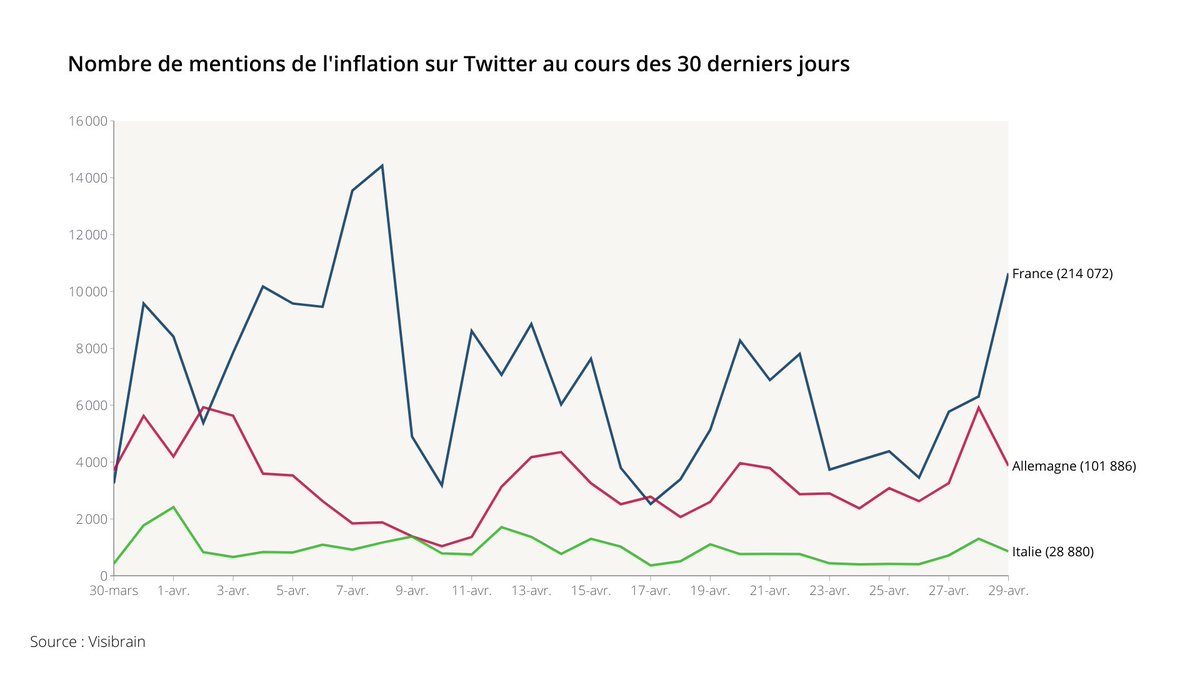
Even though inflation in Germany is higher than in France (7.8% vs 5.4% in April), the French mention inflation more on twitter than the Germans. Maybe another illustration of the concern of the French, which weighs on household consumption and ultimately on economic growth?
The French GDP figures are even worse than they appear. Without the positive contribution of inventories, the economy would shrink sharply as domestic demand falls https://t.co/6zYRoZA410
Belgians cut back on spending to cope with inflation | Article | ING Think - Faced with inflation, Belgian consumers are adapting their behaviour by reducing their spending, saving less and reducing the heating of their homes. These… https://t.co/xau9HrjeoZ
🇨🇭 The Swiss National Bank is in a relatively comfortable situation, with inflation at just 2.2% compared to 5.9% in the eurozone and 7.9% in the US.
At the moment, its job seems much easier than that of the other central banks, says @CdeMontpellier
https://t.co/R2lbN7pqs6
The Swiss National Bank will likely maintain its 'wait-and-see' stance until the impact of the Ukrainian conflict on the economy and markets is clearer, writes @CdeMontpellier
https://t.co/cHXIyAGEBI