@TroyLaForge@andrewdunx@stampgreg@DarylFransoo Yes the producer declares what variety they are selling, EPR collected on first sale of the grain. More details are https://t.co/kj81TUvqDY
@andrewdunx@stampgreg@DarylFransoo Do you think Canadian growers would accept EPR’s? EPR’s have really helped drive private cereal breeding in Australia, but some of the Canadian seed industry are against EPR’s
Listen to Correy Brown from Coorow WA talk about his experience using Voraxor herbicide. Farming up near the northern wheatbelt, resistant radish is an issue that Voraxor has helped Correy address. 🌱💪
Learn more: https://t.co/hKlTlRRcWY
“To have ILeVO® as an SDHI mixing with triazole chemistry like flutriafol. It's a very important program” explains agronomist Chris Toohey, Albury VIC.
Chris recommends #ILeVO seed treatment as a cost effective solution to control blackleg.
Find out more: https://t.co/RHnd1IKVgT
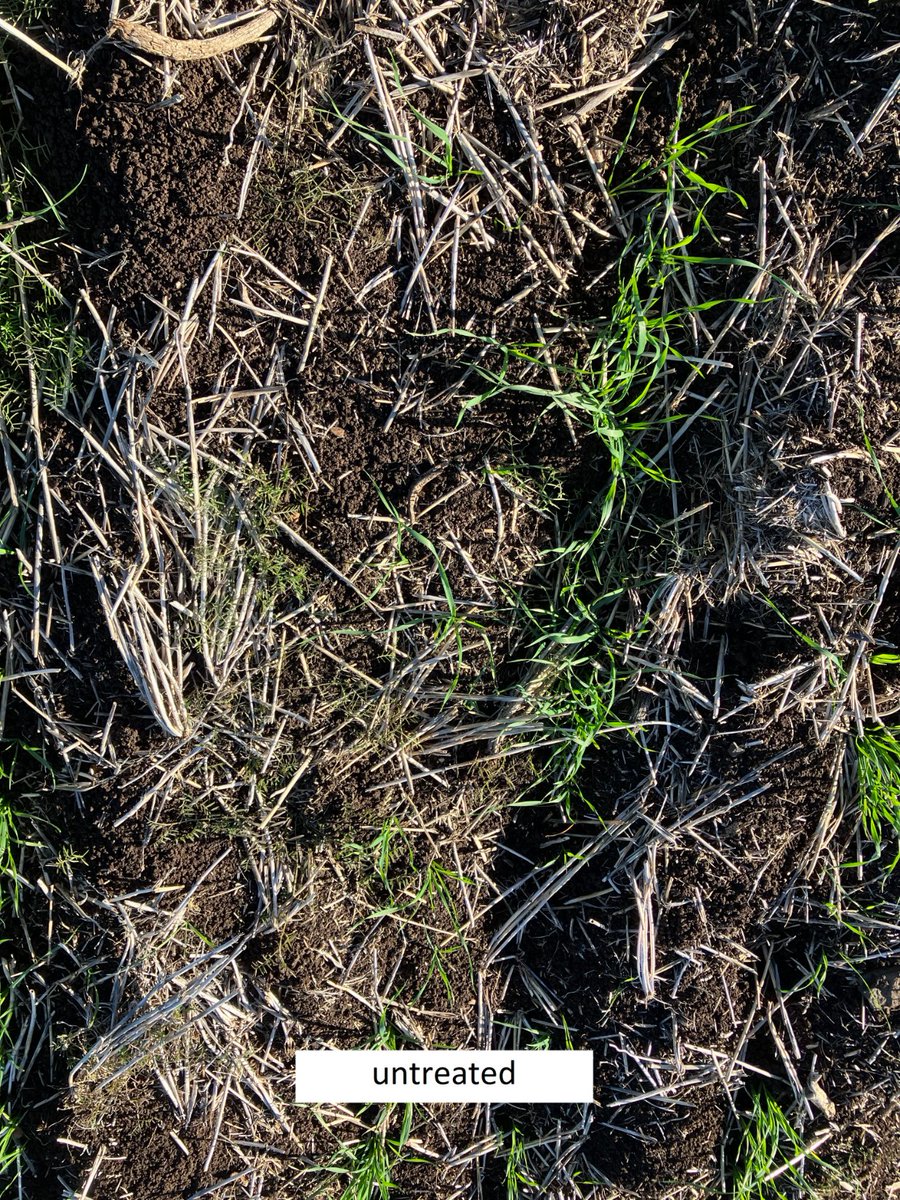
Outstanding ARG and BLW control. For annual ryegrass & broadleaf control, Luximax and Voraxor combo gives some impressive results. Pictures taken 8 weeks post sowing near Tamworth. #12weeksresidual with no crop safety issues reported by the grower https://t.co/3bNYHBWlRa
Our seed teams recently toured the InVigor hybrid production fields in South Australia.
Monitoring the production program is a crucial part of our daily activities, this evaluation serves as a crucial step in ensuring that the quality of all InVigor seed is second to none.🌾
A trial was run recently highlighting the importance of adjuvant and rate when using Voraxor herbicide, the results are timely given the recent rainfall in NSW which should bring on another germination of weeds 🌱
#voraxor#annualryegrass#MSOrate
Systiva is now registered for oats and stripe rust in wheat!
Systiva now offers oat growers a new partner to target red leather leaf as well as Septoria leaf blotch, leaf and stem rust.
Find out more: https://t.co/5Ksfh9H90f
Don't forget our current Liberty® canola credits promotion will finish on June 30! Get in quick, before you miss out on this great deal!
Find out more: https://t.co/MWOx86Wxkg
Taxing the Heartland: The Nonsense About the 0.13%
"These new capital gains tax changes risk undermining the financial stability of family-owned farms and businesses, crucial pillars of our agri-food sector. By making farming and entrepreneurship less attractive, we jeopardize not only our agricultural heritage but also the economic health of rural communities across Canada."
It’s hard to recall a time when capital gains taxes have drawn so much attention.
Historically, changes to capital gains taxation have largely flown under the radar. However, the latest modifications are different. Starting June 25, 2024, capital gains up to C$250,000 will continue to be taxed at the standard 50 percent inclusion rate. Gains exceeding C$250,000, however, will be taxed at a new inclusion rate of 66.67 percent for individuals. Furthermore, the 2024 federal budget introduces two other notable changes: all capital gains generated through a corporation will be subject to the 66.67 percent inclusion rate, and the lifetime capital gains exemption for eligible property will increase from $1,016,836 to $1,250,000.
These changes raise significant concerns for family businesses, particularly in the agri-food sector where most farms are family-run operations. The @GrainGrowers, representing over 65,000 family-owned farms, recently released a report on these changes. Contrary to Ottawa's claim that only 0.13% of Canadians, or fewer than 60,000 people, will be affected, the report suggests a much broader impact. According to @StatCan_eng, Canada has nearly 190,000 farms, the majority of which are family businesses. The Grain Growers of Canada report indicates that the average farm will see a tax increase of 30 percent due to the new two-thirds capital gains inclusion rate.
Generational succession planning is a cornerstone in the agri-food sector, particularly in farming. Currently, less than 1.7% of Canadians are involved in farming, a percentage that is likely to decrease over time. Canada is losing between 700 to 1,000 farms annually. By making farming less financially attractive, the number of farms will continue to dwindle, leading to greater consolidation and fewer family-owned farms.
Farmers are known for their ingenuity and entrepreneurial spirit, and many have accumulated significant assets. However, farmers are often "asset rich, cash poor," meaning they possess valuable assets such as farmland, quotas, equipment, and livestock but lack liquid cash. This becomes especially challenging with changes to capital gains taxes. If a farmer sells a portion of their land or valuable equipment, they might realize a substantial capital gain. The Grain Growers of Canada report highlights that this financial strain can force farmers into difficult financial positions, requiring them to find ways to generate the necessary funds to meet fiscal obligations.
Moreover, many farmers plan to pass their farms on to the next generation. Increased capital gains taxes could complicate estate planning and succession, as the tax burden on asset transfers may be higher. This could lead to more family farms being sold off or broken up to pay taxes, potentially reducing the number of family-owned farms and altering the landscape of rural communities.
The impact extends beyond farming. Many family-owned businesses exist in food manufacturing, retail, and food service in Canada. According to @IBISWorld, Canada has nearly 80,000 full-service restaurants, many of which are family-owned. These businesses could be significantly impacted by the increased capital gains tax.
Behind every family business, there are hardworking, taxpaying Canadians who will likely be affected by these changes.
While there are exclusions and fiscal measures to assist with asset transfers and generational succession planning, the tax increase disincentivizes investment. If we aspire to grow our economy and increase competition across the agri-food sector, raising taxes to ensure "the wealthy face the same tax burden as nurses" is not the solution. A more effective approach might be to reduce the tax burden for nurses instead.
More broadly, @FamBizCanada states that family-owned businesses make up 63.1% of all private sector firms in the Canadian economy, contributing 48.9% to Canada's real GDP in the private sector, amounting to $574.6 billion. Additionally, they employ 6.9 million people nationwide, representing 46.9% of private sector employment.
Much more than just 0.13% of Canadians are likely affected by these changes. Ottawa needs to reconsider this approach to avoid undermining the backbone of our food economy: family-owned agri-food businesses.
Wow! Tom Brady may have just delivered the greatest quote I’ve ever heard.
“To be successful at anything, the truth is you don’t have to be special. You just have to be what most people aren’t: consistent, determined and willing to work for it.”
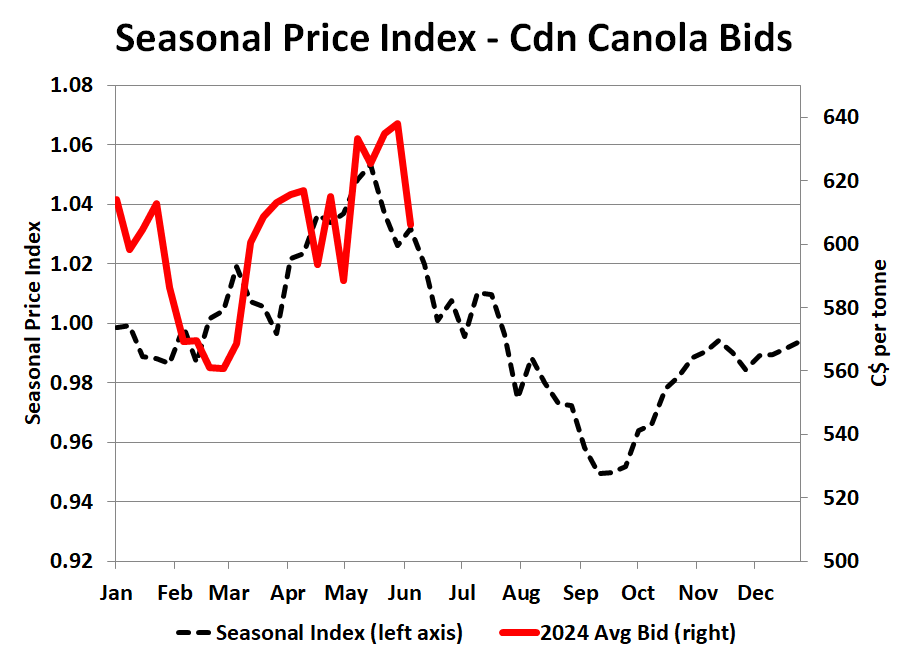
The most important question isn't "why is canola dropping now?" That's pretty clear. This is what it does.
More important (and a lot more difficult) is, "after the seasonal low, how will it come out the other side?"
It’s taken a while for industry and governments to realize we need more than solar and wind power as we move towards less CO2 emissions https://t.co/tKOelMyOGu
Afidopyropen is BASF's very own Versys insecticide. Now registered in wheat, barley and canola, it gives you an incredible aphicide with low tox to beneficials! Perfect product for your IPM program. Thank you @theGRDC for posting this great comparison.
NEW REVYSTAR® FUNGICIDE NOW REGISTERED!
We're pleased to announce that Aussie growers will now be able to get their hands on our newly registered Revystar Fungicide for the 2024 growing season.
Find out more: https://t.co/NQGyzMgDHD
Great news! More InVigor® LibertyLink® canola is now available. And if you are chasing superior weed control with Liberty® herbicide you stand to earn BIG credits on your 2025 InVigor LibertyLink varieties.
Hurry! Offer ends April 30
#InVigor high yielding canola varieties. The flexibility of #TruFlex and #LibertyLink herbicide traits plus the peace of mind of #PodGuard technology to help manage harvest yield loss, because we all know the weather doesn’t always cooperate when the canola is ready to harvest.
Good news about InVigor® canola! Favourable production conditions in 2023 have led to a bigger supply of InVigor TruFlex® seed than expected. Secure your extra 2024 InVigor seed by contacting your local reseller.
Learn more at https://t.co/ZQkQieN8Uu