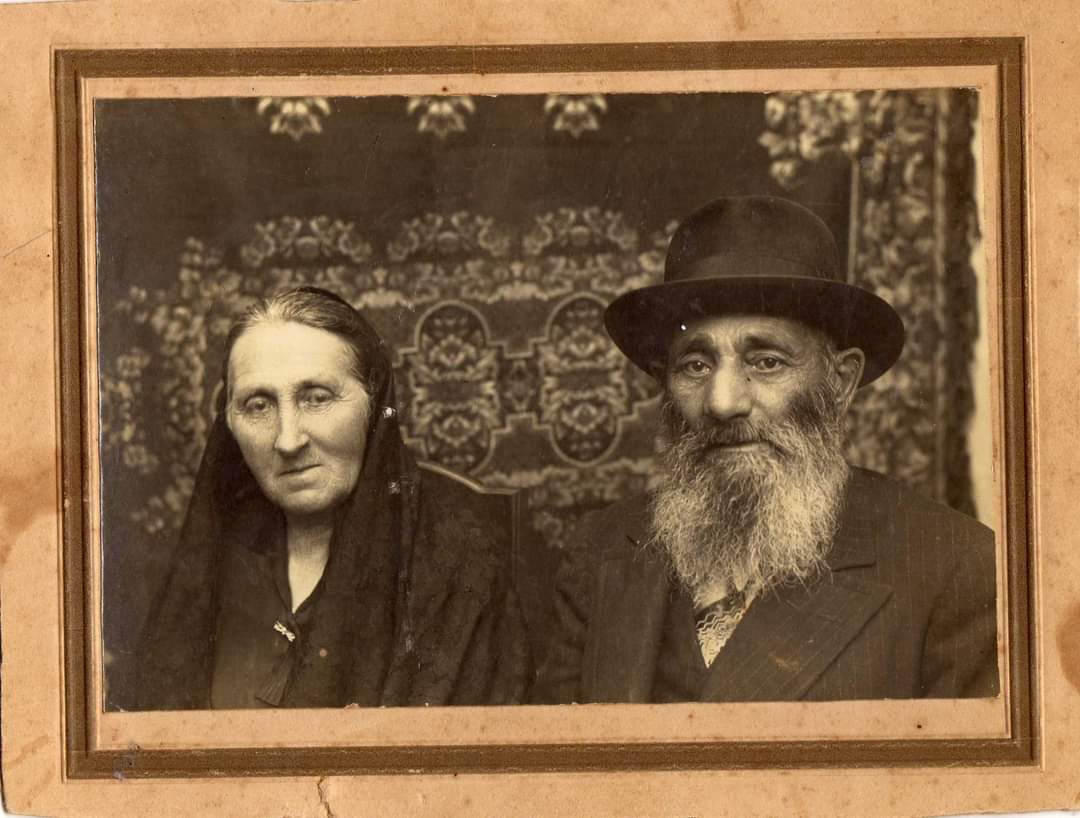
Mis tatarabuelos León Matzkin y Slate Mirkin. Nacidos en Siroka, Ucrania, vivieron entre Odessa y Kiev y vinieron a Argentina en 1902, en un barco alquilado por el Barón Hirsch, que ayudaba a los judíos a escapar de las persecusiones del Zar. Mi bisabuelo Bernardo tenía 11 años.
Javier Mascherano on why Lionel Messi broke down in tears after the final whistle against Spain in the FIFA World Cup final.
🗣️ Javier Mascherano: “After the match, I went straight to Leo. I hugged him and didn’t say anything for a few seconds because I knew there were no words that could take away that pain. When he finally spoke to me, he said something that broke my heart.”
“He told me, ‘Jefe, these tears aren’t because we lost the World Cup. Of course losing hurts, but that’s not what’s breaking me. I’m crying because this might be the last time I ever wear the Argentina shirt. That’s the pain I can’t accept.’”
“When he said those words, I couldn’t hold back my own tears. People think footballers only cry because they lose trophies. They don’t understand. Sometimes you’re crying because you know a chapter of your life the most beautiful chapter is coming to an end.”
“I’ve known Leo for almost my entire career. I’ve seen him lift trophies, lose finals, face criticism and silence the world. But I’ve never seen him look the way he looked that night. It wasn’t the face of a man defeated by Spain. It was the face of a man saying goodbye to the jersey he loves more than anything.”
“He kept looking at the Argentina badge on his chest. He touched it, kissed it and whispered, ‘I gave you everything I had.’ There wasn’t a single person in that dressing room who could look at him without crying.”
“If that truly was his last match for Argentina, then the world didn’t witness the end of a football career it witnessed the final page of the greatest international story this sport has ever known. No trophy can measure what Lionel Messi gave to his country. He didn’t leave with just tears in his eyes; he left having given every last piece of his heart to Argentina.
Algunas cosas de la final con España:
-El dolor es grande porque la expectativa era grande.
-Pero el orgullo es mayor.
-El pecho ya estaba lleno antes de la final.
-Argentina perdió bien y no suele pasar de forma habitual.
-España fue el protagonista absoluto del juego y es un justo campeón.
-El planteo inicial de Scaloni tuvo una falla: nadie se encargó del 10 de España, Dani Olmo. Se movía libre, recibía y crecían desde ahí.
-Eso provocó, a mi entender, el mayor error del DT: la salida de Nico González en el ET. Era fundamental que ingrese Paredes, pero sacar a Nico metió todavía más atrás al equipo.
-Faltó dinámica en el medio, algo que a España le sobró.
-Argentina no cuidó las pocas pelotas que tuvo.
-Lentos MacAllister, Fernández y De Paul. Paliza del mediocampo español.
-El mejor partido de Dibu en el mundial.
-Paredes y Enzo se pasaron de rosca. Hay errores que a este nivel no podés cometer.
-Lautaro se quedó sin final. Me da mucha bronca y me resulta inentendible, aunque lo pueda explicar desde lo táctico y los lesionados.
-Las lesiones fueron cayendo de manera escalonada y obligó a cambios demasiado temprano.
-Mas allá del desgaste, que se te lesionen los dos centrales titulares es de una mala suerte pocas veces vista.
-Medina y Simeone entraron muy bien.
-Vamos a recordar la última toda la vida, Giuliano.
-Enorme partido de Tagliafico.
-No quiero hablar mas del partido, porque hay otras cosas que me dejó el mundial.
-Menotti, en 2019, dijo: “Es una obsesión que yo tengo: sigo soñando con una selección de la gente. Quiero que nos represente y nos identifique”.
-Se cumplió, Flaco
-Y la vara del éxito, que habitualmente se mide en trofeos, se elevó a otro nivel imposible de imaginar.
-Lionel Messi venció al rival más imbatible de la historia: el tiempo.
-A los científicos: estudien a Messi. Indaguen en su genética. Que sea la fuente de un nuevo Actrón.
-Es muy difícil imaginarte sin la 10, capitán.
- ¿Te acordás cuando en Qatar dijiste “ya está” y no estaba nada?
- ¿Te acordás cuando retiraste al equipo porque le estaban pegando a tu gente en Brasil?
-¿Por qué crees que hoy estamos todos llorando con vos?
-Esta Selección Argentina es una poción que mezcla lo que somos y lo que fuimos.
-Y el alquimista siempre fue Lionel.
-Fuimos privilegiados por verte con esa camiseta. Y mirá que era pesada eh.
-Y si este es el final, que así sea. El mundo no sabrá si detenerse o llover.
-Mientras tanto, nosotros nos quedaremos acá, todos juntos, para contener el dolor por lo inevitable y el silencio que provoca el respeto.
- “No pienses que voy a dejarte. Porque estarás conmigo. Me llevo tu sonrisa tibia, tu mirada errante. Desde ahora en adelante, vivirás dentro de mí”.
-Este mundial demostró que nadie, en su sano juicio, debería querer enfrentarse a un argentino herido.
-No podemos pedirles más nada, muchachos.
-A un pueblo que vive fútbol, que consume fútbol, que sangra fútbol, le pagaron con fútbol. Y con algo más también.
- ¿Cómo va a ser solo fútbol si lograron que los que no miran fútbol lloren de emoción?
- ¿Cómo va a ser solo fútbol si logra que un padre, que carga un dolor imborrable, le lleve con orgullo una bandera a su hijo caído en la guerra?
-Esos chicos representaron a todos, porque en cada una de sus familias, desde chiquitos, hubo una parte de todos.
-Hoy nos tocó perder, pero les puedo asegurar con plena convicción, que vamos a volver.
-Merecer este amor que se ganaron no es para cualquiera, muchachos.
-Gracias por todo y a erguirse vertical, con la frente en alto, más allá del mal, más allá de la caída.
-Porque no es lo mismo que vivir, honrar la vida (y esta camiseta).
Ángel Di María on Lionel Messi missing out on the Best Player of the Tournament award to Rodri.
🗣️ “I’ve shared a dressing room with Lionel Messi for almost two decades, and I can say this without hesitation: what FIFA did is one of the most disrespectful decisions I’ve ever seen in football.”
“At 39 years old, Leo wasn’t surviving at this World Cup he was leading it. He carried Argentina, decided the biggest matches, inspired every player around him and proved, once again, why he’s the greatest footballer in history. If that’s not the tournament’s best player, then I honestly don’t know what is.”
“This has nothing to do with Rodri. He’s a fantastic footballer and deserves respect. But anyone who watched this World Cup knows who the face of the tournament was. Every stadium waited for Messi’s next touch. Every opponent feared him. Every Argentine believed because our captain was on the pitch.”
“Sometimes football gets it wrong, and this is one of those moments. You can’t watch everything Messi did at his age, under that pressure, against the best teams in the world, and then tell me someone else defined the tournament more than he did. That’s impossible for me to accept.”
“They can keep the trophy. They can keep the votes. History won’t remember a voting panel it will remember that a 39-year-old Lionel Messi walked into another World Cup, dominated the biggest stage in football and reminded the entire world why no one has ever reached his level. For me, he’ll always be the real Golden Ball winner.”
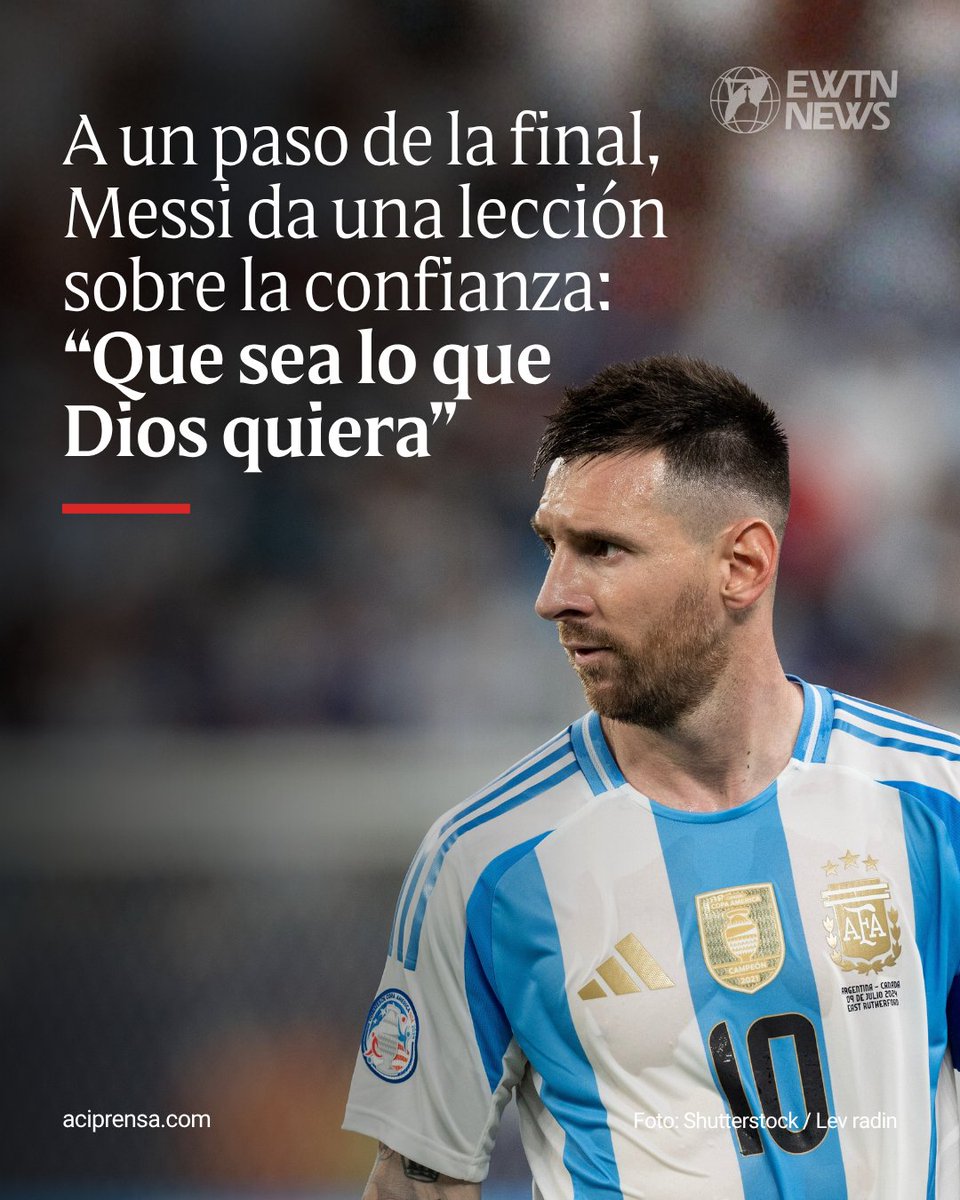
A un paso de la final, Messi da una lección sobre la confianza: “Que sea lo que Dios quiera”😇⚽
La Selección Argentina disputará este domingo la final del Mundial 2026 frente a España, en un partido que podría marcar la despedida de Lionel Messi con la camiseta albiceleste. Tras la victoria por 2-1 sobre Inglaterra en semifinales, el capitán argentino volvió a expresar públicamente su confianza en Dios y su gratitud por todo lo vivido a lo largo de su carrera.
Consultado sobre una declaración anterior en la que había dicho que “Dios tenía otra vez algo especial guardado para mí”, Messi respondió con sencillez: “Ya no podemos pedir más, con todo lo que vivimos, volver a jugar otra final”. Luego añadió: “Dios es muy grande y siempre tiene algo más, pero la verdad que yo ya no puedo pedir más, soy un agradecido por todo lo que me dio, en lo deportivo, en lo personal, y como siempre, que sea lo que Dios quiera”.
Sus palabras fueron destacadas por el sacerdote argentino Matías Jurado, conocido por su presencia en redes sociales, quien subrayó el valor del agradecimiento y la humildad del futbolista. “Leo Messi, a un paso de la gloria, y sigue diciendo lo mismo: ‘Que sea lo que Dios quiera’”, escribió.
El sacerdote resaltó que, pese a haber alcanzado la cima del fútbol con ocho Balones de Oro, más de 40 títulos y un Mundial, Messi no habla de méritos personales, sino de gratitud. “Entrenó como nadie, dejó todo en la cancha, y aun así no dice ‘me lo merezco’. Dice gracias. Esa es la humildad real: trabajar al máximo y saber que el don viene de arriba”, afirmó.
Finalmente, el P. Jurado invitó a reflexionar sobre la importancia de agradecer antes de pedir más. “A veces Dios no te da lo que pedís y no lo entendés. Pero antes de reclamar por lo que falta, frená y mirá todo lo bueno que ya te dio”. Concluyó recordando las palabras de Messi: “Que sea lo que Dios quiera”, una expresión de confianza en la voluntad de Dios incluso en los momentos más importantes de la vida.
Simon Jenkins, columnista del diario británico, The Guardian sostuvo que el Reino Unido deberá retomar tarde o temprano las negociaciones por la soberanía de las Islas Malvinas y aseguró que "no pueden ser británicas para siempre". “Ninguno de los territorios de la era imperial británica tiene el derecho eterno de permanecer como están, menos uno que le cuesta a los contribuyentes británicos más de 60 millones de libras esterlinas en materia de defensa por año”, dice en su nota
https://t.co/UHix865tIG
@VickyVillarruel@pabloquirno
Virgen del Carmen
Flor del Carmelo
Madre de Gracia
Puerta del cielo
Auxilia al pobre
Sana al enfermo
Líbranos, Madre,
De los infiernos,
De tentaciones
Y de tormentos.
Y a las almas que están sufriendo
Dales la mano
Para que al cielo suban
Por tiempo eterno.
The Church is wise. She does not give us devotions merely to stir our emotions; she gives them to lead us to holiness. That is why, today, on the feast of Our Lady of Mount Carmel, we do well to ask ourselves a simple question: Why did Our Lady give the Brown Scapular to the Church? Was it simply to wear another religious object? Or was she asking something much deeper of us?
The answer takes us back to the thirteenth century. The Carmelite Order was passing through a terrible crisis. Driven from the Holy Land, surrounded by uncertainty, it seemed that its days were numbered. Its Prior General, St. Simon Stock, did not place his confidence in princes or in clever plans. He turned to the Mother of God. According to the ancient tradition of Carmel, Our Lady appeared to him on this very day, holding the Brown Scapular and promising: "Whoever dies clothed in this Scapular shall not suffer eternal fire."
Those words have comforted Catholics for centuries, but they must be understood correctly. The Blessed Virgin was not handing out a magical object, nor was she offering salvation without conversion. God asks for our cooperation. He gives grace freely, but He also asks us to respond freely. Every gift from Heaven carries with it a responsibility.
The Scapular is, therefore, a sacramental. It is a sign that says, without words, "I belong to Mary, and through Mary I belong to Christ." Think of a religious wearing his habit. The habit does not make him holy, but it reminds him every day of the life he has promised to live. The Brown Scapular is like a small habit placed on the shoulders of the faithful. It reminds us that we should think, speak, and live as children of the Blessed Virgin.
That is why the Church has always taught that wearing the Scapular must be joined to a Christian life. Tradition also speaks of the Sabbatine Privilege, encouraging us to trust in Mary's maternal intercession for those who faithfully wear the Scapular, live chastely according to their state in life, and persevere in prayer. Notice the pattern: faithfulness, prayer, and perseverance. Our Lady never encourages laziness; she always leads us to a deeper love for her Son.
Many of us received the Scapular years ago. Perhaps it was placed around our neck as children. Perhaps we have worn it for decades without giving it much thought. Today is a good day to ask ourselves whether we are wearing only a piece of cloth, or whether we are truly living beneath Mary's mantle. The Scapular should not simply rest on our shoulders; it should shape our hearts.
The Church also reminds us today of the gift of a plenary indulgence, under the usual conditions of Confession, Holy Communion, prayer for the intentions of the Holy Father, and freedom from attachment to sin. What a beautiful reminder that the Church is truly our Mother. She not only teaches us the way to Heaven but also opens for us the treasury of Christ's mercy.
My dear friends, the older we become, the more clearly we see that everything in this world passes away. Health passes. Strength passes. Possessions pass. Only one thing remains: whether we die united to Christ. That is why the Brown Scapular is such a precious gift. Every time we touch it, it reminds us to lift our eyes from this passing world and to remember our eternal homeland.
Let us ask Our Lady of Mount Carmel today for one simple grace: that we may never wear her Scapular carelessly, but always as faithful disciples of her Son. And when the day comes for us to leave this world, may she be at our side, leading us with confidence into the presence of Jesus Christ, to whom be all honor and glory forever.
Amen.
Fr. Javier Olivera Ravasi, SE
Los cardiólogos del mundo van a estudiar en el futuro como hubo gente en un país en el culo del mundo que pudo sobrevivir a esto. Yo ya no tengo corazón ni explicaciones.
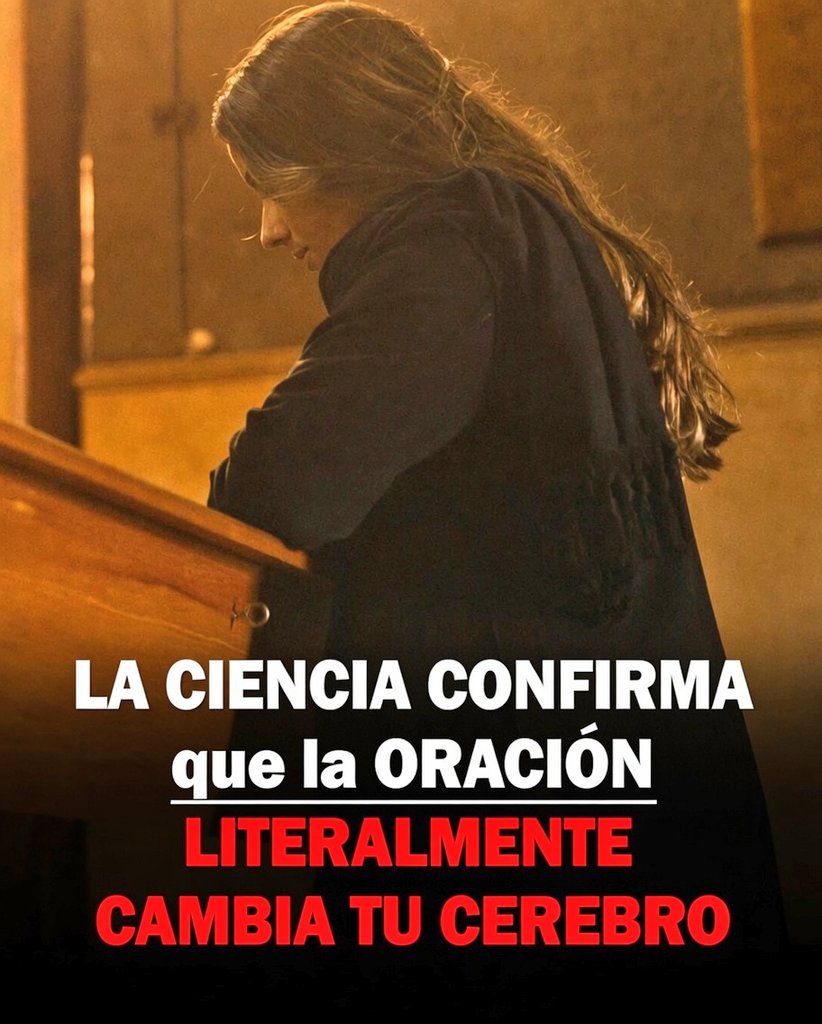
En los últimos años, los neurociencia ha utilizado tecnología avanzada de imágenes cerebrales para estudiar los efectos de la oración y la meditación, y los resultados son espectaculares.
Numerosos estudios peer-reviewed demuestran que la oración regular:
• Aumenta la materia gris en regiones cerebrales relacionadas con la atención, la regulación emocional y la empatía (investigación de la Facultad de Medicina de Harvard).
• Disminuye la actividad en la amígdala, reduciendo el miedo, la ansiedad y las respuestas al estrés.
• Fortalece la corteza prefrontal, mejorando la concentración, la compasión y la toma de decisiones morales.
• Crea patrones cerebrales similares a los experimentados en el amor profundo y el vínculo afectivo.
Un estudio pionero de la Universidad de Pensilvania (dirigido por el Dr. Andrew Newberg) que utilizó tomografías SPECT en monjas franciscanas durante la oración mostró un mayor flujo sanguíneo hacia los centros de atención y lenguaje, junto con una menor actividad en el lóbulo parietal (asociado con el sentido de identidad), lo cual concuerda con la sensación de unidad con Dios.
Otras investigaciones publicadas en revistas como Frontiers in Psychology y JAMA Psychiatry confirman que la oración contemplativa y la meditación pueden remodelar las vías neuronales, ofreciendo beneficios tangibles para la salud mental, la resiliencia y el bienestar emocional.
Esto concuerda perfectamente con la comprensión católica de que la oración es transformadora, no solo espiritualmente, sino también físicamente.
Como nos recuerda san Pablo:
«Transformaos mediante la renovación de vuestra mente» (Romanos 12:2).
La oración es un don poderoso que nos renueva desde adentro hacia afuera.
¿Has notado los efectos de la oración en tu vida?
Comparte tus reflexiones o experiencias, los leo.