Media Framing of Crime Along Ethnic Lines: Divisive.
As an Igbo man, I have endured stereotypes, judgment, and labelling solely based on my ethnic origins. This is not an isolated Igbo experience. Most Nigerians have, at some point, been reduced to their ethnicity rather than recognised for their true character.
I understand the pain of the ordinary Fulani man today, often unfairly judged by the actions of criminals he does not support, has never met, and who are not representative of his people.
Even in America, such unjust labelling fueled the civil rights movement and prompted Martin Luther King Jr. to declare that people should be judged by the content of their character, not the colour of their skin.
Every Nigerian ethnic group is known for its unique traditions, occupations, skills, and strengths. Crime, however, has no ethnicity. A thief is a thief. A terrorist is a terrorist. A kidnapper is a kidnapper. They are bad actors, not representatives of any people. They must be identified, arrested, and punished according to the law.
We must decisively abandon the dangerous practice of blaming entire ethnic groups for the actions of a few criminals. It is unjust, it breeds hatred, and it damages our national unity.
Let us proudly celebrate our diverse cultures, talents, and contributions, rather than falling prey to stereotypes and prejudices that politicians and divisive interests exploit for their gain.
A new Nigeria must emerge—one where no citizen is condemned because of tribe, religion, or birthplace. We can cherish our cultural roots while standing united by justice, mutual respect, and hope for a better future. We are capable of this.
A new Nigeria is within our reach. -PO
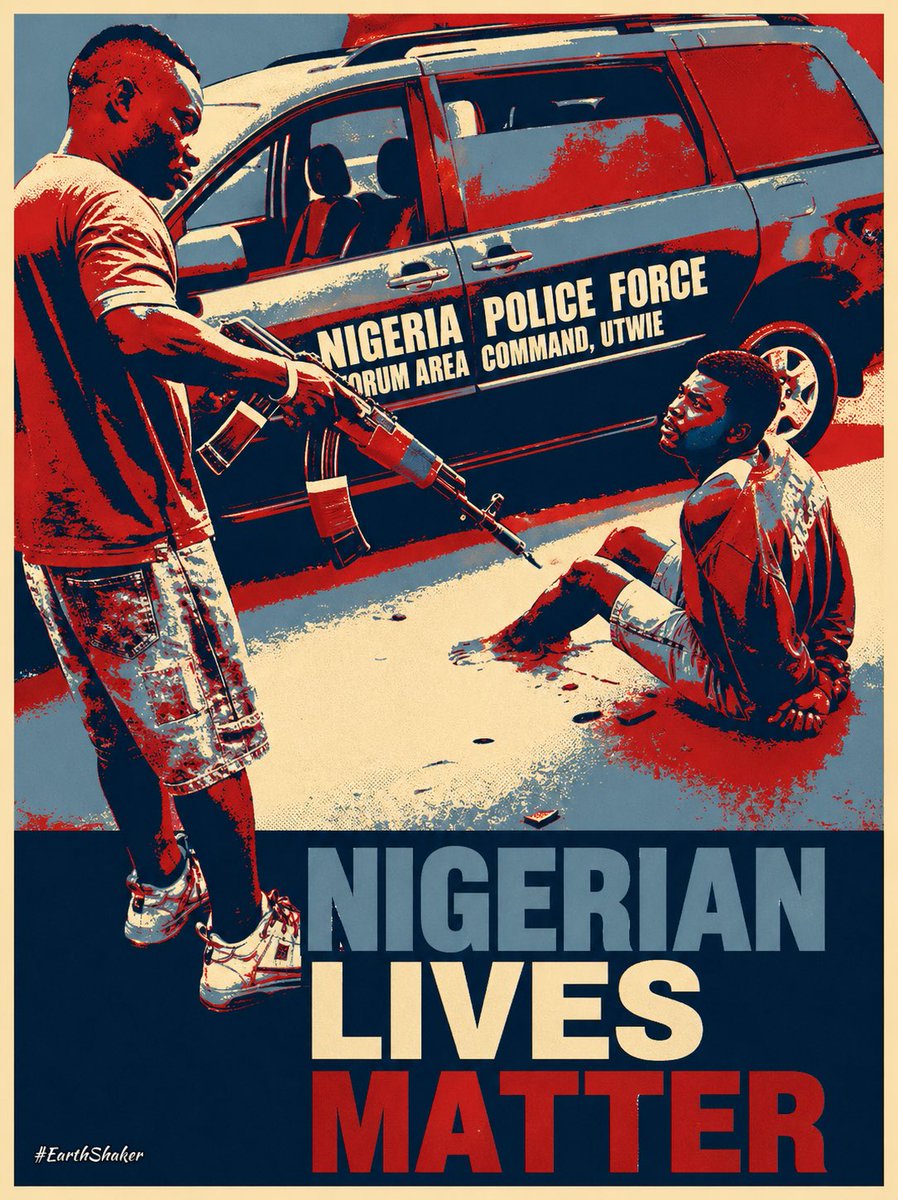
Extrajudicial Killing in Effurun
The extrajudicial killing of a young Nigerian Mr. Mene Ogidi, in Effurun, Delta State, by a police officer, is not only barbaric but also a grave violation of the rule of law.
Over time, human society has moved away from an era when lives could be taken without consequence. Through the evolution of civilisation, a fundamental principle has emerged: no one should be punished or deprived of life without due process and a fair determination of guilt.
Such acts inflict unimaginable trauma on the bereaved family and deepen public anxiety in an already distressed society. Nigerians are already traumatised by recurring reports of brutal killings by terror organisations across the country, and incidents of this nature - especially when involving state actors - only worsen that psychological burden and erode public confidence in safety and security.
In light of this, while the law must take its full course, I commend the prompt response of the police authorities so far and express confidence that they will pursue this matter to its logical conclusion. Such responsiveness is necessary to reassure the public that justice will not be compromised. I therefore urge the police and all security agencies to sustain this approach by acting with transparency and accountability. Furthermore, recruitment processes must be more rigorous, ensuring that only individuals of sound judgment and the right frame of mind are entrusted with firearms.
In the final analysis, these measures can restore public trust and uphold justice - both of which are indispensable to building a new Nigeria that is possible. -PO