On the 16th day of 🎄 Christmas #Psychtoolbox gave to me….
A new PTB release with beta quality 🍎 macOS Apple Silicon Mac support, enjoy!
PTB "Appletizer“ release details here: https://t.co/8ppGdFvuZy
We start the "Research Tools" session with @CeliFoster's talk on "Real-time 3D motion tracking using a portable stereo depth camera" @mrccbu's #CBUMethodsDay.
Out in @CurrentBiology: a challenge to traditional views on distorted body representations. With @LukeMillerNeuro and @pmedendorp at @DondersInst we found that biases in hand perception stem from somatosensory computations, not a distorted hand model.
https://t.co/irH6FQfav4
A challenge to the long-held idea of distorted hand model!
With @LukeMillerNeuro & @pmedendorp we show that biases in finger perception arise from the Bayesian integration of accurate but noisy signals encoded in spatial coordinates.
Preprint: https://t.co/YAjASKeoHT
🔔 New Psychtoolbox update: Eye to eye
The big new feature is eye tracking support for Virtual Reality (VR) / Augmented Reality (AR) / Mixed Reality (MR) Headsets with built in eye trackers.
Please TEST IT NOW and give us feedback!
Full details: https://t.co/8ppGdFvuZy
#Psychtoolbox 👀 gaze-contingent paradigms remap visual stimuli in real-time ⏱️ depending on gaze direction.
New research uses this method to map visual receptive fields 🧠during natural free viewing.
#eyetracking#visionscience#matlab
https://t.co/VEis5L6Xhj
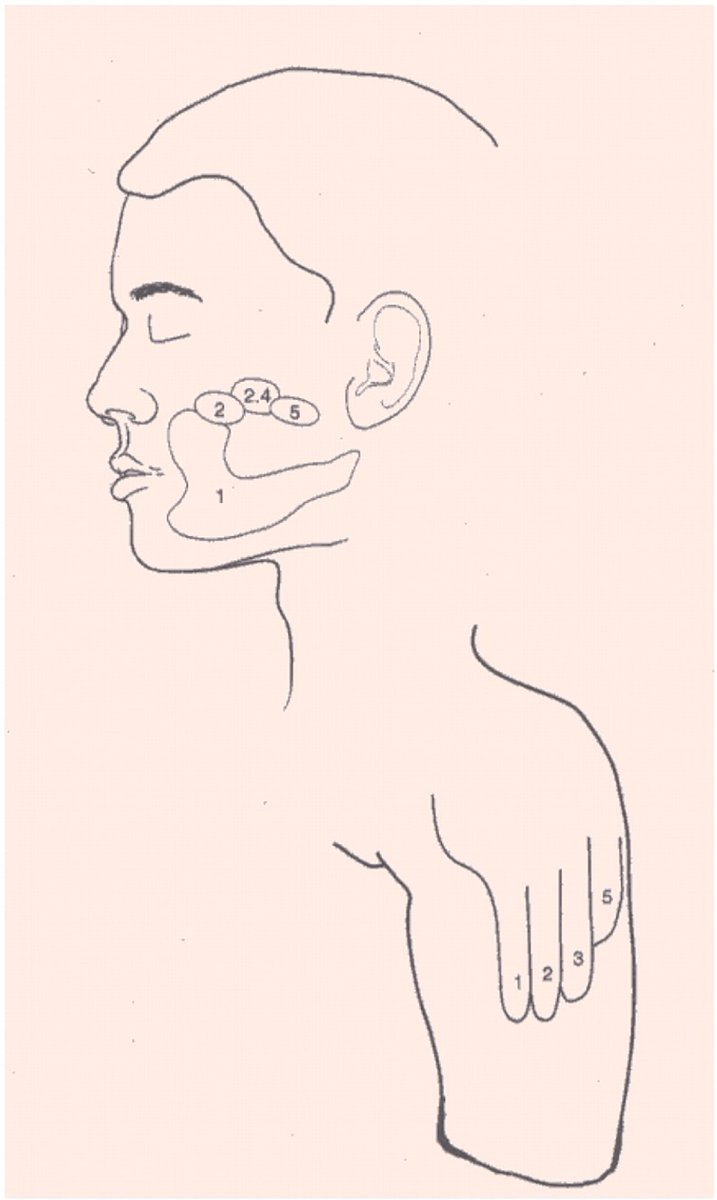
Paper alert! Many of us assume that when amputees feel a touch on their face, they also sense it in their missing hand, all thanks to brain plasticity. But what if this is based on flawed scientific evidence? Here’s a breakdown of our paper https://t.co/uKNcc84ESm
Interesting results from some Twitter polls - academics believe that academia hires candidates with privilege even if they don't translate that into higher performance/outputs. Worth thinking about & potentially doing some more rigorous research.
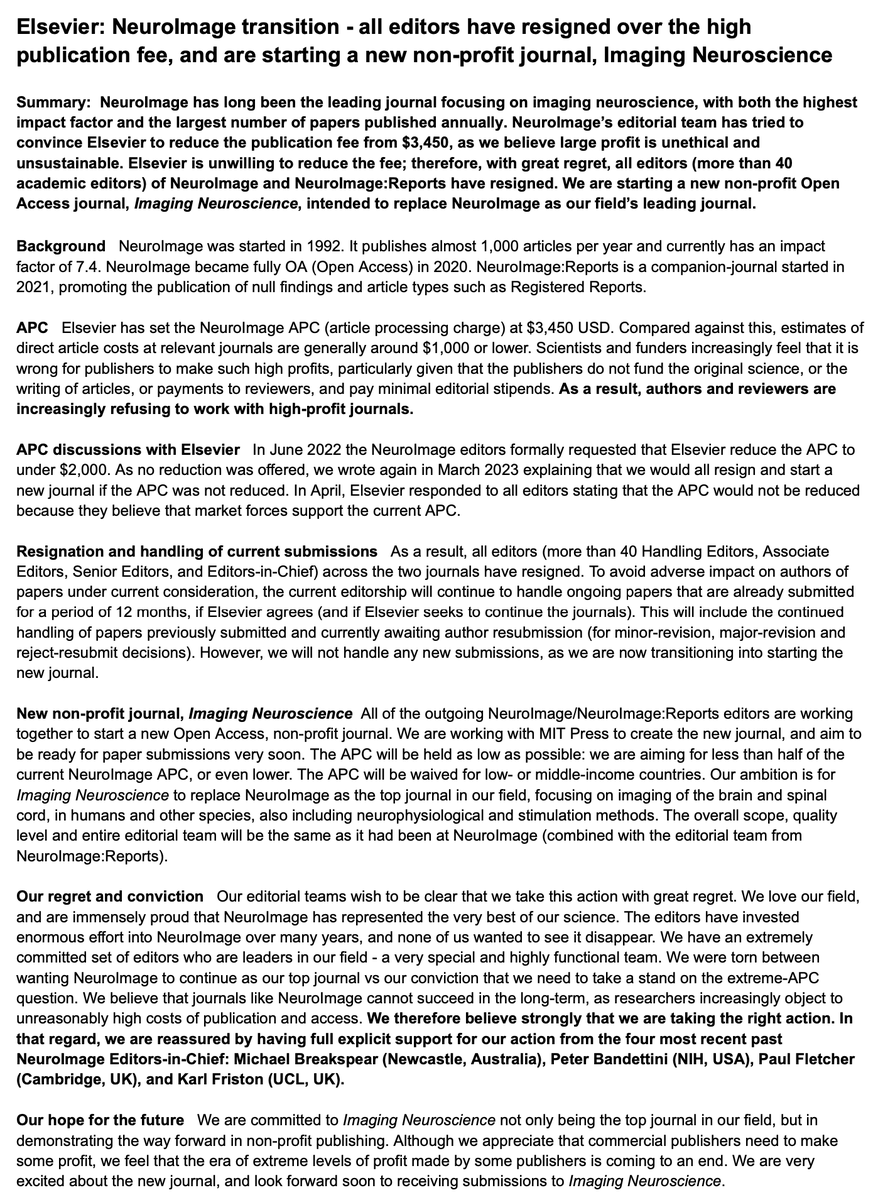
All NeuroImage and NeuroImage:Reports editors have resigned over the high publication fee, and are starting a new non-profit journal
https://t.co/DmnwDKVCK7
This comes with great regret, and a huge amount of thought and discussion- please read announcement to get more details.
#Psychtoolbox update 3.0.19.1 was released, providing further compatibility improvements and refinements to our new OpenXR support for VR/AR/MR/XR applications. Now also tested with the HTC Vive Pro Eye in addition to the Oculus Rift CV1.
More info: https://t.co/t0LKw5HuiO
#Psychtoolbox 3.0.19.0 "Virtuality!" is now released, including new OpenXR cross-platform, cross-vendor, cross-device support for VR/AR/MR/XR applications, as well as many other improvements.
Full details here: https://t.co/t0LKw5HuiO
Another iteration of the PsychoPhysics Toolbox (https://t.co/6s6eSa1esK) from the irascible and inimitable Mario Kleiner @psychtoolbox. 3.0.19 adds OpenXR. Anyone who has ever used PTB in their research owes more than the bargain €99 euro membership https://t.co/SMuLcU7oY8
We are offering an end of year sale of our #Psychtoolbox paid support membership licenses – just 99 Euros + tax! For a limited time only, see the forum post here for full details: https://t.co/niRQFZxmee
Another new preprint! We identify separated coding of tactile stimuli relative to their position on the body vs. in space in parietal cortex, and track the dynamic sensorimotor transformation of these tactile targets into movement goals. More details below.
new preprint from our lab:
Dynamic spatial coding in parietal cortex mediates hand movement planning towards touch
by former PhD student Janina Klautke (Brandes)
and postdoc Celia Foster
see info here:
https://t.co/FfHneTlseV
@VisionBernie The category effect was specific to familiar faces, so I think likely something else. OFA showed highest respones to most extreme morphs though, which seems like it could well be encoding face space PCs
New preprint! In this study, we investigated how our familiarity with faces affects the neural coding of face sex, i.e. male and female faces. [1/6] https://t.co/ET3vgGiFGc
@VisionBernie We didn't compare male/female morphing directly to the first PC of the face space, maybe the Basel face model mightve looked at that. We didn't see any univariate activation differences between faces morphed in the two diff directions (male/female directions)
These results suggest that occipitotemporal regions encode physical aspects of face sex, whereas frontal and parietal regions encode face sex in a more abstract manner that is linked to face identity. [6/6]
In contrast, face-responsive regions in the occipitotemporal cortex encoded physical changes in face sex, and were unaffected by face familiarity. [5/6]









![CeliFoster's tweet photo. New preprint! In this study, we investigated how our familiarity with faces affects the neural coding of face sex, i.e. male and female faces. [1/6] https://t.co/ET3vgGiFGc https://t.co/puEETGa9WX](https://pbs.twimg.com/media/Fgp-xoEX0AAU9iO.jpg)


