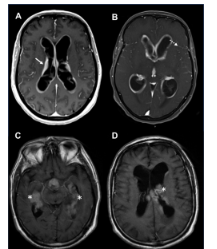
Gonçalves, J., Rodrigues, A., Pires, R. et al. Ependymal enhancement on MRI: imaging patterns and diagnostic algorithms - a pictorial essay. Neuroradiology 68, 167–180 (2026). https://t.co/aM9BqyZGy8
🧠🎧 New PN Podcast
🟪 A face in the hedge: Dementia with Lewy bodies
Pareidolia, passage hallucinations & “the company it keeps” - how do we pin down DLB?
From gait clues to word-finding pauses, biomarkers & practical management pearls.
🍎 https://t.co/eFRGPR2fBO
🟢 https://t.co/rGqYmYnIjs
🌐 https://t.co/Zi011CPKeA
#Neurology #PracticalNeurology #NeuroTwitter #MedTwitter #MedicalPodcast #DLB #Dementia #LewyBodies
Hospitalized PD patient with sudden rigidity, confusion, or fever? Think acute dopamine depletion. In this Mayo series, triggers included levodopa withdrawal (27%), antidopaminergics (33%), sepsis ± withdrawal (34%), and DBS failure.
Remember:
• Never interrupt levodopa
• Avoid antidopaminergics
• Always rule out sepsis
https://t.co/Sekpy8dMhZ
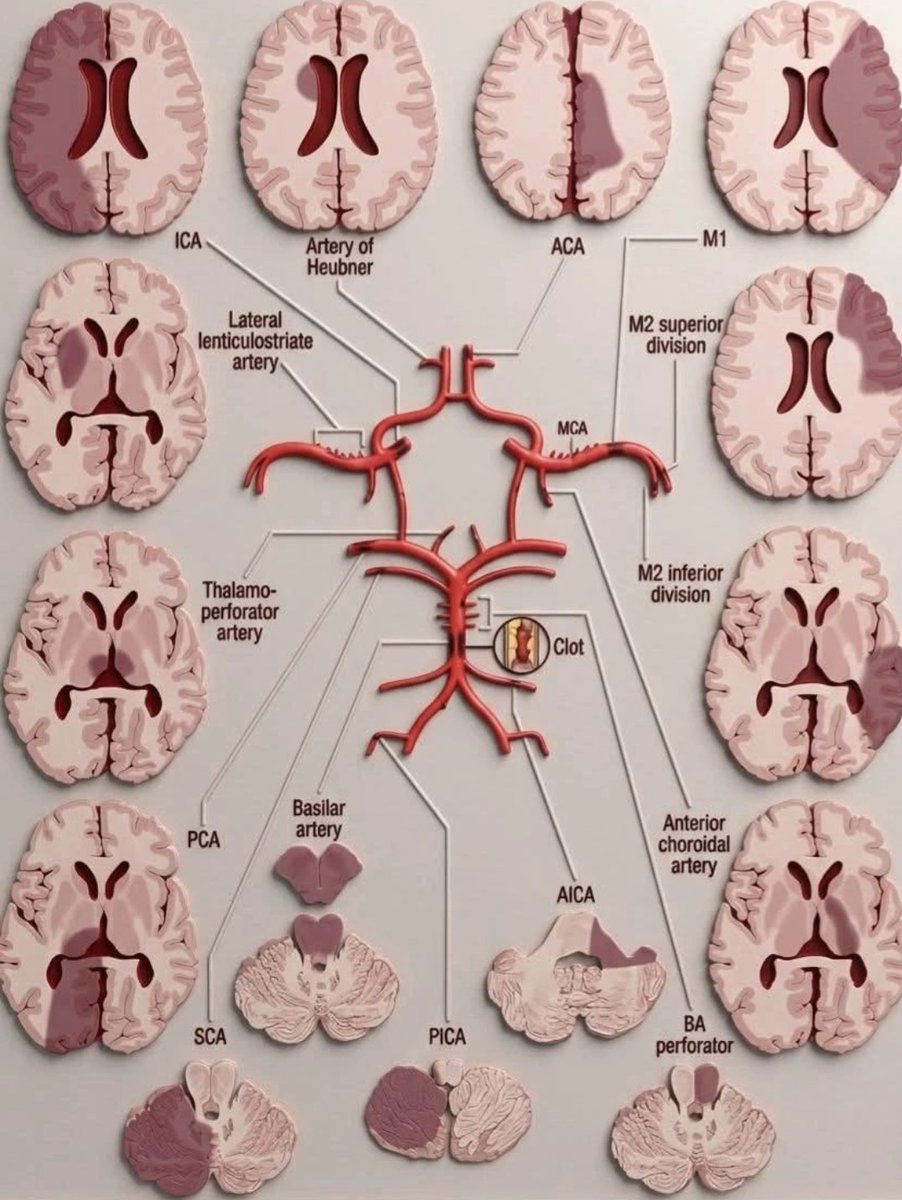
Feeling stuck in the middle when it comes to middle cerebral artery infarcts?
It may be only one vessel, but you can get many different infarct patterns & symptoms depending on where it’s occluded!
Here’s what you NEED to know:
FIVE MAIN INFARCT PATTERNS
1. Occlusion of the MCA stem or proximal M1 segment before the lenticulostriate origin
--Involves deep & superficial territories
--Weakness is usually severe. Face, arm, & leg are similarly affected
--Remember: Whole MCA occlusion = Whole hemiparesis
2. Lenticulostriate artery (LSA) Infarcts
--Involves deep territory
--Hemiparesis, hemisensory, occasional aphasia & visual hallucinations
--Remember: LSA stands for Limp (weakness), Sensory deficits, & occasional Aphasia
3. Distal M1 segment occlusion after the LSA origin
--Involves whole superficial MCA territory
--Sometimes weakness in face & arm > leg (brachiofacial hemiparesis)
--Remember: Distal MCA occlusion can somewhat spare the DISTAL most extremity (leg)
4. Superior Division occlusion
--Uncommon bc superior trunk is so short
--Involves frontal & anterior parietal lobe, including pre- & post-central gyri
--Prominent faciobrachial hemiparesis w/matching hemisensory
--Rarely visual field defect
--Remember: Superior is more = more pronounced motor deficits than inferior division
5. Inferior Division occlusion
--Involves temporal gyri & superior/inferior parietal lobule
--Facial brachial weakness is more mild than w/superior division
--Common visual field defect (homonymous hemianopia or upper quadrantopia)
--Remember: Inferior is less, so motor deficits are less pronounced
--Remember: Inferior starts w/the letter “I” = “eye” so visual field deficits
Hopefully now your reports won’t middling when it comes to middle cerebral artery infarcts!
This is an eye-opening study for me... Apparently, cerebrovascular hyperemia and /or vasospasm can occur in reversible cerebral vasoconstriction syndrome (RCVS). They may even coexist in different vascular territories or at different times in the same patient.
In RCVS, the hallmark is multifocal cerebral arterial vasoconstriction, which can progress and lead to ischemia and infarction.
At the same time, some regions can show vasodilation and impaired autoregulation with vasogenic edema, often overlapping with PRES, reflecting a hyperemic or “leaky” circulation pattern rather than pure spasm.
A mixture of distal vasodilation, proximal vasoconstriction, edema, and ischemia is well described, making it difficult to cleanly separate hyperemia from vasospasm. Indices like the Lindegaard ratio can help distinguish hyperemia from vasospasm rather than assuming only one process is present. A Lindegaard ratio of < 3 suggests hyperemia and > 7 is s/o vasospasm.
Sign of the day
ROGER’S SIGN
(NUMB CHIN SYNDROME)
Also known as Mental nerve neuropathy
Salient features
Facial & oral numbness rarely pain restricted to the distribution of the mental nerve of the inferior alveolar nerve.
It may be considered as RED FLAG symptom of a distant malignant neoplasm.
It’s associated with neoplastic processes
- Breast cancer
- lung cancer
- malignant lymphoma like
Burkitt lymphoma
- malignant metastasis to the head & neck
Mechanism
- Metastasis to Mandible
- Dural involvement of 5 th nerve at the base of the brain.
Non malignant causes include
Dental causes odont- iatrogenic ( most common)
DM
Sickle cell anemia
Vasculitis
Demyelinating diseases
Dr. Prabhakar K
Prof of Medicine
SDUMC, Kolar.
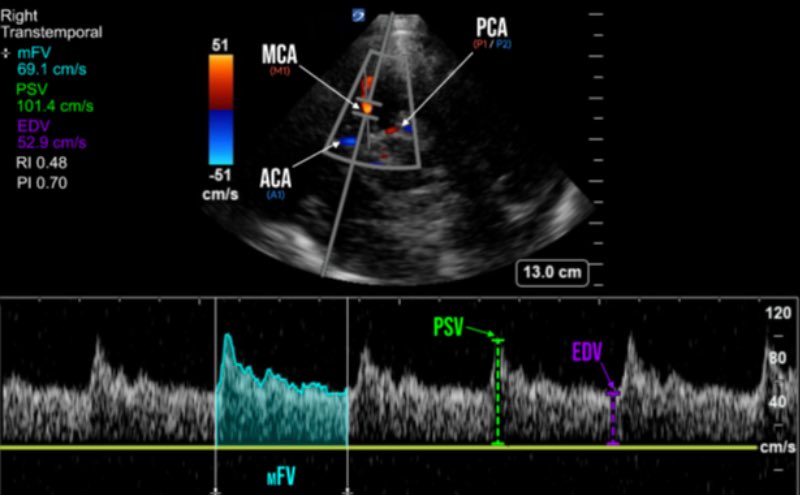
🧠 Cómo usar el Doppler transcraneal en urgencias (sin complicarte) paso a paso 🧵
Es una herramienta:
• No invasiva
• Rápida
• Repetible
• En tiempo real
Su aplicación mejor estudiada 👇
👉 Vasoespasmo de la arteria cerebral media en HSA
📊 Comparado con angio-TC:
• Sensibilidad y especificidad 89–98%
• Excelente herramienta de monitorización a la cabecera
🧠 Además puede ayudar en:
• PIC elevada
• Desplazamiento de línea media
• EVC
• TCE (pronóstico)
📌 Ideal en pacientes inestables o con recursos limitados.
#Emergencias #POCUS #Neurocríticos #Urgencias #MedicinaCrítica
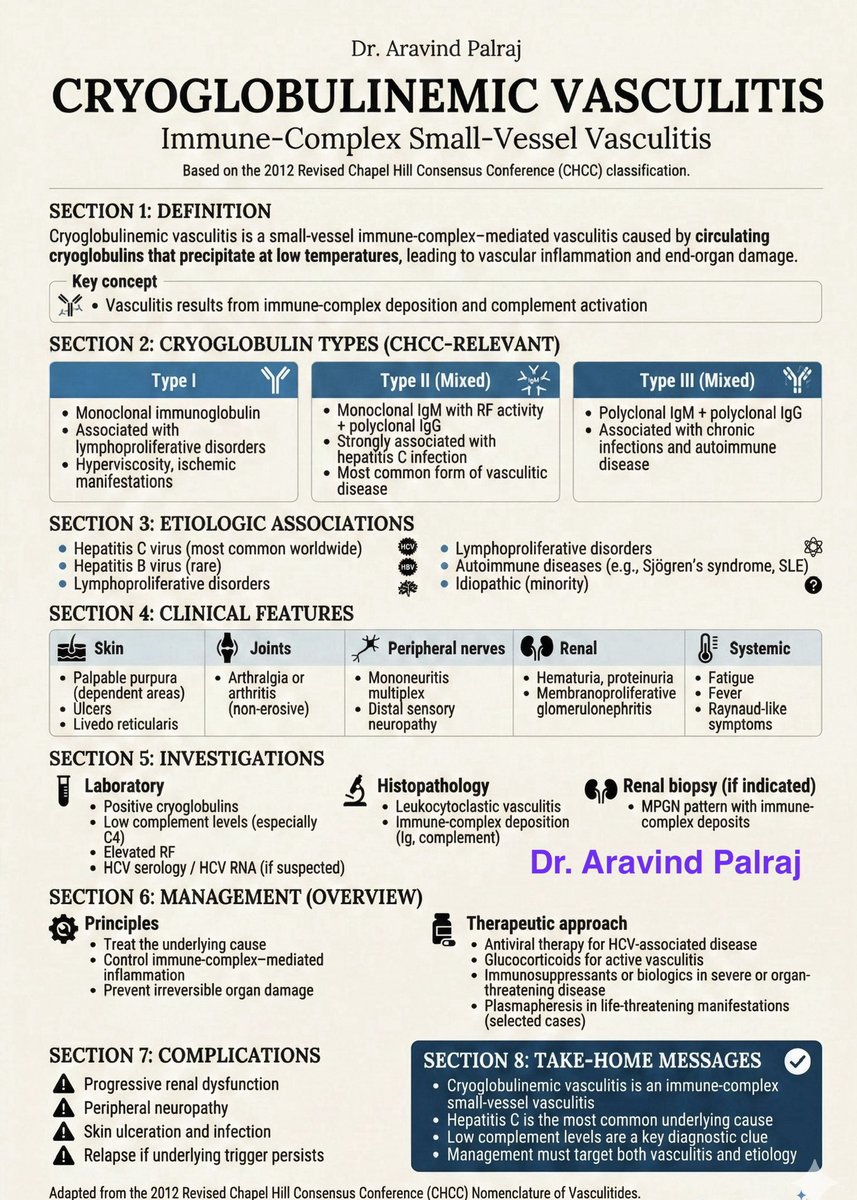
Cryoglobulinemic vasculitis is not just a rash.
It’s immune complexes, complement consumption, kidneys, nerves - and often Hepatitis C driving the disease.
Low C4 should always make you pause.
#Vasculitis#Cryoglobulinemia @DrAkhilX @IhabFathiSulima @@#Rheumatology#MedTwitter #CHCC