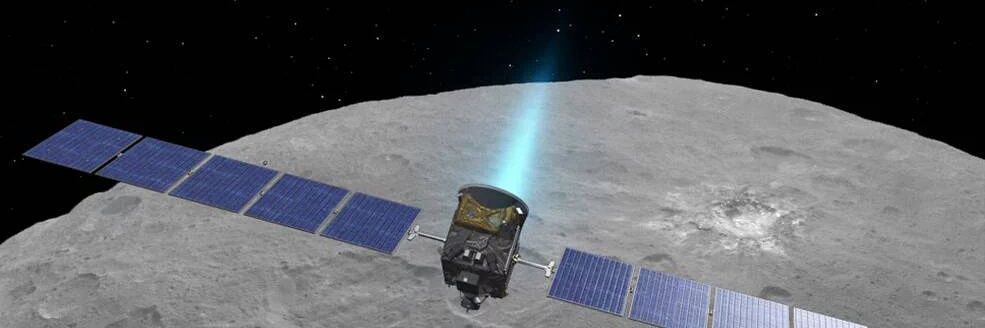
For a better grasp of what's going on in the final weeks of @NASA_Dawn's mission, read the back-to-back Dawn Journals published this week on the Planetary Society's website https://t.co/HIABqb4gCS
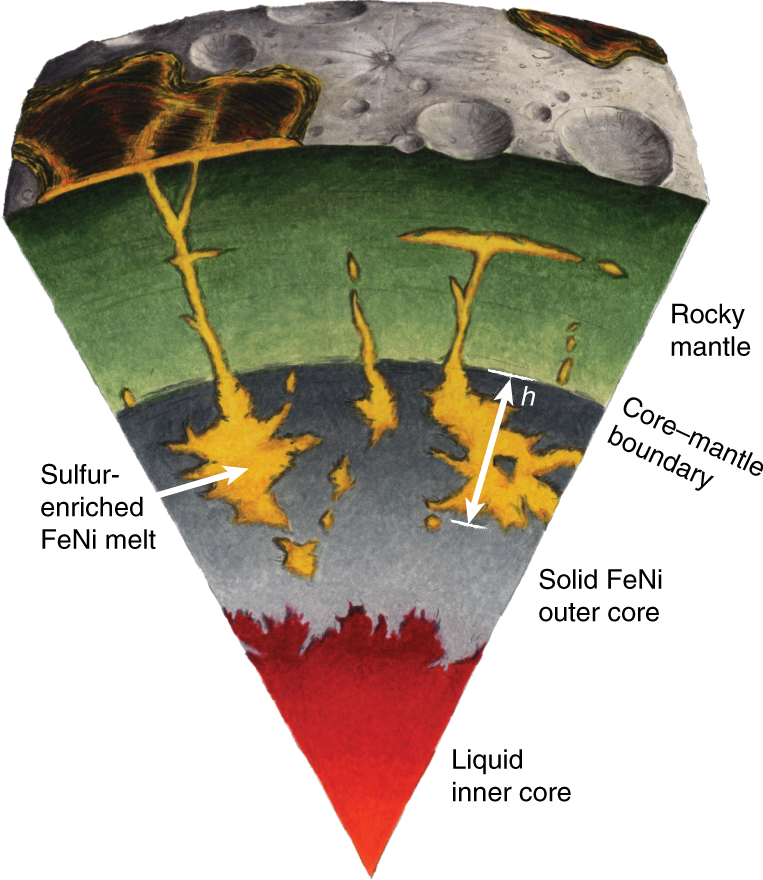
Molten iron-rich material can erupt to the surface of asteroids while they are cooling from the outside in: "ferrovolcanism". #Ferrovolcanism could have produced pallasite meteorites and substantially altered Psyche's surface. Johnson et al.: https://t.co/ibRmDhlFY6 #epscdps2019
LIVE NOW 🔴Expecting the unexpected… in space
Join us for a talk on how we repaired a spacecraft when it was millions of miles away. Watch and chat at https://t.co/AmrSxUsETV
Hey, you! 👋 Check out this #awesome@NatGeo article written by @MichaelGreshko! It summarizes findings from a new paper published by @Nature@NatureAstronomy about ferrovolcanics on the @NASAPsyche asteroid! 🌋 Click the link for more 🔗 https://t.co/gPE4P867z5
I was able to capture this perspective by flying over Bennu's southern hemisphere (at about -40° latitude) while pointing PolyCam up to the far north. This frame shows Bennu from the equator all the way up to about 50° latitude in the northern hemisphere.
https://t.co/VCGPMhoaaL
For 21 years, two NASA engineers & I have been making up really bad space jokes and emailing them to each other, sometimes 10 per day. An example from today: "The Dawn mission found salt deposits on the surface of Ceres. I wonder if any planets have pepper deposits."
Phew! After orbiting two extraterrestrial destinations and 4.3 billion miles of travel through space, it’s time for some recognition.
The @NASA_Dawn team received the Swigert Award for Space Exploration during the #SpaceSymposium earlier this week: https://t.co/3qZVOtUFmJ
Four years ago today, our Dawn spacecraft captured this sequence as it approached the dwarf planet Ceres. This week, the Space Foundation presented the Dawn mission team with the 2019 John L. "Jack" Swigert, Jr., Award for Space Exploration: https://t.co/Ek3qp6l0FU
Feed your brain with space facts this #NationalCerealDay. 🥣
"Cereal" is derived from Ceres, the Roman goddess of agriculture and grain. Ceres is also the name of the dwarf planet explored by @NASA_Dawn. https://t.co/hA3ZGiFCD3
4 years ago today (March 6, 2015) @NASA_Dawn enters orbit around the dwarf planet Ceres - the largest object in the asteroid belt. Dawn had already spent 2 years orbiting Vesta. After delivering a treasure trove of data, the mission was concluded on November 1, 2018