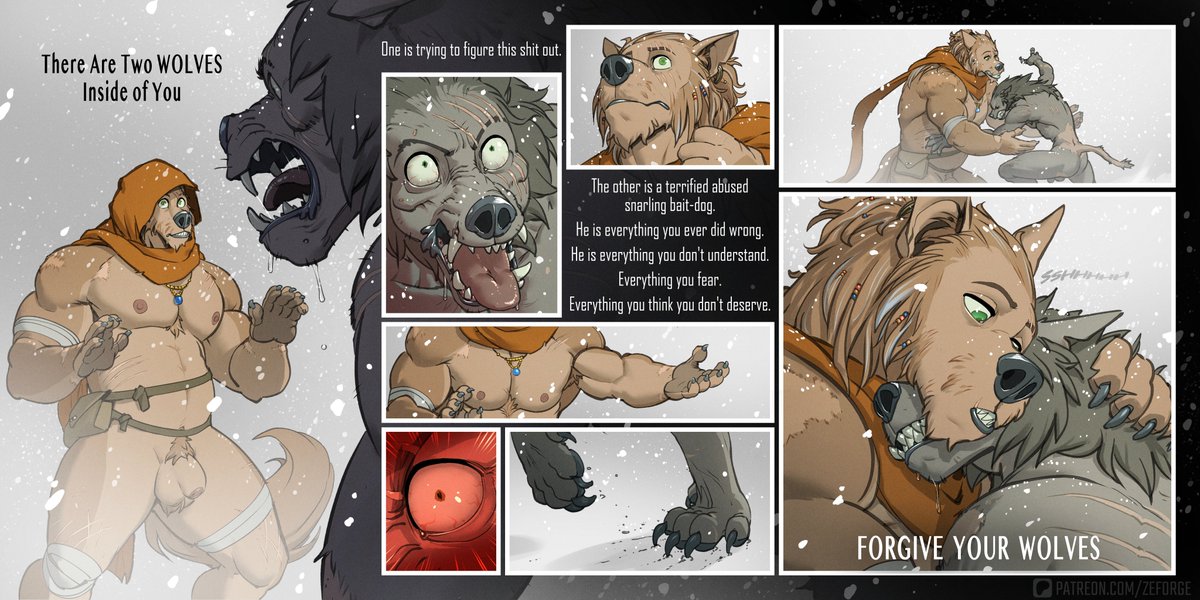
The Celtic or Irish Wolf, a complex and Otherworldly creature.... Wolves, it would seem, have always had varied personalities as diverse as their human counterparts. The Irish werewolf was not considered a “monster” at all. The werewolf was the guardian and protector of children, wounded men and lost persons, and even recruited by kings in time of war.
The Irish werewolf or Faoladh, differs from the typical western European werewolves and the faoladh was often considered “good”. The faoladh is a man or woman that shapeshifts into a wolf, and is often a protector or guardian of others rather than an unthinking, bloodthirsty creature. Where one shapeshifting wolf could be seen as evil, for example, the next might very well turn towards a travelling priest and begin to preach the gospel.
Wolves were hunted into extinction in Ireland but the country was once called Wolfland up until Middle Ages, due to the amount of wolves roaming there. They feature prominently in Irish folklore with stories of people transforming into wolves passed through the generations.
In some folklore, the faoladh were that of the Laignach Faelad. These were not doomed, kind-hearted or guardian werewolves, but vicious werewolf warriors mentioned in a medieval Irish text called the Cóir Anmann. Here, a tribe of man-wolf shapeshifters were from what is now known as Tipperary Island, followers of the bloodthirsty Irish god, Crom Cruach (the Bowed God of the Mounds.) These ancient mercenary soldiers would fight for any king willing to pay their price. Their brutality in battle made them desirable to any ruthless and desperate king willing to hire them. The price for their services? Not gold, but the flesh of newborns they would feed on.
📷 : Credit to the Owner
#archaeohistories